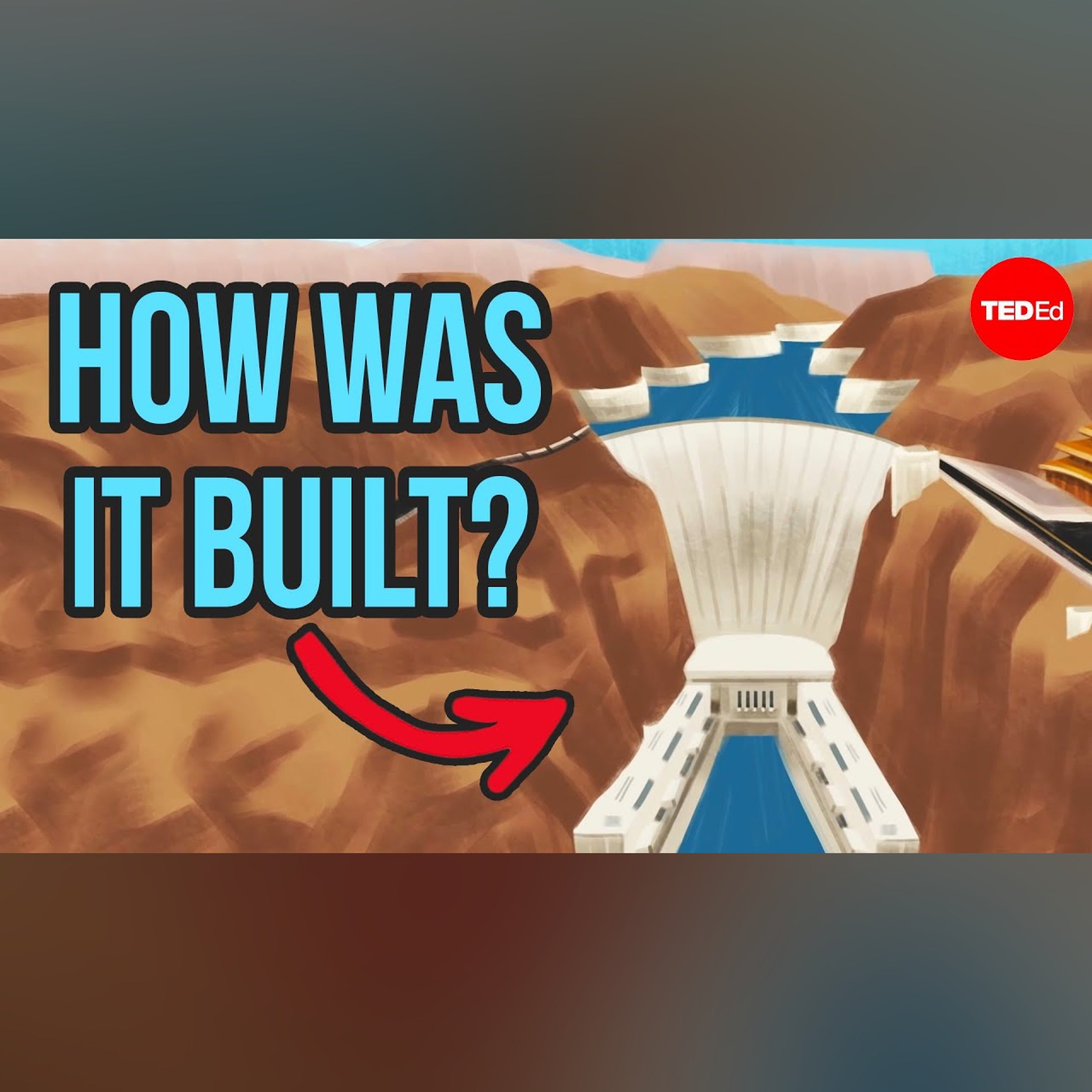
Blood, concrete, and dynamite: Building the Hoover Dam - Alex Gendler
Listen through the publisher, then discuss the episode here or arrange an in-person Roundtable. Your city determines where to meet.
Roundtables are designed for groups of four, with a shared subject and room for everyone to speak. Come for discussion, with no dating expectation.
Dig into the engineering of the Hoover Dam, a concrete arch-gravity dam on the Colorado River that supplies water to the US southwest. Uploaded 23-12-21 -- In the early 20th century, the US had expanded from coast to coast, but many cities in the southwest still lacked reliable water sources. The Colorado River's erratic flow and frequent floods made it unreliable for agriculture, and the region’s growing cities needed more energy. So the government decided to build a massive hydroelectric dam. Alex Gendler details the creation of the Hoover Dam. Lesson by Alex Gendler, directed by Jovan Rakic, Artrake Studio. Support Our Non-Profit Mission ---------------------------------------------- Support us on Patreon: http://bit.ly/TEDEdPatreon Check out our merch: http://bit.ly/TEDEDShop ---------------------------------------------- Connect With Us ---------------------------------------------- Sign up for our newsletter: http://bit.ly/TEDEdNewsletter Find us on Twitter: http://bit.ly/TEDEdTwitter Peep us on Instagram: http://bit.ly/TEDEdInstagram ---------------------------------------------- Keep Learning ---------------------------------------------- View full lesson: https://ed.ted.com/lessons/blood-concrete-and-dynamite-building-the-hoover-dam-alex-gendler Dig deeper with additional resources: https://ed.ted.com/lessons/blood-concrete-and-dynamite-building-the-hoover-dam-alex-gendler#digdeeper (https://ed.ted.com/lessons/blood-concrete-and-dynamite-building-the-hoover-dam-alex-gendler) Animator's website: https://www.artrake.com (https://www.artrake.com/) ---------------------------------------------- Thank you so much to our patrons for your support! Without you this video would not be possible! Aravind Battaje, Steven Razey, Nathan Giusti, Helen Lee, Anthony Arcis Benedict, Karthik Balsubramanian, John Hong, Annastasshia Ames, Sean, Amy Lopez, Vinh-Thuy Nguyen, Liz Candee, Ugur Doga Sezgin, Anthony Arcis, Karmi Nguyen, John C. Vesey, Yelena Baykova, Harshita Jagdish Sahijwani, Nick Johnson, Carlos H. Costa, Robert Patrick, Jennifer Kurkoski, Ryan B Harvey, Abhishek Bansal, Akinola Emmanuel, Jose Arcadio Valdes Franco, Sebastiaan Vleugels, JY Kang, Abhishek Goel, Heidi Stolt, Christina Salvatore, Karlee Finch, Michael Goldberg, Denise A Pitts, Doug Henry, Keven Webb, Mihai Sandu, Deepak Iyer, Javid Gozalov, Kyanta Yap, Rebecca Reineke, William Biersdorf, Patricia Alves Panagides, Yvette Mocete, Cyrus Garay, Samuel Barbas, Brighteagle, LadyGeek, Curtis Light and Dianne Palomar.
Episode information is provided by the publisher. Listening takes place on the publisher’s service.
Listen at the source ↗