Bloomsco's quest to take military training from years to days
15 min
Listen through the publisher, then discuss the episode here or arrange an in-person Roundtable. Your city determines where to meet.
Roundtables are designed for groups of four, with a shared subject and room for everyone to speak. Come for discussion, with no dating expectation.
Ready to revolutionize military training? In this episode, Hugh from Bloomsco reveals how AI is transforming the way the military prepares for rapidly evolving battlefields. Discover why traditional training methods are falling behind and how a new framework can empower military personnel to adapt in real-time. Hugh, a veteran in ed tech, shares his insights on the urgent need to shift from rote learning to a hands-on, competency-based approach, mirroring the military's mission-driven ethos. He discusses how his collaboration with military training development officers is reshaping training protocols, turning months of preparation into mere days. You’ll discover: The pivotal role of AI in building a semantically searchable knowledge base for training materials. How Bloomsco accelerates the development of training packages to meet modern military demands. The process of translating complex manuals into actionable training modules, including simulations and VR scenarios. Specific case studies, including a project with the Canadian Joint Warfare Center that slashed development time drastically. Insights into the future of military training and the critical importance of adaptability in today’s defence landscape. Why does this matter? As global conflicts evolve and technology advances, the military must stay ahead of the curve. Not adapting could mean the difference between success and failure on the battlefield. Join us for this essential episode that promises to inspire military professionals, educators, and anyone interested in the intersection of technology and training. Hugh's vision for a more agile and responsive military training framework could very well set the standard for the future. Don’t miss out on this opportunity to learn how to prepare for tomorrow’s challenges today.
Episode information is provided by the publisher. Listening takes place on the publisher’s service.
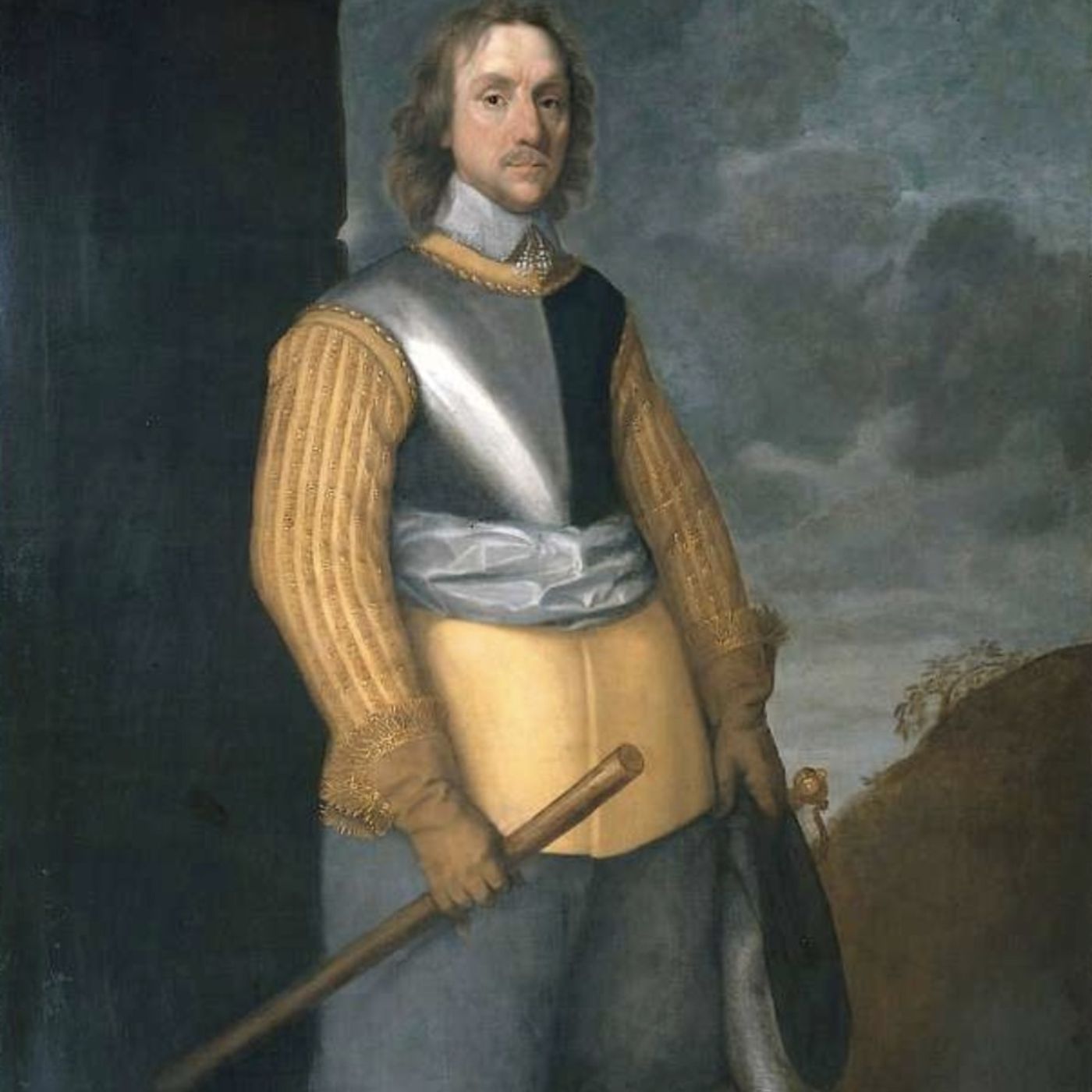
1653 OLIVER CROMWELL eorge Downing’s Early Years, Harvard Training, and Rise in Cromwell’s Parliamentary Army — Part One Dennis Sewell, author of Cromwell’s Spy: From the American Colonies to the English Civil War, introduces John Batchelor to George Downing, a member of Harvard’s first graduating class who joined the English Civil War. Serving as chaplain and scoutmaster under Oliver Cromwell, Downing put his Latin fluency, intelligence, and pragmatic ruthlessness to work in military operations. (3)
What happens inside the mind of a special operations soldier when training becomes a real-life decision to use lethal force? From the psychological demands of combat to the moral consequences that can follow, elite military units must prepare operators for situations that cannot be fully recreated in training. This episode examines stress conditioning, threat perception, moral injury, and why the ability to use lethal force does not necessarily make someone immune to its psychological consequences.
Project Synapse: Markets in Freefall, Fragile Infrastructure, and AI's Perfect Storm The hosts banter through the show's intro before focusing on a sense that "things are out of control," citing a WallStreetBets suicide-hotline post amid a market crash and discussing cascading system failures involving Microsoft, the FAA, and a reported NSA internal communications outage. They argue politicians and leadership lack technical competence and clear messaging, increasing panic, while emphasizing that many problems stem from aging, underfunded infrastructure and complex, brittle software (PHP, NGINX, Java), not proven AI attacks—more a "perfect storm" of crises. They debate whether AI should help fix complexity, stressing critical thinking, accountability, and using multiple AIs to verify each other. In a lightning round they cover Anthropic's IPO performance, mixed reactions and token limits with ChatGPT 6.2 (favoring "Sol" over "Astra"), Google's cheaper Neon model and confusing UX, Loblaw
Some strange things are happening out in space and down here on Earth. Earlier this week, astrophysicist Neil deGrasse Tyson joined Aishah Hasnie (https://www.youtube.com/watch?v=yor7TRWw67k) to unpack a fast-moving object known as 1998 KY26 orbiting the Sun, UAP discussions, and the physics behind what a first alien encounter might actually look like. Tyson broke down why its trajectory doesn't follow standard gravity alone, weighed theories ranging from space junk to the Yarkovsky effect, and shared insights from his book Take Me to Your Leader: Perspectives on Your First Alien Encounter. They also dove into growing concerns around artificial intelligence, tech vulnerabilities, and why Tyson says global guardrails are essential—plus why he’d choose the future if he had a time machine. The conversation was full of laughs and interesting perspectives on space and the potential for extraterrestrial life, but it was too long for our regular midweek Rundown. So, on today's FOX News Rundow
Jensen Huang stepped down as Nvidia CEO on November 12, 2026, after reports about an extramarital relationship with Alice Huang, a former senior executive at Megaspeed. U.S. intelligence reportedly viewed her as an asset working for Beijing. That allegation is not a conviction, and it is not the same thing as proof Nvidia secrets changed hands. Tony Brueski brings in retired FBI Special Agent Robin Dreeke, former leader of the bureau’s Counterintelligence Behavioral Analysis Program, for the question behind the headlines: how does somebody who helped build one of the world’s most important technology companies fail to recognize a possible intelligence threat in his personal life? Huang apologized to his family and Nvidia employees for infidelity. The board announced an outside investigation, while saying it knew of no reason to believe national security or proprietary information was compromised. Reuters subsequently reported that Huang had previously told Nvidia leaders his encounters
This week on the Mark Levin Show, 2028 Republican Presidential candidates must directly address the urgent threats to the country - Marxism and Islamism. These candidates should deliver bold, courageous speeches that clearly explain what is happening in the country, identify those responsible, and directly challenge these threats rather than leaving such warnings to a small number of media voices. Also, it is difficult to believe so many major outages affecting entities such as the NSA, FAA, airline systems, Microsoft, and Apple services could be merely coincidental. The timing and scale of the incidents are troubling and remain inadequately explained. President Trump had proposed a major modernization and restructuring of air traffic control in 2017 that Congress failed to enact. Had those reforms been adopted, many current FAA failures might have been avoided. Later, does Senator John Kennedy know anything about originalism? Originalism is not pure textualism. The meaning and intent
In a world where defence innovation is crucial, Eliot Pence reveals how his company, Dominion Dynamics, is poised to redefine Canada’s military landscape. Discover the untold stories behind rapid partnerships and technological advancements that are shaping the future of defense at an unprecedented pace. If you’re passionate about defence, technology, or national security, this episode is a must-listen. Eliot shares his unexpected journey to becoming a prominent figure in the defence sector, highlighting his role in transforming Canada’s defence capabilities. He discusses the intricacies of building a responsive defence industry amid geopolitical challenges, emphasizing the importance of agility and innovation in a fast-paced environment. You'll discover: The significance of the recent partnership with Ukrainian defence firms and what it means for Canada’s military support efforts. The essential strategies for developing autonomous defence technologies that can adapt to real-time threat
Communities should actively welcome newcomers even when local services must adapt.
Share your view, then see how readers voted. No sign-in required. This poll is shared across stories.
Do you agree or disagree?
Common Quandary
A Common Quandary to discuss
Another conversation to explore, separate from this news story.
The prettiest trees on your street are ecological troublemakers. Do they come down?
A row of mature flowering trees defines a neighborhood and provides valuable shade. Ecologists identify them as invasive and recommend replacing them with native saplings that will take decades to grow.
How should visible community value be weighed against gradual ecological harm?