Listen through the publisher, then discuss the episode here or arrange an in-person Roundtable. Your city determines where to meet.
Roundtables are designed for groups of four, with a shared subject and room for everyone to speak. Come for discussion, with no dating expectation.
Collagen marshmallows are now a thing. So are collagen crisps. If neither appeals, you can stir collagen powder into your morning coffee. Social media is full of products promising to replenish the collagen we lose as we age. The claims extend beyond firmer skin and fewer wrinkles to healthier joints and improved gut health. But what happens to collagen when we eat it? And can these products persuade our bodies to make more? Hosts Katie Edwards and Dan Baumgardt are joined by Joan Chang, a collagen researcher and senior lecturer at the University of Manchester, who explains why the answer is more complicated than a scoop of powder and how collagen really works in the body. Hosts: Katie Edwards and Dan Baumgardt Executive Producer: Gemma Ware Editing and mixing: Anouk Millet Artwork: Alice Mason
Episode information is provided by the publisher. Listening takes place on the publisher’s service.
Once you fully understand Keto Hair Loss, then it’s time to learn how to treat it. There are a number of ways to treat Keto Hair Loss, most commonly is Fibroblasts Treatment through Collagen Supplements. I’ll explain Fibroblasts Treatment and Collagen Supplements as well as what kind of Collagen Supplements and how much Collagen Supplements you should be taking. Read more about this topic on my blog: https://bozmd.com/ketosis-and-skin-why-fibroblasts-increase-collagen-production/ This is a clip from Keto Consult 22 found here: https://bit.ly/2Vc2Y57 Thanks for checking out the Dr Boz Channel. Tune in Sunday nights, 6PM Central Time to watch me Live! We are KETONES FOR LIFE. Improving your health - One ketone at a time. Dr Boz’s First ONLINE Course Consistently Keto: https://bozmd.com/shop WAYS TO SUPPORT THIS CHANNEL: Buy Dr Boz Products. Dr Boz K2+D3: https://amzn.to/31lIlqL (affiliate link) Dr Boz Ketones-In-A-Can: Raspberry Lemon: https://amzn.to/2GXLlSw Dutch Chocolate Sachets: htt
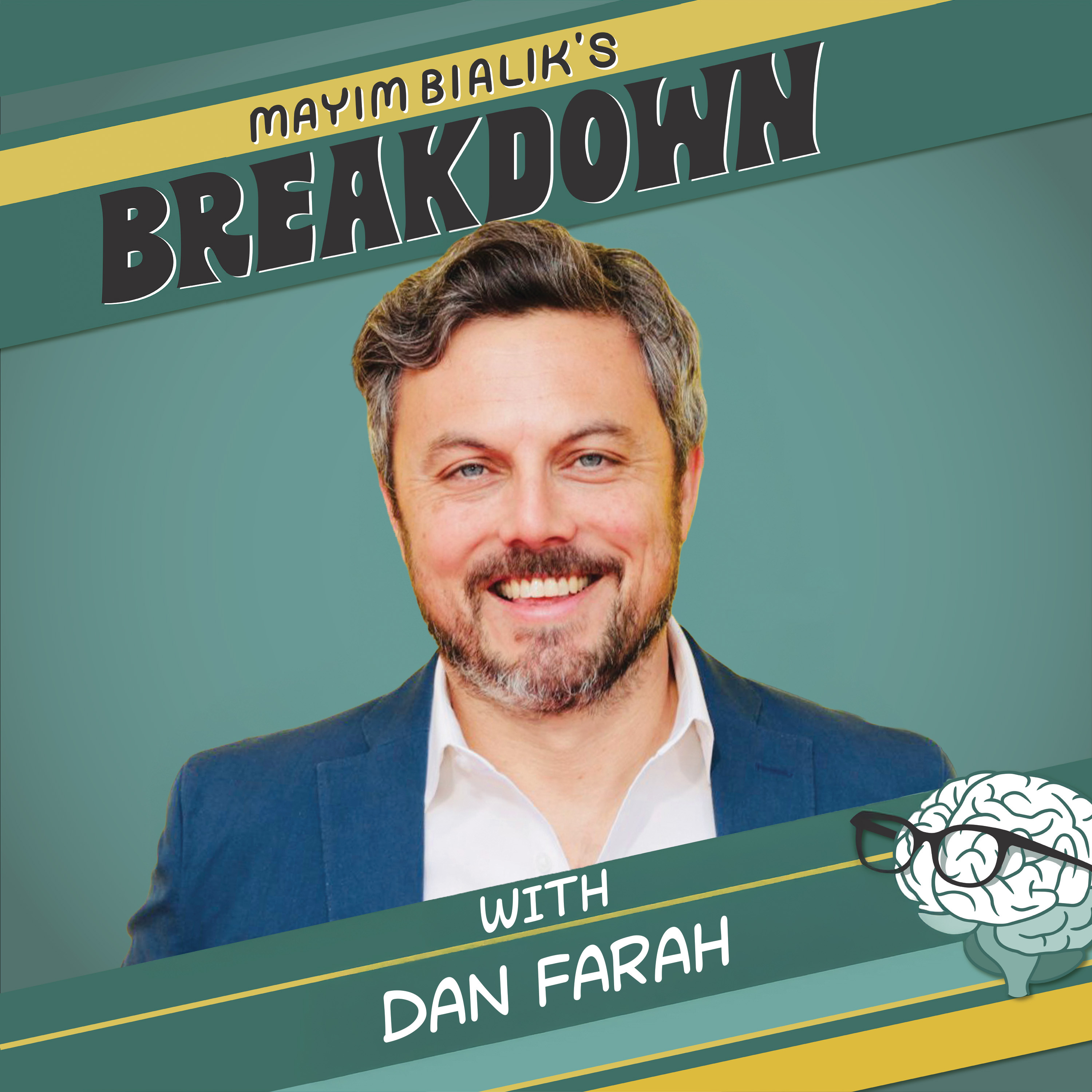
WHAT DOES THE U.S. GOVERNMENT REALLY KNOW ABOUT UAPs, ALIENS, AND NON-HUMAN INTELLIGENCE? Dan Farah, director and producer of The Age of Disclosure, goes deep behind the making of the most talked-about UAP documentary of recent years, and reveals what he heard from government, military, and intelligence insiders about alleged crash-retrieval programs, non-human intelligence (NHI), reverse-engineering, national security, and the decades-long fight over UFO disclosure. The Age of Disclosure features testimony from 34 U.S. government, military, and intelligence community insiders. But how did Dan Farah get these people to talk? And what did they tell him? In this episode of Mayim Bialik's Breakdown, Dan Farah explains: - The alleged 80-year UAP cover-up: What governments have known about NHI, and why the subject remained classified for so long - Secret race to reverse-engineer UAP tech, one of the most consequential technological & geopolitical competitions in human history - Alleged “Leg
Today, I’m sitting down with Shalin Shah (https://mariuspharma.com/team/shalin-y-shah/), whose personal health journey led him to challenge some of the biggest myths around testosterone therapy and men’s health. After being diagnosed with borderline low testosterone at the age of 30, Shalin launched a 13-year mission that not only resulted in the creation of the first FDA-approved oral testosterone pill, Kyzatrex, but also sparked him to advocate for better hormone education and diagnostics for both men and women. Episode Timestamps: Introduction and FDA changes regarding testosterone ... 00:00:00 Testosterone Project: advocacy and public health ... 00:06:37 Regulatory hurdles and the history of restrictions ... 00:08:17 Dispelling cardiovascular and prostate cancer myths ... 00:12:06 Declining testosterone trends and contributing factors ... 00:14:42 Concerns about low testosterone in younger generations ... 00:18:13 Importance of early screening and baselines ... 00:20:36 Early, over
If you're training hard but feeling wiped, eating a restricted diet for your gut, or just never hungry after a tough workout, you might not be getting the protein you need. This episode breaks down how much you really need and how to get it without upsetting your gut. YOU'LL TAKEAWAY: Macronutrients and calories 101, and how restrictive diets throw off your balance How your body digests protein, and why it matters before workouts The many roles of protein, from enzymes and iron storage to post-workout appetite How much protein you need, plus 3 easy low FODMAP ways to boost it — RESOURCES & LINKS MENTIONED: ⤵️ Want high touch coaching support for IBS & fuelling performance? Apply for coaching. (http://gutfitnutrition.com/apply) Free Training: How to Control IBS So You Can Fuel Your Training Without a Lifelong Low FODMAP Diet (https://gutfitnutrition.com/heal-ibs-training-live) Supporting your immune system when you're sick (Ep. 70) (https://open.spotify.com/episode/5bCto0jWLcbC5hQW4hrH6
Welcome to Ep#3 in our Full Table & a Well-Fed Soul Series When Food Becomes More Than Fuel Why Food Is About Connection—and How to Keep It from Becoming Self-Sabotage Food was never meant to be just another thing to manage, measure, or get right. It's nourishment, yes—but it's also tradition, celebration, connection, and some of our most meaningful memories. In this episode of A Full Table and Well-Fed Soul, Jess and Micah explore what happens when we allow food to become part of the moments that matter most. From Christmas Eve traditions and family recipes to the deeper spiritual significance of sharing a meal, they unpack why food has always been about more than nutrition. But what happens when the holiday table brings complicated family dynamics, emotional triggers, or pressure to eat perfectly? How do we enjoy the experience without swinging between restriction and overindulgence? Want to dive into this 1:1 with Jess and prep your January plan? Snag the limited-time Empowered Eati
For the days you got through and nobody saw what it took. A quiet place this evening where it counts. About 12 minutes with Steven Webb's calm voice and music underneath. Perfect for the evening. We let the body soften, from the jaw and the eyes down to the belly, because it's been on alert all day. Then we look at what today really cost. Getting up when your body said no. Being kind to someone while you were falling apart inside. Saying "yeah, fine" because where would you even start? There's an old Zen idea I keep coming back to: a thing doesn't need to be seen to be real. The rain falls on an empty field, nobody watches, and it still soaks in. We put the day down for a minute, not away, just down, and finish with three gentle wishes. May the hard days I got through be counted. I've been paralysed a long time, and I know what it can take just to get through the day. You're not doing this on your own. Treat me to a coffee, keep the podcast free, and get my Weekly Calm every Sunday. It
Some men are taking ice packs into saunas to protect their testicles from the heat. Others are shining red lights on their groins or eating raw butter in the hope of improving their sperm. There are even organised sperm races, with competitors and spectators. Welcome to spermmaxxing, the latest online trend promising men ways to boost their sperm count and quality. It brings male fertility into the world of internet self-optimisation, where almost any part of the body can become a project. But do these techniques actually work? And what can sperm count tell someone about their chances of becoming a parent? Hosts Katie Edwards and Dan Baumgardt are joined by Michael Carroll, a reader in Reproductive Science at Manchester Metropolitan University in the UK. He helps us explore what the evidence says about sperm health, where online advice gets ahead of the science and what's really happening to global sperm counts. Hosts: Katie Edwards and Dan Baumgardt Executive Producer: Gemma Ware Edit
Some people are so worried about sunscreen that they're swapping factor 50 for beef tallow. Coconut oil and olive oil also have their supporters in the world of homemade sunscreen. Meanwhile, other social media creators warn that conventional sunscreens contain dangerous chemicals, interfere with our hormones or prevent us from making vitamin D. So what does the science say? And what happens to your skin when you swap a tested sunscreen for something from the kitchen cupboard? Hosts Katie Edwards and Dan Baumgardt are joined by Charareh Pourzand (https://theconversation.com/profiles/charareh-pourzand-742219), a pharmacologist at the University of Bath and an expert in sunscreen. She explains what different types of ultraviolet radiation do to our skin, and how much sunscreen you really need. Hosts: Katie Edwards and Dan Baumgardt Executive Producer: Gemma Ware Editing and mixing: Anouk Millet Artwork: Alice Mason
A striking scientific discovery should face stronger scrutiny before changing established practice.
Share your view, then see how readers voted. No sign-in required. This poll is shared across stories.
Do you agree or disagree?
Common Quandary
A Common Quandary to discuss
Another conversation to explore, separate from this news story.
The proposal is perfect and the ring is terrible. When do you say so?
Your partner proposes with a costly ring chosen after months of secret planning. You love the proposal and want the marriage, but strongly dislike the ring you would be expected to wear every day. Returns are possible for one week.
How much honesty can a loving gesture reasonably be asked to survive?