The science of sunscreen – and the myths to watch out for
40 min
Listen through the publisher, then discuss the episode here or arrange an in-person Roundtable. Your city determines where to meet.
Roundtables are designed for groups of four, with a shared subject and room for everyone to speak. Come for discussion, with no dating expectation.
Some people are so worried about sunscreen that they're swapping factor 50 for beef tallow. Coconut oil and olive oil also have their supporters in the world of homemade sunscreen. Meanwhile, other social media creators warn that conventional sunscreens contain dangerous chemicals, interfere with our hormones or prevent us from making vitamin D. So what does the science say? And what happens to your skin when you swap a tested sunscreen for something from the kitchen cupboard? Hosts Katie Edwards and Dan Baumgardt are joined by Charareh Pourzand (https://theconversation.com/profiles/charareh-pourzand-742219), a pharmacologist at the University of Bath and an expert in sunscreen. She explains what different types of ultraviolet radiation do to our skin, and how much sunscreen you really need. Hosts: Katie Edwards and Dan Baumgardt Executive Producer: Gemma Ware Editing and mixing: Anouk Millet Artwork: Alice Mason
Episode information is provided by the publisher. Listening takes place on the publisher’s service.
These three lies about cholesterol confuse my patients and distract them from what they should be focusing on. -------------- The Workbook: https://on.bozmd.com/BozWorkbook --------------------- Thanks for checking out the Dr. Boz Channel. See links below resources and recommendations. Tune in Tuesday nights, 4PM Eastern/3PM Central to watch me Live! We improve health - One ketone at a time. --------------------- FREE STUFF 50 Keto Fat-Facts: http://on.bozmd.com/50fat Dr. Boz Ratio Spreadsheet: http://on.bozmd.com/DBR Documentary Playlist: https://on.bozmd.com/AT --------------------- Dr. Boz’s Online Courses: Consistently Keto: http://on.bozmd.com/CK BRAINS: https://on.bozmd.com/BrainsT2R --------------------- WAYS TO SUPPORT THIS CHANNEL: Share Dr. Boz content with people you love. Everyone wins when you share. Buy Dr. Boz Products: Dr. Boz Food Guide: http://on.bozmd.com/FoodGuide Walmart: https://on.bozmd.com/WalmartKetoMap Amazon: https://on.bozmd.com/AmazonAttKetoMap Beginners lo
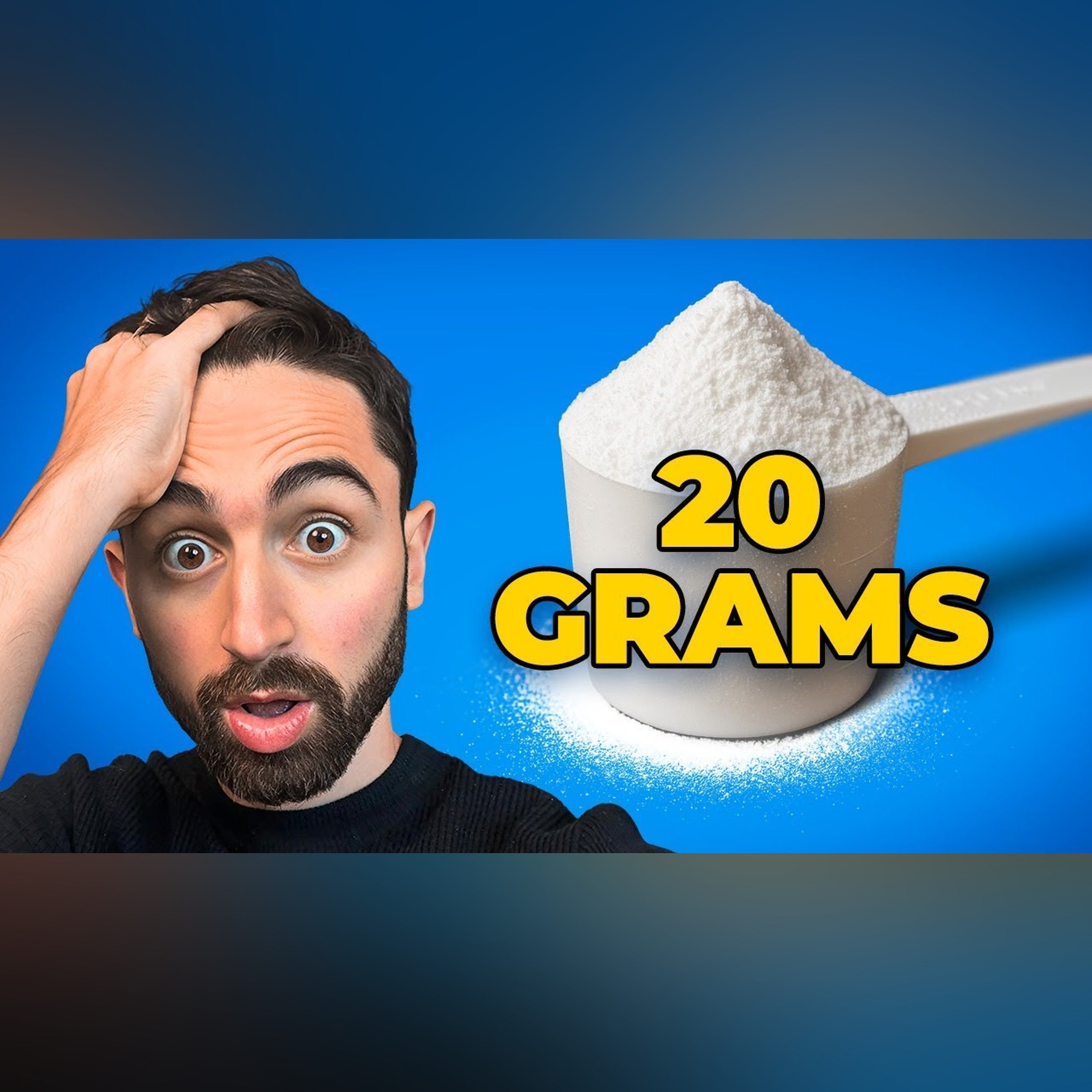
For all the references and extra details, see the associated StayCurious Metabolism Newsletter: https://staycuriousmetabolism.substack.com/p/creatine-explained-how-one-molecule?r=40ekz2 Momentous Creatine When it comes to reputation, quality, and rigorous third-party testing, you really can’t go wrong with Momentous Creatine Monohydrate. It’s extensively tested for heavy metals and banned substances. My personal preference is their pure, unflavored, no dyes or sweeteners, micronized creatine monohydrate DESCRIPTION: Creatine is one of the most researched supplements in history—yet most people still misunderstand how it works and what it actually does. In this video, I break down creatine from first principles to real-world use. We start with the biochemistry: what creatine is and how it promotes muscle growth—cell hydration, satellite cells, gene expression—and review human randomized controlled trials showing increases in lean mass and even reductions in fat mass. From there, we go be
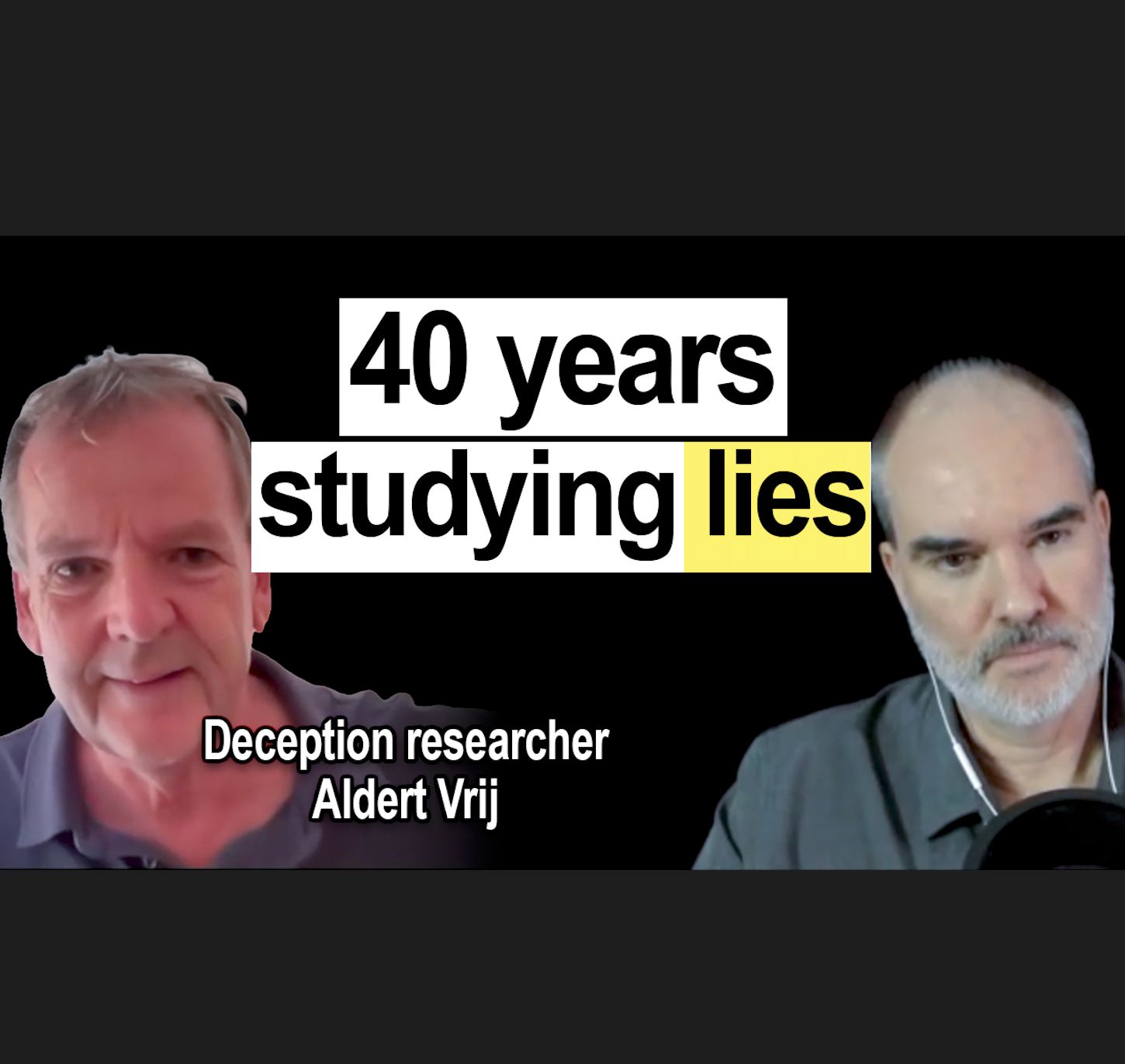
What actually works when it comes to detecting lies, and why are so many popular ideas about reading people and nonverbal behavior at odds with the scientific research? I talk with Aldert Vrij, one of the world's leading deception-detection researchers, who has spent almost four decades studying these topics. We discuss why what people say is far more revealing than their body language; why the perceived “sexiness” of reading nonverbal behavior has contributed to widespread myths and misconceptions; whether vocal behaviors like pitch, volume, and hesitation contain meaningful clues; and whether there's value in analyzing minor word choices and turns of phrase, as is done in so-called “statement analysis.” We discuss Paul Ekman's legacy as a source of faulty ideas about deception, micro-expression-based deception detection training, and the strategies that popular “body language experts” use to appear scientifically credible while simultaneously promoting ideas that conflict with the sc
Why is the manosphere so appealing to young men? What does it actually mean to be a good man? To join our journaling club, with 10,600 + others, subscribe to my imperfect email - https://www.theimperfects.com.au/sign-up-to-our-newsletter/ Journalist Marc Fennell joins us in the studio to talk about the manosphere: what is it? what are its consequences? and how can we talk to our kids about it? Marc explores with Hugh, Ryan and Josh why the manosphere is so appealing to young men, especially those who think they have little value to offer, and Josh questions what his reaction would have been, if he had of been exposed to the manosphere at a vulnerable time. We look at ‘toxic masculinity,’ and the impact of being right versus making change, and in a moment of vulnerability, Marc discusses the importance of self reflection of your own behaviour. Chapters: Chapters 00:00:00 – Marc Fennell on the Manosphere [TRAILER] 00:01:01 – Ryan’s doppelganger (and media buff etc) 00:04:24 – The State o
Today, Mel is doing something she's never done before on The Mel Robbins Podcast. She's bringing members of her team into the studio for live coaching with world-renowned communications expert Vinh Giang. Vinh is known for teaching millions of people online how to stop sounding insecure, speak more clearly, and get people to listen when you talk. And when you hear him coaching today, it will be like he’s coaching you. One person freezes when they're put on the spot. Another can't stop interrupting people. Someone else has great ideas but stays quiet because they're afraid of being judged. Does any of that sound familiar? And Vinh isn't just giving advice. He's coaching real people through practical exercises, right there in the studio, so you can hear the difference and start making those same changes in your own life. As Mel says, put yourself in their shoes. As Vinh works with each person, you'll recognize things you struggle with, too. You'll learn: -What to do when your mind goes b
A kiss can be wonderful. It can create an instant connection, spark romance, or make you feel closer to someone. But a kiss can also have the opposite effect — and sometimes ruin everything. So what makes kissing so powerful, and why can one kiss make such a difference? There's some fascinating science behind it. https://www.scientificamerican.com/article/why-we-kiss/ We spend an enormous amount of time worrying about what's going to change. What's next? What's coming? How do we prepare? But what if we're paying attention to the wrong things? Some of the most important forces shaping our lives never change, and understanding them may be far more valuable than trying to predict the future — something humans are notoriously bad at. Morgan Housel, partner at The Collaborative Fund and author of Same as Ever: A Guide to What Never Changes (https://amzn.to/3SwWn6u) (https://amzn.to/3SwWn6u)), joins me to explain why the things that stay the same may be the most important things to understan
Some men are taking ice packs into saunas to protect their testicles from the heat. Others are shining red lights on their groins or eating raw butter in the hope of improving their sperm. There are even organised sperm races, with competitors and spectators. Welcome to spermmaxxing, the latest online trend promising men ways to boost their sperm count and quality. It brings male fertility into the world of internet self-optimisation, where almost any part of the body can become a project. But do these techniques actually work? And what can sperm count tell someone about their chances of becoming a parent? Hosts Katie Edwards and Dan Baumgardt are joined by Michael Carroll, a reader in Reproductive Science at Manchester Metropolitan University in the UK. He helps us explore what the evidence says about sperm health, where online advice gets ahead of the science and what's really happening to global sperm counts. Hosts: Katie Edwards and Dan Baumgardt Executive Producer: Gemma Ware Edit
Collagen marshmallows are now a thing. So are collagen crisps. If neither appeals, you can stir collagen powder into your morning coffee. Social media is full of products promising to replenish the collagen we lose as we age. The claims extend beyond firmer skin and fewer wrinkles to healthier joints and improved gut health. But what happens to collagen when we eat it? And can these products persuade our bodies to make more? Hosts Katie Edwards and Dan Baumgardt are joined by Joan Chang, a collagen researcher and senior lecturer at the University of Manchester, who explains why the answer is more complicated than a scoop of powder and how collagen really works in the body. Hosts: Katie Edwards and Dan Baumgardt Executive Producer: Gemma Ware Editing and mixing: Anouk Millet Artwork: Alice Mason
Users should have access to human review when a platform restricts their account.
Share your view, then see how readers voted. No sign-in required. This poll is shared across stories.
Do you agree or disagree?
Common Quandary
A Common Quandary to discuss
Another conversation to explore, separate from this news story.
A new email address earns another free month. How many free trials are too many?
A streaming service offers a free month to every new account and makes cancellation deliberately confusing. You discover that slightly different email addresses let you repeat the trial indefinitely without lying about your identity.
Must customers respect the spirit of rules designed to manipulate them?