English-language podcasts

TED-Ed

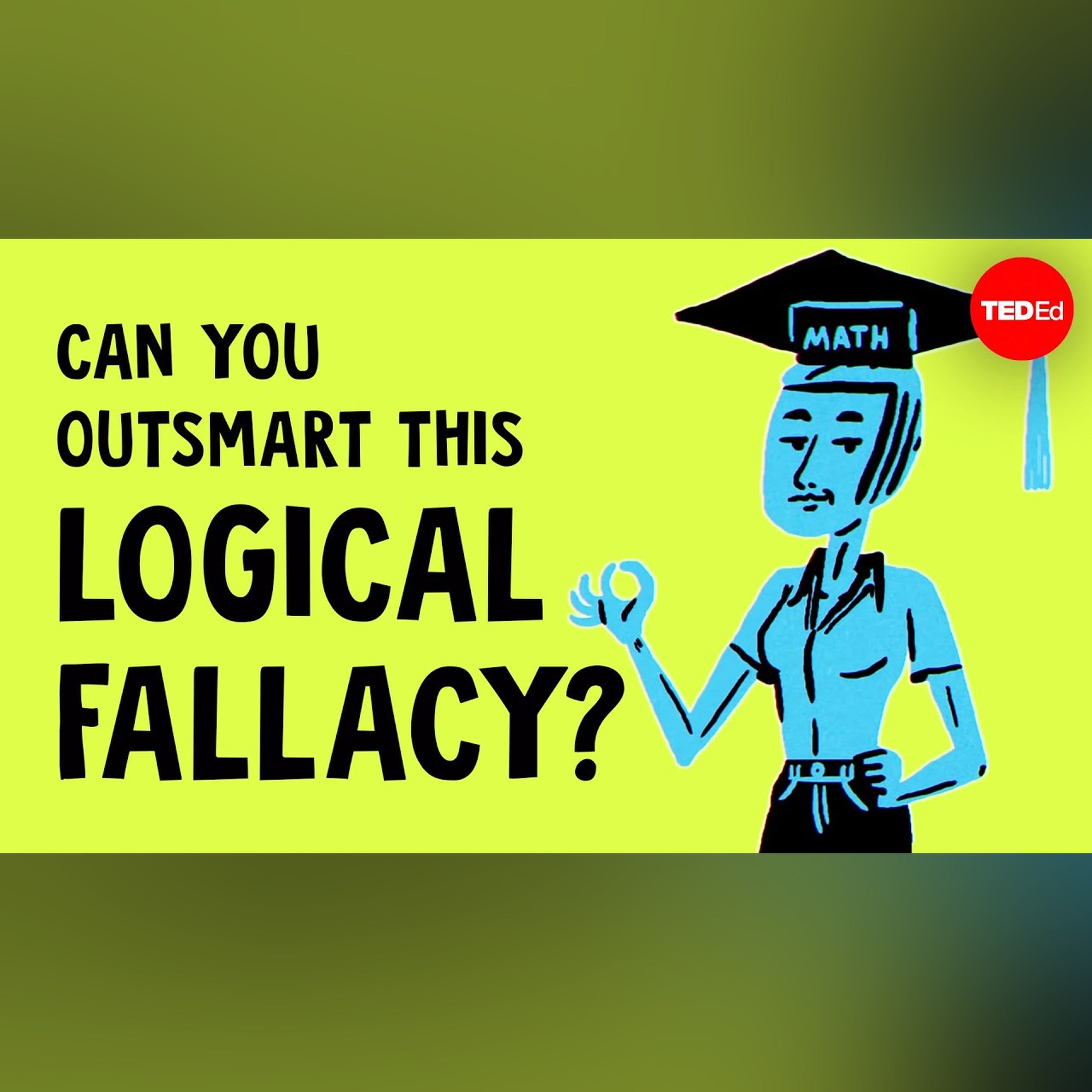
Can you outsmart this logical fallacy? - Alex Gendler
6 min

Listen through the publisher, then discuss the episode here or arrange an in-person Roundtable. Your city determines where to meet.

Roundtables are designed for groups of four, with a shared subject and room for everyone to speak. Come for discussion, with no dating expectation.

Explore the psychology of the cognitive bias known as the conjunction fallacy, where we assume specific conditions are more probable than general ones. Uploaded 25-11-19 -- Meet Lucy. She was a math major in college, and aced all her courses in probability and statistics. Which do you think is more likely: that Lucy is a portrait artist, or that Lucy is a portrait artist who also plays poker? How do we know which statement is more likely to be true? Alex Gendler explores our tendency to look for shortcuts and the phenomenon known as the conjunction fallacy. Lesson by Alex Gendler, directed by Artrake Studio. Animator's website: https://www.artrake.com (https://www.artrake.com/) Sign up for our newsletter: http://bit.ly/TEDEdNewsletter Support us on Patreon: http://bit.ly/TEDEdPatreon Find us on Twitter: http://bit.ly/TEDEdTwitter Peep us on Instagram: http://bit.ly/TEDEdInstagram View full lesson: https://ed.ted.com/lessons/can-you-outsmart-this-logical-fallacy-alex-gendler Thank you so much to our patrons for your support! Without you this video would not be possible! Mehmet Yusuf Ertekin, Arlene Weston, phkphk123321, Jennifer Kurkoski, Ryan B Harvey, Austin Randall, Abhishek Bansal, Jayant Sahewal, Dian Atamyanov, igor romanenko, Jose Arcadio Valdes Franco, Brandy Sarver, Guy Hardy, Tu-Anh Nguyen, Karl Laius, Madee Lo, JY Kang, Marc Bou Zeid, Abhishek Goel, Charles A Hershberger, Coenraad Keuning, Robert Seik, Heidi Stolt, Alexis Hevia, Todd Gross, Brady Jones, Christina Salvatore, Zhong Ming Zenny Tan, Karisa Caudill, Bruno Pinho, Derek Drescher, Mihail Radu Pantilimon, Amin Shahril, Mohamed Elsayed, Barthélémy Michalon, Chumi Ogbonna, Karlee Finch, Mohammad Said, jj5252, Kelvin Lam, Mauricio Basso, Athena Grace Franco, Tirath Singh Pandher, Melvin Williams, Tsz Hin Edmund Chan, Nicolas Silva, Raymond Lee, Kurt Almendras, Denise A Pitts and Abdallah Absi.

Episode information is provided by the publisher. Listening takes place on the publisher’s service.

Listen at the source ↗

Featured places to meet in Palo Alto, CA

Explore these places and arrange a conversation through ThinkMatch.

City guide for Palo Alto, CA

More from TED-Ed

TED-Ed

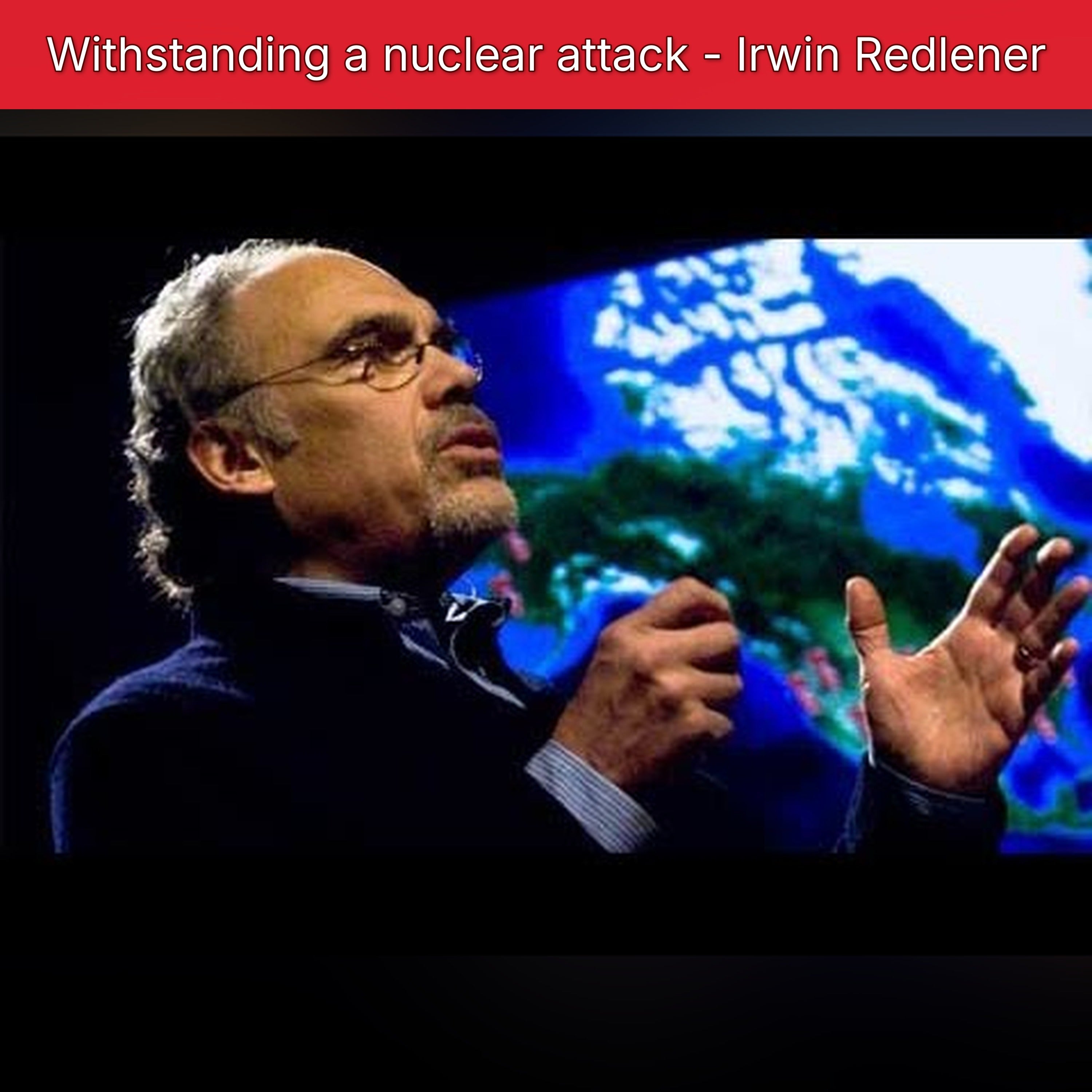
Withstanding a nuclear attack - Irwin Redlener

33 min

View full lesson: http://ed.ted.com/lessons/surviving-a-nuclear-attack-irwin-redlener The face of nuclear terror has changed since the Cold War, but disaster-medicine expert Irwin Redlener reminds us the threat is still real. He looks at some of history's farcical countermeasures and offers practical advice on how to survive an attack. Talk by Irwin Redlener.

Discuss this episode

TED-Ed

The true reason polio poses such a threat

10 min

Explore what makes polio so dangerous, what is causing the 21st century resurgence of cases, and how we can eradicate the disease. -- In 1952, polio was everywhere: killing or paralyzing roughly half a million people annually. Yet just 10 years later, paralytic polio cases in the US dropped by 96% and we were on track to get rid of polio for good. But in recent years, the virus started striking back. So, what’s behind these recent spikes? Explore the dangers of poliovirus and the possibility of eradicating this deadly disease. Directed by Anton Bogaty. This video made possible in collaboration with Gates Ventures Learn more about how TED-Ed partnerships work: https://bit.ly/TEDEdPartner A special thanks to Ananda Bandyopadhyay, Amber Zeddies, and Kathleen O'Reilly who provided information and insights for the development of this video. Support Our Non-Profit Mission ---------------------------------------------- Support us on Patreon: http://bit.ly/TEDEdPatreon Check out our merch: htt

Discuss this episode

TED-Ed

How to fool a GPS - Todd Humphreys

21 min

Todd Humphreys forecasts the near-future of geolocation when millimeter-accurate GPS "dots" will enable you to find pin-point locations, index-search your physical possessions ... or to track people without their knowledge. And the response to the sinister side of this technology may have unintended consequences of its own. (Filmed at TEDxAustin.) Uploaded 26-06-13 Talk by Todd Humphreys.

Discuss this episode

Community Poll

People leaving prison should receive practical help finding housing and work.

Share your view, then see how readers voted. No sign-in required. This poll is shared across stories.

Do you agree or disagree?

Choose one answer

Common Quandary

A Common Quandary to discuss

Another conversation to explore, separate from this news story.

Your best friend is an AI that profits when you stay lonely. Is the friendship real?

A lonely adult considers an AI companion their closest confidant. The service is always patient and supportive, but the company profits when users spend more time engaged with it.

Does a comforting system have a duty to make itself less necessary?

Explore this quandary