Listen through the publisher, then discuss the episode here or arrange an in-person Roundtable. Your city determines where to meet.
Roundtables are designed for groups of four, with a shared subject and room for everyone to speak. Come for discussion, with no dating expectation.
When the Zeppelin passenger airship Hindenburg left Germany on May 3, 1937, there were 97 people aboard. Four days later, when the Hindenburg tried to land at the Lakehurst Naval Air Station in New Jersey, at approximately 7:25pm, it was destroyed by fire in 34 seconds. Thirty-six people died, including 13 passengers, 22 crew members, and one ground crew worker. Katherine Grace Katz has written the history of this event in her book, "Shadow Before the Flame: The Hindenburg Disaster and the Prelude to War." Catherine Katz received degrees in history from Harvard University and Christ's College, Cambridge, and a law degree from Harvard Law School.
Episode information is provided by the publisher. Listening takes place on the publisher’s service.
1945 B-29 ENGINEER'S STATION Rubble Search and Atomic Blast Phenomena Charles Pellegrino, author of Ghosts of Hiroshima, tells John Batchelor how survivor Kenshi Hirata recovered his wife Setsuko's remains from their flattened home, while Tsutomu Yamaguchi survived in a mud ditch. Pellegrino explains blast phenomena including shadow people, protective shock cocoons and the "ant walking" victims seen by Dr. Michihiko Hachiya and volunteer nurse Nancy Cowell. Part Four. (12)
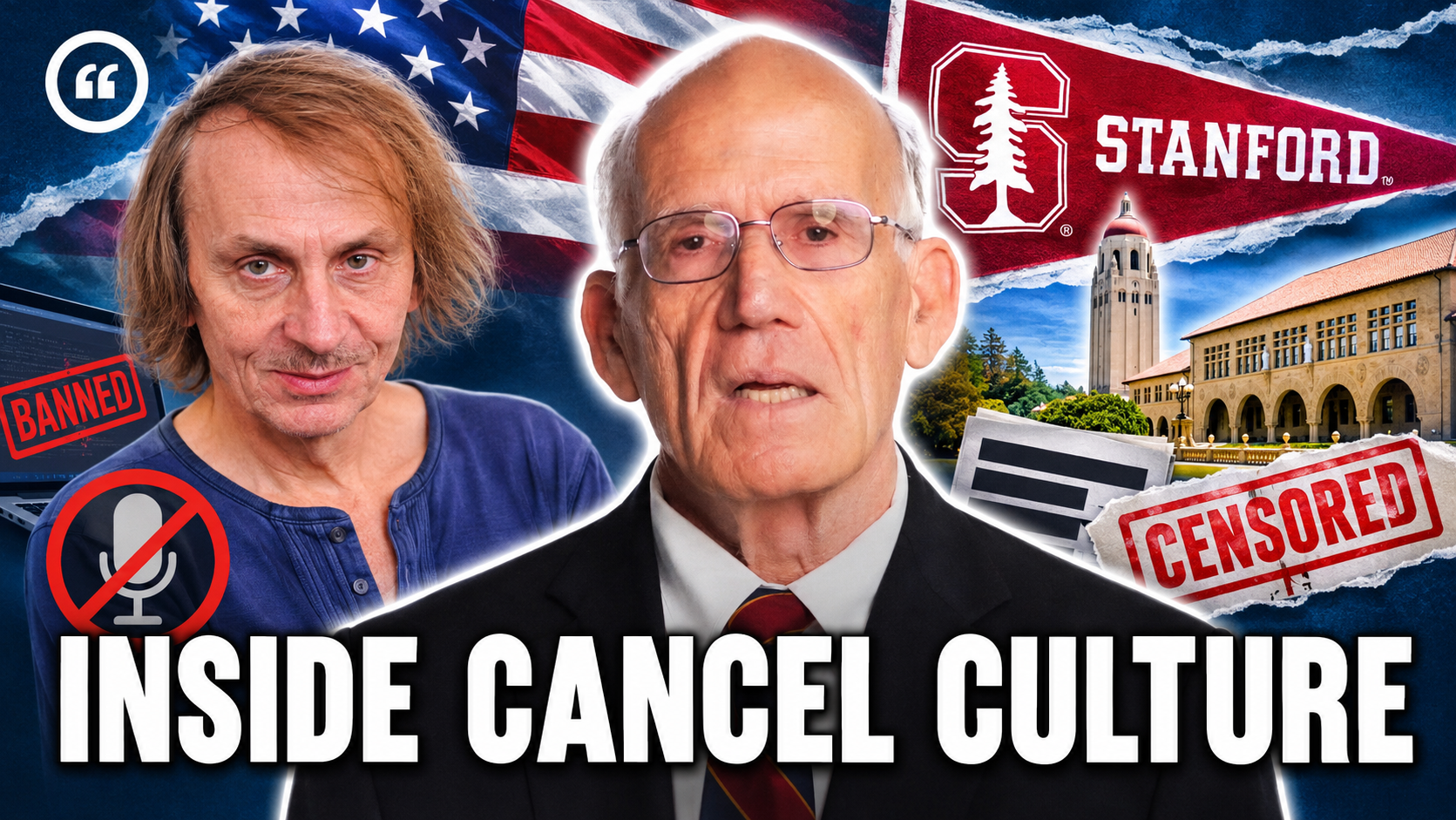
From toothpaste to baby formula, everyday products are increasingly locked behind plexiglass, a sign of America’s declining social trust. On today’s Thanksgiving episode of “Victor Davis Hanson: In His Own Words,” Victor Davis Hanson and Jack Fowler discuss the rise of the “Plexiglass Republic,” with everyday products increasingly locked behind glass. Hanson blames progressive criminal justice policies for encouraging theft and criticizes political elites who are insulated from the consequences of their own policies. They also discuss the failures of California's high-speed rail project, and the recent push from Texas Democrats to embark on a similar project. Following reports of hate speech charges against French novelist Michel Houellebecq for criticizing Islam, Hanson reflects on his own experiences with censorship at Stanford, and the political double standards surrounding free speech in America. They also examine the effectiveness of strategic bombing throughout military history,
Fox News senior medical analyst Dr. Marc Siegel's new book is 'The Angels Among Us: How God's Messengers Play a Role in Healing', published on November 17. It combines medicine, faith, personal testimonies, and spiritual guidance, focusing on how everyday people, intuition, and moments of grace can serve as healing or protective messengers. The book includes real-life accounts involving Benjamin Hall, Chris Smith, Spencer Milo, Marta Cecilia Asman, Ronald Reagan, and Bob Dylan, alongside Dr. Siegel's personal reflections on his parents and medical cases FOX's Eben Brown speaks with Dr. Marc Siegel, Senior Medical Analyst for Fox News, is also a Clinical Professor of Medicine and a practicing internist at NYU Langone Medical Center, who shares the inspiration behind his new book and tells some of the stories of survival within it. Click here to Follow the FOX News Rundown: Evening Edition: https://link.podtrac.com/fnr_podeve
On this Thanksgiving, enjoy some of our favorite recent conversations: Priya Parker, author of The Art of Gathering: How We Meet and Why It Matters (Riverhead Books, 2018) and her latest, The Art of Fighting: The Transformative Power of Conflict (Riverhead Books, 2026), talks about the importance of conflict and offers a framework for resolving it constructively. Roger Berkowitz, founder and academic director of the Hannah Arendt Center for Politics and Humanities and professor of Politics, Philosophy, and Human Rights at Bard College and the author of A World We Share: Hannah Arendt and the Power of Friendship in a Broken World (Yale University Press, 2026), draws on the work of Hannah Arendt to argue that the ability to be friends and disagree is the key to healing divisions. James Martin, SJ, a Jesuit priest, founder of Outreach, an LGBTQ Catholic resource, editor at large for America Media, and the author of the memoir Work in Progress: Confessions of a Busboy, Dishwasher, Caddy, U
Thanksgiving is often presented as a simple story of Pilgrims and Native people sharing a meal. But what gets left out—and who benefits from that version? Lakota Chicano journalist Simon Moya-Smith and Ojibwe educator Julie Francella discuss how we should to challenge the familiar holiday narrative and share the histories, traditions, and lived experiences it obscures. They discuss the Wampanoag people’s diplomacy and the realities surrounding the 1621 gathering, the origins of the National Day of Mourning, and how Manifest Destiny helped turn a complicated history into a comforting national myth. Julie describes Indigenous gratitude as an everyday practice rooted in reciprocity with the land, water, animals, and community. Simon speaks about resilience, cultural survival, stereotypes, and why Indigenous nations should never be treated as a monolith. The conversation also explores what it means to gather with family while acknowledging painful history, why Indigenous communities contin
Twenty one decisions from tribunals in Queensland, New South Wales, Victoria and Western Australia in the Tribunals edition of Thursday 26 November 2026, three with headnotes and four more worked examples from synopses. When an accurate record of an opinion is still misleading and must be amended; a solicitor whose lack of candour in his own discipline case counted against him; why Queensland's Information Commissioner stays a party to a privacy appeal; a home warranty approval that cannot be revoked; the claim fund clock; and special circumstances for costs in NCAT. Tribunals Desk: records, candour and parties (headnoted). Kelly v University of New South Wales [2026] NSWCATAP 388 - (lead) under s 15 Privacy and Personal Information Protection Act 1998 (NSW), a record of an opinion is accurate if it accurately records the opinion, but is misleading if a reasonable reader would take its substance as fact; a question of fact in which context may matter; the duty to amend in s 15(1) is ma
Barbara J. Keys is a historian of U.S. foreign policy, diplomacy, and human rights. She is a professor at Durham University in Great Britain and received her PhD from Harvard. Her book is titled "Super K: The Making, Breaking, and Remaking of Henry Kissinger's Legacy." Dr. Kissinger died on November 29, 2023, at 100 years of age. In the promotion of the book, Prof. Keys' publisher, Simon & Schuster says: "'Super K' is not just a portrait of one man’s quest to shape history; it is a sweeping account of the media and elite institutions that enabled him, revealing vulnerabilities that still shape public and political life today."
This week's program is an encore presentation featuring a C-SPAN interview with Eric Sevareid that was recorded in his Georgetown home 37 years ago in 1989. Sevareid was a war correspondent with CBS Radio starting in 1939. He spent a total of 38 years with the network. When CBS News with Walter Cronkite went to 30 minutes in 1963, Eric Sevaride would end each newscast with a two-minute analysis and commentary. Some refer to him as "The Grey Eminence." The Cronkite evening news audience in those days was close to 30 million viewers a night. Today the program is watched by around 4 million people. The American population has increased by 100 million people since 1989.
Historian Walter Stahr has written books on John Jay, William Henry Seward, Edwin Stanton, and Salmon Chase. Now comes his biography of America's 27th president, William Howard Taft, who subsequently also served as the 10th Chief Justice of the United States. Walter Stahr writes at the beginning of his book: "Taft was a modern conservative president, one who avoided foreign wars, worked closely with our allies, lowered tariff rates, and reduced the federal deficit." Stahr also writes that "Taft didn't agree with his predecessor, Theodore Roosevelt, that the president had some vague power to pursue the public good."
School policy should consider all families rather than follow the loudest parental voices.
Share your view, then see how readers voted. No sign-in required. This poll is shared across stories.
Do you agree or disagree?
Common Quandary
A Common Quandary to discuss
Another conversation to explore, separate from this news story.
The company printer sits idle all day. Can you print two hundred wedding invitations?
Your office has a fast color printer that is rarely used, and supplies are ordered automatically. Printing your wedding invitations after hours would save substantial money. Personal use is technically prohibited but routinely ignored for small jobs.
When does an insignificant workplace perk become taking?