Circulatory and Respiratory Systems - CrashCourse Biology #27
18 min
Listen through the publisher, then discuss the episode here or arrange an in-person Roundtable. Your city determines where to meet.
Roundtables are designed for groups of four, with a shared subject and room for everyone to speak. Come for discussion, with no dating expectation.
Hank takes us on a trip around the body - we follow the circulatory and respiratory systems as they deliver oxygen and remove carbon dioxide from cells, and help make it possible for our bodies to function. Table of Contents 1) Respiratory System 00:48 2) Simple Diffusion 00:55 3) Respiratory Anatomy 02:35 a) Trachea to Capillaries 03:10 4) Lung Function & Thoracic Diaphragm 04:37 5) Circulatory System 05:35 6) Circulatory Anatomy 05:54 a) Left Ventricle to Capillary Beds 06:50 b) Veins to Left Atrium 08:46 7) Endotherms & Ectotherms 09:20 References: This video uses the following sounds from Freesound.org: "00559 deep breathing 1.wav" by Robinhood76 Crash Course is on Patreon! Want to find Crash Course elsewhere on the internet? Facebook - http://www.facebook.com/YouTubeCrashCourse Twitter - http://www.twitter.com/TheCrashCourse Instagram - https://www.instagram.com/thecrashcourse/ CC Kids: http://www.youtube.com/crashcoursekids
Episode information is provided by the publisher. Listening takes place on the publisher’s service.
Struggling to find happiness in life? Tony Robbins shares his best secrets for how to be happy in any situation plus how you can remove negative thoughts to find deeper happiness and fulfillment in life, regardless of your current circumstances. Uploaded 04-08-24 Watch more videos like this Prime Your Brain to STOP Stress, Anxiety and Fear INSTANTLY: https://youtu.be/60ROjGMqXUQ 2 KEY SKILLS To Master If You Want An EXTRAORDINARY Life: https://youtu.be/CMF7H9OX5NQ #1 Best SIMPLE Technique to Overcome Fear and Anxiety Quickly: https://youtu.be/Q2sixA1vPKk The Tony Robbins Podcast: https://www.youtube.com/playlist?list=PLYTXvUDQT5pWkFiK1Yal1WtPcMrVbmjzA Follow Tony Robbins: Facebook: https://www.facebook.com/TonyRobbins Instagram: https://instagram.com/tonyrobbins/ TikTok: https://www.tiktok.com/@UC-12kRMQjK1LiQKRrT2zXcQ Twitter: https://twitter.com/tonyrobbins LinkedIn: https://www.linkedin.com/in/officialtonyrobbins Website: https://www.tonyrobbins.com/ Tony Robbins is a #1 New York Ti
Explore how pulling an all-nighter can impact your cognitive function, and find out what happens to your brain when you don't sleep. -- You’re just one history final away from a relaxing spring break. But you still have so much to study! You decide to follow in the footsteps of many students before you, and pull an all-nighter. So, what happens to your brain when you stay up all night? And does cramming like this actually help you prepare for a test? Anna Rothschild explores how a sleepless night impacts your cognitive function. Lesson by Anna Rothschild, directed by Biljana Labović. Animation by Noam Sussman & Ali Kellner, Homework Studio. This video made possible in collaboration with the Bezos Family Foundation Learn more about how TED-Ed partnerships work: https://bit.ly/TEDEdPartner A special thanks to Dr. Mathias Basner, Andrew Fuligni, Adriana Galván, and UCLA Center for the Developing Adolescent who provided information and insights for the development of this video. Support Ou
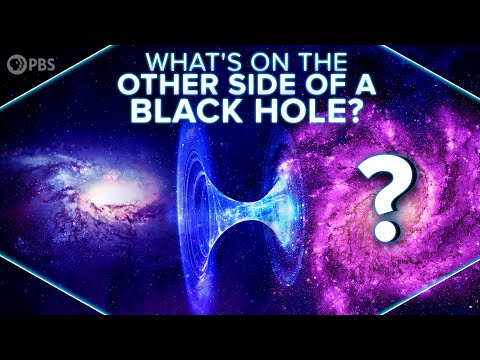
PBS Member Stations rely on viewers like you. To support your local station, go to: http://to.pbs.org/DonateSPACE ↓ More info below ↓ Uploaded 31-03-20 Sign Up on Patreon to get access to the Space Time Discord! Check out the Space Time Merch Store Normal maps are useless inside black holes. At the event horizon - the ultimate point of no return as you approach a black hole - time and space themselves change their character. We need new coordinate systems to trace paths into the black hole interior. But the maps we draw using those coordinates reveal something unexpected - they don’t simply end inside the black hole, but continue beyond. In these maps, black holes become wormholes, and new universes lie on the other side. Hosted by Matt O'Dowd Written by Matt O'Dowd Graphics by Leonardo Scholzer, Yago Ballarini, and Pedro Osinski Directed by: Andrew Kornhaber Executive Producers: Eric Brown and Andrew Kornhaber End Credits Music by J.R.S. Schattenberg: https://www.youtube.com/channel/U
Instant Access to your FREE training course: https://nci.university (https://nci.university/) Uploaded 27-07-25 This is the simulation you already live inside of—and you’ve been breathing it like oxygen since the day you were born. In this video, we expose the invisible machinery beneath modern life—how symbols have replaced truth, how marketing has replaced meaning, and how our desires are manufactured by the very system that feeds on them. Drawing from the work of Jean Baudrillard and the hidden mechanisms of simulacra, we walk you through 10 real-life “glitches” that reveal the truth: • Why your food is rendered, not real • How social media replaced memory • Why you take photos of things you never actually see • And why even your “rebellion” is likely pre-approved This isn’t a conspiracy. It’s a mirror. And once you see it, you can’t unsee it. simulation theory, simulated reality, Baudrillard simulation, are we in a simulation, hyperreality explained, social media illusion, digital
The Five Pillars of Financial Freedom | Jim Rohn Motivation True financial freedom isn’t just about money—it’s about building the habits, mindset, and principles that create lasting wealth. In this powerful Jim Rohn motivational video, you’ll discover the five essential pillars of financial success that can help you create security, opportunity, and independence. Uploaded 05-10-25 Jim Rohn explains that wealth is not something you chase—it’s something you attract by becoming a disciplined, responsible, and growth-minded individual. These five pillars will show you how to manage your money wisely, invest in yourself, and build a financial foundation that supports the life you want. In this video, you’ll learn: The five pillars of financial freedom and how to apply them. Why discipline is more important than income when building wealth. How to create multiple streams of income for financial security. Why financial freedom starts with self-education and personal growth. Practical steps to
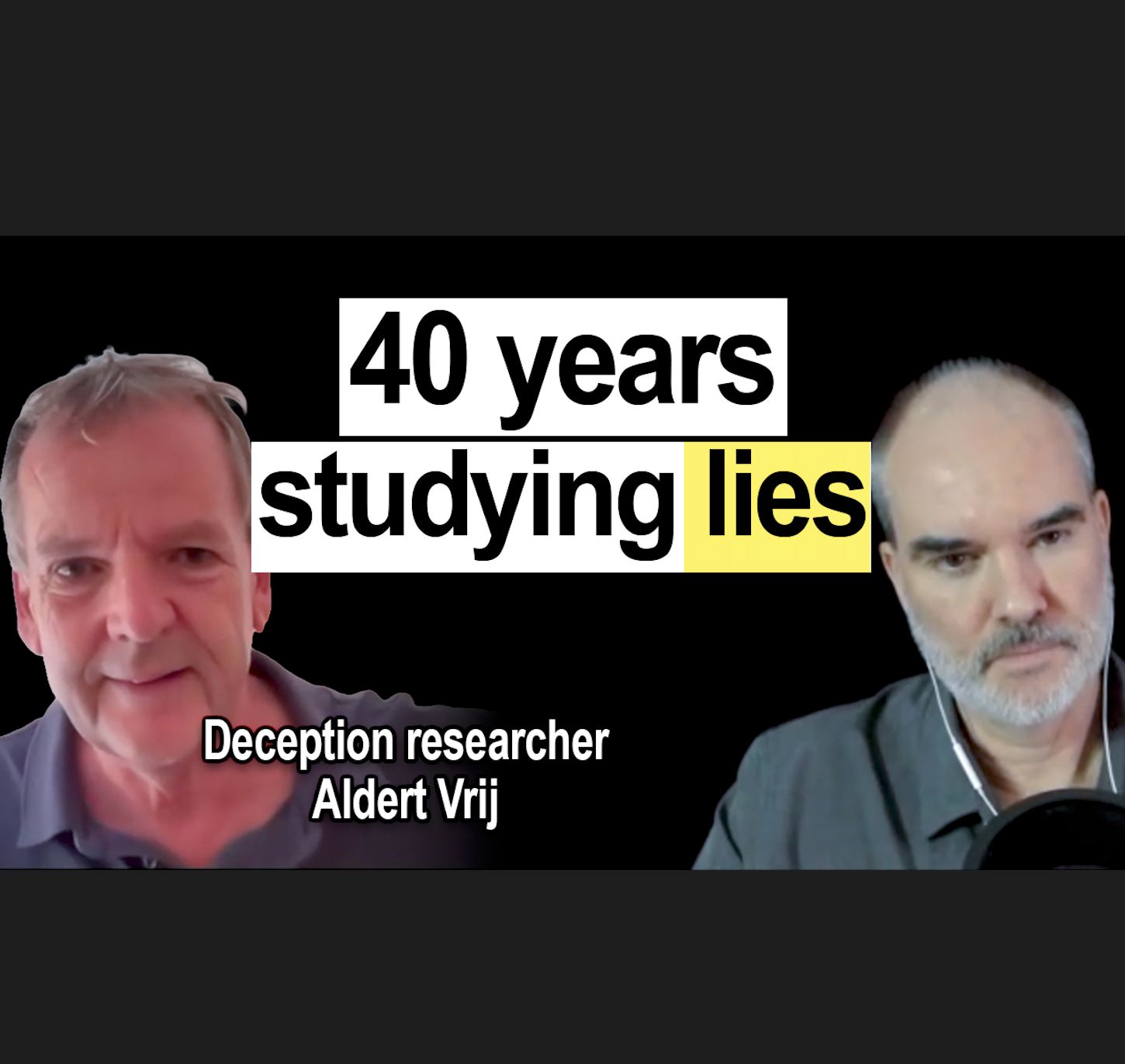
What actually works when it comes to detecting lies, and why are so many popular ideas about reading people and nonverbal behavior at odds with the scientific research? I talk with Aldert Vrij, one of the world's leading deception-detection researchers, who has spent almost four decades studying these topics. We discuss why what people say is far more revealing than their body language; why the perceived “sexiness” of reading nonverbal behavior has contributed to widespread myths and misconceptions; whether vocal behaviors like pitch, volume, and hesitation contain meaningful clues; and whether there's value in analyzing minor word choices and turns of phrase, as is done in so-called “statement analysis.” We discuss Paul Ekman's legacy as a source of faulty ideas about deception, micro-expression-based deception detection training, and the strategies that popular “body language experts” use to appear scientifically credible while simultaneously promoting ideas that conflict with the sc
The majority of the universe is made up of a currently mysterious entity that pervades space: dark energy. We don’t know exactly what it is, but we do know that dark energy accelerates the expansion of space. We think this means the Universe will expand forever, even as our view of it shrinks while space expands faster all the time. Check out the Crash Course Astronomy solar system poster here: http://store.dftba.com/products/crashcourse-astronomy-poster If you want to learn more about the creation and death of the universe, watch Crash Course Big History here: https://youtube.com/playlist?list=PL8dPuuaLjXtMczXZUmjb3mZSU1Roxnrey -- Chapters: Introduction: The Expanding Universe 00:00 The Expansion of Space is Accelerating 2:17 What is Dark Energy? 4:19 Will the Universe Expand Forever? The Geometry of the Universe 5:20 The Cosmic Horizon of the Observable Universe 6:50 Review 10:20 -- GEOMETRY OF THE UNIVERSE RESOURCES Geometry: Expanding faster than light: General expansion: -- PBS Di
Have you ever wondered where cured meats like salami or pepperoni get their bright red color? Of course its from organic chemistry! A chemical called nitric acid gives them that bright color, while also increasing their shelf. It's also involved in some other interesting reactions. In this episode of Crash Course Organic Chemistry we'll see how nitrous acid reacts with primary amines to form diazonium salts, we'll learn about alkyldiazonium salts and aryldiazonium salts, and see what conditions are necessary for nucleophilic aromatic substitutions. Series Sources: Brown, W. H., Iverson, B. L., Ansyln, E. V., Foote, C., Organic Chemistry; 8th ed.; Cengage Learning, Boston, 2018. Bruice, P. Y., Organic Chemistry, 7th ed.; Pearson Education, Inc., United States, 2014. Clayden, J., Greeves, N., Warren., S., Organic Chemistry, 2nd ed.; Oxford University Press, New York, 2012. Jones Jr., M.; Fleming, S. A., Organic Chemistry, 5th ed.; W. W. Norton & Company, New York, 2014. Klein., D., Organ
Like a trendy dance, a fighting combo, or a secret handshake, organic reactions can be broken down into simpler steps. In this episode of Crash Course Organic Chemistry, we’ll specifically be looking at alkene addition reactions, and with each new reaction ask ourselves three questions to help us puzzle through the mechanism and understand what’s going on. Episode Sources: Le Couteur, P, Burreson, J. Napoleon’s Buttons: 17 molecules that changed history., Penguin, New York, 2004, Chapter 1. Whipps, H., “How the Spice Trade Changed the World,” https://www.livescience.com/7495-spice-trade-changed-world.html Last accessed, 3/28/2020. Henriques, Martha, “How spices changed the ancient world,” http://www.bbc.com/future/bespoke/made-on-earth/the-flavours-that-shaped-the-world/ Last accessed, 3/28/2020. Hashimoto, K., Yaoi, T., Koshiba, H., Yoshida, T., Maoka, T., Fujiwara, Y., Yaamoto, Y, Mori, K., “Photochemical Isomerization of Piperine, a Pungent Constituent of Pepper”, Food Sci. Technol.
Reports of research should distinguish clearly between association and proven causation.
Share your view, then see how readers voted. No sign-in required. This poll is shared across stories.
Do you agree or disagree?
Common Quandary
A Common Quandary to discuss
Another conversation to explore, separate from this news story.
You are vegetarian, but the leftover steak is headed for the trash. Do you eat it?
A vegetarian avoids buying meat because of animal welfare concerns. At work events, untouched meat is routinely thrown away, and eating it would neither increase demand nor cause another animal to be harmed.
Should a moral practice be judged by its consequences or its consistency?