English-language podcasts

Signals to Danger

Clapham & Corporate Memory
57 min

Listen through the publisher, then discuss the episode here or arrange an in-person Roundtable. Your city determines where to meet.

Roundtables are designed for groups of four, with a shared subject and room for everyone to speak. Come for discussion, with no dating expectation.

The railway learns lessons after disaster. But how does it keep those lessons alive when the people who learned them move on? To close Clapham month, this Rail Safety Review explores corporate memory: the knowledge an industry carries forward, and the understanding behind the rules, checks and working practices it inherits. We begin at South Wingfield in October 2022, where two trains came to a stand just seventy-five metres apart after a signalling error allowed a passenger train into an occupied section. From there, we follow investigations into unsecured points at Cardiff East Junction, a collision at London Waterloo and a derailment at Dalwhinnie. Each incident had its own causes, but together they raise questions which reach directly back to Clapham. How are changes to signalling equipment controlled? What does each check actually prove? And how can an organisation establish that the safeguards written into its procedures are protecting the railway in practice? Through these investigations, we explore how experience passes between colleagues, what can be lost when teams and organisations change, and why understanding the purpose of a safeguard matters alongside knowing how to apply it. The final instalment of our four-episode Clapham month considers what the next generation needs to inherit—and why the explanation needs to travel with the instruction. CONTINUE LISTENING This episode accompanies our three-part series on the Clapham Junction disaster, covering the accident, the investigation and its legacy. Find the series and follow Signals to Danger on your preferred podcast app: SUPPORT & GET IN TOUCH Support Signals to Danger on Patreon to listen to episodes ad-free. Have a question for a future Q&A? Email [email protected] or get in touch through our social channels. You can find Signals to Danger on Facebook, Instagram, TikTok, LinkedIn and X. MUSIC CREDITS Music: Documentary by leberch Source: https://pixabay.com/music/modern-classical-documentary-509968/ Used under the Pixabay Content License. ABOUT SIGNALS TO DANGER Hosted on Acast.

Episode information is provided by the publisher. Listening takes place on the publisher’s service.

Listen at the source ↗

Featured places to meet in Palo Alto, CA

Explore these places and arrange a conversation through ThinkMatch.

City guide for Palo Alto, CA

More from Signals to Danger

Signals to Danger

Clapham Junction - 1988 — Part Three

89 min

On 12 December 1988, 35 people lost their lives and 484 were injured when three trains collided on the approaches to Clapham Junction. The subsequent investigation exposed far more than a single signalling fault. It revealed serious weaknesses in the way British Rail installed, tested and supervised safety-critical equipment, and raised fundamental questions about how safety was managed across the organisation. In November 1989, Anthony Hidden QC published his findings, making 93 recommendations intended to prevent future accidents, improve safety management and reduce the consequences when things went wrong. But what happened next? In the concluding episode of our three-part investigation into the Clapham Junction disaster, we examine the legacy of Hidden's report and the changes that followed. From signalling installation standards, independent testing and the management of working hours, to Automatic Train Protection, cab radio, rolling-stock crashworthiness and emergency preparedne

Discuss this episode

Signals to Danger

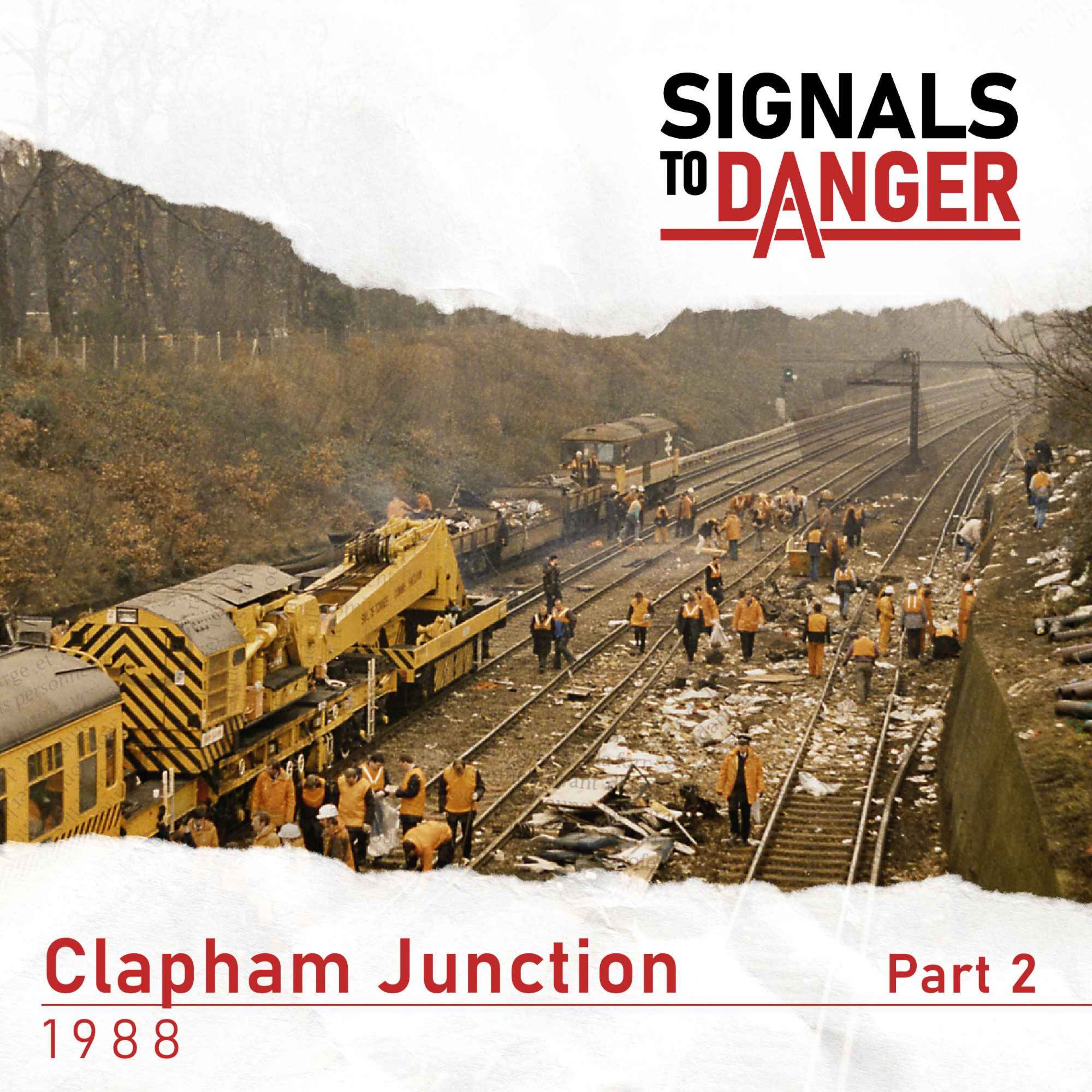
Clapham Junction - 1988 – Part Two

80 min

On the morning of 12 December 1988, three trains collided near Clapham Junction in south London. Thirty-five people lost their lives, and hundreds more were injured. The disaster raised a fundamental question about railway safety: how could a signalling system designed to keep trains apart allow one to proceed towards another standing on the same line? In the second episode of our three-part series, we follow the investigation into the Clapham Junction railway disaster. At the centre of the inquiry was signal WF138, which had displayed dangerously incorrect aspects to approaching Drivers. Investigators would discover how a single redundant wire, left behind during signalling alterations, had created an electrical false feed capable of defeating a vital safety protection. But identifying the electrical fault was only the beginning. The investigation, led by Anthony Hidden QC, examined the engineering work undertaken as part of the Waterloo Area Resignalling Scheme, the failure to indepe

Discuss this episode

Community Poll

Communities losing a major industry deserve transition support before jobs disappear.

Share your view, then see how readers voted. No sign-in required. This poll is shared across stories.

Do you agree or disagree?

Choose one answer

Common Quandary

A Common Quandary to discuss

Another conversation to explore, separate from this news story.

Your ex's streaming password still works. When does borrowing become stealing?

Months after a friendly breakup, your television remains logged into your ex's streaming account. They have never mentioned it, the service allows several screens, and your viewing does not increase their monthly bill.

Can silence count as permission when asking might end the benefit?

Explore this quandary