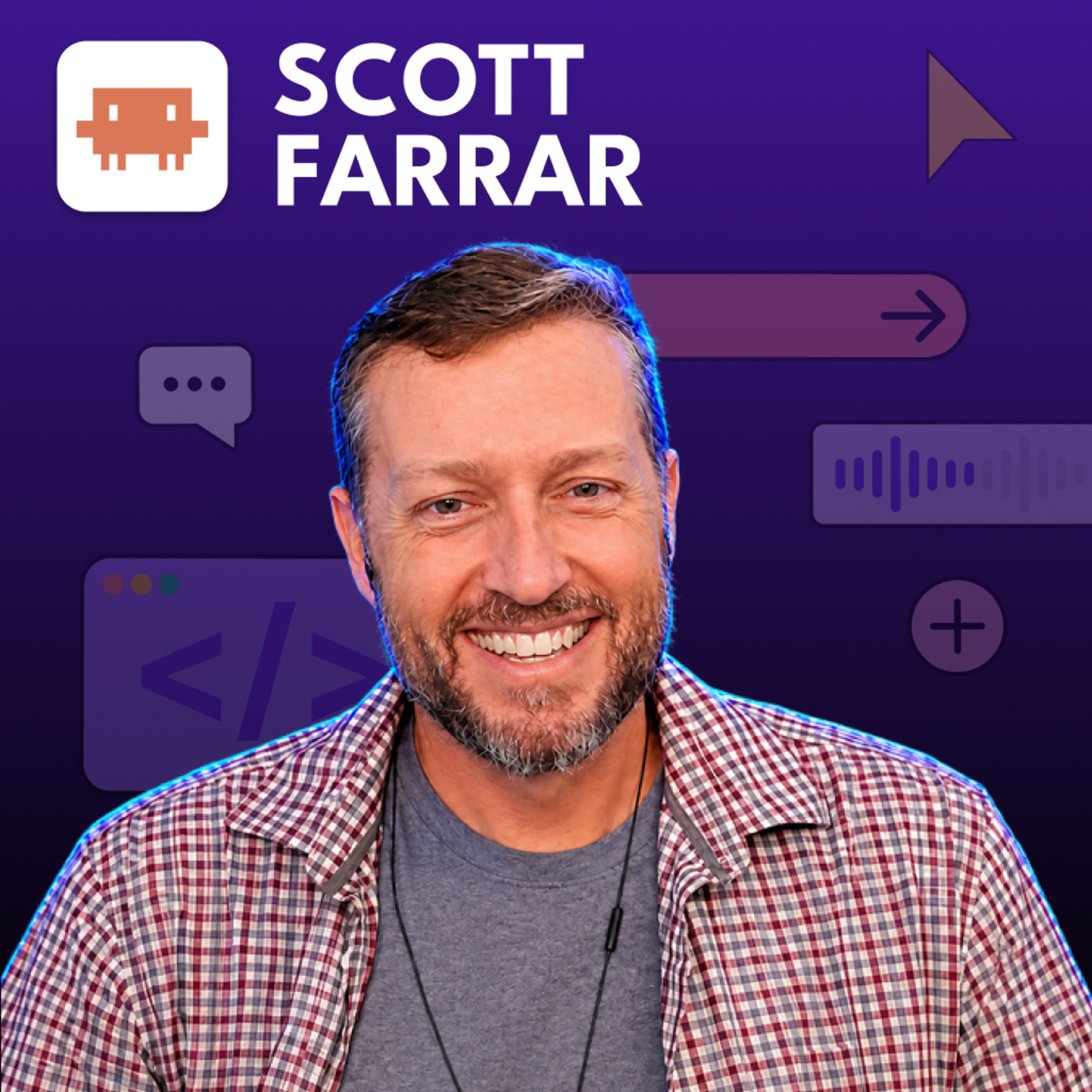
Claude Code + Obsidian: My family’s AI brain | Scott Farrar
35 min
Listen through the publisher, then discuss the episode here or arrange an in-person Roundtable. Your city determines where to meet.
Roundtables are designed for groups of four, with a shared subject and room for everyone to speak. Come for discussion, with no dating expectation.
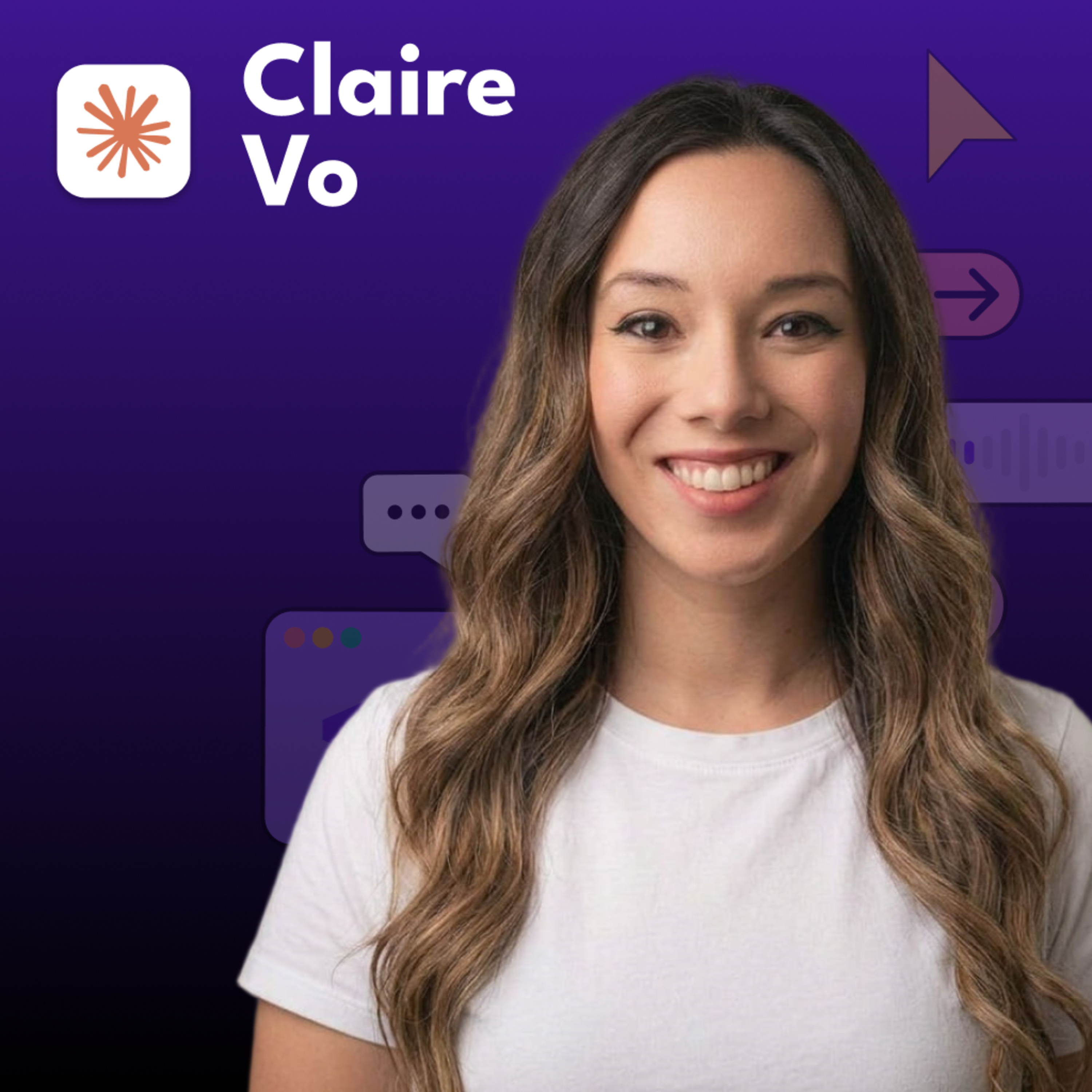
Scott Farrar is a math educator and parent who got tired of AI chats that drift and forget. So he built a household brain in Claude Code: a folder of Markdown files, viewed in Obsidian, that knows his appliances, warranties, insurance documents, and everything on his family’s to-do list. In this episode, Scott shows how he uses it to shop for car insurance, plan repairs, share the system with his wife, and put priority tasks and recent wins on a wall display. We also talk about AI and math learning, and why he wants AI to keep kids doing the thinking. What you’ll learn: Why he moved his home life from AI chat to Claude Code What Claude told him to photograph first How AI made him a sharper insurance shopper The to-do file he keeps coming back to How he and his wife share one household brain Why his wall display has a “recent wins” section How a flipped tutor gets kids to teach the AI — Brought to you by: Jira Product Discovery (https://atlassian.com/howiai)—Prioritize with insights, build with confidence — In this episode, we cover: (00:00) Teaser (02:41) The problem (and solution) (06:05) Demo: shopping for car insurance (08:05) Building a household brain (12:37) Type A vs. type B AI organization (14:40) His shared household to-do list (19:07) Household DAKboard wall display (21:36) Does it actually change behavior? (22:40) Household tasks to hand to AI (26:00) AI, kids, and student agency (31:16) When AI gets out of sync (32:49) Where to find Scott — Tools referenced: • Claude Code: https://www.claude.com/product/claude-code • Obsidian: https://obsidian.md/ • GitHub: https://github.com/ • DAKboard: https://dakboard.com/ — Other references: • I Built My Home’s AI Assistant (Scott’s write-up): https://sfxmath.com/work/homeai-household-knowledge-base/ • Algebuds: Student Tutors Chatbot: https://sfxmath.com/work/algebuds/ — Where to find Scott Farrar: Website: https://sfxmath.com/ LinkedIn: https://www.linkedin.com/in/farrarscott — Where to find Claire Vo: ChatPRD: https://www.chatprd.ai/ Website: https://clairevo.com/ LinkedIn: https://www.linkedin.com/in/clairevo/ X: https://x.com/clairevo — Have a really cool use case of how you use AI in your work? Let us know: — Production and marketing by https://penname.co/.
Episode information is provided by the publisher. Listening takes place on the publisher’s service.
Alex and Sam cover Claude Code 2.1.329 and a review workflow that names the pull request, pins the changes, separates findings from tests and checks that the right code was examined. All worked scenarios are hypothetical. Includes a Railway affiliate advertisement. Sources: https://github.com/anthropics/claude-code/releases/tag/v2.1.329 Includes a Railway affiliate advertisement. Find our links at https://aishows.cc; we may earn a commission.
Explore how pulling an all-nighter can impact your cognitive function, and find out what happens to your brain when you don't sleep. -- You’re just one history final away from a relaxing spring break. But you still have so much to study! You decide to follow in the footsteps of many students before you, and pull an all-nighter. So, what happens to your brain when you stay up all night? And does cramming like this actually help you prepare for a test? Anna Rothschild explores how a sleepless night impacts your cognitive function. Lesson by Anna Rothschild, directed by Biljana Labović. Animation by Noam Sussman & Ali Kellner, Homework Studio. This video made possible in collaboration with the Bezos Family Foundation Learn more about how TED-Ed partnerships work: https://bit.ly/TEDEdPartner A special thanks to Dr. Mathias Basner, Andrew Fuligni, Adriana Galván, and UCLA Center for the Developing Adolescent who provided information and insights for the development of this video. Support Ou
What is the Apple Vision Pro actually for? THIS… Get better sleep with $200 off your Eight Sleep Pod Cover using my code CLEO: https://www.eightsleep.com/cleo/ If you want to feel more optimistic about the future, consider subscribing. You’ve seen the Apple Vision Pro. But this isn’t a product review. In this video, @mkbhd and I take a dive into what the future might actually look like with this category of tech - and why you should care. (With a cameo from @ryan !) Honestly, with all the jargon and hype (VR! AR! Spatial computing! Metaverse!), I’ve been tuning out the news about these devices for a while. But now, I think it’s time to turn the volume back up and pay attention. There is a deeply optimistic future that’s possible here. Not Ready Player One, but something else entirely. I’m going to try to show you what it might really look and feel like. If the Apple Macintosh helped unlock personal computing, and the iPhone unlocked computers in our pockets, what is this device suppose
Project Synapse: Markets in Freefall, Fragile Infrastructure, and AI's Perfect Storm The hosts banter through the show's intro before focusing on a sense that "things are out of control," citing a WallStreetBets suicide-hotline post amid a market crash and discussing cascading system failures involving Microsoft, the FAA, and a reported NSA internal communications outage. They argue politicians and leadership lack technical competence and clear messaging, increasing panic, while emphasizing that many problems stem from aging, underfunded infrastructure and complex, brittle software (PHP, NGINX, Java), not proven AI attacks—more a "perfect storm" of crises. They debate whether AI should help fix complexity, stressing critical thinking, accountability, and using multiple AIs to verify each other. In a lightning round they cover Anthropic's IPO performance, mixed reactions and token limits with ChatGPT 6.2 (favoring "Sol" over "Astra"), Google's cheaper Neon model and confusing UX, Loblaw
Travelling made me rich, I’ll teach you how. Episodes created by entrepreneur and masculinity ace Jack Hopkins for his youtube channel, this podcast is dedicated to helping men rediscover their inner strength and confidence in a society that often promotes feminine values over masculine ones.Follow the podcast for valuable insights, inspiring stories, and practical advice on how to embrace your masculinity, build your confidence, and achieve your goals. Whether you're looking to improve your relationships, advance your entrepreneurial career, or simply feel more confident and capable, Jack has valuable insights that can help you achieve your goals.So, if you're ready to reclaim your masculinity and awaken the beast that lives inside you, follow the podcast & turn on notis Follow Jack Hopkins:Insta: @jackhopfitnessYT: @JackhopkinsCEODisclaimer: All content rights belong to @JackhopkinsCEO on YouTube. This is a fan page. ------------------------- ----- Keywords: self discipline men, figh
Horizon3.ai co-founder and CTO Anthony Pillitiere discusses how AI-enabled agentic threat actors are industrializing cyberattacks using existing vulnerabilities rather than novel exploits. Drawing on 21 years in the Air Force and his role as deputy CTO for JSOC, he explains why organizations must shift to autonomous offensive security and how the collapse between emerging threats and exploitation is forcing leaders to address long-standing cyber debt. Brought to you by: Mongo DB - Anyone can prototype an agent. Lovable - Turn ideas into software people love with Lovable. Start today at https://lovable.dev/ Factory - A 24/7 system turning signals into production software. Visithttps://factory.com/ Neon (by Databricks) - Scale your startup on Neon. The Postgres backend for apps and agents. Built by Databricks.https://neon.com/mtshttps://neon.com/mts (https://neon.com/mts%E2%81%A0) Head over to http://getvcx.com (http://getvcx.com/) to learn more Kong - The AI connectivity platform. Larri
Today I’m walking you through a problem that has cost me tens of thousands of dollars over the past year and eaten almost all of my engineering energy: token fraud. I’m the solo founder of ChatPRD, a bootstrapped AI platform for product managers, and fraudsters have been farming our free trials, reselling promo codes, wrapping the product in relays, and installing a custom MCP that ran as a 24/7 compute worker. I’ll walk through the six abuse patterns I’ve seen, the business and technical controls I put in place, the Jev loop that classifies fraud in real time, and why I finally killed free trials for good. If you sell AI, you sell compute. What you’ll learn: What token fraud is and why AI SaaS is uniquely exposed The six attack patterns I’ve seen at ChatPRD Why I finally turned off free trials for good The Roblox and Fortnite maps I accidentally funded Business controls that actually slow fraud down How I use Jev to classify fraud in real time Why your AI support desk can become an at
Anthropic just released Fable 5.2, their new frontier model, and I spent two days actually building things with it before recording this. I made an animated marketing video from a single tweet, assembled a pile of unboxed furniture using only blurry floor photos, and extended our CXO brand sprites into a full bug-defense game complete with a trailer. In this episode I walk through what impressed me, what fell down, and how I’m thinking about routing tasks between Fable 5.2 and Opus 5.5 going forward. What you’ll learn: What Anthropic launched with Fable 5.2 and Mythos 5.2, and when to reach for Fable instead of Opus 5.5 My pros and cons after a couple of days of hands-on testing How Fable 5.2 turned a tweet and a brand book into an animated video that doesn’t look like slides The geometry test every other model failed: assembly instructions for flat-pack furniture with no manual How it handled a real re-architecture of ChatPRD’s product intelligence pipeline Why I still wouldn’t let it
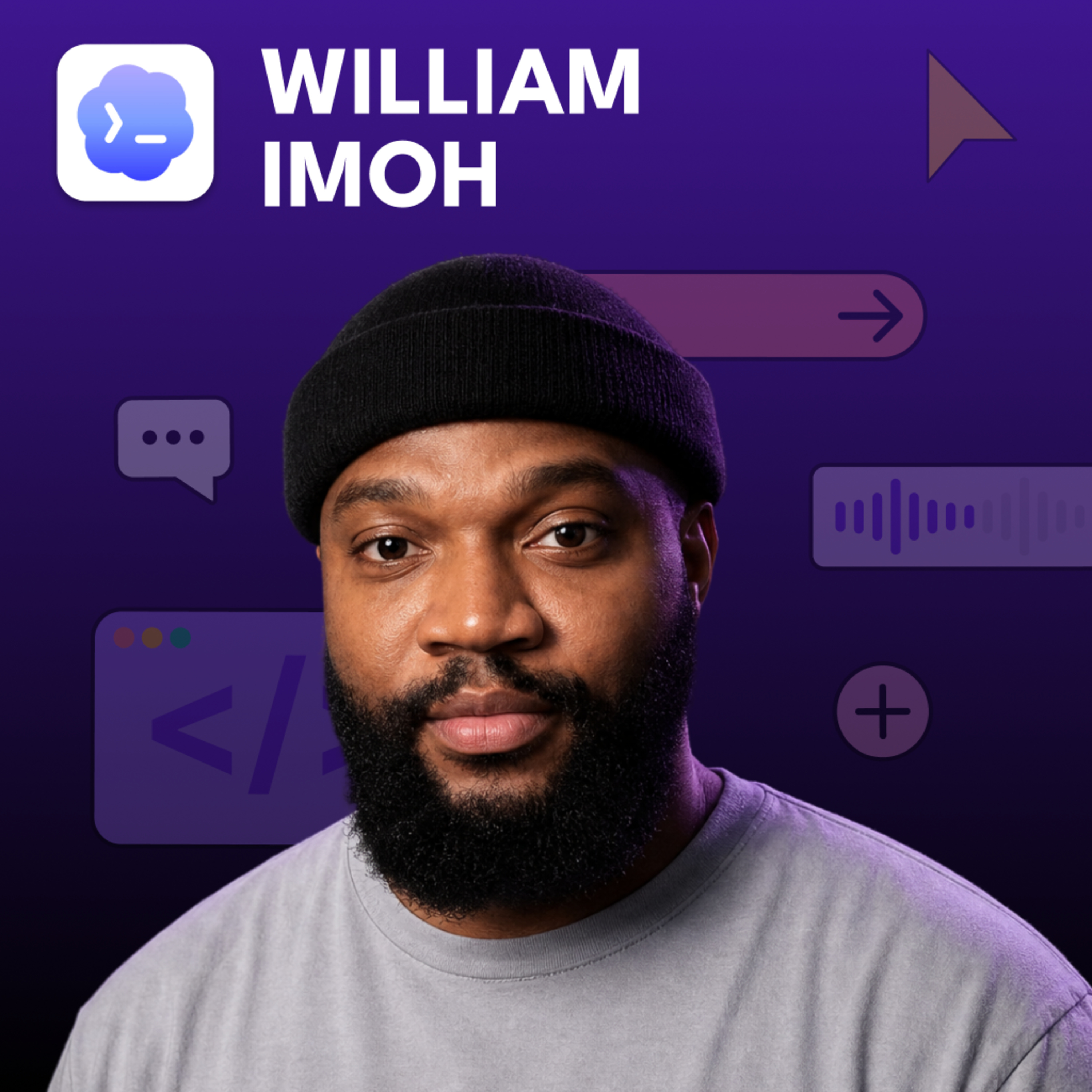
William Imoh is the founder of Hackmamba, a developer marketing company, and the creator of Mural, a real-time voice app he built to learn Norwegian after moving from Dubai to Norway. He has a chemical engineering degree, taught himself to code, and spent four years as a product manager, but he had never written a line of Swift. In this episode, William shows how he used Codex and GPT-Live to build Mural natively for iOS and Android, then walks through the Lord of the Rings–themed Grok Bot “fellowship” that helps him run a team of about 25 as a solo founder. What you’ll learn: The design prompt that made Mural look nothing like any other language app Why 1,000 days of Duolingo left him unable to hold a conversation in Norwegian What GPT-Live-1 costs per session and the latency threshold that makes or breaks a voice tutor How he assigned every solo founder role to a Lord of the Rings character in Grok Why he gave his agents access to everything across 15 open tabs, except one thing What
Schools should restrict personal phone use during lessons.
Share your view, then see how readers voted. No sign-in required. This poll is shared across stories.
Do you agree or disagree?
Common Quandary
A Common Quandary to discuss
Another conversation to explore, separate from this news story.
A new email address earns another free month. How many free trials are too many?
A streaming service offers a free month to every new account and makes cancellation deliberately confusing. You discover that slightly different email addresses let you repeat the trial indefinitely without lying about your identity.
Must customers respect the spirit of rules designed to manipulate them?