CONTENTS-11-13
Listen through the publisher, then discuss the episode here or arrange an in-person Roundtable. Your city determines where to meet.
Roundtables are designed for groups of four, with a shared subject and room for everyone to speak. Come for discussion, with no dating expectation.
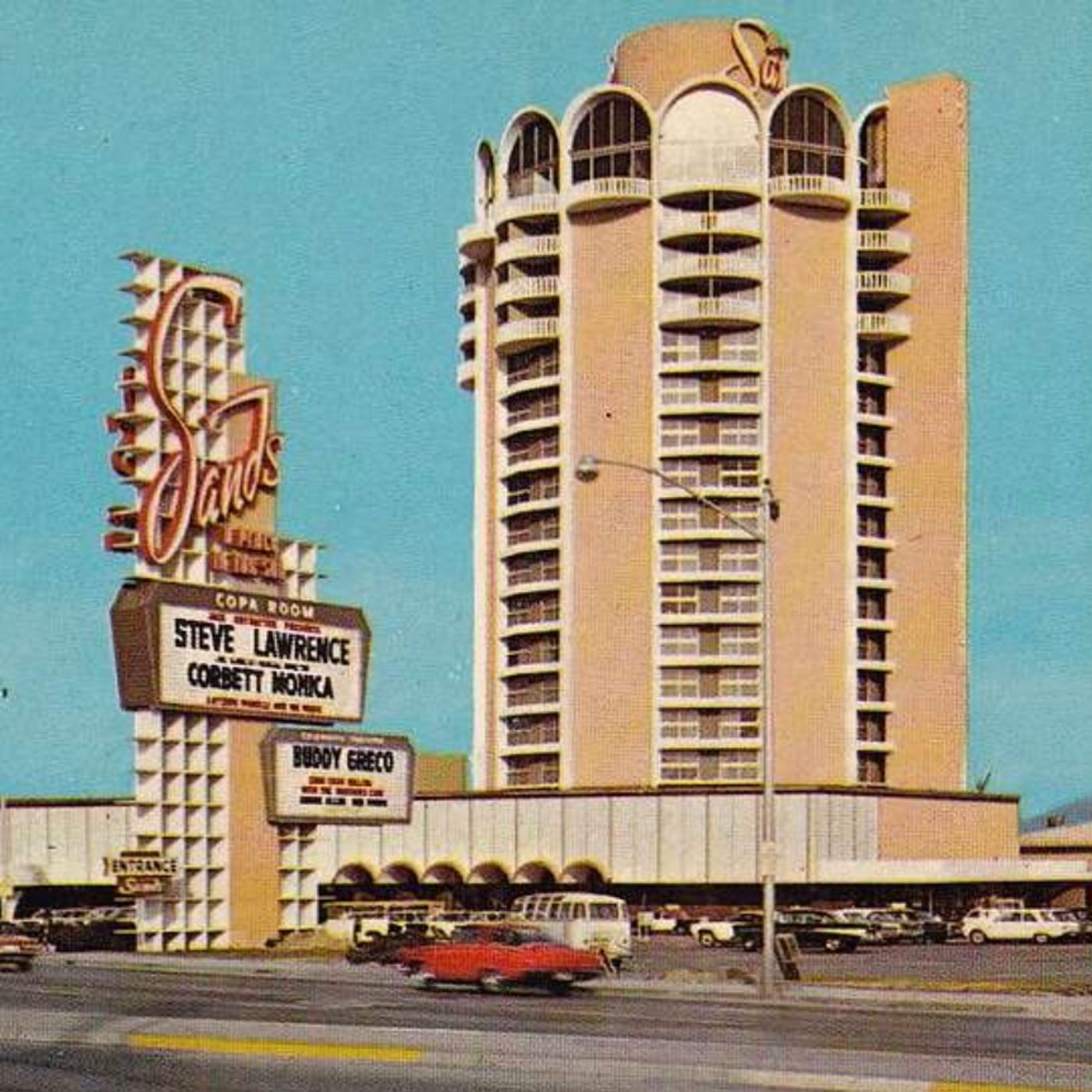
1950-1960 SANDS HOTEL CONTENTS OF THE JOHN BATCHELOR SHOW 11-13-2026 Severe Atmospheric Rivers Impact Southern California Coastline — Part One Jeff Bliss reports that massive atmospheric river storms are bringing damaging surf and unusually warm sea temperatures to Southern California’s coastal waters. Severe high waves threatening beachfront property highlight local coastal vulnerabilities, while historical surge projections underscore broader municipal unpreparedness for a major tsunami along the region’s Pacific beaches. (1) Disneyland Expansion Projects and Historic Casino Transformation — Part Two Jeff Bliss describes Disneyland’s expansive theme park developments, including new themed lands and corporate Imagineering facilities in Cypress. Meanwhile, historic Las Vegas landmarks such as the Showboat and Imperial Palace undergo creative destruction, making way for modern commercial and residential development and updated entertainment venues. (2) Artificial Intelligence Constitutionalism Defines AI Governance Rules — Part One Kevin Frazier discusses how leading technology developers publish internal alignment documents, such as Anthropic’s constitution for Claude, to guide AI model behavior. He compares these governance frameworks to administrative rulemaking, advocating heightened transparency, public notice, and formal administrative procedures to oversee powerful AI systems. (3) Public Engagement Demanded for AI Constitutional Alignment — Part Two Kevin Frazier explores practical alignment methods, including red-teaming protocols and constitutional classifiers designed to prevent model misuse. He emphasizes the urgent need for institutionalized public consultation so that broader societal values, rather than corporate preferences alone, shape future artificial intelligence governance. (4) Lancaster County Employment Resiliency and Holiday Shopping Jim McTague reports that Lancaster County maintains a robust local economy, with exceptionally low unemployment, active holiday retail shopping, and lower gas prices. Local historical innovations like the Pennsylvania long rifle and the Conestoga wagon contrast with modern debates over the water consumption of regional data centers. (5) Political Existential Risks and Unaffordable Policy Proposals Véronique de Rugy observes that political rhetoric frequently frames opposing presidential candidates as existential national threats, while party candidate selection remains flawed. She sharply criticizes progressive proposals, including universal basic income, free childcare, Medicare for All, and wealth taxes, as fiscally unaffordable and unsustainable over the long term. (6) Tape Manufacturing Resilience Amid Inflation — Part One Gene Marks describes pressure-sensitive tape manufacturers navigating elevated raw material costs and international tariffs while maintaining strong sales growth. US domestic manufacturing expands through supply chain reshoring, while consumer spending drives resilient holiday retail despite housing market stagnation and persistent Producer Price Indexincreases. (7) Small Business Confidence and Artificial Intelligence Integration — Part Two Gene Marks reports that small business surveys reflect steady employment growth, resilient hiring, and record startup application filings nationwide. Entrepreneurs show robust confidence by rapidly adopting artificial intelligence reporting tools, while data center construction provides crucial ongoing support to regional commercial building sectors. (8) Cambridge Spy Ring Origins and Early Betrayals — Part One Antonia Senior, author of Stalin’s Apostles: The Cambridge 5 and the Making of the Soviet Empire, describes how Soviet intelligence recruited gifted Cambridge students, including working-class outlier John Cairncross, who passed Bletchley Park decrypts and atomic secrets to Moscow. Donald Maclean exploited high-level British diplomatic access in Washington to pass secret discussions on the formation of NATO to Joseph Stalin. (9) Kim Philby Betrays Allied Cold War Operations — Part Two Antonia Senior, author of Stalin’s Apostles: The Cambridge 5 and the Making of the Soviet Empire, details how master spy Kim Philby served as British intelligence liaison in Washington while systematically betraying secret Allied rollback missions behind the Iron Curtain. His callous betrayals caused catastrophic losses for anti-Soviet resistance fighters across Albania, Latvia, and Ukraine. (10) Venona Intercepts Force Dramatic Soviet Agent Defections — Part Three Antonia Senior, author of Stalin’s Apostles: The Cambridge 5 and the Making of the Soviet Empire, explains how Venona code-breaking exposed a Soviet operative within the British embassy, prompting Guy Burgess to warn Donald Maclean in London. Both men defected to Moscow, leaving Kim Philby to deploy stubborn denials against MI5interrogation despite lingering official suspicion. (11) Philby Escape and Immunity for Cambridge Spies — Part Four Antonia Senior, author of Stalin’s Apostles: The Cambridge 5 and the Making of the Soviet Empire, recounts how official exoneration allowed Kim Philby to work as a journalist in Beirut before escaping to Moscow when fresh evidence compromised him. Anthony Blunt and John Cairncross secured immunity through secret confessions, exposing the full extent of the Cambridge spy ring. (12) Saudi Arabia Missile Capabilities and Regional Escalation — Part One Henry Sokolski explains that Saudi Arabia seeks advanced Chinese ballistic missiles and domestic nuclear capabilities to counter persistent Iranian missile threats. Offense-dominant warfare and vulnerability to Houthi strikes drive Riyadhtoward independent military deterrence, raising severe proliferation concerns for international policymakers and the US Congress. (13) European Satellite Deterrence and American Missile Defense — Part Two Henry Sokolski reports that Germany is exploring space-based satellite constellations to support long-range conventional strikes against Russian targets. Simultaneously, France considers forward nuclear deterrence in frontline NATO countries, while shifting political dynamics in the United States jeopardize funding and momentum for the ambitious Golden Dome missile defense initiative. (14) Commercial Space Operations and Federal Regulatory Developments — Part One Bob Zimmerman reports that Texas political disputes threaten SpaceX’s Starship launch access, while Starlinkenforces operational restrictions in Ukraine. Synspective secures launch contracts with Firefly, Blue Origin resolves New Glenn valve issues, Axiom files intellectual property litigation against Vast, and Pentagon loans support private space infrastructure companies. (15) Planetary Science Discoveries and Deep Space Probes — Part Two Bob Zimmerman reports that Curiosity has found potential sulfate crystals on Mount Sharp, while NASA solicits commercial proposals for Mars Sample Return. The European Space Agency’s Hera spacecraft arrives to investigate the Dimorphos asteroid impact site, as astronomers observe a bright Type Ia supernova fifty million light-years away. (16)
Episode information is provided by the publisher. Listening takes place on the publisher’s service.
Listen at the source ↗