Dave Chapman + Linley Dixon: Saving Organic Through Activist Science
66 min
Listen through the publisher, then discuss the episode here or arrange an in-person Roundtable. Your city determines where to meet.
Roundtables are designed for groups of four, with a shared subject and room for everyone to speak. Come for discussion, with no dating expectation.
Dave Chapman and Linley Dixon take the stage at Churchtown Dairy to examine the science and systems behind the future of organic farming. Dave contrasts what he calls the “science of death” with a science that works through living systems, using biological control as an example of what becomes possible when agriculture learns from ecology rather than trying to overpower it. Linley brings that argument into the institutions that produce agricultural knowledge, asking what happens when public research disappears and private industry increasingly determines which questions get studied. Their talks ultimately become a call to defend organic not only in the field, but in science, policy, and public life. To find a Real Organic farm near you, please visit: https://www.realorganicproject.org/directory (https://https//www.realorganicproject.org/directory) We believe that the organic standards, with their focus on soil health, biodiversity, and animal welfare were written as they should be, but that the current lack of enforcement of those standards is jeopardizing the ability for small farms who adhere to the law to stay in business. To read our weekly newsletter and get firsthand news about what's happening with organic food, farming and policy, please subscribe here: https://www.realorganicproject.org/email/ (https://https//www.realorganicproject.org/email/)
Episode information is provided by the publisher. Listening takes place on the publisher’s service.
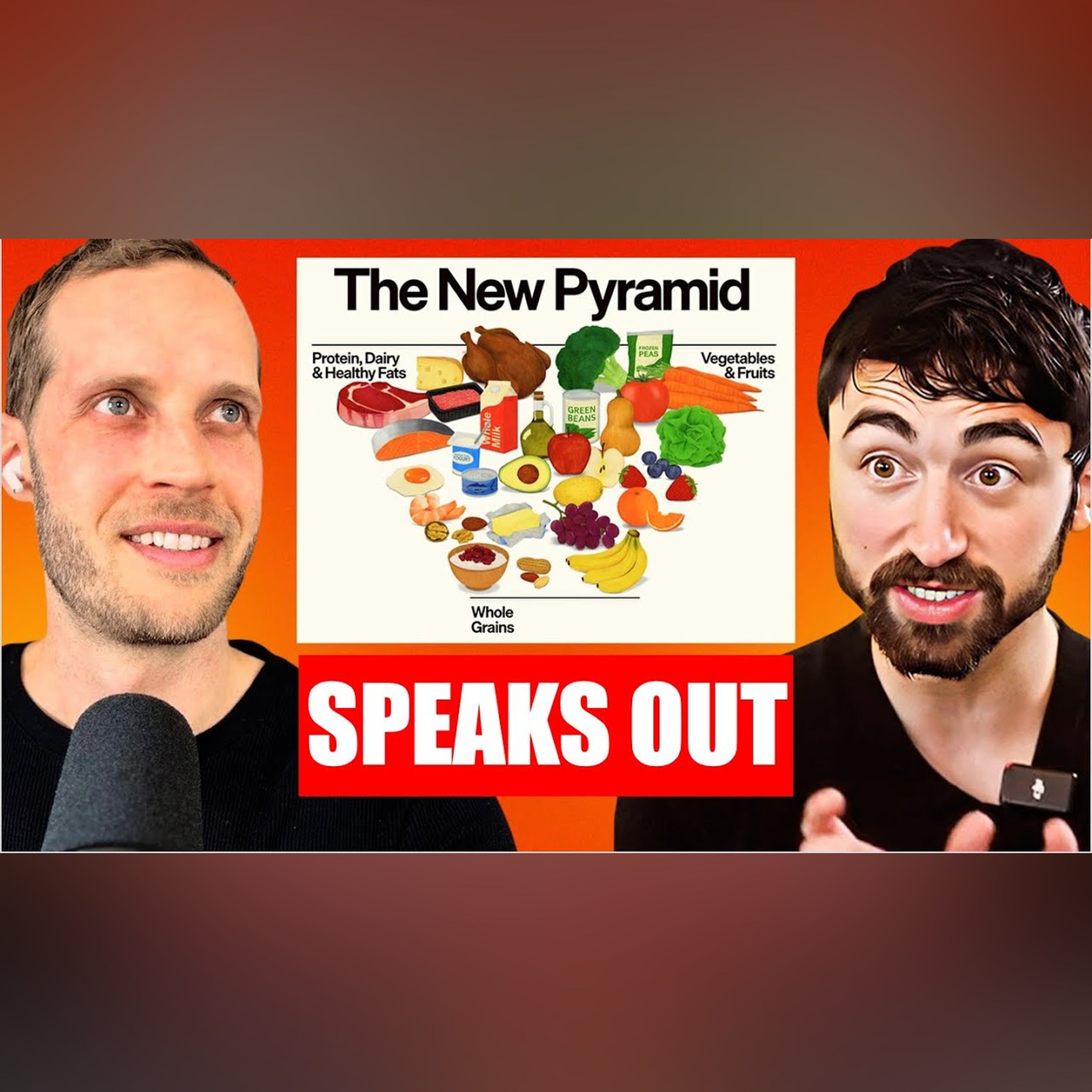
For a written digest on the guidelines, see the StayCurious Metabolism Letter: https://staycuriousmetabolism.substack.com/p/the-new-dietary-guidelines-actually?r=40ekz2 The 2025–2030 Dietary Guidelines are being marketed as a major reset with a simple message: put “real food” back at the center of the American diet. And in a lot of ways, they do represent progress. But when you actually read what’s written, some of the most important details raise real questions. For example, the document still states that saturated fat should not exceed 10% of total daily calories. To separate signal from spin, I’m joined by Dr. Ty Beal PhD, who worked on the evidence review side of the Guidelines process, to explain what the scientific background documents actually say, what happens after scientists submit reviews, and why the final public-facing document can end up with compromises, inconsistencies, or imprecise terminology. If you want a clear, good-faith breakdown—what’s genuinely better, what sti
In Brought to You By: How Corporations Warped the Truth, Conned the Public, and Broke Democracy (https://bookshop.org/a/12343/9781639736331), Amy Westervelt exposes the plot hidden within the familiar story of science denial. Over the last century, Big Industry has built a vast apparatus of think tanks, lobbyists, sponsored university labs, and obliging news networks to con the public and fool decision-makers, poisoning the informational ecosystem and warping the nature of truth along the way. With her signature wit and incisiveness, Westervelt introduces the masterminds of corporate misinformation: Herb Schmertz, the public relations pioneer who made Mobil “the thinking man's oil company;” Richard Edelman, the PR guy who helped the dairy industry vilify oat milk; David Petraeus, the disgraced spy chief using counter-insurgency tactics to discredit climate science; and many more. She shows how these company men have worked to usher in an era of unprecedented corporate control. Only by
In this Jim Rohn Motivation video, Jim dives deep into the extraordinary power of small habits and how they shape your destiny . Success isn’t about massive change—it’s about daily choices, small disciplines, and consistent effort that compound over time. Key Topics From This Motivational Video: Why small habits shape your future How identity drives behavior change The secret to breaking bad habits for good Why consistency beats intensity every time How responsibility leads to true freedom Jim Rohn shares that the key to real transformation lies not in dramatic change, but in quiet, consistent action. From saving a dollar to reading one page, these small acts—done daily—build momentum, shape identity, and ultimately determine your outcomes. This message challenges you to stop chasing success and start attracting it by becoming the kind of person success is drawn to. This Jim Rohn Motivational Video Is Perfect For: Anyone feeling stuck and unsure how to begin People who want to break ba
This new tech is changing how movies get made. So @mkbhd and I tested it out... Watch MKBHD's video: https://youtu.be/RM7SobH8ZO0 I’ve been obsessed with sci-fi movies since I was a kid. I love being transported to another world. But lately, I’ve been wondering: How do those worlds look so… REAL? The tech behind movies has exploded in complexity and realism, changing how stories come to life on screen. Luckily, at the same time, those tools are becoming more and more available to more people telling stories. It’s not just blockbusters like Avatar 2 or Avengers or Dune. It’s also smaller budget films like Everything Everywhere All at Once or even… YouTube creators? In this video, Marques Brownlee and I test out 3 movie-making tools that are changing how movies, shows, and maybe even YouTube videos (??) get made. We’re at ZeroSpace Studios in New York to show you how each of these crazy technologies work - and how you might be able to use them. Along the way, we hit big questions like: W
You can learn more about CuriosityStream at https://curiositystream.com/spacetime Uploaded 01-05-19 PBS Member Stations rely on viewers like you. To support your local station, go to: http://to.pbs.org/DonateSPACE How do you take a picture of a black hole and what can we learn from it? Our first ever actual bona fide photo of a black hole, made by the Event Horizon Telescope and revealed to the world in a press conference on April 10th. Since then it’s got plenty of coverage, because … I mean look at it. It’s a freaking black hole. It’s black, it’s holey, it’s everything we hoped it would be. Now that the giddiness has subsided and I personally have stopped spending hours on end staring at a black spot, we can take a breath and actually look at the real science here and discuss exactly how a picture like this could be taken and what we can learn from it. Check out the new Space Time Merch Store! Support Space Time on Patreon Need a Black Hole Refresher #Blackhole #astrophysics #spaceti
A kiss can be wonderful. It can create an instant connection, spark romance, or make you feel closer to someone. But a kiss can also have the opposite effect — and sometimes ruin everything. So what makes kissing so powerful, and why can one kiss make such a difference? There's some fascinating science behind it. https://www.scientificamerican.com/article/why-we-kiss/ We spend an enormous amount of time worrying about what's going to change. What's next? What's coming? How do we prepare? But what if we're paying attention to the wrong things? Some of the most important forces shaping our lives never change, and understanding them may be far more valuable than trying to predict the future — something humans are notoriously bad at. Morgan Housel, partner at The Collaborative Fund and author of Same as Ever: A Guide to What Never Changes (https://amzn.to/3SwWn6u) (https://amzn.to/3SwWn6u)), joins me to explain why the things that stay the same may be the most important things to understan
Rep. Thomas Massie, a Kentucky Republican, and Rep. Chellie Pingree, a Maine Democrat, both farm, and on food and farming they work together. Massie raises grass-finished beef, meat chickens, peaches, and apples. Pingree has been an organic farmer since the 1970s. Recorded live at Churchtown 2026 with Dave Chapman, the two talk about the fight to keep Bayer from getting immunity from glyphosate lawsuits, and the House floor vote where 207 Democrats and 73 Republicans voted to pull that immunity out of the farm bill. They cover the PRIME Act for small meat processors, Pingree's bill to ban paraquat, a bill to end capital gains tax when a family farm passes to the next generation, and how to reach the staffer who writes your representative's vote recommendation. Massie also shares what's next on his farm, from pasture-raised pigs on acorns to a self-propelled chicken tractor. https://realorganicproject.org/two-farmers-in-Congress-across-the-aisle (https://https//realorganicproject.org/sa
For this bonus episode, we’re sharing a favorite from No Small Endeavor, hosted by Lee C. Camp, a podcast exploring what it means to live a good life. Lee sat down with Real Organic Project co-director Linley Dixon to talk about the path that took her from academia into farming and activism, and why healthy soil became central to the way she thinks about food, community, and human flourishing. Linley also shares the story behind the Real Organic Project and why protecting the meaning of organic requires farmers and eaters to keep asking difficult questions about the food system. We hope you enjoy A Good Life Grows in Healthy Soil. To find a Real Organic farm near you, please visit: We believe that the organic standards, with their focus on soil health, biodiversity, and animal welfare were written as they should be, but that the current lack of enforcement of those standards is jeopardizing the ability for small farms who adhere to the law to stay in business. To read our weekly newsle
Vocational training should receive the same respect as university education.
Share your view, then see how readers voted. No sign-in required. This poll is shared across stories.
Do you agree or disagree?
Common Quandary
A Common Quandary to discuss
Another conversation to explore, separate from this news story.
The luxury hotel charges too much and will never miss one robe. Do you pack it?
After an expensive hotel stay, you notice a plush robe without a price tag or warning. The room cost more than expected, several promised amenities were unavailable, and you convince yourself the robe is probably included.
When does feeling overcharged become permission to compensate yourself?