Listen through the publisher, then discuss the episode here or arrange an in-person Roundtable. Your city determines where to meet.
Roundtables are designed for groups of four, with a shared subject and room for everyone to speak. Come for discussion, with no dating expectation.
In this event Mark Little discusses his recently published book: The Last Good Day on the Internet. Drawing on his unique experience as the founder of two internet start-ups, Storyful and Kinzen, and working with Twitter and Spotify, Mark’s book charts the rise of the attention economy and discusses options for building a better internet. Mark also discusses the rise of AI and its implications for leadership in politics, business and civil society. Mark Little is an entrepreneur and journalist working to understand the impact of technology on media and democracy. His new book, The Last Good Day on the Internet, explores hope and humanity in the age of superhuman technology. Mark was the co-founder of Kinzen, which used AI and human analysis to detect online harms, and the founder of Storyful, the world's first social news agency. Mark has worked on trust and safety issues at Spotify, and developed media partnerships for Twitter. He is a former TV presenter and foreign correspondent for RTE, and was a member of the Future of Media Commission, tasked with mapping the future of public media in Ireland.
Episode information is provided by the publisher. Listening takes place on the publisher’s service.
As we stand on the brink of potential global conflict, everyone must pay attention to the rapid evolution of warfare, especially given the innovations highlighted by the situation in Ukraine at this weekend's security conference in Halifax. Now more than ever, understanding these developments is vital as they could shape the future of military engagements worldwide. Join journalist Paul Wells and host Laura Babcock for a thought-provoking discussion on the complexities of modern warfare, the implications of Carney's and Poilievre's recent speeches at the Annual Press Event, and the importance of maintaining civil discourse on tough topics in our democracy.They also discuss the historic failure of the COP 31 Climate Summit. Engaging with these issues isn't just an academic exercise; it’s about preparing ourselves for the challenges ahead and ensuring we can navigate them thoughtfully and responsibly. Let’s not sit back and ignore the signs of our times—be informed, be involved, and join
This webinar presented outputs from Austroads Research Report AP-R778-26, Stocktake and Roadmap for Vehicle Technology Deployments. The research examined current and emerging issues, gaps and opportunities associated with vehicle connectivity, automation and electrification across Australia and New Zealand. Drawing on a targeted literature review and consultations with government transport agencies and industry experts, the project identified priority areas for future research, coordination, monitoring and exploration to be considered in the development of the Austroads VAT program. The webinar outlined considerations regarding road safety, operations and sustainability, and discussed how transport agencies can remain informed as vehicle technologies, standards, deployment models and market conditions continue to evolve. Webinar participants were introduced to the accompanying navigable roadmap, which brought together relevant Austroads publications, current projects and proposed futur
Rebuilding the government after Trump and DOGE will take more than rehiring the people they fired last year. The Supreme Court enabled the administration’s assault on services and protections millions of Americans rely upon, and it could still block the rebuilding, too. On this week’s Amicus, Dahlia Lithwick talks with Cornell law professor and former Biden administration official K. Sabeel Rahman about his new book, Remaking the State: A New Blueprint for American Democracy (https://www.amazon.com/dp/1967190208?tag=slatmaga-20&th=1), about why restoring the old machinery of the administrative state won’t be enough. Rahman connects DOGE’s slash-and-burn campaign to a much longer legal project. He explains why doctrines that constrain regulation remain a threat to future policymaking, even as the high court supercharges Trump’s executive power grabs. But this is not just a damage assessment. From stronger consumer protections to easier access to public benefits and a meaningful democrat
Europe's Little Anarchy: The Rise and Fall of Neutral Moresnet (https://bookshop.org/a/12343/9781501788147)(Cornell UP, 2026) uncovers the history of Neutral Moresnet: a once-forgotten space without borders, nationalism, or a recognized government. Between 1815 and 1919, this square mile of land wedged between Belgium, the Netherlands, and Germany was home to thousands of people living off the grid, free of taxation and oversight. But they also had no political status, police, legal currency, proper law courts, or government presence in sectors like public health, infrastructure maintenance, or education. Meanwhile, practical control over Neutral Moresnet lay in the hands of the local industry: a for-profit, multinational mining company that, because it owned rights to the land, also held a near monopoly on the supply of high-quality zinc to the rest of the world. Dr. Steven Press explores how the residents of Neutral Moresnet sought to improve their quality of life, appealing to Germa
The Nvidia board said it unanimously backed Huang’s return after “input from senior levels of the United States government” made its members confident that Mr Huang did not pose a national security risk. Donald Trump has said Huang’s return was vital for Nvidia and the US economy, calling Huang a “Great Patriot and National Treasure”, with “no reason to believe” his return poses a national security risk. In this episode, Sarah and Anthony start with this dramatic u-turn, looking at why Huang has been reinstated as president and CEO of Nvidia. It’s less than two weeks since he abruptly resigned following reports of two extramarital relationships - including one with a woman whom US intelligence identified as a spy for China. In a phone interview this morning with CNBC, Trump said America must “protect its geniuses” and declared Huang “exonerated” from criminal wrongdoing. Nvidia’s shares jumped by around 30 percent up as Wall Street opened, with the Nvidia board saying Huang’s return is
November 23, 2026; 5pm: Deadline: White House examines mounting criticism of Pete Hegseth’s Pentagon leadership, Trump’s use of DOJ and the pardon power, Democrats’ expanding House majority, and the fallout from dismantling USAID. The hour connects national security, democracy, accountability, and public health through reporting and analysis from Pentagon, legal, political, and foreign aid experts. Hosted by Simplecast, an AdsWizz company.
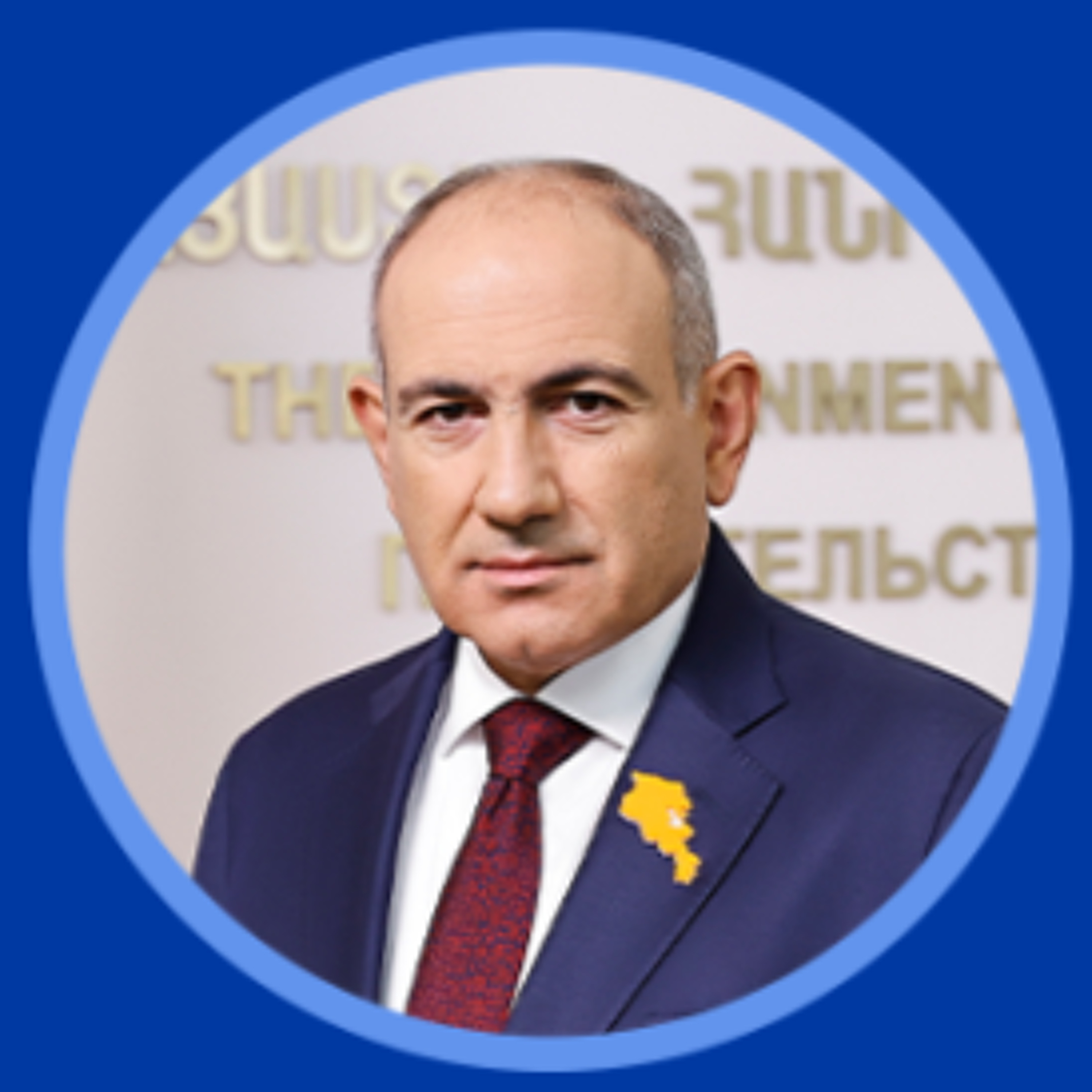
Nikol Pashinyan has served as Prime Minister of the Republic of Armenia since May 2018, leading the country through a period of significant political, economic, and social transformation. He entered parliamentary politics in 2012, when he was elected to the National Assembly as a representative of the Armenian National Congress Alliance. In 2018, he initiated the My Step movement, which led to Armenia’s peaceful Velvet Revolution. On May 8, 2018, he was elected Prime Minister by the National Assembly. His Civil Contract party won the 2021 elections, leading to his reappointment as Prime Minister. In 2026, Civil Contract won the elections, and Nikol Pashinyan was appointed Prime Minister for another term. Among his international honors are the Knight Grand Cross of the Order of Pope Pius IX, awarded by Pope Francis in 2023; the Gold Medal of the Hellenic Parliament in 2024; Kazakhstan’s Order of the Altyn Qyran in 2025; the Zayed Award for Human Fraternity in 2026; and the Gernika Award
Edi Rama is the Prime Minister of the Republic of Albania and Chairman of the Socialist Party of Albania. Before entering politics, Edi Rama established himself as a painter, professor, writer and public intellectual. He has served as Prime Minister since 2013 and is currently serving his fourth consecutive term in office. His fourth government, sworn in in September 2025, continues to place European Union membership, economic development, institutional modernization, digital transformation and Albania’s Euro-Atlantic partnerships among its central priorities. Albania is undergoing a period of significant institutional, economic and social transformation, with a strong focus on justice reform, public services modernisation, public administration, as well as citizen centric and social welfare reforms. Albania obtained EU candidate status in 2014 and formally opened accession negotiations in 2022. Between mid-2022 and 2026, Albania made remarkable progress in its EU accession process. Th
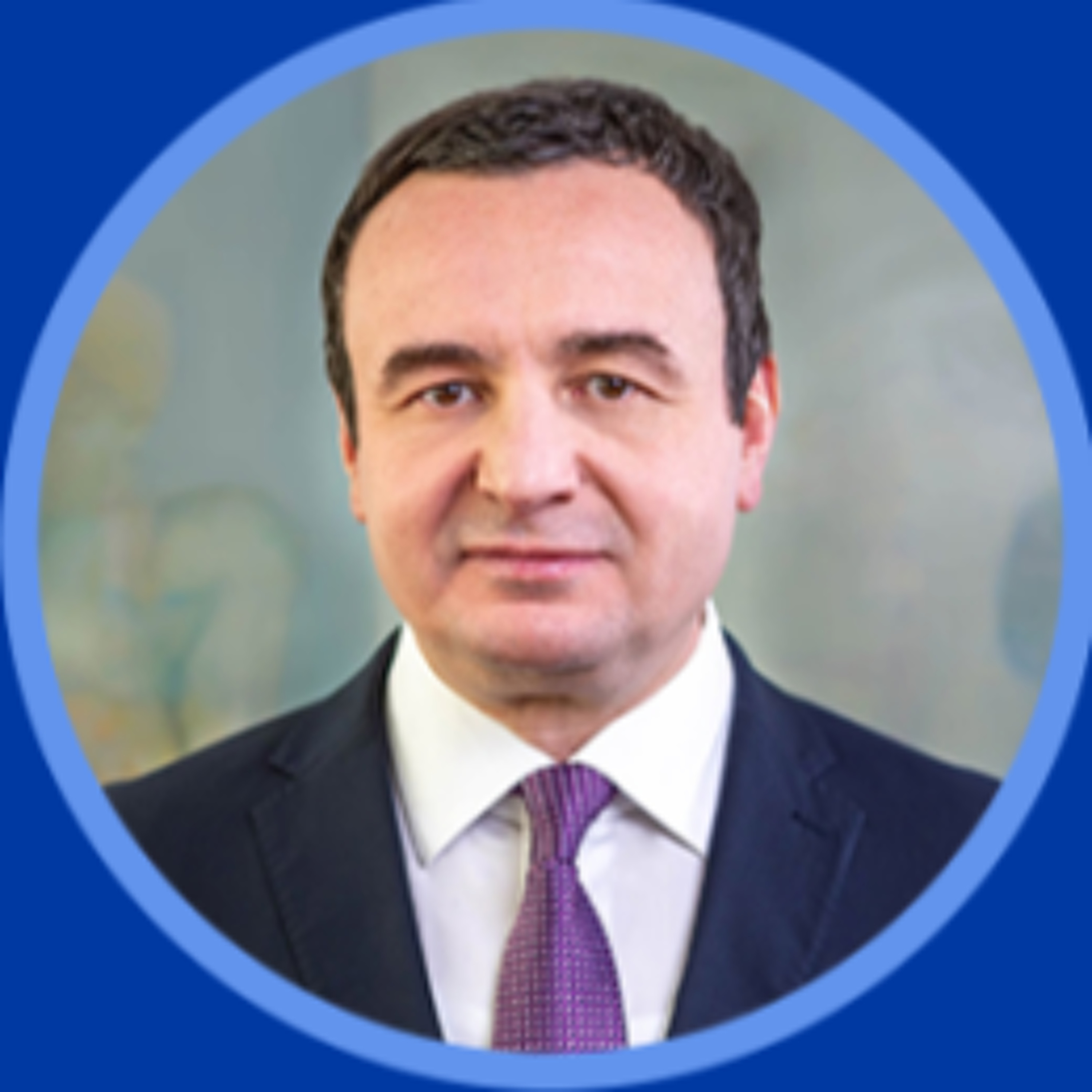
Since declaring independence in 2008, Kosovo has made significant progress in consolidating its statehood, strengthening democratic institutions, and advancing its European agenda. However, this pathway has been met with domestic and geopolitical challenges. In his first ever address at the IIEA, the Prime Minister of Kosovo, H.E. Mr. Albin Kurti, reflects upon the country's reform efforts, especially during his time in office. The Prime Minister also considers Kosovo's MR. opportunities and ongoing challenges, while outlining the country’s aspirations to transition from being one of Europe's most pro-European countries to becoming a full member of the EU. H.E. Mr. Albin Kurti was elected Prime Minister of the Republic of Kosovo for the fourth time in September 2026, being elected first in February 2020. Before his time as prime minister, Mr. Kurti led the massive student protests in 1997 against the repressive Milosevic regime. Having been politically active during the war and serving
Researchers should publish important limitations alongside the main findings.
Share your view, then see how readers voted. No sign-in required. This poll is shared across stories.
Do you agree or disagree?
Common Quandary
A Common Quandary to discuss
Another conversation to explore, separate from this news story.
You wear an expensive outfit once and return it spotless. Clever or dishonest?
You buy an expensive outfit for a single event, keep it spotless, and return it the next day. The store's generous policy allows returns without asking whether an item was worn.
Does exploiting a policy differ from breaking a rule?