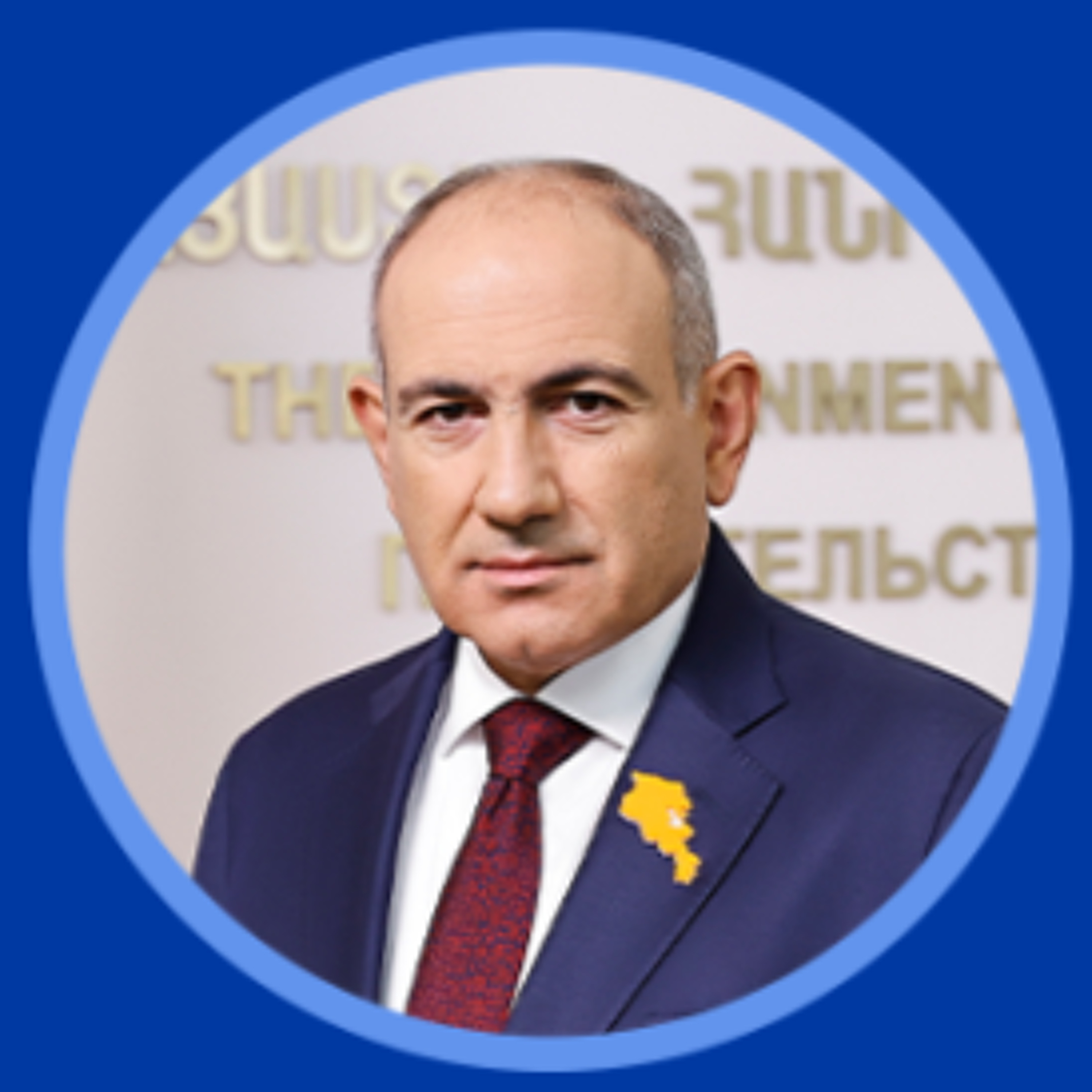
A Keynote Address by Nikol Pashinyan, Prime Minister of the Republic of Armenia
37 min
Listen through the publisher, then discuss the episode here or arrange an in-person Roundtable. Your city determines where to meet.
Roundtables are designed for groups of four, with a shared subject and room for everyone to speak. Come for discussion, with no dating expectation.
Nikol Pashinyan has served as Prime Minister of the Republic of Armenia since May 2018, leading the country through a period of significant political, economic, and social transformation. He entered parliamentary politics in 2012, when he was elected to the National Assembly as a representative of the Armenian National Congress Alliance. In 2018, he initiated the My Step movement, which led to Armenia’s peaceful Velvet Revolution. On May 8, 2018, he was elected Prime Minister by the National Assembly. His Civil Contract party won the 2021 elections, leading to his reappointment as Prime Minister. In 2026, Civil Contract won the elections, and Nikol Pashinyan was appointed Prime Minister for another term. Among his international honors are the Knight Grand Cross of the Order of Pope Pius IX, awarded by Pope Francis in 2023; the Gold Medal of the Hellenic Parliament in 2024; Kazakhstan’s Order of the Altyn Qyran in 2025; the Zayed Award for Human Fraternity in 2026; and the Gernika Award for Peace and Reconciliation. In 2026, he was also awarded the Grand Cross of the Legion of Honour of France.
Episode information is provided by the publisher. Listening takes place on the publisher’s service.
For review: 1. Iraq has reached a compromise with the powerful Iran-backed militia Kataeb Hezbollah, three senior security officials said, after Prime Minister Ali al-Zaidi readied security forces to move against the group. Reflecting the gravity of the situation, Iraqi Shiite political sources said Esmail Qaani, commander of Iran’s elite Revolutionary Guards’ Quds Force, arrived in Baghdad late on Monday to help defuse tensions with Kataeb Hezbollah, Tehran’s most powerful militia ally in Iraq. 2. Lebanese President Joseph Aoun launched a lengthy rebuke of Iran in an Independence Day address, arguing that the Islamic Republic does not have the right to interfere in Lebanon’s internal affairs, as it long has via support for its local terror proxy, Hezbollah. 3. Yemen’s Houthis launched strikes on the Saudi capital Riyadh on Saturday, after vowing reprisals for a “special operation” by the Saudi-led coalition fighting them. The coalition later said it had “intercepted and destroyed” thr
Former Prime Minister Stephen Harper joins Hub Dialogues to discuss his political journey and new memoir, Here for Canada. Harper reflects on his unconventional path from Toronto to Alberta to Ottawa, his role in building the Conservative Party of Canada, and the tension between populism and conservatism. He examines the challenge of uniting Canada’s fractured conservative movement, emphasizing fiscal responsibility and economic management as core principles. Harper also discusses his approach to Quebec, the importance of building durable political institutions over personal ambition, and how successful conservative politics must balance philosophical grounding with responsiveness to ordinary Canadians’ concerns. This is part one of The Hub’s interview. Stay tuned for part two, coming Wednesday. The Hub is Canada’s fastest growing independent digital news outlet. https://tinyurl.com/3a7zpd7e (Apple) https://tinyurl.com/y8akmfn7 (Spotify) Watch a video version on YouTube: https://www.yo
On this gripping episode of #POWERCAST, you won't want to miss this must-listen conversation! Charlie Angus, the steadfast Leader of the Resistance and host of Meidas Canada, joins OShow host Laura Babcock to unpack the escalating threats the Trump regime poses to Canada. With figures like Hegseth trying to dismantle our crucial military relationship, we must stand united against these challenges. Prime Minister Mark Carney is courageously pushing back, but we need to rally behind him and demand accountability from MAGA Premiers Smith and Ford for their concerning plans regarding healthcare. This isn't just politics; it's about our country's future and the well-being of our citizens. In addition, let’s call out Pierre Poilievre's disgraceful antics, including shameful jokes at the expense of Katy Perry and Justin Trudeau. We must elevate the discourse, foster a political environment that reflects our values and integrity, and hold the media accountable for their American-appeasement he
Three of the Justice Department's most senior officials resigned within 72 hours of the 2026 midterm elections. Harmeet Dhillon, who ran the Civil Rights Division, left after failing to force 30 states to hand over voter rolls. John Eisenberg, who oversaw national security and the leak investigation into journalists, stepped down. And Jason Reding Quiñones, the U.S. Attorney for the Southern District of Florida who was leading the so-called "grand conspiracy" investigation into Trump's perceived enemies, quit abruptly. Democrats are about to take control of Congress. The officials who might have been called to testify are leaving before the subpoenas arrive. This episode breaks down who left, why, and what it means for the investigations that remain. General information only, not legal advice. Based on public records and news reports. Thanks for listening to Gavel & Gazette. Legal news, explained. General information only, not legal advice. This episode includes AI-generated content.
Why has Pauline Hanson's moment finally come, almost 30 years after she first won a seat? How does One Nation turn nostalgia for an imagined past into political power? Could a party with no experience in government really end up running the country? In this live episode, recorded at ANU, Professor Mark Kenny talks with author John Birmingham about his new Quarterly Essay, Another Country: The Rise and Rise of One Nation. They discuss Hanson's lucky career from Ipswich to the Senate, the four demographic filters of race, place, age and education that predict One Nation support, and the March for Australia rallies. They also look at how the shift to three main political forces is unsettling the Liberals, how the neoliberal economic consensus helped create today's grievance politics, and what to expect from the Victorian election. Hosted on Acast.
The D.C. Circuit hears a dispute between the Postal Service and its regulator over government contracts. During the COVID pandemic, the Postal Service worked with the Department of Health and Human Services to get test kits to households. The work included preparing test-kit packages as well as delivering them. That familiar operation exposes a less familiar question: when the Postal Service serves another federal agency, which regulatory rules apply? In an accounting proceeding, the Postal Regulatory Commission applied a framework for hybrid agreements: contracts combining postal and nonpostal services. It required separate accounting and, for certain negotiated delivery arrangements, approval before implementation. The Postal Service sought reconsideration, but the Commission refused to remove those conditions. The Postal Service will argue that Congress authorized it to supply services to federal agencies on agreed terms, without this extra approval step. It will also challenge how
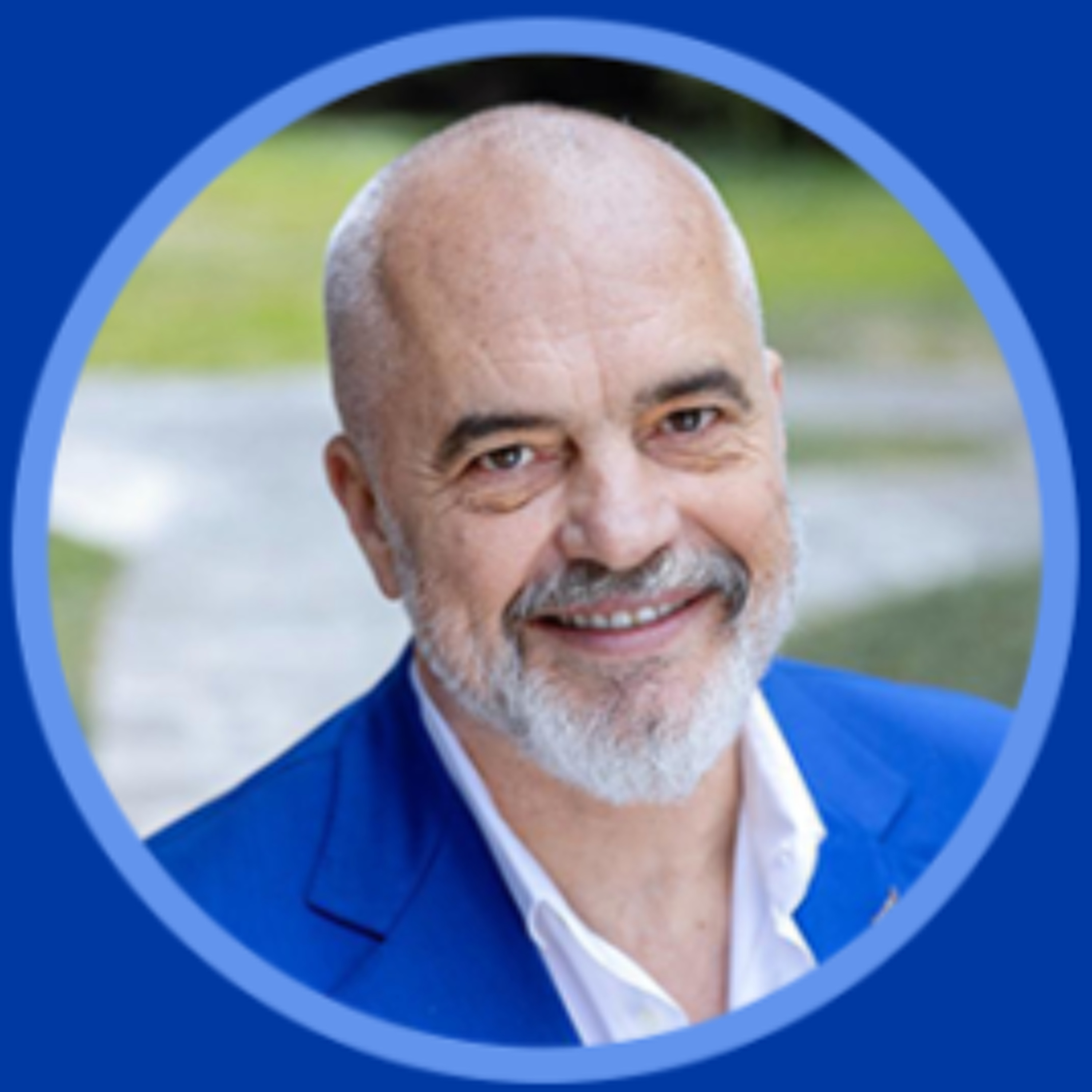
Edi Rama is the Prime Minister of the Republic of Albania and Chairman of the Socialist Party of Albania. Before entering politics, Edi Rama established himself as a painter, professor, writer and public intellectual. He has served as Prime Minister since 2013 and is currently serving his fourth consecutive term in office. His fourth government, sworn in in September 2025, continues to place European Union membership, economic development, institutional modernization, digital transformation and Albania’s Euro-Atlantic partnerships among its central priorities. Albania is undergoing a period of significant institutional, economic and social transformation, with a strong focus on justice reform, public services modernisation, public administration, as well as citizen centric and social welfare reforms. Albania obtained EU candidate status in 2014 and formally opened accession negotiations in 2022. Between mid-2022 and 2026, Albania made remarkable progress in its EU accession process. Th
Since declaring independence in 2008, Kosovo has made significant progress in consolidating its statehood, strengthening democratic institutions, and advancing its European agenda. However, this pathway has been met with domestic and geopolitical challenges. In his first ever address at the IIEA, the Prime Minister of Kosovo, H.E. Mr. Albin Kurti, reflects upon the country's reform efforts, especially during his time in office. The Prime Minister also considers Kosovo's MR. opportunities and ongoing challenges, while outlining the country’s aspirations to transition from being one of Europe's most pro-European countries to becoming a full member of the EU. H.E. Mr. Albin Kurti was elected Prime Minister of the Republic of Kosovo for the fourth time in September 2026, being elected first in February 2020. Before his time as prime minister, Mr. Kurti led the massive student protests in 1997 against the repressive Milosevic regime. Having been politically active during the war and serving
Amidst transforming regulatory frameworks, rapid technological change, and complex interactions between regulations and new technology, digital policy issues now span across traditional economic sectors and regulatory spheres. Ensuring cross-sectoral coherence is thus vital for a successful digital policy framework. This event explores the coordination, cooperation, and collaboration necessary to ensure that digital policy regulations can be effectively implemented to protect citizens and benefit society while facilitating innovation and certainty for business. The panel for this event examine cooperation, coordination and engagement between regulatory agencies, businesses, academia, and civil society, both within Ireland and across borders. This event is organised by the IIEA in collaboration with the Digital Regulators Group (DRG). The DRG works to support a coherent and cohesive approach to digital regulation in Ireland. The DRG consists of Coimisiún na Meán, the Commission for Comm
Developers should cover the infrastructure costs created by their projects.
Share your view, then see how readers voted. No sign-in required. This poll is shared across stories.
Do you agree or disagree?
Common Quandary
A Common Quandary to discuss
Another conversation to explore, separate from this news story.
Five friends join the person ahead of you after a forty-minute wait. Do you object?
You wait forty minutes for a popular event. Just before the doors open, five friends join the person directly ahead of you, who says they have been holding everyone's place from the beginning.
What unwritten agreement does joining a line create?