Destressing Toolkit (3/5): What causes panic attacks and how you can prevent them | Cindy J. Aaronson
8 min
Listen through the publisher, then discuss the episode here or arrange an in-person Roundtable. Your city determines where to meet.
Roundtables are designed for groups of four, with a shared subject and room for everyone to speak. Come for discussion, with no dating expectation.
Countless poets and writers have tried to put words to the experience of a panic attack— a sensation so overwhelming, many people mistake it for a heart attack, stroke, or other life-threatening crisis. Studies suggest that almost a third of us will experience at least one panic attack in our lives. So what exactly is a panic attack, and can we prevent them? Cindy J. Aaronson investigates. [Directed by Aim Creative Studios, narrated by Bethany Cutmore-Scott, music by André Aires]. Hosted on Acast.
Episode information is provided by the publisher. Listening takes place on the publisher’s service.
Rob reveals his secrets to keeping things hot in the bedroom throughout his marriage and well after menopause and he called in to talk all about it. Tune in to hear all the details including how things changed in their bedroom once his wife finally spoke up about her not having orgasms, what he learned about pleasing her and how he went on a mission to figure her out, the books he read that completely changed the game, how their sex life changed when she went through menopause, all the things he tried to make sex more pleasurable again for her, how he came up with a unique way to apply lubricant that helped prevent pain and tearing, how his wife had a prolapsed cervix and the surgery she had to correct it, how and why she became way to tight afterwards, what he introduced in the bedroom that completely loosened her up and allowed her to start having sex again, why she refused to go on HRT and the over-the-counter products he found for her that helped with vaginal dryness and tearing, h
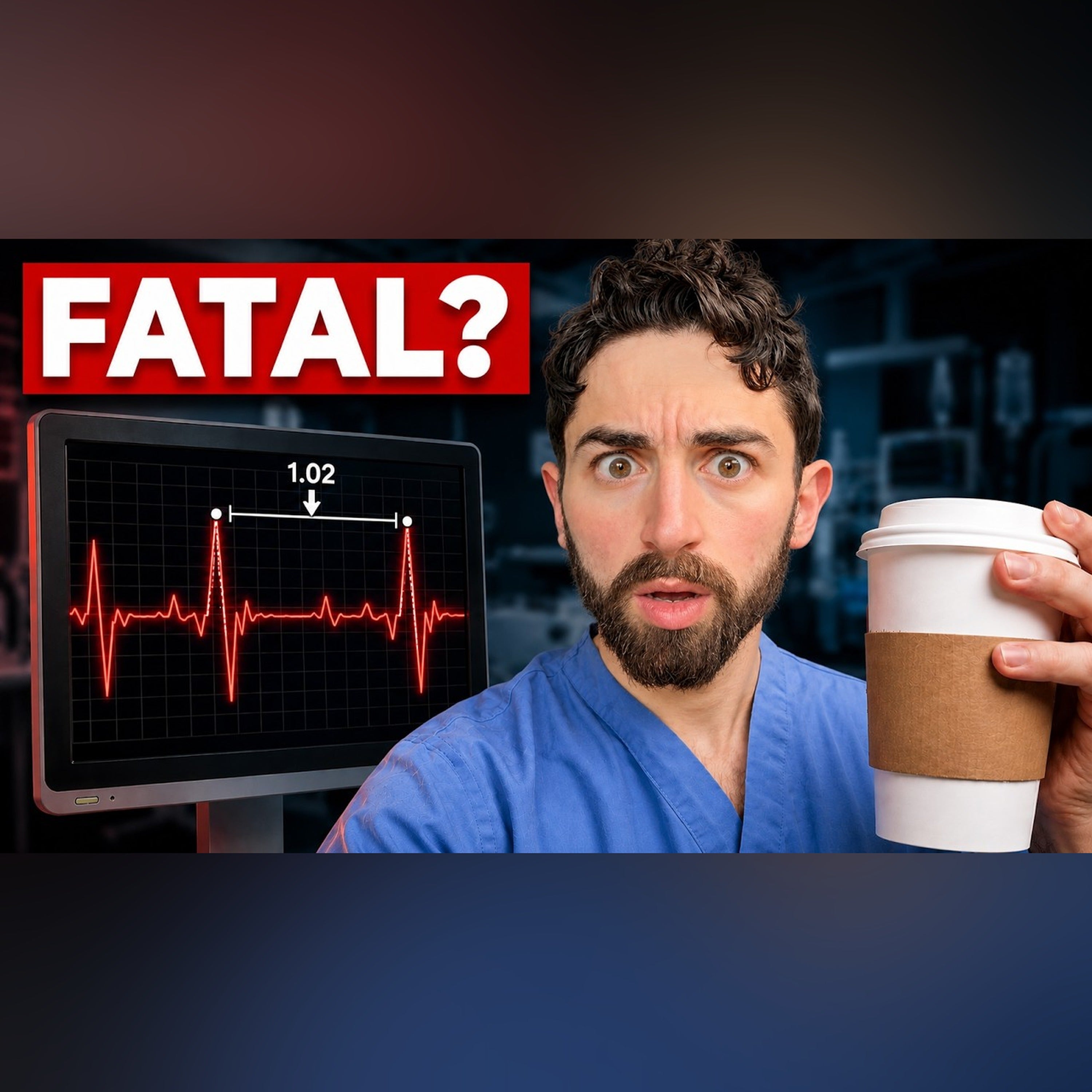
For a written breakdown, early access to content like this, and extra nuances, see the associated StayCurious Metabolism newsletter: https://staycuriousmetabolism.substack.com/p/why-you-need-to-track-your-heart?r=40ekz2 If you want to try the omega supplement I use, Accentrate Omega Max, here’s the link: https://www.fenixhealthscience.com/staycurious Heart rate variability (HRV) is more than just a number, it’s a real-time window into how well your brain, heart, and nervous system are working together. In this video, we break down what HRV actually measures, why it’s such a powerful predictor of mortality and heart attack risk, and how it reflects something deeper: your body’s ability to adapt, recover, and respond to stress. We walk through landmark studies showing that low HRV is associated with significantly higher risk of death and first cardiac events—even after controlling for traditional risk factors. But this isn’t just about risk. HRV is something you can measure today and act
One of the most beautiful images of a guardian angel I’ve ever seen is an icon of an old woman standing in the snow. Beside her, an angel bends down to tie her shoelaces. I love that detail. It reminds me that even the smallest things in our lives matter. In this Sunday Reflection, I explore what the Franciscan tradition teaches us about guardian angels. What does it mean to have a companion who walks beside us through difficulty? And when did you last ask your guardian angel for help? I also reflect on the seraphim, the angels we describe as being on fire with love, and on how St Francis shared that same warmth with those around him. I invite you to take a quiet moment today to ask for a little of that love in your own heart, for yourself, for others and for the whole of creation. Peace be with you. Timestamps 00:00 Angels and the image of a love that burns 01:20 Guardian angels and unseen companionship 03:09 The angel tying an old woman’s shoelaces 04:02 An invitation to open ourselv
Tonight, I continue my series, The Cozy Rainy Hotel, in which we visit a cozy hotel on rainy nights in different places around the world. Tonight we will visit a counrty where many of you come from, Canada. We will visit the city of Montreal and we will explore the many different influences and people from different backgrounds. This sleep story is narrated by a real human, not AI. #sleep #bedtimestory #sleepstory #rain #cozy #montreal Welcome to Stephen Dalton Sleep Stories Check out my other channels:
What actually works when it comes to detecting lies, and why are so many popular ideas about reading people and nonverbal behavior at odds with the scientific research? I talk with Aldert Vrij, one of the world's leading deception-detection researchers, who has spent almost four decades studying these topics. We discuss why what people say is far more revealing than their body language; why the perceived “sexiness” of reading nonverbal behavior has contributed to widespread myths and misconceptions; whether vocal behaviors like pitch, volume, and hesitation contain meaningful clues; and whether there's value in analyzing minor word choices and turns of phrase, as is done in so-called “statement analysis.” We discuss Paul Ekman's legacy as a source of faulty ideas about deception, micro-expression-based deception detection training, and the strategies that popular “body language experts” use to appear scientifically credible while simultaneously promoting ideas that conflict with the sc
Today, I’m honored to connect with Dr. Troy Badger. He is a board-certified cardiologist and interventionalist and the founder of Cardiostrong, a concierge preventive cardiology clinic in Provo, Utah, focused on reducing cardiovascular risk, optimizing metabolic health, and improving strength and cardiorespiratory fitness for executives and athletes. In today’s conversation, we discuss Dr. Badger’s gender- and age-specific approach to heart health, including treatment differences for men and women, and diagnoses such as INOCA, SCAD, vasospastic disease, and Takotsubo. We examine emotions and their influence on heart health, coronary ischemia and cardiomyopathies, labs and diagnostics, how Dr. Badger assesses risk in his patients, and the differences between a CAC and a CCTA. Dr. Badger also shares the labs he finds essential for all patients and discusses the role of VO2 Max, cardiovascular training, and lifestyle—specifically nutrition, the use of GLP-1 drugs, and a multidisciplinary
The stress you may feel being otherized or stereotyped can take a significant toll on your health and well-being. In this thoughtful conversation, social psychologist Valerie Purdie-Greenaway reveals the true source of this anxiety (hint: it isn't the individual) and shares strategies on building resilient systems of support for ourselves and others -- so that we can build a more inclusive, empathic and just world. (This conversation, hosted by TED curator Cloe Shasha Brooks, is part of TED's "How to Deal with Difficult Feelings" series.) Hosted on Acast.
In crowds, at meetings, get-togethers with friends, everyday interactions: social anxiety can show up as an unwelcome guest at any time. But why? Psychologist Fallon Goodman digs into the source of social anxiety, setting the record straight about this common condition with practical solutions to help you feel the most authentically "you" while out and about. After the talk, mental health specialist Dr. Jessi Gold joins Shoshana in a sweeping conversation on social media’s impact on social anxiety and how we can best support ourselves and others. Hosted on Acast.
What if you could transform your anxiety into something you can actually use during your work day? Neuroscientist Wendy Suzuki shares two evidence-based activities -- breathing and movement -- that can soothe your nervous system and fuel creativity and connection. Hosted on Acast.
Users should have access to human review when a platform restricts their account.
Share your view, then see how readers voted. No sign-in required. This poll is shared across stories.
Do you agree or disagree?
Common Quandary
A Common Quandary to discuss
Another conversation to explore, separate from this news story.
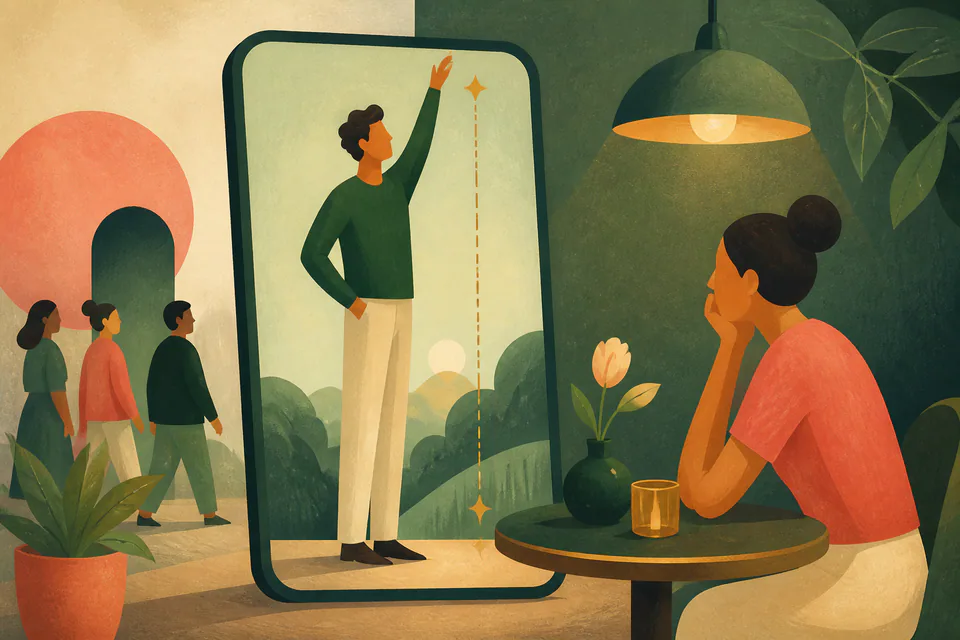
Everyone exaggerates on dating apps. Are two imaginary inches harmless?
A friend adds two inches to their listed height because they believe filters exclude them before personality has a chance. They plan to be charming enough that a date will not care once they meet in person.
Can deception be a fair response to superficial gatekeeping?