Do You Earn Enough To Afford The American Dream in 2026?
62 min
Listen through the publisher, then discuss the episode here or arrange an in-person Roundtable. Your city determines where to meet.
Roundtables are designed for groups of four, with a shared subject and room for everyone to speak. Come for discussion, with no dating expectation.
The American Dream now costs $5.3 million in 2026, according to a new Investopedia analysis. But is that really how much money you need to afford a home, raise a family, buy cars, and retire comfortably? Brian and Bo break down the eight major expenses behind the American Dream, explain why the retirement calculation may be misleading, and show how investing and compound growth can dramatically change the numbers. From housing affordability and the cost of raising children to retirement savings and financial independence, discover why the American Dream may be more attainable than the headlines suggest.
Episode information is provided by the publisher. Listening takes place on the publisher’s service.
How will you know when you’ve reached true wealth? Is it when you have your dream home? Once you own an expensive car? Perhaps the signifier is when you’re wealthy enough to have your own private airplane? In Tony’s opinion, these are the wrong things to use when measuring your wealth. Uploaded 12-09-19 The people with mansion-sized homes, with three sports cars sitting in the garage, with a private plane that takes them to and from their vacation home – these people may not necessarily have access to true wealth. None of these are indicators of true wealth; they’re indicators of monetary wealth. True wealth is the ability to live life on your own terms. It’s freedom. Tony explains that money itself isn’t wealth, it’s a vehicle – a tool you can use to achieve financial freedom, to go after the dreams you didn’t think were possible, to design your life in a way that makes you feel alive and fulfilled. While Unshakeable is a financial freedom playbook, the process of becoming unshakeable
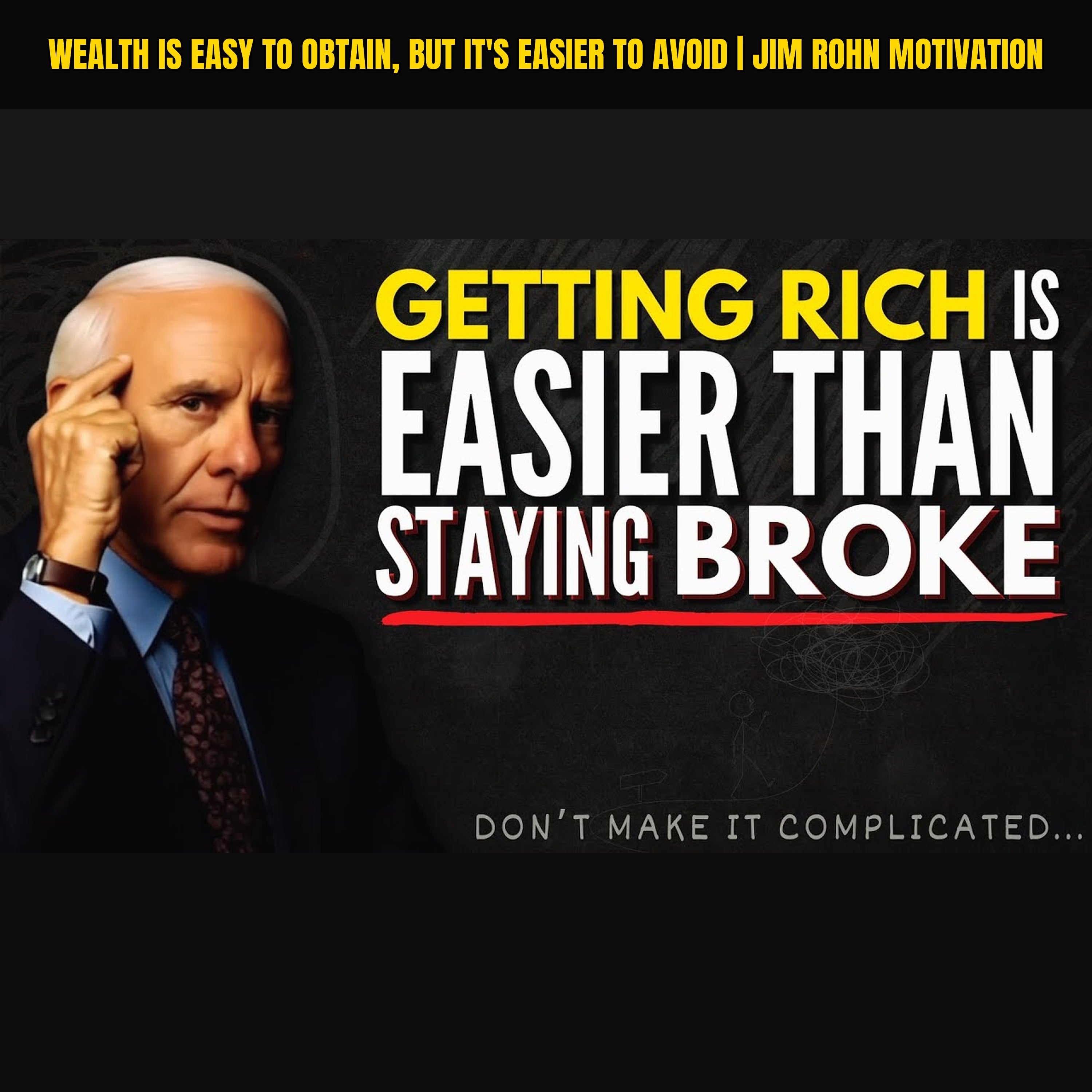
#JimRohnMotivation #JimRohn #JimRohnSpeech In this Jim Rohn Motivation video, discover the truth about wealth building—it’s easy to get rich, but easier not to. Jim Rohn reveals how small, consistent habits—not luck, genius, or perfect timing—create lasting financial success. Learn the simple daily disciplines that separate those who build wealth from those who only wish for it. Key Topics From This Motivational Video: Why the habits that build wealth are simple—but easy to ignore The hidden cost of procrastination, comfort, and distraction How systems—not willpower—drive consistent results Why small daily actions compound into lasting wealth The mindset shift from spending to building Jim Rohn explains that wealth isn’t built on dramatic leaps—it’s built on quiet, repeatable steps practiced over time. The math is simple: earn more than you spend, invest the difference, and let time work its magic. But the challenge isn’t knowing what to do—it’s doing it every day, without excuse, and
Uncover the shocking truth behind Social Security's major cleanup! We dive into increased clawbacks, fraud detection, and the misuse of deceased individuals' social security numbers. Discover how fraudsters exploit the system for COVID relief and loans. Is the government doing enough? #SocialSecurityFraud #FraudDetection #GovernmentWaste #SocialSecurityFraud #FraudDetection #GovernmentWaste #BidenAdministration #OIGInvestigation #COVIDReliefFraud #PPPloans #IRSfraud #FinancialCrimes #SocialSecurity
The world’s most astonishing science experiment, simply explained. On the border between France and Switzerland is the biggest science experiment humanity has ever built. Over a 100 meters underground, there’s a tunnel 27 kilometers long in a big loop under nearby homes, businesses, and farms. Inside that tunnel, scientists built a blue tube big enough to crawl through, and inside that tube, they put two pipes that they keep colder and emptier than outer space. Down those pipes, they fire particles smaller than atoms in opposite directions…. and push them faster and faster… until when they’re almost at the speed of light… they SMASH TOGETHER. This underground particle-smasher is also known as the Large Hadron Collider at CERN. It took thousands of scientists from over nearly 100 different countries $5 billion dollars and 30 years to plan and build. My question is: Why? Why did they do that??? Why spend so much money and time to smash particles underground? And now… why do so many scien
Master the skills that change lives — enroll in your free human behavior course today: https://nci.university/learn Uploaded 18-01-26 EXECUTIVE BRIEFING This video is a clipped excerpt from the NCI-4 Grad School vault. It was never designed as public content. This material is normally contextualized inside NCI-4 Grad School as part of a longer deprogramming sequence. What you’re seeing here is a compressed strike—enough to make the pattern visible. Inside this 5:42 segment, the mechanism behind compliance is exposed—as procedure. The same survival code that once kept humans alive now keeps them compliant, self-policing, and identity-bound to approval. This excerpt covers: • Why obedience persists even when authority disappears • How identity replaces force as the primary control mechanism • Why rebellion often fails while compliance feels “reasonable” • The sequence that trains people to silence themselves automatically It shows you why rules feel inevitable. FINAL WARNING: Exposure al
Today, Mel is taking 58 years of hard-earned life lessons and is packing them into under an hour, to save you some of the time, frustration, and worry it took her to learn them the hard way. In this episode, Mel is fielding real questions from listeners around the world. From making friends and bouncing back from rejection to feeling stuck in life and wondering if it's all going to work out, Mel is sharing the advice she wishes she'd known sooner. And she's not holding back. You'll hear Mel get personal about her own setbacks, and what she's learned about starting over, going after what you want, and trusting yourself when life doesn't go according to plan. You'll learn: -How to stop worrying about the future when nothing feels certain -How to make big life decisions, including whether or not to have kids -How to make new friends as an adult -What to do when you get rejected from your dream job -What to do when a friend ghosts you -How to stop procrastinating and finally follow through
Before 2026 ends, there are 8 important money moves you should review to prepare your finances for 2027. From maximizing your 401(k) and Roth IRA contributions to taking advantage of new tax rules, some financial planning opportunities are worth addressing before December 31. Brian and Bo walk through their year-end financial checklist, including emergency funds, high-interest debt, HSA contributions, retirement savings, charitable giving, and planning for future expenses. Don't let another year end without reviewing your financial plan. Find out what you might be missing and how to finish 2026 strong!
This episode brought to you by Abound Wealth. Take the relationship to the next level and become a client: https://moneyguy.com/become-a-client/ Are viral tax loopholes actually legal, or could they get you in serious trouble with the IRS? Brian and Bo are joined by tax attorney Jasmine DiLucci to react to some of the worst tax advice on the internet. From a $2.1 million fraudulent tax refund to questionable rental property deductions, family foundations, paying your kids through an LLC, and avoiding state taxes, we're breaking down which tax strategies actually work and which could lead to expensive penalties. Learn about common tax mistakes, small business taxes, IRS audits, and why following financial advice from social media could cost you more than you save.
This episode brought to you by Abound Wealth. Take the relationship to the next level and become a client: https://moneyguy.com/become-a-client/ Are you richer than most Americans your age? New financial data reveals how household income, net worth, and savings habits compare across Americans in their 20s, 30s, 40s, and 50s. Brian and Bo compare average Americans, Financial Mutants, and Abound Wealth clients to uncover what separates everyday savers from wealthy households. Discover how much you should have invested at your age, why some people build wealth faster, and how credit card debt, car purchases, emergency funds, and investing habits affect financial independence. Are you ahead of the curve, behind, or right on track for retirement? Let's find out.
Residents' need for quiet should usually outweigh the benefits of late-night entertainment.
Share your view, then see how readers voted. No sign-in required. This poll is shared across stories.
Do you agree or disagree?
Common Quandary
A Common Quandary to discuss
Another conversation to explore, separate from this news story.
You can clone the best dog you ever had. Would you?
After a beloved dog dies, its owner can afford to have it cloned. The procedure is legal and improving, but it uses animals as surrogates and will not recreate the original dog's memories or personality.
What do our obligations to animals permit us to create for our own comfort?