Dr Emma Bramham and Professor Fleur Loveridge from the University of Leeds
12 min
Listen through the publisher, then discuss the episode here or arrange an in-person Roundtable. Your city determines where to meet.
Roundtables are designed for groups of four, with a shared subject and room for everyone to speak. Come for discussion, with no dating expectation.
What role could geothermal energy play in the UK's net zero future? In this episode of Tomorrow's Energy, Hannah Walker speaks to Dr Emma Bramham and Professor Fleur Loveridge from the University of Leeds about the potential of geothermal energy to decarbonise heat, improve energy resilience and support long-term energy storage. Together, they explore the opportunities, challenges and policies needed to unlock this renewable energy source across the UK. The podcast is produced by the team at Salix Finance.
Episode information is provided by the publisher. Listening takes place on the publisher’s service.
In this joint lecture, Gresham Professor of Physic Robin May and world-renowned puppet creator Steve Allen (Labyrinth, The Muppets, Fraggle Rock) discuss the science that goes in to bringing puppets to life, what our interactions with puppets mean for our understanding of human emotions, and how we may be able to use puppets to help tackle some of society’s most pressing challenges. This lecture was recorded by Professor Robin May and Steve Allen on 13th of October 2026 at Barnard’s Inn Hall, London. Professor of Infectious Disease at the University of Birmingham, and (interim) Chief Scientist at the UK Health Security Agency, Robin May was appointed Gresham Professor of Physic in May 2022. Between July 2020 and September 2025 he served as Chief Scientific Adviser at the Food Standards Agency (FSA). Professor May’s early training was in Plant Sciences at the University of Oxford, followed by a PhD on mammalian cell biology at University College London and the University of Birmingham.
Shopping in a cost of living crisis means more of us are looking for bargains. But ahead of Black Friday and the Christmas shopping rush, experts are warning consumers to be cautious. Tests on fake make-up, perfumes and skin creams have been shown to contain dangerous substances such as mercury and nicotine. Laura Foster speaks to toxicologist Rani Ghosh and Helen Barnham from the Intellectual Property Office about the health risks linked to fake cosmetics including blistering, blindness and kidney damage. After research by the University of Cambridge and University of East Anglia suggested females with autoimmune diseases are less likely than men to be believed, more and more women have been coming forward to share their experiences. We hear from Beth Smith from East Yorkshire about her long, diagnostic journey and speak to the research lead, Dr Melanie Sloan, about what can be done to stop the gender bias and reduce the likelihood of anyone being misdiagnosed, no matter their gender.
The recent upheaval in the world economy, driven by unsettling news from the AI tech oligarchy Nvidia scandal, is a wake-up call for all of us. The urgent need to protest against dangerous data centres has never been more critical. In Alberta, we are witnessing a remarkable shift: traditional conservatives are distancing themselves from Premier Danielle Smith and her chaotic MAGA party, creating an unprecedented opportunity for the NDP. This shift highlights the public’s growing concern over unregulated AI and data centres — an issue that affects us all.While PM Mark Carney focuses on attracting investment to Canada’s energy sector, his strategy may be a bluff aimed at outmaneuvering Smith and messaging investors. This landscape is shifting rapidly, and we must stay informed. Join Max Fawcett, Lead Columnist for Canada's National Observer, as he delivers a thought-provoking assessment of Alberta’s state and the risks AI poses. This isn't just another political discussion; it's a rallyi
PBS Member Stations rely on viewers like you. To support your local station, go to: http://to.pbs.org/DonateSPACE Sign Up on Patreon to get access to the Space Time Discord! One of the most fundamental physics facts is that the speed of light in a vacuum is constant for all observers. But can we really be sure that the speed of light wasn’t different in the past, or perhaps in other parts of the universe? In fact, variable speed of light theories have long been used to try to explain everything from dark energy to gravity itself. Let’s explore how constant this fundamental constant really is. All Previous Episodes Referenced Check out the Space Time Merch Store Sign up for the mailing list to get episode notifications and hear special announcements! Search the Entire Space Time Library Here: https://search.pbsspacetime.com/ Hosted by Matt O'Dowd Written by Fernando Franco Félix & Matt O'Dowd Post Production by Leonardo Scholzer, Yago Ballarini, Adriano Leal & Stephanie Faria Directed b
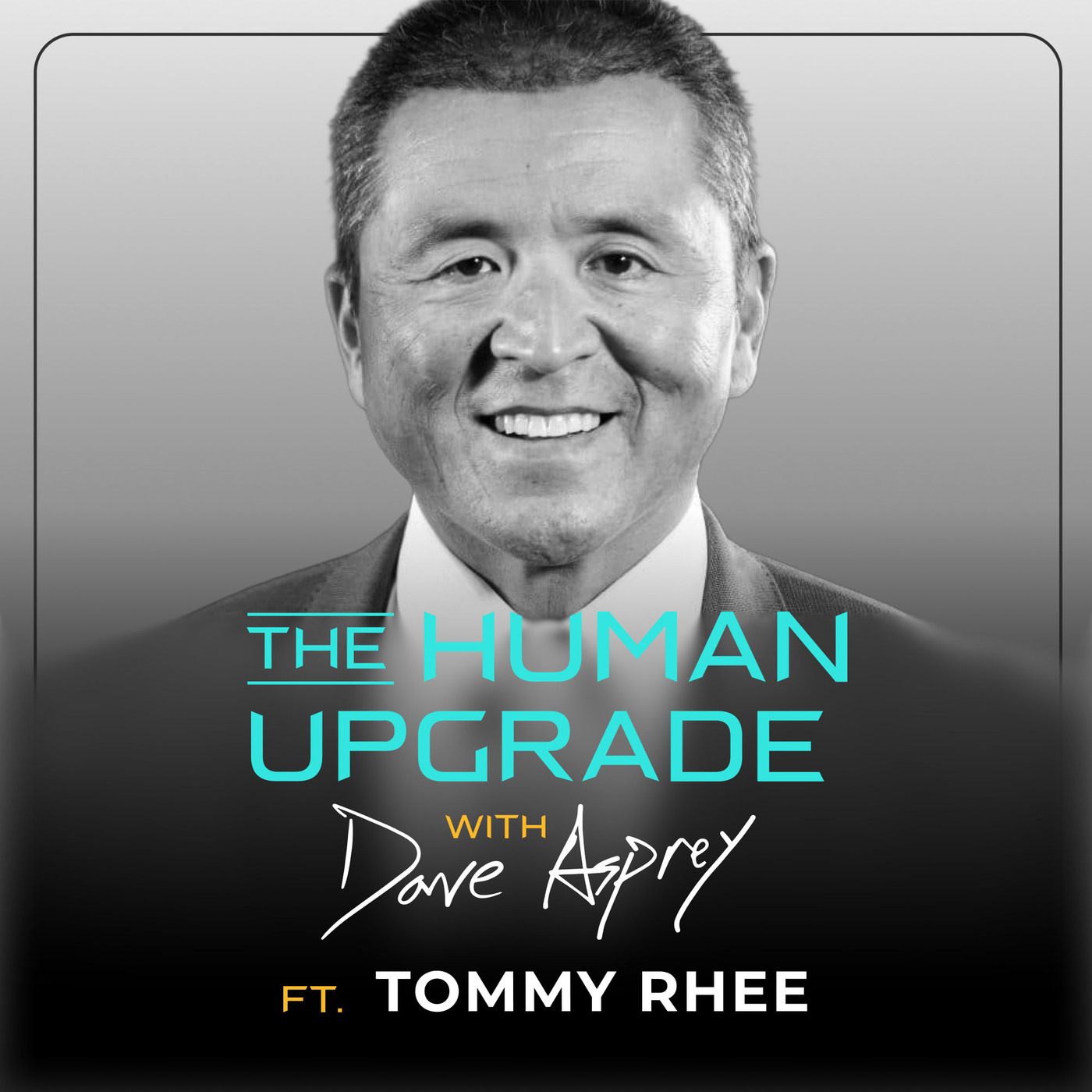
Whole-Body Vibration, Longevity, Nitric Oxide, Bone Density & Cellular Health Host Dave Asprey sits down with Dr. Tommy Rhee, sports chiropractor, regenerative medicine expert, and former practitioner with the Tampa Bay Buccaneers and UCLA Athletics, to explore whole-body vibration, longevity, nitric oxide production, blood circulation, bone density, muscle activation, and the science of mechanical stimulation. Drawing on more than 20 years of clinical experience working with professional and Olympic athletes, Dr. Rhee explains how specific vibration frequencies may influence cellular signaling, cardiovascular function, and physical performance. Dave and Tommy examine why whole-body vibration has become a popular biohacking technology and how just a few minutes of mechanical stimulation may support multiple systems throughout the body. Dr. Rhee explains how standing on a vibration platform creates rapid muscle contractions and mechanical forces that stimulate circulation and may activa
A fake job interview helped open the door to a reported $6.3 billion theft from Binance. The FBI attributed the heist to North Korea, which has used cryptocurrency theft to raise revenue and evade sanctions. This week, former federal prosecutor Maya Song joins Frank Cilluffo to explain why tracing stolen cryptocurrency is easier than getting it back, what prosecutors need to turn an attribution into a criminal case, and how companies and law enforcement can work together to limit the damage after a breach. Main Topics The fake recruiting scheme the led to $6.3B loss The theft and fraudulent IT work funding North Korea Tracing, freezing, and recovering stolen cryptocurrency Public attribution and the evidence needed for an indictment When companies should contact law enforcement How indictments and asset seizures can disrupt future operations Key Quotes "Law enforcement generally, when it comes to the cybercrime threat, they have at the federal level taken an attitude of deter, disrupt,
How do we create warmer, healthier homes while ensuring the energy transition is fair for everyone? In this episode of Tomorrow's Energy, host Hannah Walker is joined by Ian Preston from the Centre for Sustainable Energy to discuss retrofitting homes, tackling fuel poverty, adapting to a changing climate, and ensuring communities benefit from the transition to net zero. From heat pumps and energy efficiency to overheating homes and energy justice, Ian shares practical insights on the challenges and opportunities shaping the future of energy in the UK. The podcast is produced by the team at Salix Finance.
Our guest for this episode is Darryl Plummer, programmes director at Groundwork Five Counties. The charity works with local authorities and social housing providers across the East Midlands to help residents stay warm, healthy and safe in their homes through energy advice and support. Darryl discusses the growing pressures facing households as energy costs continue to rise and explains how many people are still being forced to choose between heating and other essential living costs. He shares insights from the charity's work visiting homes, supporting vulnerable residents and tackling issues such as fuel poverty, damp and mould. The conversation explores the charity's Green Doctor service, which provides free, tailored energy advice to households. Darryl explains how simple measures such as reviewing energy tariffs, improving heating controls, installing draught-proofing and switching to LED lighting can help residents reduce energy costs and improve comfort in their homes. He also hig
Tourism revenue should help cover the costs visitors create for local residents.
Share your view, then see how readers voted. No sign-in required. This poll is shared across stories.
Do you agree or disagree?
Common Quandary
A Common Quandary to discuss
Another conversation to explore, separate from this news story.
The prettiest trees on your street are ecological troublemakers. Do they come down?
A row of mature flowering trees defines a neighborhood and provides valuable shade. Ecologists identify them as invasive and recommend replacing them with native saplings that will take decades to grow.
How should visible community value be weighed against gradual ecological harm?