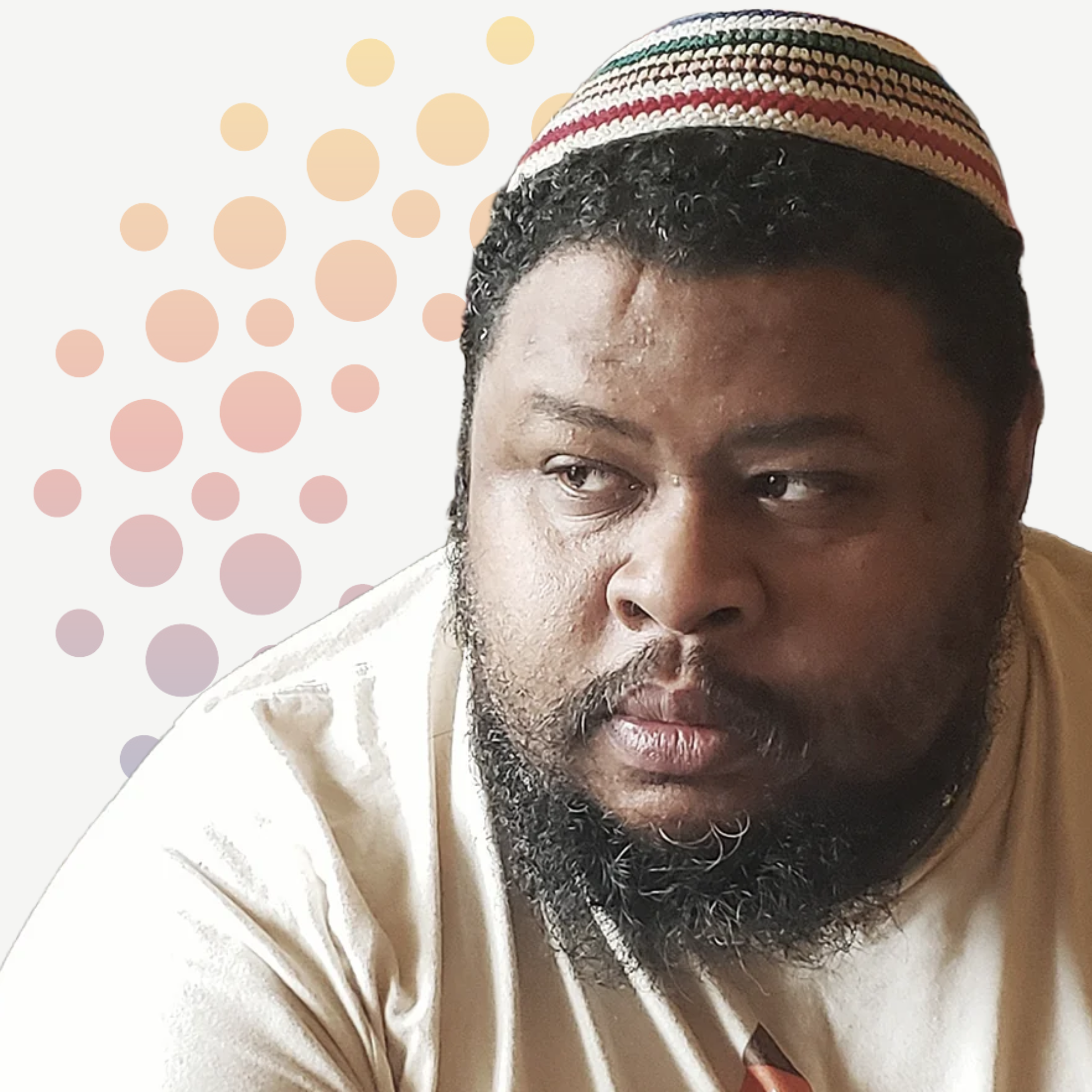
Eating the Seasons: Food, Faith and Belonging with Michael W. Twitty
31 min
Listen through the publisher, then discuss the episode here or arrange an in-person Roundtable. Your city determines where to meet.
Roundtables are designed for groups of four, with a shared subject and room for everyone to speak. Come for discussion, with no dating expectation.
Food rituals twine through our calendars and religious observances: what we eat, when we eat it, and when we go without. How does that repetition become ritual? How does food become sacred? And who gets to decide what belongs on the table—and who belongs around it? Complexified is joined by culinary historian and two-time James Beard Award–winning author Michael W. Twitty (https://michaelwtwitty.com/). In The Cooking Gene (https://thecookinggene.com/), he traces his ancestry through African American culinary history. In Koshersoul (https://koshersoulbook.com/), he explores food, faith, and Black and Jewish identity. Our conversation moves from his year of food traditions to the meals that make us feel at home—and the moments when they don’t. We talk about changing family recipes, welcoming someone’s food along with their full selves, and the difference between borrowing a tradition and respecting the people who carry it. And as we gather for eating season, Michael offers a reminder: capture the recipes. Ask for the stories. There’s no later. Find (https://religionnews.com/complexified/)Complexified (https://religionnews.com/complexified/)at Religion News Service. (https://religionnews.com/complexified/)
Episode information is provided by the publisher. Listening takes place on the publisher’s service.
The holidays often make our movements more predictable. Family dinners, religious services, shopping routines, and annual gatherings can provide opportunities for someone engaged in stalking to anticipate where a victim will be. This episode examines how stalkers exploit predictable routines, the warning signs of surveillance and unwanted contact, and practical precautions families can take to reduce exposure without allowing fear to dictate their celebrations.
Join NCI University today to master human behavior and influence: Uploaded 05-11-21 This is a dive to discover the possibilities, not the case itself. Sirhan Sirhan, in full Sirhan Bishara Sirhan, (born March 19, 1944, Jerusalem), Palestinian-born Jordanian citizen who was convicted (1969) of fatally shooting U.S. Sen. Robert F. Kennedy on June 5, 1968. He received the death penalty, but the sentence was later commuted to life. Sirhan, a Christian Palestinian, was born in Jerusalem. In 1948 Jordan took control of East Jerusalem and what is now the West Bank, and the following year it granted citizenship to people living in those areas. It is believed that this is how Sirhan became a Jordanian citizen. In the 1950s, he and his family moved to the United States and eventually settled in Pasadena, California. There he attended Pasadena City College and later held odd jobs, notably working at a horse stable and later at a health food store. During this time, Sirhan became vocal in his oppo
Sometimes, all it takes is one powerful Islamic reminder to bring your heart closer to Allah ﷻ and change the way you see your life. In a world filled with distractions, taking even a few moments to remember Allah can help us reconnect with our faith, reflect on our purpose, and find peace through the beautiful teachings of Islam. These short but meaningful Islamic reminders share timeless lessons inspired by the Holy Quran and the Sunnah of Prophet Muhammad ﷺ, offering spiritual motivation, wisdom, and encouragement in less than a minute. Whether you are searching for inner peace, struggling with life's challenges, or simply looking to strengthen your Iman, these reminders invite you to reflect on what truly matters. Discover the beauty of trusting Allah, practising Sabr, expressing gratitude, seeking forgiveness, and living each day with greater faith and purpose. Every reminder is an opportunity to pause, reflect, and remember that our ultimate success lies in pleasing Allah and pre
Two members of this family knelt beside wounded strangers this week. Only one was seen doing it. Mark Francis on the week India went perfectly for William and Kate — street cricket with Sachin Tendulkar, sixty rupees on the Metro, five Earthshot winners, and Kate alone at a Mumbai maternity hospital on the final day, holding the hand of a mother who had just lost one of her newborn twins. And on Harry in Lviv, meeting the newest members of Ukraine’s Invictus community, in a visit that landed on the one weekend nobody could look — followed by a Telegraph interview in which he said that if asked to sign up again, “I will 100 per cent be there to serve my country”. Plus Camilla’s private letter, Charles and the Butlin’s holiday he never got, and the royal accounts welcoming Robert Pattinson: “Welcome to His Majesty’s Secret Service, Mr Bond.” One subscription, the whole family, no ads. Try it free for 30 days: tap Try Free in Apple Podcasts. Got an App Store gift card? This is a good use
Hey Carpool Crew! A 6-year-old sent in a great puzzle: how did God make trees without seeds? Pastor Justin goes to Genesis 1:11, where God speaks and the first trees are simply there, with the seeds already tucked inside. Kids learn that we always have to start with something, and God doesn't. Your child gets one small thing to try: find a seed in an apple or an orange, hold it, and say, "God thought of this first." About 2 minutes, made for the car. Scripture: Genesis 1:11 (CSB) SAVE A SEAT FOR THE NEXT FAMILY Carpooling with Jesus is a nonprofit. Give here: https://carpoolingwithjesus.com/give FOR YOUR KIDS Download the Free Advent Paper Chain Craft: https://carpoolingwithjesus.com/advent/paper-chain Book a Shout Out: https://carpoolingwithjesus.com/shoutout CARPOOLING WITH JESUS+ Everything is on our website: https://carpoolingwithjesus.com FOLLOW ALONG • Instagram: https://bit.ly/carpooling-insta • TikTok: https://www.tiktok.com/@carpoolingwithjesus • YouTube: https://bit.ly/Youtub
Why do we put off doing good even when we know what to do? In Episode 29 of Become New’s Seven Deadly Sins series, John Ortberg explores sloth, how it differs from healthy rest, and why fear can make “not yet” feel easier than taking action. From Augustine’s Confessions and John Greenleaf Whittier’s “Maud Muller” to Jesus’ teaching in Matthew 25, John looks at what happens when we keep postponing the good we could do. Then Baxter, John’s old dog, offers a picture of perseverance: rest when you need to, then take one more step. New episodes every weekday. One day at a time. TEXT us at 51504 EMAIL US at [email protected] GET A TEXT REMINDER FOR NEW VIDEOS: text NEW to 51504 DOWNLOAD FREE STUDY GUIDES: BecomeNew.com/study-guides Music Credits: Welcome to the World by Sarah Watson License# MB01XUUTGU633PL 0:00 Why sloth deserves a closer look 1:25 The Homer Simpson version of sloth 2:26 Rest is good, and Augustine says “not yet” 3:33 How sloth helps us dodge the call to love 4:21 The f
We call Leo the American pope. But as he travels through South America, people there have their own claim on him—and their own expectations. In Argentina, he’s stepping into the homecoming Pope Francis never made (https://religionnews.com/2026/11/10/in-argentina-francis-legacy-hovers-over-leo/). In Peru, where Leo spent years as a priest and bishop and became a citizen, he’s coming back to communities that helped shape him (https://religionnews.com/2026/11/10/chiclayo-peru-prepares-for-pope-leo-xiv-return/). People want to celebrate him. They also want him to speak to the problems dividing their countries. So why should audiences here care? These visits offer a chance to see how he handles something Americans know well: deep political division (https://religionnews.com/2026/11/08/in-argentina-milei-embraces-pope-leo-xiv-who-pushes-him-on-austerity/), including inside the church (https://religionnews.com/2026/11/11/during-leos-visit-protest-messages-on-the-streets-reveal-argentine-churc
What does this election tell us about the changing role of religion in American public life? A record number of Muslims are headed to Congress. (https://religionnews.com/2026/11/04/at-least-7-muslims-were-elected-to-congress-a-record/) Christian pastors won races campaigning on economic justice. (https://religionnews.com/2026/11/05/frederick-haynes-congress-texas-election-2026/) Voters with no religious affiliation helped elect candidates who put faith at the center of their campaigns. (https://religionnews.com/2026/11/04/catholics-and-nones-played-key-role-in-democrats-historic-victory-exit-polls-show/) There are unexpected and encouraging new alliances here, also… deep divisions. (https://religionnews.com/2026/11/04/michigan-jews-voted-for-el-sayed-but-the-community-divisions-remain/) Tom Gjelten (https://berkleycenter.georgetown.edu/people/tom-gjelten) is an award-winning journalist who spent nearly four decades at NPR, covering international affairs, national security, and, most re
All year on Complexified, we’ve been asking who gets to claim Christianity in American politics. Tonight, that question has some new answers. Did these candidates win because of how they talked about faith? What brought voters to the polls? And how much of what happened tonight will last beyond this election? Jack Jenkins (https://religionnews.com/author/jackjenkins/), national reporter for RNS and author of American Prophets: The Religious Roots of Progressive Politics and the Ongoing Fight for the Soul of the Country (https://www.jackjenkins.me/american-prophets.html), is joining us to unpack the results and what they mean for religion and political power.
Officials should investigate credible environmental concerns before harm is conclusively proven.
Share your view, then see how readers voted. No sign-in required. This poll is shared across stories.
Do you agree or disagree?
Common Quandary
A Common Quandary to discuss
Another conversation to explore, separate from this news story.
Your teenager locks you out of their phone. When is it okay to look?
Your usually outgoing sixteen-year-old has withdrawn and stopped seeing friends. They insist they are fine and refuse to talk. You know their phone passcode and could read their messages without being discovered.
How serious must a fear be before protection outranks privacy?