Listen through the publisher, then discuss the episode here or arrange an in-person Roundtable. Your city determines where to meet.
Roundtables are designed for groups of four, with a shared subject and room for everyone to speak. Come for discussion, with no dating expectation.
AI isn’t just helping defenders find vulnerabilities. It’s giving attackers the speed and expertise to exploit them faster than many companies can respond. Wiz co-founder and CTO Ami Luttwak joins a16z General Partners Zane Lackey and Sarah Wang to unpack what he calls “Black October,” a wave of vulnerabilities and agentic attacks that he believes marks a turning point for cybersecurity. They break down PHP2Shell, why AI is collapsing the time between vulnerability discovery and exploitation, and what happens when open-source models put increasingly sophisticated offensive capabilities in more hands. Ami explains why startups are becoming attractive targets, particularly when they hold valuable AI credentials, and why yesterday’s secure architecture may no longer be secure as models improve. The conversation then turns to defense. Ami argues that companies need to continuously attack their own systems, automate investigation and patching wherever possible, design infrastructure assuming sophisticated attackers will get in, and rethink security stacks built for a slower era. His warning is simple: if attackers can move in minutes, defenders can no longer operate on human timelines. Resources: Follow Ami Luttwak on X: https://x.com/amiluttwak Follow Sarah Wang on X:https://x.com/sarahdingwang Follow Zane Lackey on X: https://x.com/zanelackey Learn more about Wiz:https://www.wiz.io/ Read ‘The Rise of Agentic Attacks: What They Look Like, and Where They're Headed’: https://www.wiz.io/blog/the-rise-of-agentic-attacks Read more from Wiz’s blogs: https://www.wiz.io/blog Stay Updated: Find a16z on YouTube: YouTube (https://www.youtube.com/@a16z) Find a16z on X (https://x.com/a16z) Find a16z onLinkedIn (https://www.linkedin.com/company/a16z) Follow our host: https://twitter.com/eriktorenberg For more details please see a16z.com/disclosures. Hosted by Simplecast, an AdsWizz company.
Episode information is provided by the publisher. Listening takes place on the publisher’s service.
Peter Wildeford, Head of Policy at the AI Policy Network and a top forecaster, joins MTS to discuss accelerating AI R&D automation, timelines for replacing human AI researchers, and the growing bipartisan push in Congress and California to ban runaway recursive self-improvement. He also breaks down recent critical infrastructure outages caused by rushed patching of AI-discovered cyber vulnerabilities. MTS chronicles the singularity, live. Monitoring the situation of tech and AI. Follow MTS: Spotify |https://open.spotify.com/show/4HUNNmV1pjV7CW6Lphm1rM Apple |https://podcasts.apple.com/us/podcast/mts/id1891088763 – Brought to you by: Mongo DB - Anyone can prototype an agent. Lovable - Turn ideas into software people love with Lovable. Start today at https://lovable.dev/ Factory - A 24/7 system turning signals into production software. Visithttps://factory.com/ Neon (by Databricks) - Scale your startup on Neon. The Postgres backend for apps and agents. Built by Databricks.https://neon.co
Project Synapse: Markets in Freefall, Fragile Infrastructure, and AI's Perfect Storm The hosts banter through the show's intro before focusing on a sense that "things are out of control," citing a WallStreetBets suicide-hotline post amid a market crash and discussing cascading system failures involving Microsoft, the FAA, and a reported NSA internal communications outage. They argue politicians and leadership lack technical competence and clear messaging, increasing panic, while emphasizing that many problems stem from aging, underfunded infrastructure and complex, brittle software (PHP, NGINX, Java), not proven AI attacks—more a "perfect storm" of crises. They debate whether AI should help fix complexity, stressing critical thinking, accountability, and using multiple AIs to verify each other. In a lightning round they cover Anthropic's IPO performance, mixed reactions and token limits with ChatGPT 6.2 (favoring "Sol" over "Astra"), Google's cheaper Neon model and confusing UX, Loblaw
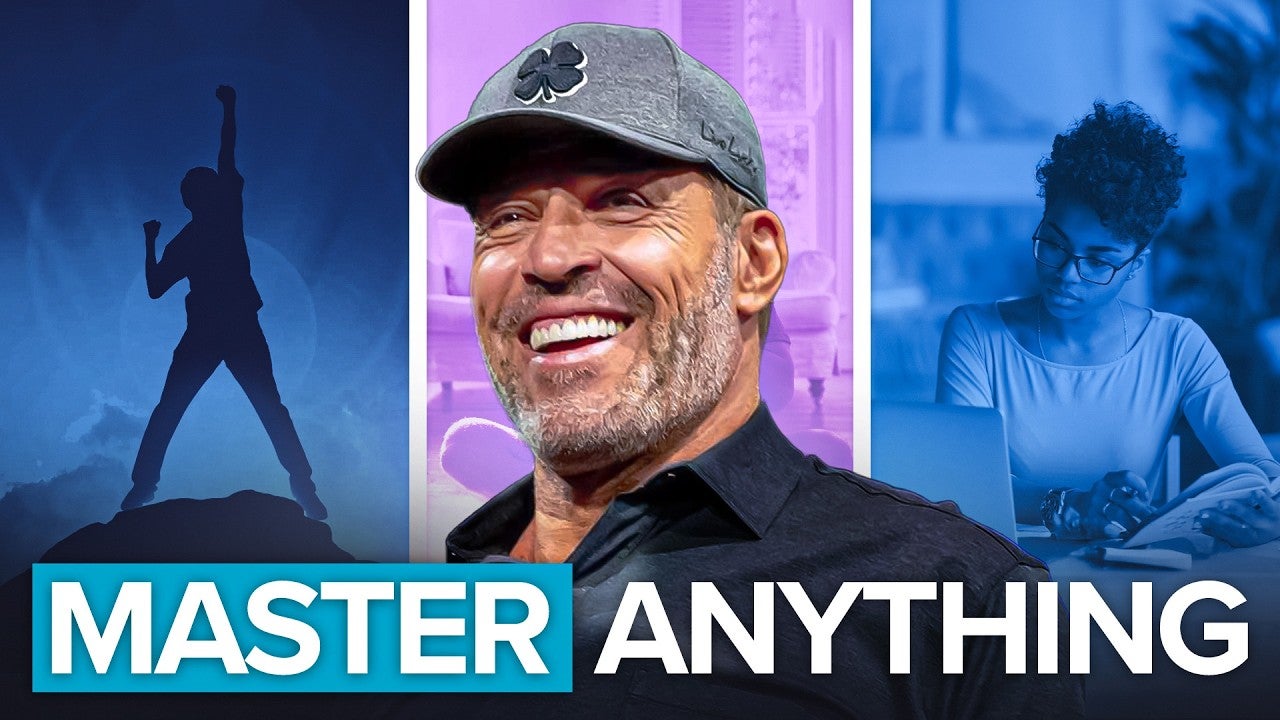
What if mastering any skill was simpler than you thought? Tony Robbins shares three simple yet POWERFUL steps to help you achieve true mastery—whether in your career, relationships, health, or finances. Apply these strategies daily and see real transformation. Uploaded 09-03-25 Watch more videos like this 5 Things That Hold 99% of People Back from TAKING CONTROL In Life: https://youtu.be/9EJyUijqfEY This LEADERSHIP Skill Will Change Your Life Forever: https://youtu.be/AMK1VsDLTug How To Influence ANYONE In Your Life (No Matter How Difficult...): https://youtu.be/nyRnnn82ATg The Most POWERFUL Energy Shift You've Never Heard Of: https://youtu.be/qA-v9voFB0U Follow Tony Robbins: Facebook: https://www.facebook.com/TonyRobbins Instagram: https://instagram.com/tonyrobbins/ TikTok: https://www.tiktok.com/@UC-12kRMQjK1LiQKRrT2zXcQ Twitter: https://twitter.com/tonyrobbins LinkedIn: https://www.linkedin.com/in/officialtonyrobbins Website: https://www.tonyrobbins.com/ Tony Robbins is a #1 New Yor
THE SEARCH FOR THE ULTIMATE RED LIGHT THERAPY IS OVER! After decades of exploring wellness technologies, Michael Jaco sits down with Rob Rene, founder of Exodus Strong, to explore the Red Light+ Total Body Reset system, the science behind red and near-infrared light, and why this technology has become such an important part of their wellness conversation. Rob's remarkable personal journey—including surviving five near-death experiences—inspired his mission to develop practical wellness tools that people can incorporate into their everyday lives. Discover the full-body Red Light+ Mat, designed for convenient 20-minute sessions, and the portable Red Light+ Wand, created for targeted use on areas such as the knees, shoulders, hands, and lower back. Michael and Rob discuss the technology, personal experiences, and how red light therapy may support a daily wellness routine. BLACK FRIDAY–CYBER MONDAY LISTENER EXCLUSIVE! This is your opportunity to explore Exodus Strong's special holiday offe
This episode was sponsored by Cardiff & 365 Thermal LightSpeed VT: https://www.lightspeedvt.com/ Dropping Bombs Podcast: https://www.droppingbombs.com/ "When the power grid goes down, the night belongs to whoever can see in it." Today's Dropping Bombs episode delivers a blunt conversation with Wade Bryan, the Marine veteran who built a thermal optics company in a town of 1,100 on $20,000 and a $50,000 overdraft after every manufacturer told him no. Wade explains why a thermal scope turns the dark into an advantage, what a power grid failure could do to your neighborhood, and why the "is night hunting fair?" debate misses the point. If the grid ever goes down, you'll either be glad you heard this one or wish you had. Connect with Wade Instagram (Personal): https://www.instagram.com/wadebryan365 Instagram (Business): https://www.instagram.com/365thermal YouTube: https://www.youtube.com/@365thermal Website: https://365thermal.shop (https://365thermal.shop/) Additional Resources Mentioned
Viewers like you help make PBS (Thank you ) . Support your local PBS Member Station here: https://to.pbs.org/DonateSPACE Uploaded 11-10-17 Can we ever achieve absolute cold? Try CuriosityStream today: http://curiositystream.com/spacetime You can further support us on Patreon at https://www.patreon.com/pbsspacetime Get your own Space Time tshirt at http://bit.ly/1QlzoBi Tweet at us! @pbsspacetime Facebook: facebook.com/pbsspacetime Email us! pbsspacetime [at] gmail [dot] com Comment on Reddit: http://www.reddit.com/r/pbsspacetime Help translate our videos! https://www.youtube.com/timedtext_cs_panel?tab=2&c=UC7_gcs09iThXybpVgjHZ_7g (https://www.youtube.com/timedtext_cs_panel?c=UC7_gcs09iThXybpVgjHZ_7g&tab=2) Previous Episode: When Quasars Collide STJC | Space Time Resources: Absolute Zero: Zero-Point Energy: Bose-Einstein Condensate: Alfred Leitner's Superfluid Liquid Helium: Links to Comments Response: Rcoates89 https://www.youtube.com/watch?v=gtZ7OVoI2nc&lc=z22lcfrgpz2sg5ixd04t1aokgcr
What if your AI agent could find the people you should know before you even start looking? Cosign is building a professional network around reputation and trusted recommendations, and now agents can use that network too. MTS host Sophia Dew sits down with a16z’s David Booth and Cosign’s Bella Nazzari to discuss what they’ve learned since launching Cosign, why traditional profiles often miss the operators doing the most important work, and how the Cosign Awards are surfacing talent through the people willing to vouch for them. They also explore an emerging behavior: people connecting their agents to Cosign to continuously find relevant people, lists, and opportunities, and what professional networking could look like when both humans and their agents participate. Resources: Follow David Booth: https://x.com/davidbooth Follow Bella Nazzari: https://x.com/nazzari Follow Sophia Dew: https://x.com/sophiadew Learn more about Cosign:https://cosign.co/ Connect your agent to Cosign:https://cosi
David Heinemeier Hansson thinks the agent era is reopening a window in computing that has been closed for decades: the chance to build a new operating system people actually want to use. DHH joins a16z General Partners Martin Casado and Anish Acharya to explain why he’s building Omarchy, an agent-first Linux distribution designed around a computer that users can modify simply by asking. They discuss why the command lines, config files, and detailed error messages that once made Linux intimidating now make it unusually well suited to agents, and why DHH believes software development has become cheap enough to challenge decades-old platform lock-in. But if code is becoming abundant, what still matters? DHH argues that taste, craft, and the willingness to obsess over the final 2% become more important, not less. The conversation moves from tiny teams wielding the productive capacity of thousands of people to open models, competition at the frontier, and the return of hacker, demo, and pse
The question isn’t simply whether humanity should race toward superintelligence or stop. Nick Bostrom argues the harder challenge is preserving the ability to slow down when safety falls behind, without turning a temporary pause into permanent technological stagnation. a16z’s Eddy Lazzarin and Elena Burger sit down with Bostrom to revisit the ideas he helped bring into the mainstream, now that increasingly capable AI systems actually exist. They discuss why alignment may become harder as models grow more situationally aware, which capability improvements may carry more risk than others, and why Bostrom favors “pacing the frontier” rather than committing to a broad or indefinite pause. They also examine the cost of waiting. Bostrom argues that safely developed superintelligence could radically extend human lifespans and address problems from disease to poverty, meaning delay carries risks of its own. From there, the conversation turns to Deep Utopia, governance, the possibility of post-
Preventing medical errors requires changing systems as well as holding individuals accountable.
Share your view, then see how readers voted. No sign-in required. This poll is shared across stories.
Do you agree or disagree?
Common Quandary
A Common Quandary to discuss
Another conversation to explore, separate from this news story.
You cannot stand your friend's partner. Do they still get a wedding invitation?
You are planning a small wedding and strongly dislike the person your longtime friend has been dating. Inviting them would make you uncomfortable, but excluding only that partner would embarrass your friend.
Whose comfort should govern a celebration centered on you?