Flights stopped nationwide. Banks locked people out. Outlook went dark. Even a classified NSA network failed. That's six outages in six days, and Congress reportedly heard that some came from rushed fixes for security holes AI found. On November 13th, a router failure caused the longest nationwide ground stop in 25 years. Investigators are still working out whether faulty equipment or installation work was to blame. Dr. Hassan Shahidi, president and CEO of the Flight Safety Foundation, explains what went wrong and what it means for your holiday travel. Then, Grand Theft Auto VI is finally here, 13 years after GTA V. Sensor Tower estimates it earned $1.84 billion by release day, employers are bracing for sick calls, and 43 soldiers at Fort Stewart reenlisted for four days off to play it. Plus: Tyler Brickley's Kindness Mob rallied around Kahri Salyars when online bullies struck A 9-year-old's AI python photo fooled firefighters The best days to buy for Black Friday How to scan the famil
Kraken (https://kraken.pxf.io/c/6563010/687155/10583) Ledger (https://shop.ledger.com/?r=59fe6e05c254) NordVPN (https://go.nordvpn.net/aff_c?aff_id=143753&offer_id=612&url_id=14830) Spotify (https://open.spotify.com/show/4gu4MrqbGVZeNNNbAuvSmR) Follow Crypto News Today on X: @CryptoNewsHQ (https://x.com/CryptoNewsHQ) Published companion Deep Dive: AI's $81 Billion Explosion — Is Wall Street Abandoning Bitcoin? (https://cryptonewstoday.io/podcast/episodes/cefa139e-23c4-4424-b40a-238636763f2e) November 21, 2026: Bitcoin rebounds from roughly $55,130, briefly reclaims $60,000, then slips below it again. Who will keep buying when forced trades end? Today's Daily Crypto Roundup examines the recovery test, Chainflip's vault drain and service halt, and ZebPay's warning about customer information exposed through MoEngage. Listening guide: Why Bitcoin ETF flows and Bitcoin's price can move differently (https://cryptonewstoday.io/podcast/guides/bitcoin-etf-inflows-and-price). Also covered: Bitde
The Huge Conversation with Mark Zuckerberg... I interviewed Meta CEO Mark Zuckerberg before Connect. There are not many people with more power over our future. Right now, Mark Zuckerberg and his team are imagining the future billions of people might live in, soon, and building towards it. So, in this conversation, my goal is to figure out what that future looks like. To paint a picture of the future Mark Zuckerberg is trying to build, so that you can decide for yourself what you think of it. We talked about the Meta's new Orion prototype AR glasses, creating holograms and the Star Trek universal translator, generative AI changing social media, big trends in human connection, open sourced AI, Ray Ban Meta glasses and Quest 3S, the biggest genuine question on his mind right now, and more... Welcome to the first episode of our new series, Huge Conversations… Special thanks to Derek Thompson, for his generous guidance on my first long-form interview! Chapters: 0:00 What is Mark Zuckerberg
Puzzle through this classic ethical dilemma and decide: is community safety more important than individual privacy? -- Your government has introduced a plan to address record-breaking rates of traffic tickets and deadly hovercar accidents. They propose assigning “driver credit scores” to every citizen, but would need to install cameras and microphones in every vehicle. While it would make the roads safer, is this undeniable benefit worth the cost to drivers’ privacy? Michael Vazquez and Sarah Stroud investigate. Lesson by Michael Vazquez and Sarah Stroud, directed by Jeff Le Bars, JetPropulsion.space. This video made possible in collaboration with the Parr Center for Ethics Learn more about how TED-Ed partnerships work: https://bit.ly/TEDEdPartner Support Our Non-Profit Mission ---------------------------------------------- Support us on Patreon: http://bit.ly/TEDEdPatreon Check out our merch: http://bit.ly/TEDEDShop ---------------------------------------------- Connect With Us ------
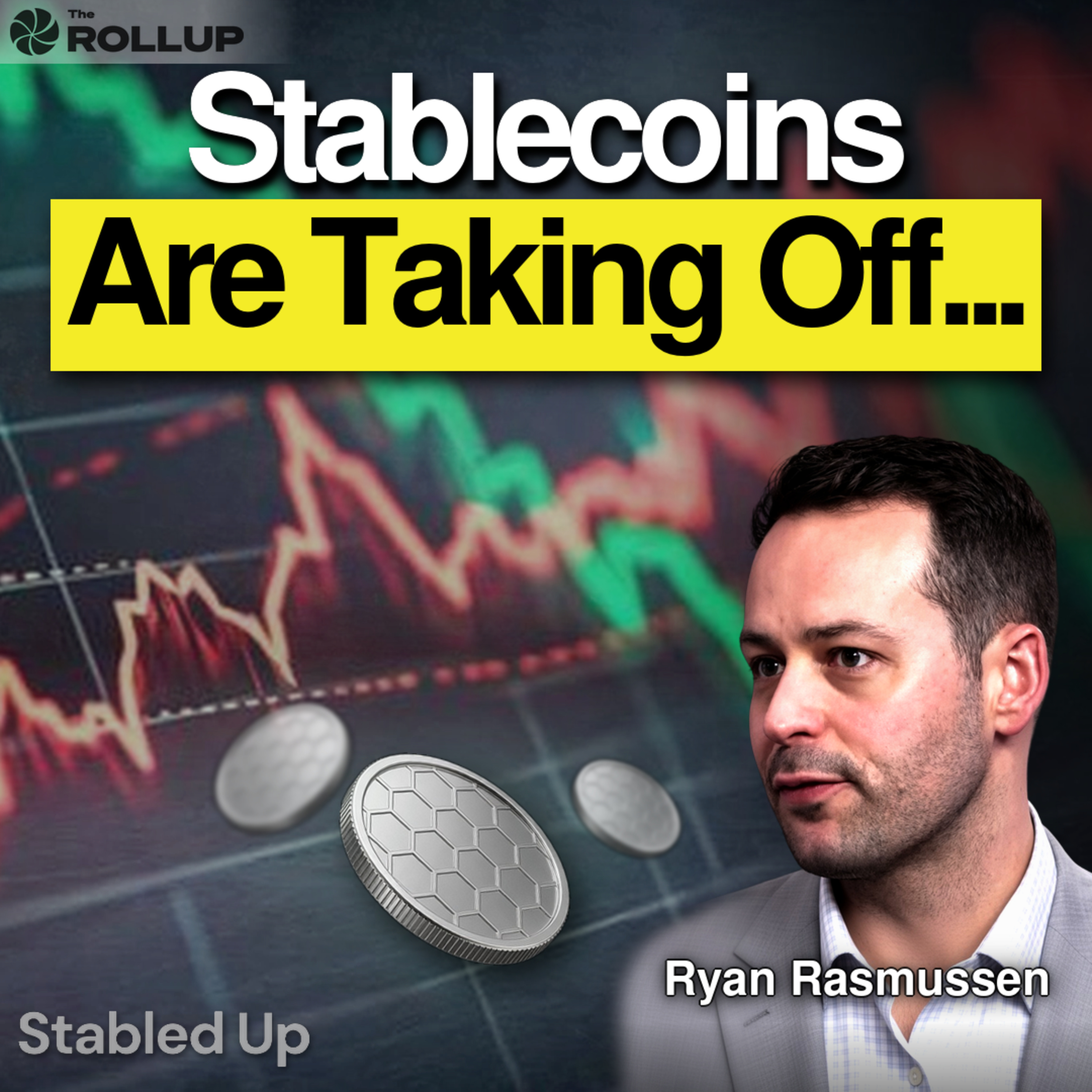
Bitwise Head of Research Ryan Rasmussen joins The Rollup at Solana Breakpoint to break down how investors should value SOL, from Solana's 40% share of tokenized stock volume to why tokens without strong tokenomics are set to underperform. We also cover the sharpest stablecoin drawdown Ryan has seen, the CFTC's perps ruling with Backpack, and why Bitwise views today as a buying opportunity. Stabled Up is presented by Frax. Ryan Rasmussen is the Head of Research at Bitwise. Live from the financial capital of the world. Timestamps: 00:00 Intro 00:45 Why Stablecoin AUM Is Falling 02:30 Climbing The Wall Of Worry 04:53 The Genius Act And Payment Stablecoins 05:42 Perps Come To The US Via Backpack 08:20 Tokenization Is Only 0.01% Of The Market 10:24 Who Wins The Tokenization Race 11:09 Do Tokenomics Matter? 13:21 A New Cohort Of Winners 14:57 Why Holding Periods Matter 16:09 Bitwise's Long-Term View On Solana Guest Socials Ryan Rasmussen X: https://x.com/RasterlyRock Bitwise X: https://x.com
In this episode of EVJ Snippets, we summarise the latest research soon to be published in our Equine Veterinary Journal through a quick overview of the paper: Athletic function following synovial sepsis in horses. This paper will soon be available to read on the Wiley Online Library.
In this episode of EVJ Snippets, we summarise the latest research published in our Equine Veterinary Journal through a quick overview of the paper: Fluorescent tagging for assessment of environmental cleaning in an equine hospital (https://beva.onlinelibrary.wiley.com/doi/10.1002/evj.70348).
Schools should evaluate new teaching approaches by actual improvements in learning.
Share your view, then see how readers voted. No sign-in required. This poll is shared across stories.
Do you agree or disagree?
Common Quandary
A Common Quandary to discuss
Another conversation to explore, separate from this news story.
The stadium can ban violent fans by scanning every face at the gate. Would you walk in?
A stadium can use facial recognition to identify people banned for violence and shorten security lines. Every visitor would be scanned, error rates are not zero, and the resulting biometric data could become useful to police or advertisers.
How much privacy may a crowd be asked to trade for collective safety?