English-language podcasts

People Who Read People: A Behavior and Psychology Podcast

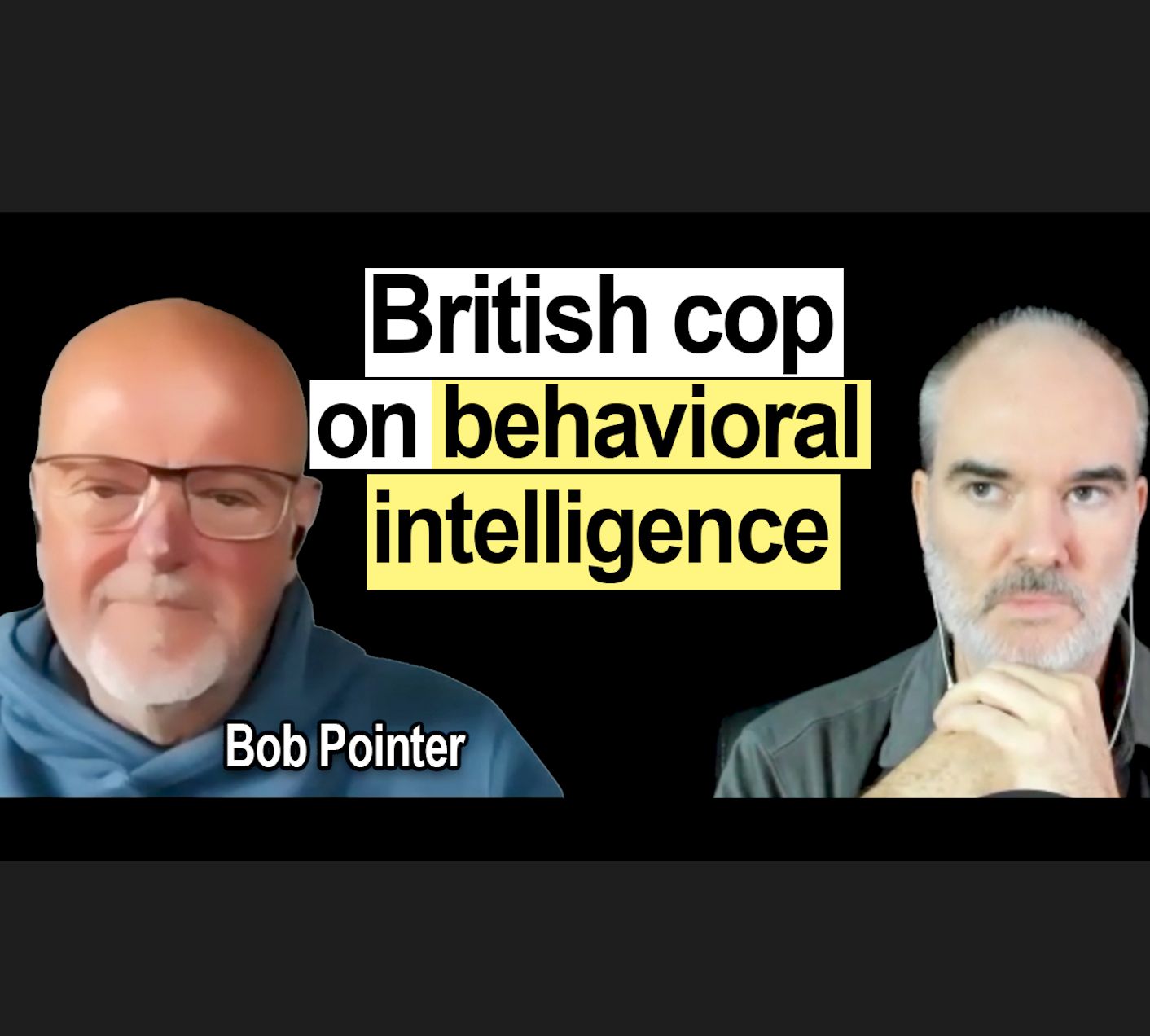
Ex-London cop on British interrogation strategies, celebrity behavior "experts," and baselining
77 min

Listen through the publisher, then discuss the episode here or arrange an in-person Roundtable. Your city determines where to meet.

Roundtables are designed for groups of four, with a shared subject and room for everyone to speak. Come for discussion, with no dating expectation.

What can an experienced police detective tell us about spotting lies, reading behavior, and getting people to open up? I talk with Bob Pointer, founder of the Behavioural Intelligence Academy (www.bi-ac.com). Bob is a former British police detective who has worked on fraud, counter-terrorism, and police corruption investigations. Bob shares stories from his career, including how British police used to learn interrogation techniques from TV shows, and how he was fooled by a fraud suspect. We discuss how police interviewing techniques have evolved, why even experienced investigators can struggle to spot deception, and we examine popular celebrity body-language "experts" who overstate their abilities. We also examine how police use behavioral observations to identify potential threats in public places, why personality tests can be misleading, and how investigators can build productive relationships with people they don't necessarily like or trust. Throughout the talk, we explore the importance of context, the dangers of overconfidence, and why paying too much attention to ambiguous body-language cues can distract us from more useful information. Hosted by Simplecast, an AdsWizz company.

Episode information is provided by the publisher. Listening takes place on the publisher’s service.

Listen at the source ↗

Featured places to meet in Palo Alto, CA

Explore these places and arrange a conversation through ThinkMatch.

City guide for Palo Alto, CA

More from People Who Read People: A Behavior and Psychology Podcast

People Who Read People: A Behavior and Psychology Podcast

Renowned deception researcher Aldert Vrij on how to detect lies

56 min

What actually works when it comes to detecting lies, and why are so many popular ideas about reading people and nonverbal behavior at odds with the scientific research? I talk with Aldert Vrij, one of the world's leading deception-detection researchers, who has spent almost four decades studying these topics. We discuss why what people say is far more revealing than their body language; why the perceived “sexiness” of reading nonverbal behavior has contributed to widespread myths and misconceptions; whether vocal behaviors like pitch, volume, and hesitation contain meaningful clues; and whether there's value in analyzing minor word choices and turns of phrase, as is done in so-called “statement analysis.” We discuss Paul Ekman's legacy as a source of faulty ideas about deception, micro-expression-based deception detection training, and the strategies that popular “body language experts” use to appear scientifically credible while simultaneously promoting ideas that conflict with the sc

Discuss this episode

People Who Read People: A Behavior and Psychology Podcast

Poker tells at the World Series of Poker, with $1.75M WSOP winner Rami Hammoud

75 min

Rami Hammoud finished 6th in the 2026 World Series of Poker Main Event, winning $1.75 million. Before the final table, he hired me (Zach Elwood) to study poker tells/behavior in the footage of his opponents. In this talk, Rami shares the story behind his journey to winning a life-changing amount of money, including how he almost left Las Vegas before the Main Event began, and how a mindset of having nothing to lose helped him play fearlessly. He talks about how studying poker tells transformed his approach to the game, sharing specific hands where behavioral clues helped him make decisions—and others where relying on such clues backfired. We discuss the psychology of high-stakes decisions, why even highly experienced poker players can be reluctant to trust behavioral reads, how the fear of looking foolish can lead to suboptimal decision-making. We also talk about some dynamics from the final table, including a call that many people thought was one of the worst calls in the history of W

Discuss this episode

Community Poll

Tourism revenue should help cover the costs visitors create for local residents.

Share your view, then see how readers voted. No sign-in required. This poll is shared across stories.

Do you agree or disagree?

Choose one answer

Common Quandary

A Common Quandary to discuss

Another conversation to explore, separate from this news story.

You find a rare library book your father kept for forty years. Do you return it anonymously?

While clearing your father's attic, you find a rare book stamped by the local library and due in 1986. The library would be thrilled to recover it, but returning it openly would expose a secret he apparently kept for decades—and might produce a spectacular overdue fine.

Does making an old wrong right require admitting who did it?

Explore this quandary