Export Controls, Sanctions, and Trusted Partnerships
Listen through the publisher, then discuss the episode here or arrange an in-person Roundtable. Your city determines where to meet.
Roundtables are designed for groups of four, with a shared subject and room for everyone to speak. Come for discussion, with no dating expectation.
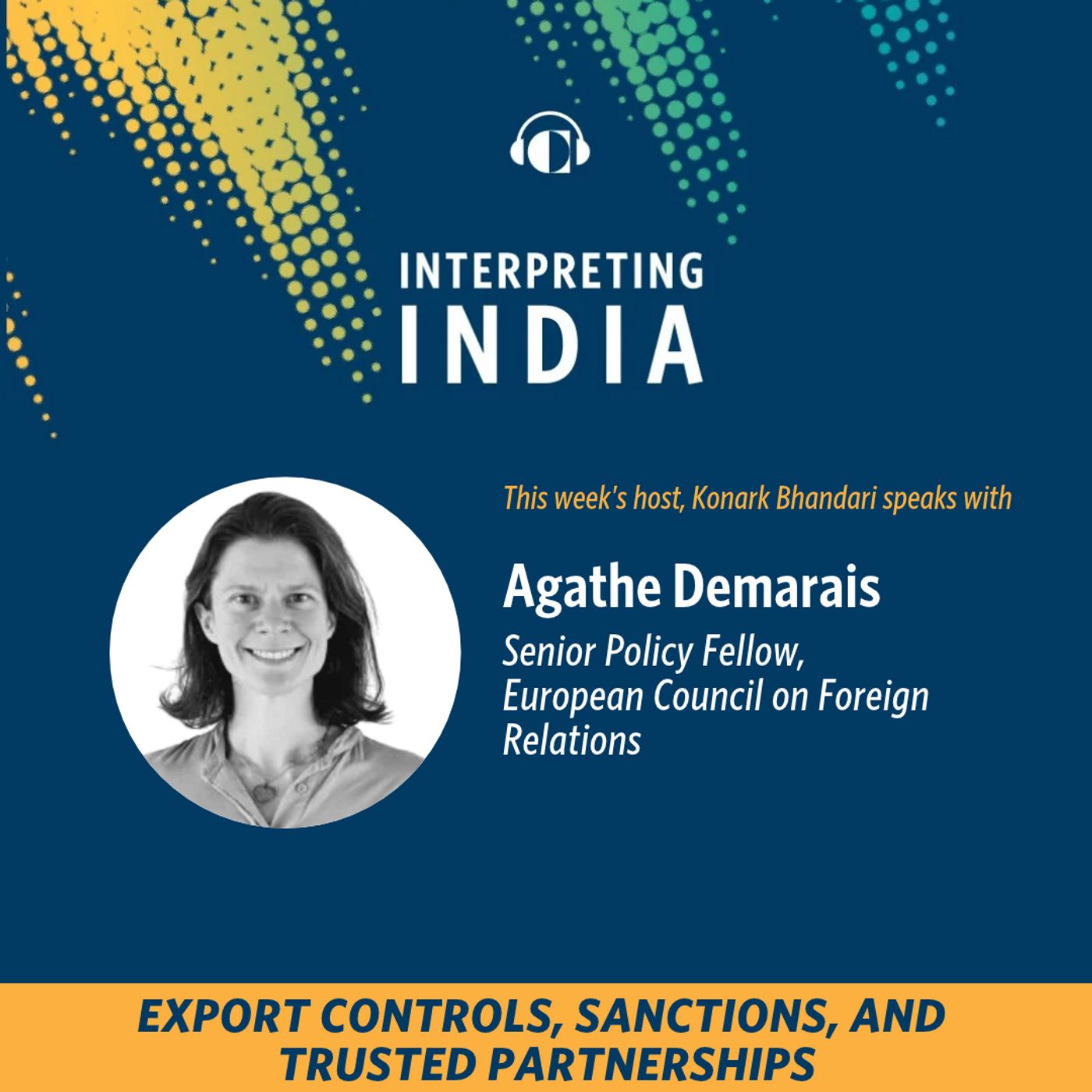
Agathe points to three drivers behind the new technology partnerships: the tech and AI race, the fragmentation of the global economy between a U.S.-led and a China-led bloc, and the difficulties of multilateralism. Middle powers like India are the swing states in that picture, which is why bigger powers want deals with them. On unpredictability, she says export controls on a U.S. frontier AI model showed that closed models come with an off switch, while Chinese models are open weight. Rare earths are a different case, because adaptation is possible, and Norway is now the top provider of rare earth compounds to the EU. Firms hedge and build redundancy, and in tech, reliability could become as important as capability. Export controls inflict short-term pain but fuel the target's push for self-sufficiency, which is why she says coalitions matter. Drawing on ECFR's new report, which tests eight widely held ideas about the global economy against data, Agathe says Europe is not losing the tech race so much as not fully running it. The Eurozone imports roughly three times the intellectual property it earns, and India pays out about eight times. Europe still holds leverage through coalitions and services. On secondary sanctions, she argues that uncertainty is the point and that firms, not governments, decide how to respond. The data shows little de-dollarization. For middle powers like India and Europe, she sees two strategies, building domestic resilience or picking a side, with the answer likely somewhere in between. She calls the EU-India trade deal excellent news, but says results will come gradually and the devil is in the details. Episode Contributors Konark Bhandari (https://carnegieindia.org/india/people/konark-bhandari) is a fellow with Carnegie India. He is a lawyer who has researched certain areas in the digital economy, focusing primarily on approaches to antitrust regulation of companies in the digital realm. Agathe Demarais (https://ecfr.eu/profile/agathe-demarais/)is a senior policy fellow at the European Council on Foreign Relations. Her areas of interest include the global economy, US-EU-China economic relations and economic statecraft. She heads ECFR’s geoeconomics and tech team, and co-leads ECFR’s flagship Re:Order project (https://gbr01.safelinks.protection.outlook.com/?data=05%7C02%7CMartin.Tenev%40ecfr.eu%7C140f7f9402f04446c7db08de4ea07e07%7C70d29c8fa8684fa69817fd7e08f16663%7C0%7C0%7C639034648431168300%7CUnknown%7CTWFpbGZsb3d8eyJFbXB0eU1hcGkiOnRydWUsIlYiOiIwLjAuMDAwMCIsIlAiOiJXaW4zMiIsIkFOIjoiTWFpbCIsIldUIjoyfQ%3D%3D%7C0%7C%7C%7C&reserved=0&sdata=joxG6DPXb1fG2%2BPWLy36u3gAoawozAmsLnwpg6q%2B9oU%3D&url=https%3A%2F%2Fecfr.eu%2Feuropeanpower%2Freorder%2F), exploring emerging visions of the global order, as well as the interplay between economic might and geopolitical influence. Readings Interdependence, revised: A new dictionary for the world economy (https://ecfr.eu/special/interdependence-revised/) by Agathe Demarais and Chiara Malaponti, European Council on Foreign Relations Every two weeks, Interpreting India brings you diverse voices from India and around the world to explore the critical questions shaping the nation's future. We delve into how technology, the economy, and foreign policy intertwine to influence India's relationship with the global stage. As a Carnegie India production, hosted by Carnegie scholars, Interpreting India, a Carnegie India production, provides insightful perspectives and cutting-edge by tackling the defining questions that chart India's course through the next decade. Stay tuned for thought-provoking discussions, expert insights, and a deeper understanding of India's place in the world. Don't forget to subscribe, share, and leave a review to join the conversation and be part of Interpreting India's journey.
Episode information is provided by the publisher. Listening takes place on the publisher’s service.
Listen at the source ↗