Feast of the Dedication of the Lateran Basilica - John 2: 13-22
23 min
Listen through the publisher, then discuss the episode here or arrange an in-person Roundtable. Your city determines where to meet.
Roundtables are designed for groups of four, with a shared subject and room for everyone to speak. Come for discussion, with no dating expectation.
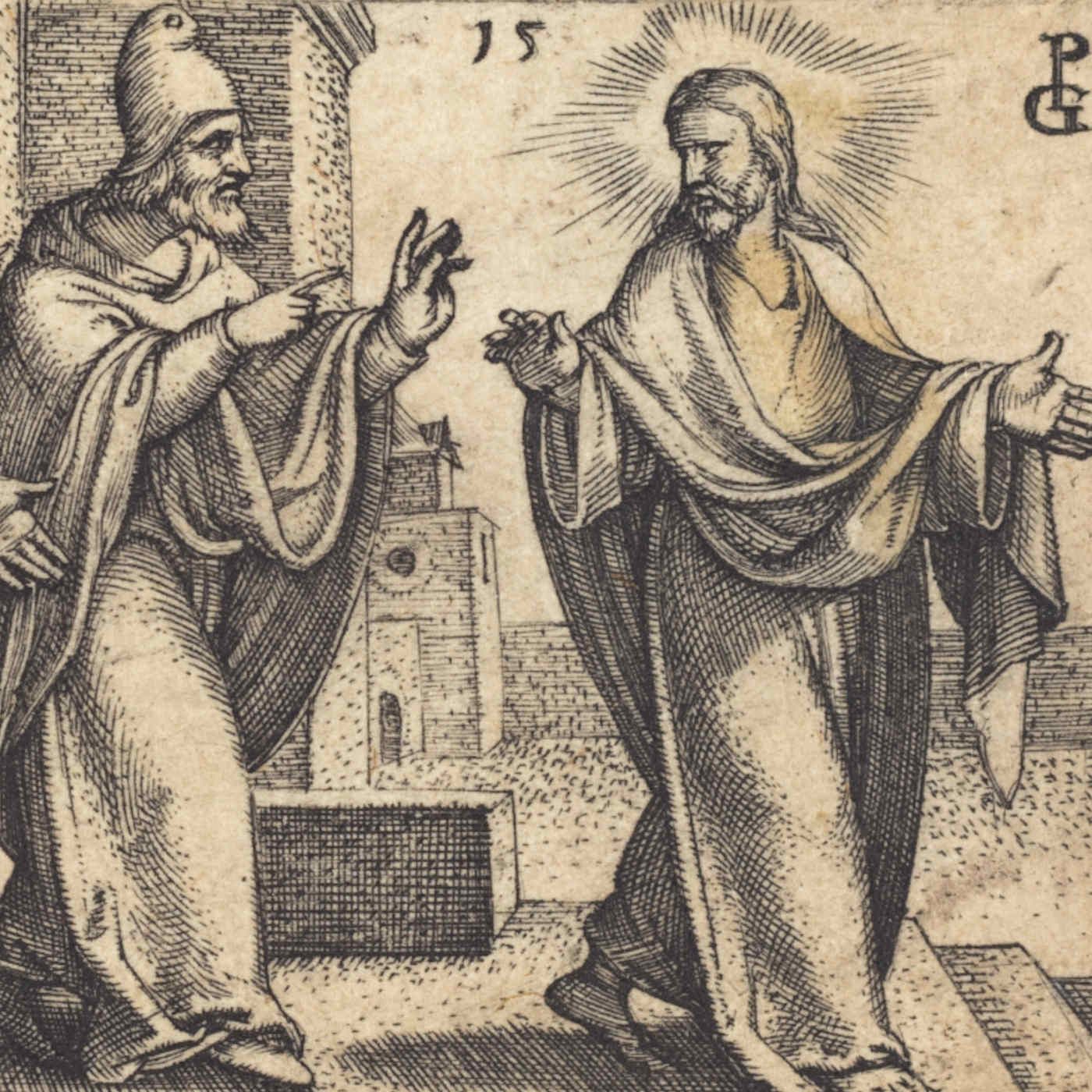
John 2: 13-22 - 'Destroy this Sanctuary and in three days I will raise it up.' Catechism of the Catholic Church Paragraphs: - 583-584 (In 'Jesus and The Temple) - Like the prophets before him Jesus expressed the deepest respect for the Temple in Jerusalem...Jesus went up to the Temple as the privileged place of encounter with God. For him, the Temple was the dwelling of his Father, a house of prayer, and he was angered that its outer court had become a place of commerce. He drove merchants out of it because of jealous love for his Father: “You shall not make my Father’s house a house of trade. His disciples remembered that it was written, ‘Zeal for your house will consume me.’” (abbreviated) - 586 (in 'Jesus and the Temple') - Far from having been hostile to the Temple...He even identified himself with the Temple by presenting himself as God’s definitive dwelling-place among men. Therefore his being put to bodily death presaged the destruction of the Temple, which would manifest the dawning of a new age in the history of salvation: “The hour is coming when neither on this mountain nor in Jerusalem will you worship the Father.” (abbreviated). - 575 (in 'Jesus and Israel') - Many of Jesus' deeds and words constituted a "sign of contradiction", but more so for the religious authorities in Jerusalem, whom the Gospel according to John often calls simply "the Jews", than for the ordinary People of God (abbreviated). - 994 (in 'The Progressive Revelation of the Resurrection') - But there is more. Jesus links faith in the resurrection to his own person: "I am the Resurrection and the life." It is Jesus himself who on the last day will raise up those who have believed in him, who have eaten his body and drunk his blood. Already now in this present life he gives a sign and pledge of this by restoring some of the dead to life, announcing thereby his own Resurrection, though it was to be of another order. He speaks of this unique event as the "sign of Jonah," The sign of the temple: he announces that he will be put to death but rise thereafter on the third day. Got a Bible question?
Episode information is provided by the publisher. Listening takes place on the publisher’s service.
Read Online (https://catholic-daily-reflections.com/2026/11/20/questioning-god/) Questioning God Some Sadducees, those who deny that there is a resurrection, came forward and put this question to Jesus, saying, “Teacher, Moses wrote for us, If someone’s brother dies leaving a wife but no child, his brother must take the wife and raise up descendants for his brother. Now there were seven brothers…” Luke 20:27–29 After entering Jerusalem for the Passover and cleansing the Temple, Jesus returned each day to teach within its courts. The people warmly received Him, hanging on His every word. Yet the religious leaders, fearful of His influence, deliberately and methodically sought to trap Him, discredit Him, and destroy Him. First, the chief priests, scribes, and elders challenged His authority, questioning His right to drive out the moneychangers and those selling animals for sacrifice. He declared they had turned His Father’s house into a den of thieves. When that ploy failed, the leaders
Friday 20 November 2026 Today is Friday the 20th of November, in the 33rd week of Ordinary Time. Continuum Choir sings, ‘Upon Your Heart’ by Eleanor Daley: Set me as a seal upon your heart, As a seal upon your arm, For love is strong as death. Many waters cannot quench love, Neither can the floods drown it. If you keep my commandments, You shall abide in my love, Love one another as I have loved you, Then shall your joy be complete. As you hear these words sung, let them carry you into prayer... Today’s reading is from the Book of Revelation. Revelation 10:8-11 Then the voice that I had heard from heaven spoke to me again, saying, ‘Go, take the scroll that is open in the hand of the angel who is standing on the sea and on the land.’ So I went to the angel and told him to give me the little scroll; and he said to me, ‘Take it, and eat; it will be bitter to your stomach, but sweet as honey in your mouth.’ So I took the little scroll from the hand of the angel and ate it; it was sweet as
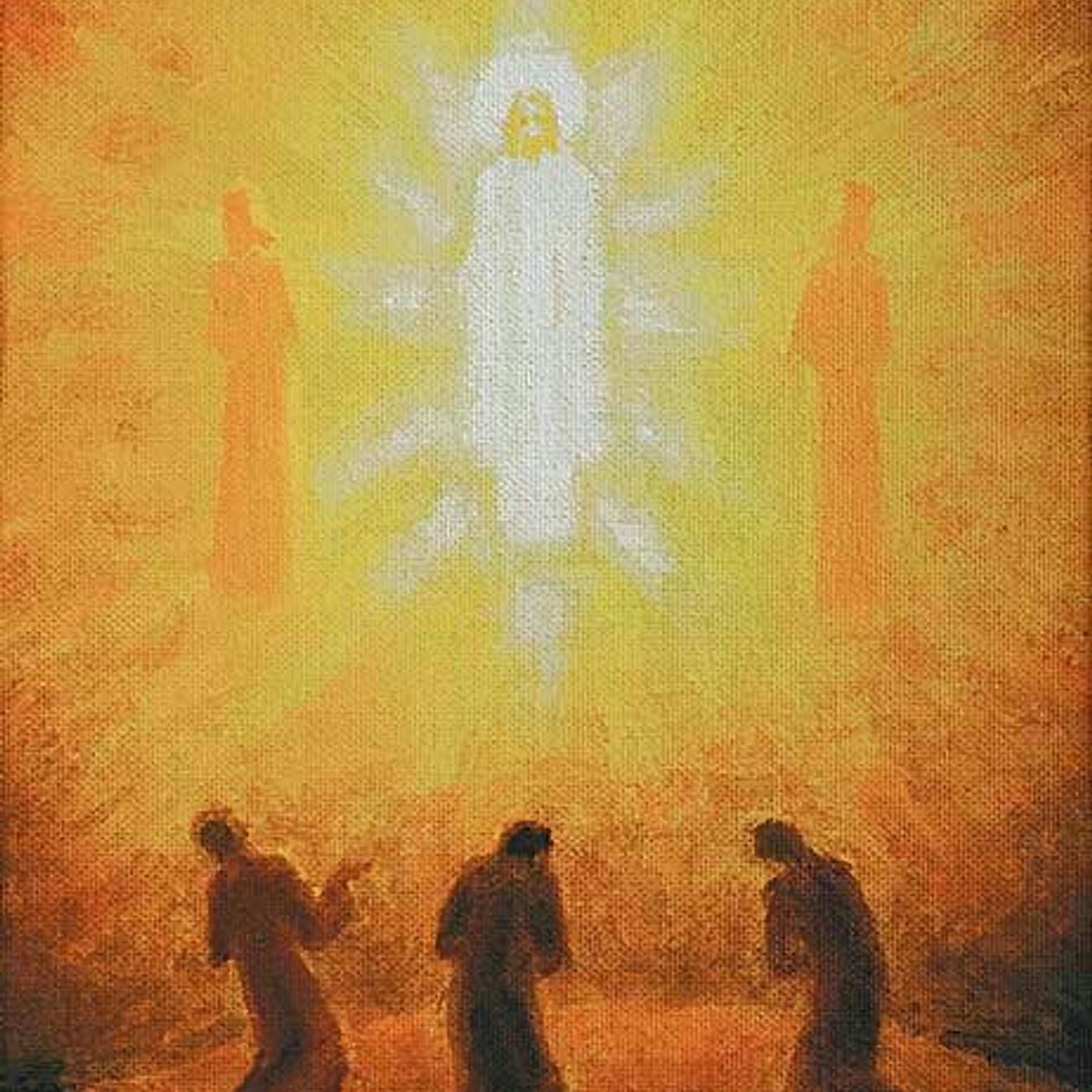
Jesus takes Peter, James and John up a high mountain, where something extraordinary happens. Before their eyes, His appearance changes. His face shines like the sun, His clothes become dazzling white, and Moses and Elijah appear, speaking with Him. This encounter reminds us that following Christ is not simply about knowing stories about Him or witnessing extraordinary moments. It is about recognising who He truly is, listening to His words and allowing that revelation to transform how we live. Every contribution counts. Thank you for being part of our journey!
Good morning, “I’m the king, and she’s my queen… she doesn’t get to usurp the throne.” Not words from a Shakespearian tragedy, but the words of Aaron Edwards, the Christian theologian and father of seven who features in a new documentary on the BBC this week. Edwards and his wife Molly are one of the families in filmmaker Poppy Jay’s Young British and Tradwife, exploring women embracing traditional gender roles, often showcased on Instagram. For some, this is more than a choice to stay at home rather than go to work – feminism’s aim was to give women choice, after all. But rather for some it’s also a belief rooted in their reading of the Bible that wives should submit to their husbands. As a Christian feminist, I won’t get into the debate here, but what struck me was how questions of sovereignty, submission and power are finding their ways into much of our public debate. In the home, in the Church, in the nation, in our politics, we’re asking: who exactly is in charge? Who should submi
What if raising your children could be one of the most meaningful acts of worship in your life? What if every sacrifice you make as a parent becomes an opportunity to earn the pleasure of Allah ﷻ? In this powerful Islamic reminder, Sheikh Dr. Sajid Umar delivers an important message that every Muslim parent needs to hear: parenting is not simply a responsibility or a daily routine. When approached with sincere intentions and guided by Islamic values, raising children can become an act of Ibadah and a means of seeking reward in the Hereafter. In today's busy world, many parents struggle to balance their careers, financial responsibilities, and family life. But while providing for our children is important, their emotional well-being, Islamic upbringing, and connection with Allah deserve our attention too. This thought-provoking lecture explores: • Why parenting is a sacred responsibility in Islam • How raising children with sincere intentions can become Ibadah • The importance of being
Do you ever feel named but unknown? Like you are invited but not necessarily included? You have a seat at the table, but you rarely speak? Let me tell you something, the behind the scenes people are needed. Jesus could have chosen a king to be in his inner circle. He could have chosen a military leader. He could have chosen a prominent business man. But instead, he chose James the son of Alphaeus, known as James the Less. For real, that was his title – James the Less. Why? Because there was already a James chosen for Jesus’ inner circle. Remember James the fisherman and brother of John? That James was given the title James the Great, so now we have this James known as James the Less. Maybe sometimes you feel like your name comes with the title “lesser than” too. You’re not as smart. You’re not as pretty. You’re not as successful. You’re not the first one everyone chooses. You’re named but mostly just unknown. Oh girl, how you are needed!!!!! This James, James the Less, is named but pre
Matthew 25: 31-46 - 'I was naked and you clothed me; sick, and you visited me.' Catechism of the Catholic Church Paragraphs: - 544 (In 'The Kingdom of God is at hand') - Jesus identifies himself with the poor of every kind and makes active love toward them the condition for entering his kingdom (abbreviated) - 1033-1034 (in 'I Believe in Life Everlasting') - Our Lord warns us that we shall be separated from him if we fail to meet the serious needs of the poor and the little ones who are his brethren...Jesus often speaks of "Gehenna" of "the unquenchable fire" reserved for those who to the end of their lives refuse to believe and be converted, where both soul and body can be lost. Jesus solemnly proclaims that he "will send his angels, and they will gather . . . all evil doers, and throw them into the furnace of fire," and that he will pronounce the condemnation: "Depart from me, you cursed, into the eternal fire!" - 2447 (in 'Love for the Poor') - The works of mercy are charitable acti
Luke 20: 27-40 - 'In God all men are alive.' Catechism of the Catholic Church Paragraphs: - 330 (In 'Who are Angels'?) - As purely spiritual creatures angels have intelligence and will: they are personal and immortal creatures, surpassing in perfection all visible creatures, as the splendor of their glory bears witness. - 575 (In 'Jesus and Israel') - Many of Jesus’ deeds and words constituted a “sign of contradiction,” but more so for the religious authorities in Jerusalem, whom the Gospel according to John often calls simply “the Jews,” than for the ordinary People of God. To be sure, Christ’s relations with the Pharisees were not exclusively polemical. Some Pharisees warned him of the danger he was courting; Jesus praises some of them, like the scribe of Mark 12:34, and dines several times at their homes. Jesus endorses some of the teachings imparted by this religious elite of God’s people: the resurrection of the dead, certain forms of piety (almsgiving, fasting, and prayer), the c
Luke 19: 41-44 - 'Jesus sheds tears over the coming fate of Jerusalem.' Catechism of the Catholic Church Paragraphs: - 558 (In 'Jesus' ascent to Jerusalem') - Jesus recalls the martyrdom of the prophets who had been put to death in Jerusalem. Nevertheless he persists in calling Jerusalem to gather around him: “How often would I have gathered your children together as a hen gathers her brood under her wings, and you would not!” When Jerusalem comes into view he weeps over her and expresses once again his heart’s desire: “Would that even today you knew the things that make for peace! But now they are hid from your eyes.” Got a Bible question?
Public sports funding should prioritize everyday participation over elite competition.
Share your view, then see how readers voted. No sign-in required. This poll is shared across stories.
Do you agree or disagree?
Common Quandary
A Common Quandary to discuss
Another conversation to explore, separate from this news story.
You can clone the best dog you ever had. Would you?
After a beloved dog dies, its owner can afford to have it cloned. The procedure is legal and improving, but it uses animals as surrogates and will not recreate the original dog's memories or personality.
What do our obligations to animals permit us to create for our own comfort?