Federalism: Crash Course Government and Politics #4
14 min
Listen through the publisher, then discuss the episode here or arrange an in-person Roundtable. Your city determines where to meet.
Roundtables are designed for groups of four, with a shared subject and room for everyone to speak. Come for discussion, with no dating expectation.
In which Craig Benzine teaches you about federalism, or the idea that in the United States, power is divided between the national government and the 50 state governments. Craig will teach you about how federalism has evolved over the history of the US, what powers are given to the federal government, and what stuff the states control on their own. And he punches an eagle, which may not surprise you at all. Produced in collaboration with PBS Digital Studios: http://youtube.com/pbsdigitalstudios Support is provided by Voqal: http://www.voqal.org (http://www.voqal.org/) Chapters: Introduction: Federalism 00:00 What is Federalism? 0:38 Dual Federalism 1:47 The Commerce Cause 3:34 Cooperative Federalism 4:18 Grants-in-aid 4:48 Regulated Federalism 6:04 New Federalism 7:00 Federalism Today 8:05 Credits 8:44 Crash Course is on Patreon! Want to find Crash Course elsewhere on the internet? Facebook - http://www.facebook.com/YouTubeCrashCourse Twitter - http://www.twitter.com/TheCrashCourse Instagram - https://www.instagram.com/thecrashcourse/ CC Kids: http://www.youtube.com/crashcoursekids
Episode information is provided by the publisher. Listening takes place on the publisher’s service.
Best books for Prompt Engineering with GPT-3 and LLMs - Crash Course in AGIEpisode release date: 27 Dec 2022Spreading awareness about the works of some of the leading educators in the AI revolution. Core Ideas: Metamodernism: Narratives and emergence view of reality - Reduce suffering - Increase prosperity - Increase understanding mantra: Seek knowledge. ELABORATE: Add depth and detail to understanding, weaving comprehensive and nuanced explanations.DISCLAIMER: This is a community-driven show. ----------------Best books for Prompt Engineering with GPT-3 and LLMs - Crash Course in AGIEpisode release date: 27 Dec 2022Spreading awareness about the works of some of the leading educators in the AI revolution. Core Ideas: Metamodernism: Narratives and emergence view of reality - Reduce suffering - Increase prosperity - Increase understanding mantra: Seek knowledge. ELABORATE: Add depth and detail to understanding, weaving comprehensive and nuanced explanations.DISCLAIMER: This is a community
Puzzle through this classic ethical dilemma and decide: is community safety more important than individual privacy? -- Your government has introduced a plan to address record-breaking rates of traffic tickets and deadly hovercar accidents. They propose assigning “driver credit scores” to every citizen, but would need to install cameras and microphones in every vehicle. While it would make the roads safer, is this undeniable benefit worth the cost to drivers’ privacy? Michael Vazquez and Sarah Stroud investigate. Lesson by Michael Vazquez and Sarah Stroud, directed by Jeff Le Bars, JetPropulsion.space. This video made possible in collaboration with the Parr Center for Ethics Learn more about how TED-Ed partnerships work: https://bit.ly/TEDEdPartner Support Our Non-Profit Mission ---------------------------------------------- Support us on Patreon: http://bit.ly/TEDEdPatreon Check out our merch: http://bit.ly/TEDEDShop ---------------------------------------------- Connect With Us ------
PBS Member Stations rely on viewers like you. To support your local station, go to: http://to.pbs.org/DonateSPACE ↓ More info below ↓ Uploaded 11-11-20 Sign Up on Patreon to get access to the Space Time Discord! Physicists have a long history of sticking our noses where they don’t belong - and one of our favorite places to step beyond our expertise is the question of consciousness and free will. Sometimes our musings are insightful, sometimes incoherent, and usually at least somewhat naive. Which a fair description of this show, so of course Space Time needs to weigh in physics and free will.. Check out the Space Time Merch Store Hosted by Matt O'Dowd Written by Matt O'Dowd and Bahar Gholipour Graphics by Leonardo Scholzer, Yago Ballarini, and Pedro Osinski Directed by: Andrew Kornhaber Assistant Producer: Setare Gholipour Executive Producers: Eric Brown and Andrew Kornhaber End Credits Music by J.R.S. Schattenberg: https://www.youtube.com/channel/UCRl6-nb4iOnsij-vnpAjp0Q Special Thank
In this video, we will debunk the myth that calories cause obesity, and then discuss evidence-based, practical wisdom that will help you teach your body’s metabolism to work with you, rather than against you. We will delve into the weeds a bit with examples, but also zoom out to make sure you get the big picture takeaways that you need to hear! Chapters 0:00 – Introduction 0:55 – Calories Don’t Cause Obesity 3:53 – Nuances in Human Trials 7:31 – Power of Animal Studies 8:38 – 4 Tips on How to Fix a Broken Metabolism 9:16 – Processed Foods and Sweeteners 11:11 – Reduce Sugar Intake 14:23 – Exercise 15:45 – Conclusion Other videos mentioned: What is a FAST metabolism, Really?! Lifting the Weight of Anxiety: New Data on Exercise Too Cool for Stool: NEW Metabolic Advantage of Ketogenic Diets Sweet Surprise: The Science of Sucralose will leave your head Spinning Walter Willett on Controversial Low-Carb vs Low-Fat Study Papers Referenced: Levine JA, et al Science.1999. PMID: 9880251 Soto Mot
What’s the key to building a truly great life? Tony Robbins shares how leadership starts with influence and serving others. In this video, he explores how mastering your emotions and influencing yourself first can change everything. Are you ready to shift your mindset, change your state, rewire your patterns and lead with greater impact? Uploaded 22-09-24 Watch more videos like this Shift Your Identity and Master Your State: https://youtu.be/B8Jb3qmCEAc 2 Key Skills To Master If You Want An Extraordinary Life: https://youtu.be/CMF7H9OX5NQ NOW I AM THE VOICE! Change Your State and Raise Your Standards: https://youtu.be/ceYtAEpSoGk Tony Robbins Life Advice Playlist: https://www.youtube.com/playlist?list=PLYTXvUDQT5pXYvh-ry7E6_XV23-9mObG1 Follow Tony Robbins: Facebook: https://www.facebook.com/TonyRobbins Instagram: https://instagram.com/tonyrobbins/ TikTok: https://www.tiktok.com/@UC-12kRMQjK1LiQKRrT2zXcQ Twitter: https://twitter.com/tonyrobbins LinkedIn: https://www.linkedin.com/in/offi
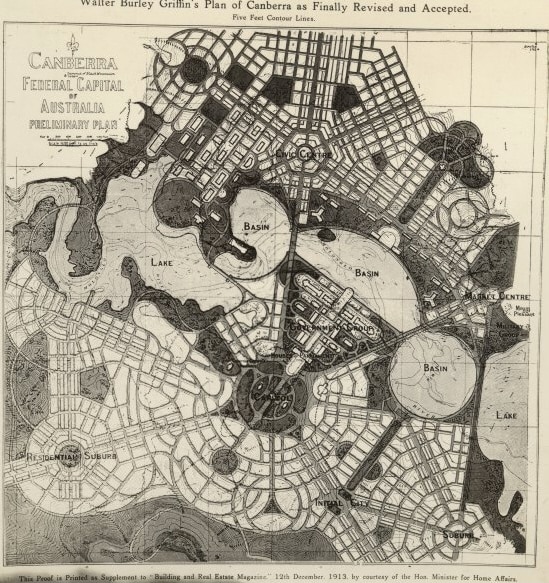
This Tuesday 24 November is the 150th anniversary of the birth of Walter Burley Griffin, the American architect who, in partnership with his wife and close collaborator Marion Mahony Griffin, won Australia’s Federal Capital Design Competition. The Griffins "radical" vision for Canberra was inspired by great thinkers at the turn of the 20th century, but the advent of The Great War was the beginning of the end of the Walter Burley Griffin plan. This year's Marion Mahony Griffin lecture, titled “The magic of two Americans (https://www.library.gov.au/whats-on/events/2026-marion-mahony-griffin-lecture-magic-two-americans)” is being given by Professor David Headon at the National Library of Australia on Tuesday November 24 at 6pm. It will also be lifestreamed on the National Library of Australia’s YouTube (https://www.youtube.com/@NationalLibraryofAustralia/featured) channel. Guest: Professor David Headon of the ANU Australian Studies Institute. David has also been Cultural Advisor at the Na
The majority of the universe is made up of a currently mysterious entity that pervades space: dark energy. We don’t know exactly what it is, but we do know that dark energy accelerates the expansion of space. We think this means the Universe will expand forever, even as our view of it shrinks while space expands faster all the time. Check out the Crash Course Astronomy solar system poster here: http://store.dftba.com/products/crashcourse-astronomy-poster If you want to learn more about the creation and death of the universe, watch Crash Course Big History here: https://youtube.com/playlist?list=PL8dPuuaLjXtMczXZUmjb3mZSU1Roxnrey -- Chapters: Introduction: The Expanding Universe 00:00 The Expansion of Space is Accelerating 2:17 What is Dark Energy? 4:19 Will the Universe Expand Forever? The Geometry of the Universe 5:20 The Cosmic Horizon of the Observable Universe 6:50 Review 10:20 -- GEOMETRY OF THE UNIVERSE RESOURCES Geometry: Expanding faster than light: General expansion: -- PBS Di
Have you ever wondered where cured meats like salami or pepperoni get their bright red color? Of course its from organic chemistry! A chemical called nitric acid gives them that bright color, while also increasing their shelf. It's also involved in some other interesting reactions. In this episode of Crash Course Organic Chemistry we'll see how nitrous acid reacts with primary amines to form diazonium salts, we'll learn about alkyldiazonium salts and aryldiazonium salts, and see what conditions are necessary for nucleophilic aromatic substitutions. Series Sources: Brown, W. H., Iverson, B. L., Ansyln, E. V., Foote, C., Organic Chemistry; 8th ed.; Cengage Learning, Boston, 2018. Bruice, P. Y., Organic Chemistry, 7th ed.; Pearson Education, Inc., United States, 2014. Clayden, J., Greeves, N., Warren., S., Organic Chemistry, 2nd ed.; Oxford University Press, New York, 2012. Jones Jr., M.; Fleming, S. A., Organic Chemistry, 5th ed.; W. W. Norton & Company, New York, 2014. Klein., D., Organ
Like a trendy dance, a fighting combo, or a secret handshake, organic reactions can be broken down into simpler steps. In this episode of Crash Course Organic Chemistry, we’ll specifically be looking at alkene addition reactions, and with each new reaction ask ourselves three questions to help us puzzle through the mechanism and understand what’s going on. Episode Sources: Le Couteur, P, Burreson, J. Napoleon’s Buttons: 17 molecules that changed history., Penguin, New York, 2004, Chapter 1. Whipps, H., “How the Spice Trade Changed the World,” https://www.livescience.com/7495-spice-trade-changed-world.html Last accessed, 3/28/2020. Henriques, Martha, “How spices changed the ancient world,” http://www.bbc.com/future/bespoke/made-on-earth/the-flavours-that-shaped-the-world/ Last accessed, 3/28/2020. Hashimoto, K., Yaoi, T., Koshiba, H., Yoshida, T., Maoka, T., Fujiwara, Y., Yaamoto, Y, Mori, K., “Photochemical Isomerization of Piperine, a Pungent Constituent of Pepper”, Food Sci. Technol.
Public officials should meet ethical standards higher than the minimum required by law.
Share your view, then see how readers voted. No sign-in required. This poll is shared across stories.
Do you agree or disagree?
Common Quandary
A Common Quandary to discuss
Another conversation to explore, separate from this news story.
Your coworker's religious holiday means you work the unpopular shift again. Is that fair?
A workplace accommodates religious observances by asking other employees to cover unpopular shifts. One coworker objects that nonreligious commitments can be equally meaningful but receive less formal protection.
Does equal respect require treating every kind of commitment identically?