Listen through the publisher, then discuss the episode here or arrange an in-person Roundtable. Your city determines where to meet.
Roundtables are designed for groups of four, with a shared subject and room for everyone to speak. Come for discussion, with no dating expectation.
Merriam-Webster's Word of the Day for November 26, 2026 is: felicitous • \fih-LISS-uh-tus\ • adjective Felicitous is an adjective most often used in formal speech and writing to describe something that is very well expressed or suited for some purpose or situation. It can also be used as a synonym for pleasant or delightful. // She had not been asked ahead of time to speak at the event, but she managed some felicitous remarks nonetheless. // That the cousins happened to be on the same flight was a felicitous coincidence—they had no idea the other would even be traveling at that time. See the entry > (https://www.merriam-webster.com/dictionary/felicitous) Examples: “It’s a felicitous coincidence that the dance world pivots on the two seasons with action-verb monikers, fall and spring. The former is accompanied by swarms of students returning to classrooms and campuses, with the dance world snapping to attention in September.” — Andrew Gilbert, The East Bay (California) Times, 8 Sept. 2026 Did you know? Before a mouse named Mickey ruled the animation scene, there was Felix—a wily black cat who is often regarded as the first cartoon star, and who became an international sensation (https://www.britannica.com/biography/Otto-Messmer) in the early 20th century for films such as Felix in Hollywood (1923) and Comicalamities (1928). “Felix,” you might say, was a felicitous—that is, apt (https://www.merriam-webster.com/dictionary/apt)—name for the happy, Chaplinesque (https://www.britannica.com/biography/Charlie-Chaplin) feline. Felix, after all, is a Latin word meaning “happy” or “fruitful,” and the ancestor of the English adjective felicitous, which can mean both “pleasant and delightful,” and “very well suited or expressed.” With regard to the “apt” sense of felicitous, it’s important to note that it is most often applied to someone’s actions or expressions (as in “a felicitous phrase”). In other words, no matter how fitting someone’s choice of pants may be for, say, the world premiere of a new animated movie, it would not be fitting to say “they arrived at the theater wearing felicitous pants.”
Episode information is provided by the publisher. Listening takes place on the publisher’s service.
Imagine taking a walk in the woods after a particularly busy week. You listen to the birds, watch the sunlight filter through the trees, and gradually notice little things you would normally walk past without a second thought. Nature has a way of bringing us back to the present moment. Hello everyone, and welcome to Daily English. Today's expression is “have a way of doing something.” When we say someone or something has a way of doing something, we mean that they have a particular ability or tendency to produce a certain effect, sometimes in a way that's difficult to explain. Let's look at a few examples. Imagine you're walking through a supermarket when you suddenly hear a song you used to listen to years ago. Within seconds, you're thinking about an old friend, a particular summer, and a version of yourself you haven't thought about in a long time. You might say: “Music has a way of bringing back memories we didn't even know we still had.” Now, imagine you've been worrying about a p
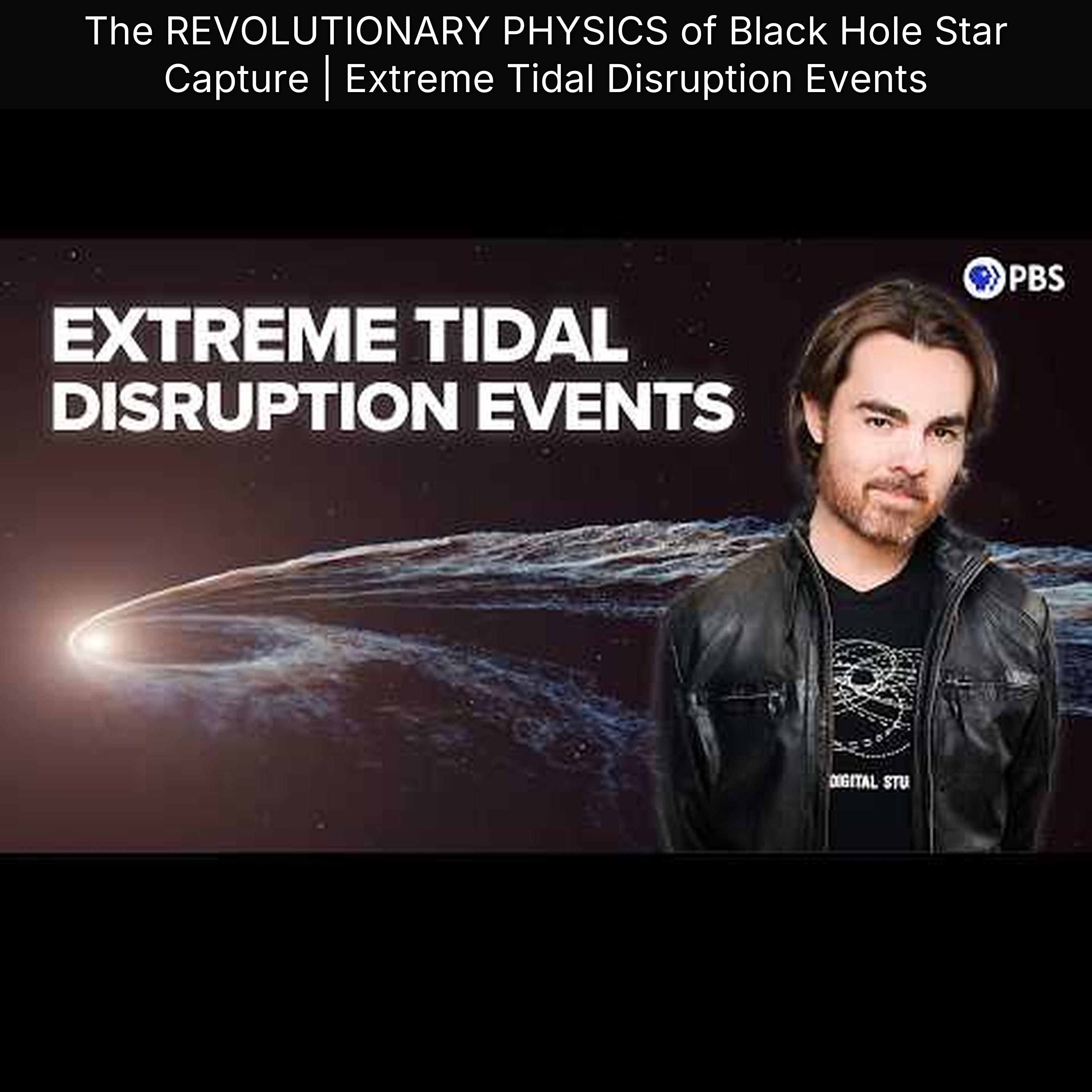
PBS Member Stations rely on viewers like you. To support your local station, go to:http://to.pbs.org/DonateSPACE Sign Up on Patreon to get access to the Space Time Discord! If you track the motion of individual stars in the ultra-dense star cluster at the very center of the Milky Way you’ll see that they swing in sharp orbits around some vast but invisible mass—that’s the Sagittarius A* supermassive black hole. These are perilous orbits, and sometimes a star wanders just a little too close to that lurking monster, leading to its utter destruction in the spectacular phenomenon known as a tidal disruption event. We’ve never seen a TDE in the Milky Way, but we’ve seen them in distant galaxies—and we now know how to spot stellar destructions so extreme that they reveal properties of the black hole itself. Check out the Space Time Merch Store Sign up for the mailing list to get episode notifications and hear special announcements! Search the Entire Space Time Library Here: https://search.pb
Uploaded 06-11-17 View full lesson: https://ed.ted.com/lessons/how-many-verb-tenses-are-there-in-english-anna-ananichuk How many different verb tenses are there in a language like English? At first, the answer seems obvious — there’s past, present, and future. But it isn't quite that simple. Anna Ananichuk explains how thanks to something called grammatical aspect, each of those time periods actually divides further. Lesson by Anna Ananichuk, directed by Luke Rotzler. Thank you so much to our patrons for your support! Without you this video would not be possible. Fiona Prince, Anthony Kudolo, Mrinalini, Yanuar Ashari, Antero Semi, Ivan Todorović, Sdiep Sriram, Hachik Masis Bagdatyan, Matteo De Micheli, Kostadin Mandulov, Miami Beach Family, David and Pamela Fialkoff, Mayra Urbano, Brittiny Elman, vivian james, Ryohky Araya, Steven LaVoy, Adil Abdulla, Joanne Luce, Jason A Saslow, Mukamik, John Christian S. Ramos, Bev Millar, Merit Gamertsfelder, Lex Azevedo.
Sit down with Tony Robbins and Danny Meyer behind-the-scenes at Business Mastery. Danny reveals how every business strategy starts with the idea of “enlightened hospitality” – and how leading with hospitality at the top of mind not only transforms business outcomes for stakeholders but inspires a healthy internal culture within any company. Uploaded 20-05-21 In their conversation, Danny shares the story of how Shake Shack grew from a hot dog cart into a world-famous restaurant sensation. He also unveils an essential trait that all entrepreneurs have in common and what is absolutely necessary to stay relevant and how to constantly innovate in one of the most competitive industries in the world. If you’re in the hospitality industry or restaurant business, do not miss this insightful interview! About Business Mastery Business Mastery is the world’s premier business training event designed and hosted by the world’s #1 authority on personal growth, business transformation and peak performa
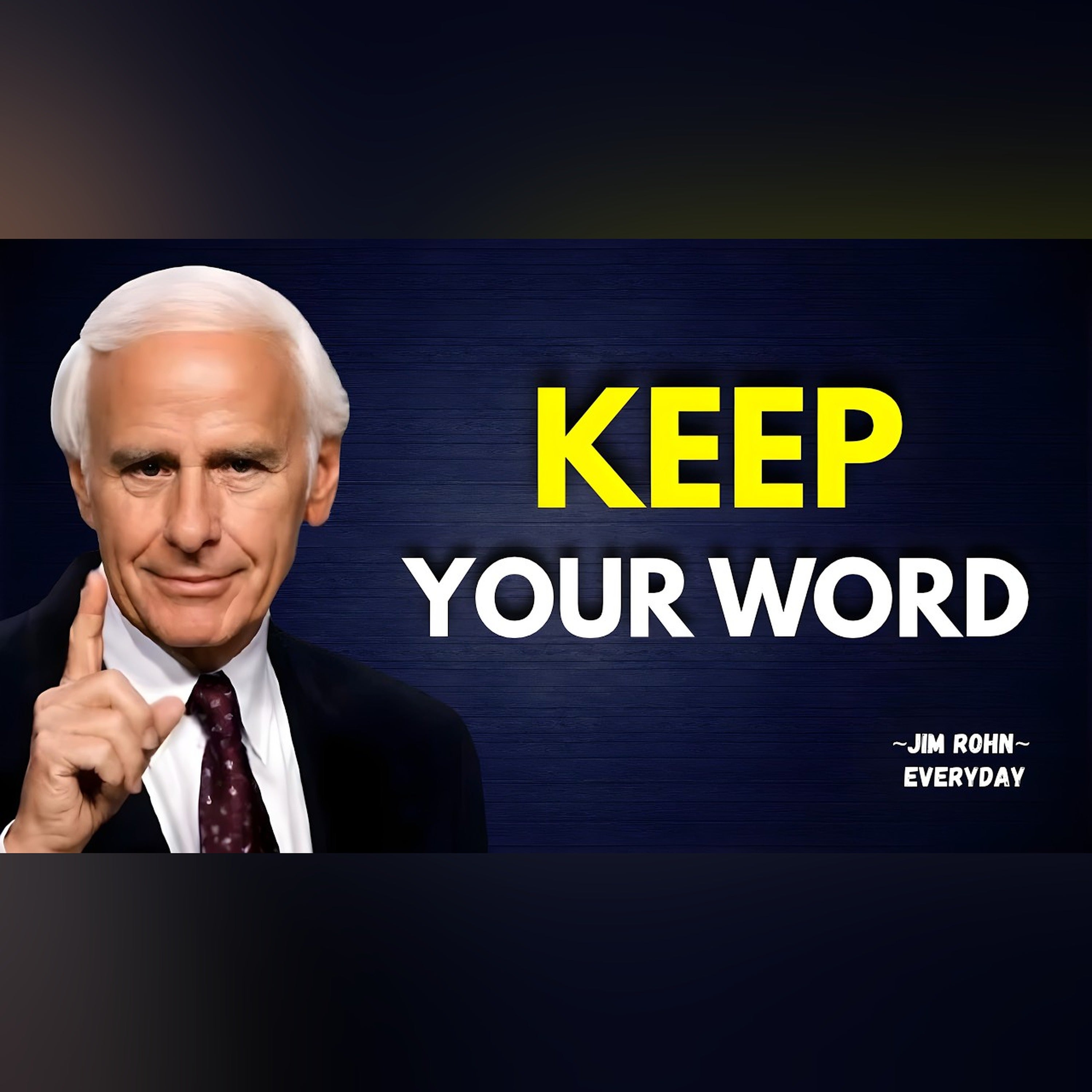
# Keep Your Promises To Yourself — This Will Change Your Life | Jim Rohn Motivation Every time you promise yourself something and fail to follow through, you make it harder to trust your own decisions. But when you start keeping your word to yourself, something important begins to change. Uploaded 13-10-26 In this powerful motivational video inspired by Jim Rohn, you’ll discover why keeping your personal promises is one of the most important habits for building self-discipline, confidence, and lasting success. You may promise yourself that you will wake up earlier, exercise regularly, save money, stop wasting time, or finally work toward your goals. But what happens when nobody is watching and nobody is reminding you? Your choices in those moments can shape how much you trust yourself. Jim Rohn teaches that personal growth begins with responsibility and consistent action. When you stop making promises you do not intend to keep, set realistic commitments, and follow through even when yo
Seventeen decisions from tribunals in Tasmania, New South Wales, the ACT and Queensland and from the Trade Marks Office in the Tribunals edition of Wednesday 25 November 2026, nine with headnotes and four more worked examples from synopses. When a tribunal will keep a disciplined property agent's name out of the published reasons; who has standing to seek review of a liquor licensing decision; retaliatory termination notices; why rent reduction comes first in the ACT; and a run of trade mark rulings on bad faith and on descriptive versus allusive marks. Tribunals Desk: naming a disciplined practitioner (lead; headnoted). Property Agents Board v Ld (No.2) [2026] TASCAT 152 - s 81(2)(d) Tasmanian Civil and Administrative Tribunal Act 2020 (Tas) confers a broad evaluative discretion to restrict publication for any sufficient reason, without necessity or exceptional circumstances, informed by the protective purpose of discipline; open justice is the starting point and reputational harm alo
Merriam-Webster's Word of the Day for November 25, 2026 is: arbiter • \AHR-buh-ter\ • noun An arbiter is a person with power to decide a dispute, or a person or agency whose judgment or opinion is considered authoritative. // The mayor will act as the final arbiter in any disputes between board members. // He is regarded as an arbiter of taste in the world of musical theater. See the entry > (https://www.merriam-webster.com/dictionary/arbiter) Examples: "Oscar documentary favorites are starting to emerge as critics and other arbiters begin to announce their nominees and shortlists, bringing some clarity to a wide-open awards race." — Matthew Carey, Deadline, 20 Oct. 2026 Did you know? There's no disputing the origins of arbiter: it traces back to a Latin noun, with the same spelling, referring to an eyewitness, onlooker, or person appointed to settle a dispute. Several English words having to do with judging or being a judge stem from the Latin arbiter, including arbitration (https://w
Merriam-Webster's Word of the Day for November 24, 2026 is: dubious • \DOO-bee-us\ • adjective Dubious describes a person who lacks a definite opinion or is doubtful about something; this sense of the word is usually used with about. Dubious can also describe something that causes doubt, uncertainty, or suspicion. In phrases like “dubious honor” and “dubious distinction” it functions ironically to describe something bad or undesirable as if it were an honor or achievement. // Despite having some late-season success, we were dubious about the likelihood of our team making the playoffs. // The miraculous revival of their company was achieved through dubious means. See the entry > (https://www.merriam-webster.com/dictionary/dubious) Examples: “In ‘The Music Man,’ ... River City, Iowa, comes alive in a whirl of brass, choreography, bright costumes and the bustling energy of a community discovering that maybe it has a little more music in it than anyone realized. ... At the center of it all
Merriam-Webster's Word of the Day for November 23, 2026 is: optimization • \ahp-tuh-muh-ZAY-shun\ • noun Optimization refers to an act, process, or methodology of making something (such as a design, system, or decision) as good, functional, or effective as possible. // She traded in her old phone for a newer model that offered improved battery optimization and better camera performance. See the entry > (https://www.merriam-webster.com/dictionary/optimization) Examples: "For better or worse, my notes app is the piece of technology closest to looking like the inside of my brain: a bit chaotic, annoyingly detail-oriented, and perhaps perpetually nostalgic. While handwritten to-do lists hold my life together, my notes app contains the catch-all, the weird (one that simply says 'possum'), and the important (a list of people's birthdays) coexisting. Somehow, the mess of my notes resists all forms of optimization, or even coherence." — Rainesford Stauffer, Time, 24 July 2026 Did you know? Opt
Public contracts should consider quality and reliability, even when the lowest bid costs less.
Share your view, then see how readers voted. No sign-in required. This poll is shared across stories.
Do you agree or disagree?
Common Quandary
A Common Quandary to discuss
Another conversation to explore, separate from this news story.
You wear an expensive outfit once and return it spotless. Clever or dishonest?
You buy an expensive outfit for a single event, keep it spotless, and return it the next day. The store's generous policy allows returns without asking whether an item was worn.
Does exploiting a policy differ from breaking a rule?