Financial Foundations 4: Building Credit and Using Credit Cards Wisely
24 min
Listen through the publisher, then discuss the episode here or arrange an in-person Roundtable. Your city determines where to meet.
Roundtables are designed for groups of four, with a shared subject and room for everyone to speak. Come for discussion, with no dating expectation.
Ready to feel more confident with money and stop figuring it all out alone? The $100K Club is for you. Learn more at: https://herfirst100k.com/ffpod Welcome back to our Financial Foundations series, sponsored by State Farm. Last time we talked about getting out of debt, and I promised we'd get to credit cards next, because they're one of my favorite things to talk about. In this episode I'm breaking down what actually goes into your credit score, the fastest way to raise it, and the new rule on buy now, pay later loans. Then we get into why I use my credit card like a debit card, how to pick your first card, how to use it without sliding into debt, and the myths that cost people money. If you're still paying down credit card debt, I've got a plan for that too. Mentioned in this episode: How to Turn Your Bills into Free Travel with Shakeemah Smith (The Passport Abuser) (https://herfirst100k.com/financial-feminist-show-notes/bills-to-boarding-passes/) Missed the rest of the series? Catch-up from the beginning: Financial Foundations #1: Your Money Blueprint (https://herfirst100k.com/financial-feminist-show-notes/money-blueprint/) Financial Foundations 2: Budgeting with Intention (https://herfirst100k.com/financial-feminist-show-notes/budgeting-with-intention/) Financial Foundations # 3: Let’s Talk About Debt (https://herfirst100k.com/financial-feminist-show-notes/get-out-of-debt/) 00:00 Intro 01:58 Credit cards are a tool 03:24 Your credit score: your adulting GPA 04:26 Payment history 05:15 Amount owed and credit utilization 07:19 Length of credit history 08:10 New credit and hard inquiries 08:48 Credit mix 09:01 Buy now, pay later and your credit score 09:54 Why I don't use a debit card 10:34 Rewards and perks 11:48 Security and fraud protection 12:46 What I do when I need cash 13:19 Choosing your first credit card 15:03 Using your card responsibly 16:17 Why credit card debt is so expensive 17:24 Personal loans for credit card debt 18:25 Habits to pay it off 19:17 Travel rewards and annual fees 21:04 Points vs. cash back 21:35 Sticking with one bank 22:20 Myth: authorized user status 23:27 Myth: carrying a balance helps your score 24:54 Homework and next episode: investing
Episode information is provided by the publisher. Listening takes place on the publisher’s service.
The Five Pillars of Financial Freedom | Jim Rohn Motivation True financial freedom isn’t just about money—it’s about building the habits, mindset, and principles that create lasting wealth. In this powerful Jim Rohn motivational video, you’ll discover the five essential pillars of financial success that can help you create security, opportunity, and independence. Uploaded 05-10-25 Jim Rohn explains that wealth is not something you chase—it’s something you attract by becoming a disciplined, responsible, and growth-minded individual. These five pillars will show you how to manage your money wisely, invest in yourself, and build a financial foundation that supports the life you want. In this video, you’ll learn: The five pillars of financial freedom and how to apply them. Why discipline is more important than income when building wealth. How to create multiple streams of income for financial security. Why financial freedom starts with self-education and personal growth. Practical steps to
Get the 200+ Page Optimal Living Daily Workbook (PDF) - Free. Want to turn today's episode into an actionable plan? Episode 3779: Joshua Fields Millburn and Ryan Nicodemus of The Minimalists explain the first steps they took to regain control of their money after years of six-figure debt. It starts with a written monthly budget that sorts every expense into essentials, nonessentials and junk, plus a small safety net for emergencies, and then reframes investing as simply paying your future self, automated so you never miss the money. Read along with the original article(s) here: https://www.theminimalists.com/freedom/ Quotes to ponder: "Most of us have no idea where our money is going. We think we know, but we don't really know." "The stricter you are, the sooner you'll be free." "Right now is the best time to start planning for your future." Airwallex is a financial technology company, not a bank. Services in the US are provided by Airwallex US, LLC, a licensed money transmitter (NMLS
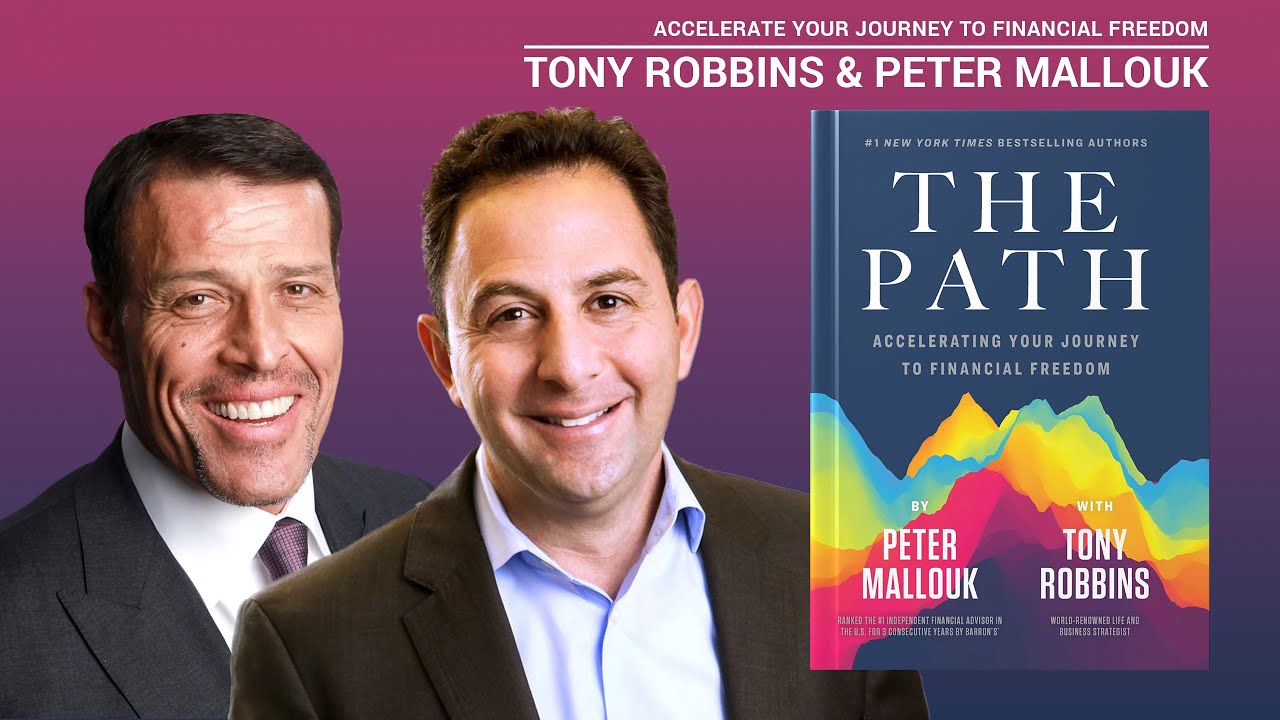
This interview with Peter Mallouk, global finance expert and co-author of The Path, pulls the curtain back on what’s really happening in today’s marketplace – and shows you how to leverage it to build true financial independence. It’s a sneak peek of what’s in the book, packed with valuable advice from one of the greatest minds in finance: Mallouk has been ranked the #1 financial advisor by Barron’s and grew his wealth management firm, Creative Planning, from managing $30 million in assets to more than $50 billion. Uploaded 18-10-20 From financial principles like inflation, bear markets and taxes to the psychology of success, in this video Mallouk shares a few of the most essential concepts from the book. He’ll go over the importance of getting laser-focused on your goals, an idea that Tony Robbins himself also champions. As Peter explains, superstar athletes didn’t just wake up one day and start working out. They know their sport and they know what they have to do to win. This applies
7 Side Hustles Students Can Start In 2026Mark Tilbury firmly believes that anyone who learns the skill sets of a millionaire can become a millionaire, ANYONE. Now Mark wants to help you become financially free as well. Follow the podcast and turn on notifications! Follow @MarkTilbury on Tiktok, YouTube, Twitter & IGDisclaimer: All content rights belong to Mark Tilbury. This Podcast is fan-made. No copyright infringement intended. ------ Keywords: financial education, money management, personal finance, lottery strategy, atm fraud, financial independence, credit cards
Viewers like you help make PBS (Thank you ) . Support your local PBS Member Station here: https://to.pbs.org/DonateSPACE Uploaded 18-04-18 To find out more, visit: https://brilliant.org/SpaceTime Now that gravitational waves are definitely a thing, it’s time to think about some of the crazy things we can figure out with them. In some cases we’re going to need a gravitational wave observatory - in fact, we've already built one. You can further support us on Patreon at https://www.patreon.com/pbsspacetime Get your own Space Time t-shirt at http://bit.ly/1QlzoBi Tweet at us! @pbsspacetime Facebook: facebook.com/pbsspacetime Email us! pbsspacetime [at] gmail [dot] com Comment on Reddit: http://www.reddit.com/r/pbsspacetime Help translate our videos! https://www.youtube.com/timedtext_cs_panel?tab=2&c=UC7_gcs09iThXybpVgjHZ_7g (https://www.youtube.com/timedtext_cs_panel?c=UC7_gcs09iThXybpVgjHZ_7g&tab=2) Previous Episode: The Physics of Life (ft. It's Okay to be Smart and PBS Eons!) https://w
What if success isn't something you chase, but something you attract through the person you become? Real success begins with personal growth, self discipline, and the value you bring to the world. Instead of constantly searching for shortcuts or waiting for opportunities, focus on developing the skills, mindset, and character that make meaningful achievements possible. This powerful motivational speech explores timeless principles of success, wealth creation, personal development, and the importance of becoming more valuable to others. Discover why your personal growth influences your results, how daily discipline shapes your future, and why helping others achieve their goals can become one of the most powerful foundations for your own success. In this motivational journey, you'll explore: • The Attraction Principle: Why success is connected to the person you become rather than simply what you pursue. • The Marketplace Rule: How developing valuable skills and contributing to others can
Why is it so hard to spend money you worked years to save? Today I'm welcoming back Jean Chatzky, who spent 25 years as the Today show's financial editor, founded HerMoney, and has a new book out called The Forever Paycheck. Honestly, she's one of the people who shaped how I think about money in the first place. We're getting into money hoarding: why disciplined savers have such a hard time enjoying what they built, and where that "don't touch it or you won't be safe" instinct comes from. Jean breaks down how to turn part of your savings into a paycheck so spending feels normal again. And we talk about the harder question underneath all of it, which is figuring out what you actually want your money to pay for. Jean’s Links: Website: https://hermoney.com/ Get Jean’s book, The Forever Paycheck: https://jeanchatzky.com/books/ Jean’s prior Financial Feminist episode: What to Do If You’re 35+ and Feel Financially Behind with Jean Chatzky (https://herfirst100k.com/financial-feminist-show-not
Visit https://herfirst100k.com/ffpod to join our 5 Day Debt Challenge and find any resources mentioned in the show! Getting out of debt is shockingly simple. The math is easy. Showing up every single month is the hard part. In episode three of Financial Foundations, sponsored by State Farm, we're tackling debt, with zero shame. I'll explain where debt sits on your financial priority list, teach you the rule of 7% (which you'll use for the rest of your life), and break down why credit card debt feels like drowning. Then I'll walk you through my four-step debt payoff plan, tell you about the time my car loan company made me mail $50 to a PO box in Iowa, and share what to check before you sign for any new debt. Missed the rest of the series? Catch-up from the beginning: Financial Foundations #1: Your Money Blueprint: https://herfirst100k.com/financial-feminist-show-notes/money-blueprint/ Financial Foundations 2: Budgeting with Intention: https://herfirst100k.com/financial-feminist-show-no
Already know how to save but wondering how to go from six figures to seven? Download my free guide, How I Built My First $1M, and see the three things that took me from $100K to $1M in under two years. Visit https://herfirst100k.com/ffpod and grab it today. At 25, I had $100,000 in the bank. At 27, I was a millionaire. And today I’m handing you my actual formula. Plenty of articles boil my story down to “save money, invest, start a business.” That’s technically true and practically useless. In this episode, I’m breaking down what I did between 25 and 27 that made the biggest difference, which parts you can copy, and which parts came from privilege I didn’t earn. I graduated debt-free and grew up with parents who taught me about money, and that shaped the conditions I made my decisions in. Personal finance is personal, so treat this as a formula you adapt to your own life instead of a script to copy line for line. Mentioned in this episode: The $100K Blueprint: https://herfirst100k.com/
Sporting success should include character and contribution, not only winning.
Share your view, then see how readers voted. No sign-in required. This poll is shared across stories.
Do you agree or disagree?
Common Quandary
A Common Quandary to discuss
Another conversation to explore, separate from this news story.
Someone holds a grocery line spot while their partner fills the cart. Is that cutting?
A shopper with one item stands ahead of you in a long checkout line. Just before reaching the register, their partner arrives with a cart packed to the top and joins them. They insist they were shopping together all along.
Can one person reserve a place in line for an unknown amount of work?