Food and Farming Revolution with regenerative farmer, author and Thrutopian, Benedikt Bösel
Listen through the publisher, then discuss the episode here or arrange an in-person Roundtable. Your city determines where to meet.
Roundtables are designed for groups of four, with a shared subject and room for everyone to speak. Come for discussion, with no dating expectation.
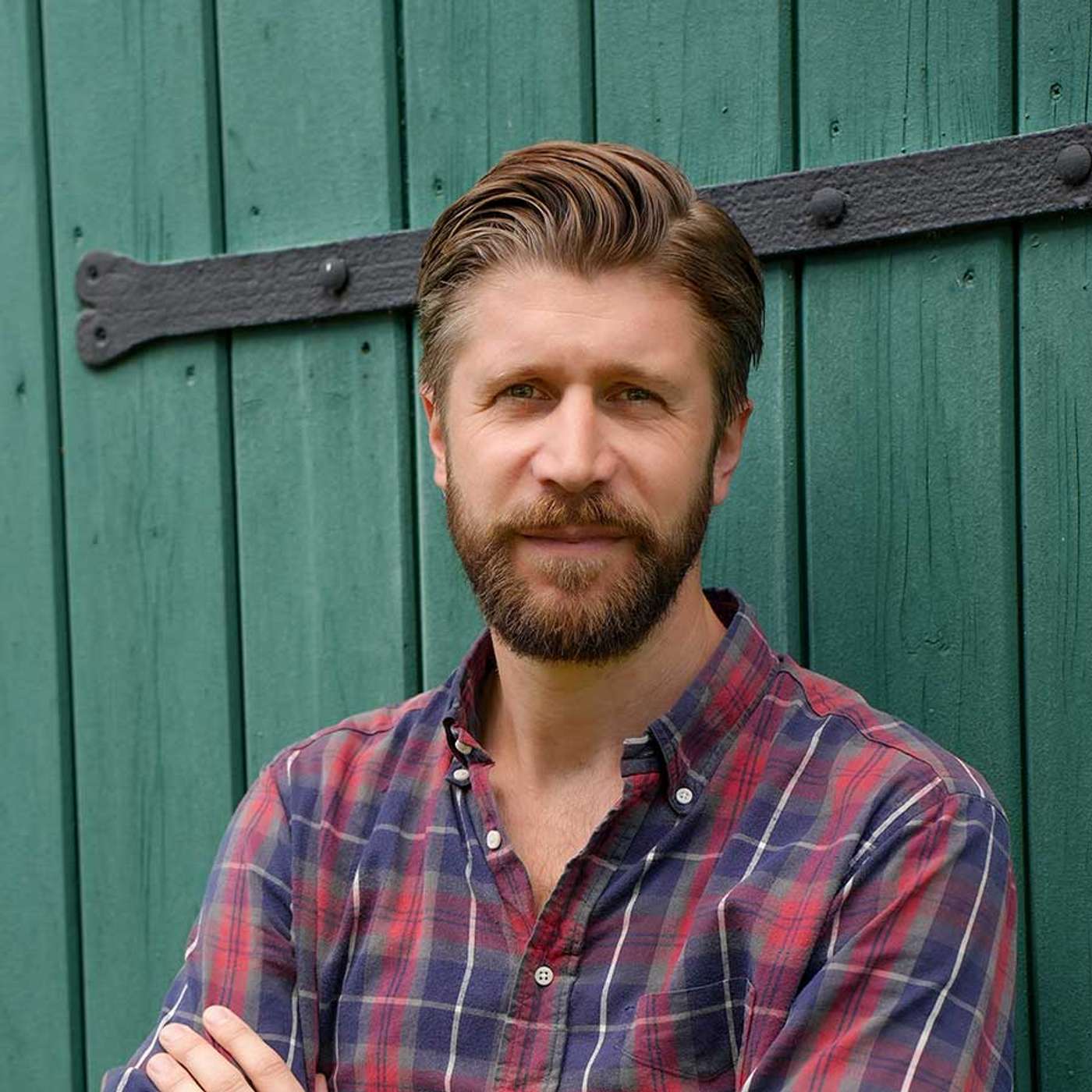
It's clear we need a whole new approach to the ways we farm our food - one that treats the natural world as a partner, where we can co-create abundance in service to life. The task now is to create prototypes at scale in many different contexts so that people can experience the difference between real food grown in healthy, life-filled, life-giving soil and the empty calories of the industrially processed semi-edible toxins that our current systems produce. On top of this, we need layers of education to help people appreciate the difference between the lifeless soil, murdered hedgerows and contaminated water of industrial agriculture, compared to the abundant ecosystems of regenerative farming. We talk about this a lot on the podcast, partly because we live on a regenerative smallholding and we're part way through the Roots2Regeneration training, but even without this, there are some core systems that need to change as part of the overall Thrutopian shift we need to make and our entire food and farming system is a key one of these: everyone needs to eat, but more than this, we need to experience what it is to live in a way that enhances the flourishing of all life on earth. So in searching for people who are living this new system, experimenting, creating radical new ways of engaging, we came across this week's guest. Benedikt Bösel is an agricultural economist, regenerative farmer, and author of the book Food and Farm Revolution: for our climate, our biodiversity, our health, even our very existence. As you'll hear, when Benedikt took over the family farm, he was faced with a thousand hectares of sand, and he had to find a way to make it work, not just within the current economic system, but in a way that was going to work for the land, for the people living there, for the communities around it - and most of all, for future generations. He brought a background in the finance industry and an early attempt at high tech agriculture, but it was the realisation that even his family's approach to ecological farming - what we'd call organic - was not sustainable that took him down the regenerative route. His book is beautifully put together and reads with the pace of a thriller - it's a memoir, a template, a call to action - and a Thrutopian route map - by the end, he's looking forward to a future where we're in climate breakdown, but we're working with all parts of ourselves, each other and the web of life to create a food system that works at all scales... and uniquely in my experience, he's looked hard at the political and governance shifts that are needed to get us here, as well as the shifts in our current economic model. It's exactly what we need in these times and I will read it regularly, often and there are bits I'm going to print out and stick on the wall. So in the hope that you, too, can be inspired, please do enjoy this episode. Links Food and Farm Revolution (https://5mbooks.com/product/food-farm-revolution) Benedikt's 'Living Lab' (https://finck-stiftung.org/en/) Benedikt on LinkedIn (https://www.linkedin.com/in/benediktboesel/) Dirt to Soil by Gabe Brown (https://uk.bookshop.org/p/books/dirt-to-soil-one-family-s-journey-into-regenerative-agriculture-gabe-brown/f53e1fb001fcc7e5) —About Accidental Gods— Manda and Louise both offer one-to-one Mentoring Calls.
Episode information is provided by the publisher. Listening takes place on the publisher’s service.
Listen at the source ↗