Four ways to understand the Earth's age - Joshua M. Sneideman
6 min
Listen through the publisher, then discuss the episode here or arrange an in-person Roundtable. Your city determines where to meet.
Roundtables are designed for groups of four, with a shared subject and room for everyone to speak. Come for discussion, with no dating expectation.
View full lesson: http://ed.ted.com/lessons/the-earth-s-age-in-measurements-you-can-understand-joshua-m-sneideman Uploaded 29-08-13 The Earth is 4.6 billion years old -- but how can humans relate to a number so colossal, and where do we fit on the geologic timeline? Comparing the Earth's lifetime to one calendar year, events like the extinction of dinosaurs and Columbus setting sail took place relatively recently. Joshua M. Sneideman reminds us of our time and place in the universe. Lesson by Joshua M. Sneideman, animation by Powerhouse Animation Studios Inc.
Episode information is provided by the publisher. Listening takes place on the publisher’s service.
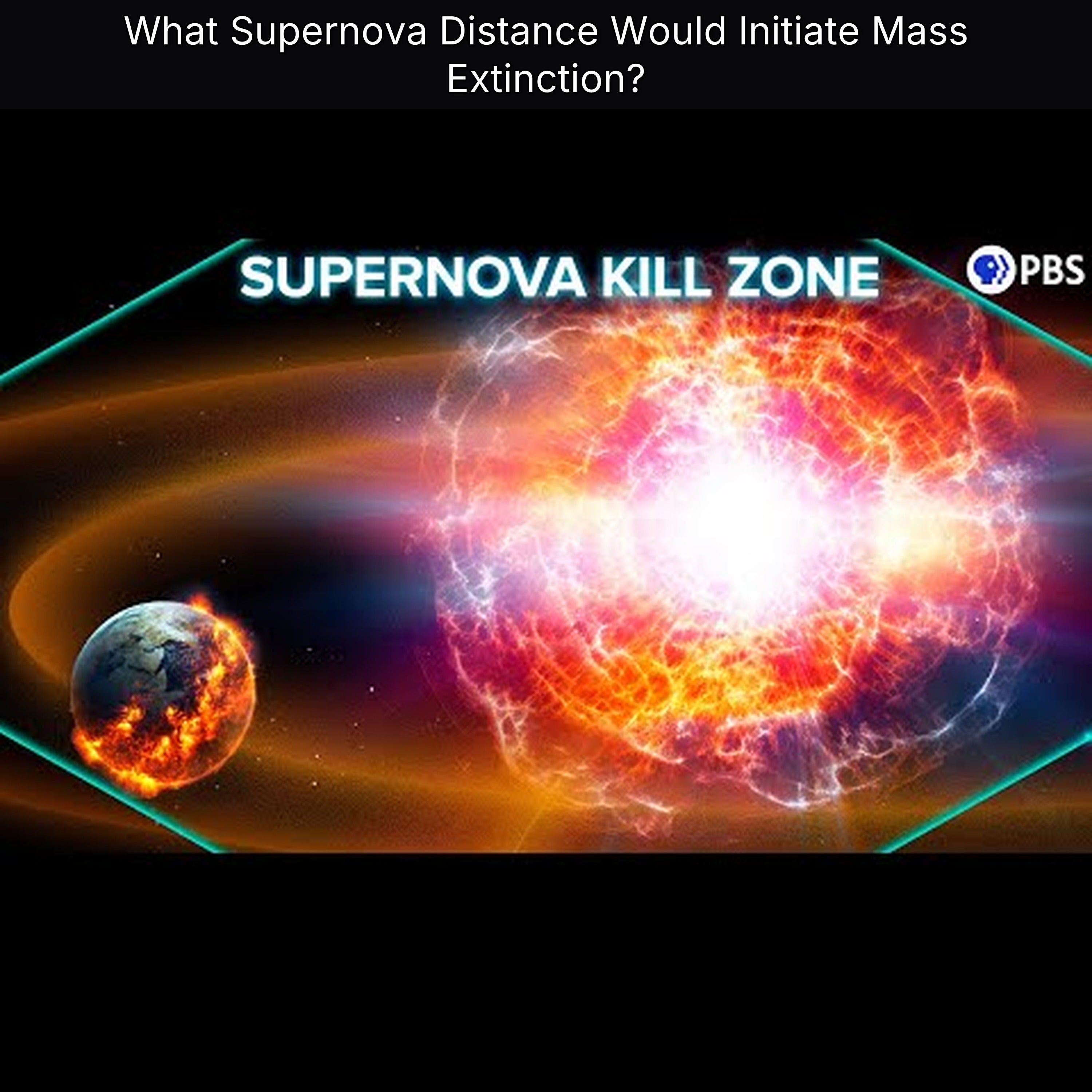
Thank you to Brilliant for Supporting PBS. To learn more go to https://brilliant.org/SpaceTime/ PBS Member Stations rely on viewers like you. To support your local station, go to:http://to.pbs.org/DonateSPACE Sign Up on Patreon to get access to the Space Time Discord! The deaths of massive stars results in one of the most beautiful and violent events in the universe: the supernova. They are so luminous we can see them here on Earth and historical records show that we can even see them into the day. But supernovas release deadly and violent radiation that could destroy our atmosphere. So how far away do these supernova have to be for humanity to be safe? And when will the next supernova occur Check out the Space Time Merch Store Sign up for the mailing list to get episode notifications and hear special announcements! Search the Entire Space Time Library Here: https://search.pbsspacetime.com/ Hosted by Matt O'Dowd Written by Matt O'Dowd Post Production by Leonardo Scholzer, Yago Ballarin
To influence others, you must first understand what already influences them. In this powerful talk, Tony Robbins breaks down the five personality types you need to know to connect with and lead people effectively. Uploaded 23-02-25 Watch more videos like this Use 4 "Alter Egos" to BREAK FREE from Limitations: https://youtu.be/zxtFZc8qeug #1 Best SIMPLE Technique to Overcome Fear and Anxiety Quickly: https://youtu.be/Q2sixA1vPKk STOP Letting These Beliefs CONTROL Your Life: https://youtu.be/G0psZhmKGgE Use This Easy Formula to Improve Your Life INSTANTLY: https://youtu.be/w3nRX2qP0Wc Follow Tony Robbins: Facebook: https://www.facebook.com/TonyRobbins Instagram: https://instagram.com/tonyrobbins/ TikTok: https://www.tiktok.com/@UC-12kRMQjK1LiQKRrT2zXcQ Twitter: https://twitter.com/tonyrobbins LinkedIn: https://www.linkedin.com/in/officialtonyrobbins Website: https://www.tonyrobbins.com/ Tony Robbins is a #1 New York Times best-selling author, entrepreneur, philanthropist, and the nation'
In today's brief: Drones over Sigonella: the US Navy says three drones were detected over its base in Sicily; Italian sources say one small quadcopter, probably a prank. The vampire camel: researchers at the American Museum of Natural History name a 10 to 13 million year old camel with fangs. Carbon from the core: a Columbia-led study says heavy carbon in Kilauea's rocks may be leaking from Earth's core, and may first have come from space. Cautious inquiry: Tom Rogan argues in UnHerd that the Bigfoot and UFO files deserve a proper look. Cryptid stamps: Mothman, Sasquatch, the Jackalope, the Squonk and Champ get a USPS stamp set in 2027. SIGNAL: an AI assistant for ghost hunters that checks for ordinary explanations first. Quick hits: the Juarez "pterodactyl" looks like a heron; drones over Canadian bases; a fourth Galileo Project observatory. Every story and source: https://believepod.com/ufo-paranormal-news-25-november-2026/ New episodes every morning. Keep your eyes on the sky. Sourc
In this Jim Rohn Motivation speech, Jim delivers a powerful message: dreams without deadlines drift, but dreams with deadlines drive. He exposes the danger of “someday thinking” and shows why setting dates turns vague wishes into real goals with urgency, clarity, and unstoppable momentum. Key Topics From This Motivational speech: The danger of “someday” thinking Why deadlines transform dreams into goals How time pressure creates focus and productivity The role of small deadlines in building big victories Why discipline follows a clear timeline In this motivational speech, Jim Rohn reminds us that life won’t wait—you either circle the date or watch years slip by in regret. He explains how deadlines create urgency, sharpen decisions, and turn potential into progress. Whether saving money, improving health, or building relationships, progress comes when you stop drifting and tie your dream to the calendar. This Jim Rohn Motivational speech Is Perfect For: Anyone tired of drifting and wait
A cheap HDMI capture card and Claude let a blind user get into a PC's BIOS without a monitor or sighted help. Steven Scott and Shaun Preece explain how it works, announce the new Good Vibes podcast, and work through a full inbox on iOS 27, Mastodon, Envision and Gemini. Steven plugged his Dell XPS into an HDMI capture card. Claude took screenshots and told him which keys to press, tab by tab, until he was inside the BIOS. Shaun used Whisper and Claude to trim a video in about two minutes. The hosts also talk about Media Access, a new audio editor from Brian Hartgen, and about using AI to make video shorts with captions. Good Vibes is a new podcast where blind people vibe code. It has interviews and demos, and the idea behind it is simple: if they won't build it for us, we'll build it ourselves. It debuts on Double Tap Live on 27 November and arrives in podcast apps on 30 November. In the inbox, Mike in Upstate New York finally updates to iOS 27, and the hosts compare VoiceOver bugs. Go
Black Friday sale: one week only Our Black Friday sale starts Friday, November 27. For one week, you can get a yearly Culips membership for $126. That’s 30% less than paying monthly for a year. You’ll get every lesson, all of our study tools, unlimited live speaking classes, and ad-free audio, all in our new app. There’s no coupon code. Just visit Culips.com before the sale ends on Thursday, December 3. Get the Black Friday deal at Culips.com (https://culips.com/). Andrew and Indiana catch up on what they’ve been doing lately. Indiana tells a story about a painful trip to the dentist, and Andrew talks about going to a rap concert by himself in Seoul. They also talk about AI music in gyms and cafes, a famous horror movie that Indiana saw at a special screening with its actors, and Andrew’s new rice cooker. Along the way, you’ll learn useful English vocabulary like “that’s the kicker,” “at the top of one’s game,” “more bang for your buck,” “clocked in, clocked out,” “right on the button,
Your mobile phone, computer and game console have a bloody past — tied to tantalum mining, which funds the war in the Democratic Republic of the Congo. Drawing on his personal story, activist and refugee Bandi Mbubi gives a stirring call to action. (Filmed at TEDxExeter.) Uploaded 29-08-13 Talk by Bandi Mbubi.
Explore the depths of Lake Cadagno, a meromictic lake that is considered a model for Earth before the Great Oxidation Event. -- In the millions of years since oxygen began saturating Earth’s oceans and atmosphere, most organisms have evolved to rely on this gas. However, there are some places where oxygen-averse microorganisms like those from Earth’s earliest days have re-emerged. And one such place is hidden high in the Swiss Alp’s Piora Valley. Nicola Storelli and Daniele Zanzi dive into the depths of Lake Cadagno. Lesson by Nicola Storelli and Daniele Zanzi, directed by Ivana Volda, Thomas Johnson Volda. A special thanks to Francesco Di Nezio, Bruno Giussani, Raffaele Peduzzi, Sandro Peduzzi, Samuele Roman, and Mauro Tonolla who provided information and insights for the development of this video. Support Our Non-Profit Mission ---------------------------------------------- Support us on Patreon: http://bit.ly/TEDEdPatreon Check out our merch: http://bit.ly/TEDEDShop ----------------
View full lesson: http://ed.ted.com/lessons/particles-and-waves-the-central-mystery-of-quantum-mechanics-chad-orzel Uploaded 15-09-14 One of the most amazing facts in physics is that everything in the universe, from light to electrons to atoms, behaves like both a particle and a wave at the same time. But how did physicists arrive at this mind-boggling conclusion? Chad Orzel recounts the string of scientists who built on each other’s discoveries to arrive at this ‘central mystery’ of quantum mechanics. Lesson by Chad Orzel, animation by Joana Bartolomeu.
Organizations should collect less personal information rather than simply promise stronger security.
Share your view, then see how readers voted. No sign-in required. This poll is shared across stories.
Do you agree or disagree?
Common Quandary
A Common Quandary to discuss
Another conversation to explore, separate from this news story.
A patient records every doctor visit for their followers. Can the doctor refuse to be filmed?
A patient with a large social-media following livestreams their health journey and wants to record every appointment. They say the videos help others and keep doctors accountable. Their physician finds the camera distracting and worries that casual remarks will be edited out of context.
Whose comfort should control a conversation about one person's body and another person's work?