Frontier AI Models Are Shockingly Gullible | Snehal Antani
20 min
Listen through the publisher, then discuss the episode here or arrange an in-person Roundtable. Your city determines where to meet.
Roundtables are designed for groups of four, with a shared subject and room for everyone to speak. Come for discussion, with no dating expectation.
Horizon3 co-founder and CEO Snehal Antani discusses the launch of the company’s Adversarial Intelligence Frontier Lab and how AI agents are changing offensive and defensive cybersecurity. He explains why frontier AI models fail against basic cyber deception, why private behind-the-firewall training data is the real moat over compute, and why attackers rely on machine-speed execution of basic flaws rather than zero-days. -- MTS chronicles the singularity, live. Monitoring the situation of tech and AI. Follow MTS: Spotify |https://open.spotify.com/show/4HUNNmV1pjV7CW6Lphm1rM Apple |https://podcasts.apple.com/us/podcast/mts/id1891088763 – Brought to you by: Mongo DB - Anyone can prototype an agent. Lovable - Turn ideas into software people love with Lovable. Start today at https://lovable.dev/ Factory - A 24/7 system turning signals into production software. Visithttps://factory.com/ Neon (by Databricks) - Scale your startup on Neon. The Postgres backend for apps and agents. Built by Databricks.https://neon.com/mtshttps://neon.com/mts (https://neon.com/mts%E2%81%A0) Head over to http://getvcx.com (http://getvcx.com/) to learn more Kong - The AI connectivity platform. Larridin - Finally prove what your AI investment is worth. Ship 5x faster. https://blitzy.com (https://blitzy.com/) AdQuick - Make your brand a billboard. Clickhouse - The real-time database that keeps up with all of it. https://clickhouse.com/ – Timestamps: (00:00) Introduction (01:07) Adversarial Intelligence Frontier Lab Launch (02:12) Why AI Cyberattacks Are Accelerating (04:13) Compute vs. Cyber Training Data (06:51) Why Frontier Labs Lack Data (10:14) Horizon3 Hits $2B Valuation (11:44) Black October and Hacker Tactics (15:38) What’s Next for Horizon3 –
Episode information is provided by the publisher. Listening takes place on the publisher’s service.
Palo Alto Networks has agreed to acquire the artificial intelligence startup Applied Compute in an all-stock transaction valued at $4.5 billion. Founded by former OpenAI researchers, Applied Compute specializes in helping businesses train and deploy customized open-weight AI models using their own proprietary data. This strategic purchase enables the cybersecurity giant to expand beyond traditional security offerings and embed protection directly into corporate AI infrastructure. Alongside the acquisition announcement, Palo Alto reported strong quarterly financial results that pushed its shares up significantly and led the company to raise its annual revenue forecast. Ultimately, the deal highlights a broader industry trend where major tech firms are rapidly absorbing specialized artificial intelligence capabilities to meet growing enterprise demand.
Google’s Gemini Neon edged out Fable on a coding benchmark, but its best pitch may be as a second opinion. NLW shares how Neon helped him find the story in an oil episode that Claude and ChatGPT kept turning into a Wikipedia entry, and what happened when he pushed back on its ideas. In the headlines: Anthropic closes its first day of trading up 17%, and Chinese AI labs warn that new U.S. chip restrictions could delay model releases. LATEST EPISODE: How We Got Here - 'How GTA 6 Explains America" Brought to you by: Gartner - AI strategy, trends and insights - https://www.gartner.com/ai Granola - The AI notepad for people in back-to-back meetings. Try it free granola.ai/brief (http://granola.ai/brief) Newsletter: https://aidailybrief.beehiiv.com/ Interested in sponsoring the show? [email protected]
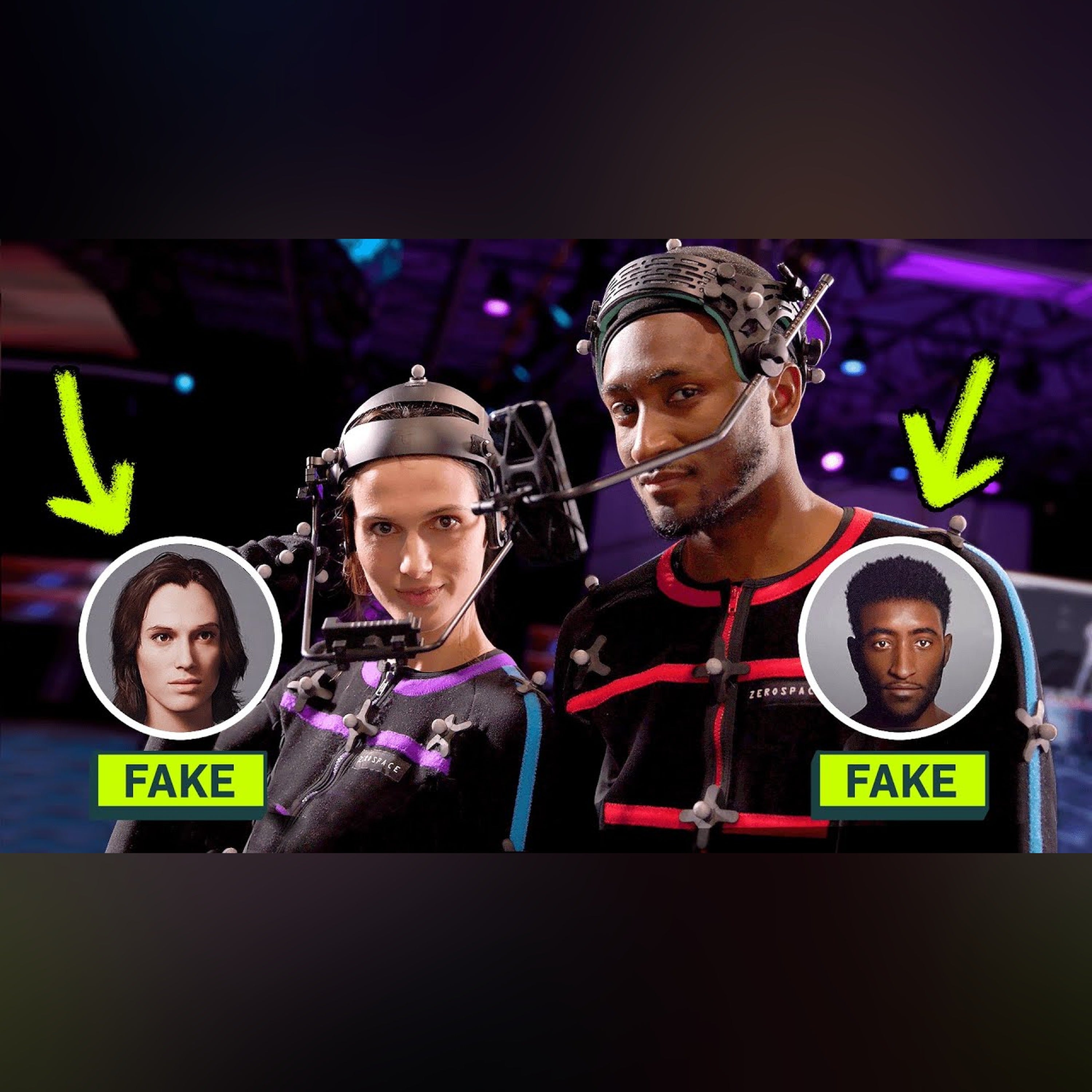
This new tech is changing how movies get made. So @mkbhd and I tested it out... Watch MKBHD's video: https://youtu.be/RM7SobH8ZO0 I’ve been obsessed with sci-fi movies since I was a kid. I love being transported to another world. But lately, I’ve been wondering: How do those worlds look so… REAL? The tech behind movies has exploded in complexity and realism, changing how stories come to life on screen. Luckily, at the same time, those tools are becoming more and more available to more people telling stories. It’s not just blockbusters like Avatar 2 or Avengers or Dune. It’s also smaller budget films like Everything Everywhere All at Once or even… YouTube creators? In this video, Marques Brownlee and I test out 3 movie-making tools that are changing how movies, shows, and maybe even YouTube videos (??) get made. We’re at ZeroSpace Studios in New York to show you how each of these crazy technologies work - and how you might be able to use them. Along the way, we hit big questions like: W
Ivan Espinosa's turnaround plan takes Nissan from 56 models to 45. I explain why that official count includes cars made by its Chinese joint venture partner, rather than only Nissan's own models. My estimate is that the reduction is more like going to 35 actual Nissan models—a narrower range as the company bets on fewer, better cars.
AI news from Anthropic's first day of trading, with Gemini Neon in Antigravity, Project Genie, Microsoft's MAI models, AI chips for China and Meta Muse. Anthropic priced its IPO at 83, opened near 111, and topped out above 114 before drifting back into the low 90s. Employees hold an estimated 232 billion dollars in stock, and Ashton Kutcher became a billionaire through his firm's early stake. Google stories included a hands-on account of Gemini Neon in Antigravity reviewing a whole project and then directing Claude Code as its product manager, a live Project Genie build of a South African safari, the Gemini Mac app's computer use, and Gemini for healthcare. Other topics were building an AI operations function from scratch at Verstela, gamified employee onboarding, Microsoft's Labs Canvas and MAI Code 2, House documents showing about 880,000 NVIDIA and AMD chips approved for export to China, and a Reuters report that Meta Muse surfaced private Signal messages through device permissions,
Project Synapse: Markets in Freefall, Fragile Infrastructure, and AI's Perfect Storm The hosts banter through the show's intro before focusing on a sense that "things are out of control," citing a WallStreetBets suicide-hotline post amid a market crash and discussing cascading system failures involving Microsoft, the FAA, and a reported NSA internal communications outage. They argue politicians and leadership lack technical competence and clear messaging, increasing panic, while emphasizing that many problems stem from aging, underfunded infrastructure and complex, brittle software (PHP, NGINX, Java), not proven AI attacks—more a "perfect storm" of crises. They debate whether AI should help fix complexity, stressing critical thinking, accountability, and using multiple AIs to verify each other. In a lightning round they cover Anthropic's IPO performance, mixed reactions and token limits with ChatGPT 6.2 (favoring "Sol" over "Astra"), Google's cheaper Neon model and confusing UX, Loblaw
Malo Bourgon, CEO of the Machine Intelligence Research Institute (MIRI), explains why the organization pivoted away from technical alignment research toward communications and Washington, D.C. governance to buy time before superintelligence arrives. He argues that AI capabilities are scaling more predictably than fundamental alignment breakthroughs, leaving humanity unprepared if superintelligence arrives within one to five years, and contends that frontier labs will not reliably slow down on their own due to competitive pressures and deceptive alignment risks. -- MTS chronicles the singularity, live. Monitoring the situation of tech and AI. Follow MTS: Spotify |https://open.spotify.com/show/4HUNNmV1pjV7CW6Lphm1rM Apple |https://podcasts.apple.com/us/podcast/mts/id1891088763 – Brought to you by: Mongo DB - Anyone can prototype an agent. Lovable - Turn ideas into software people love with Lovable. Start today at https://lovable.dev/ Factory - A 24/7 system turning signals into productio
Asana Chief Product Officer Arnab Bose discusses how enterprises deploy human-agent teams in production, why organizational alignment is the primary bottleneck over raw model intelligence, and how self-driving organizations will materialize by 2027. He also shares concrete customer results from FedEx and Washmen and explains how Asana’s own R&D team is expanding rather than shrinking as AI accelerates product development. MTS chronicles the singularity, live. Monitoring the situation of tech and AI. Follow MTS: Spotify |https://open.spotify.com/show/4HUNNmV1pjV7CW6Lphm1rM Apple |https://podcasts.apple.com/us/podcast/mts/id1891088763 – Brought to you by: Mongo DB - Anyone can prototype an agent. Lovable - Turn ideas into software people love with Lovable. Start today at https://lovable.dev/ Factory - A 24/7 system turning signals into production software. Visithttps://factory.com/ Neon (by Databricks) - Scale your startup on Neon. The Postgres backend for apps and agents. Built by Datab
Kyle Chan, a fellow at the Brookings Institution and author of the newsletter High Capacity, breaks down the shifting US-China AI landscape. He discusses Trump’s APEC summit with Xi Jinping, China’s push for an indigenous semiconductor supply chain, Beijing’s pullback from open-source frontier models like Qwen 4 Max over cyber risks, and how Nvidia’s ecosystem will change without Jensen Huang. MTS chronicles the singularity, live. Monitoring the situation of tech and AI. Follow MTS: Spotify |https://open.spotify.com/show/4HUNNmV1pjV7CW6Lphm1rM Apple |https://podcasts.apple.com/us/podcast/mts/id1891088763 – Brought to you by: Mongo DB - Anyone can prototype an agent. Lovable - Turn ideas into software people love with Lovable. Start today at https://lovable.dev/ Factory - A 24/7 system turning signals into production software. Visithttps://factory.com/ Neon (by Databricks) - Scale your startup on Neon. The Postgres backend for apps and agents. Built by Databricks.https://neon.com/mtshtt
Large platforms should make it easier for smaller competitors to connect with their services.
Share your view, then see how readers voted. No sign-in required. This poll is shared across stories.
Do you agree or disagree?
Common Quandary
A Common Quandary to discuss
Another conversation to explore, separate from this news story.
Your family connection could get your child into their dream school. Do you use it?
A university argues that considering family ties builds loyalty and encourages donations that fund scholarships. Critics say the preference preserves inherited advantage and takes places from stronger applicants.
Can benefits to the whole institution justify an unequal admissions advantage?