English-language podcasts

Fun Facts Daily

Fun Facts About Toast
16 min

Listen through the publisher, then discuss the episode here or arrange an in-person Roundtable. Your city determines where to meet.

Roundtables are designed for groups of four, with a shared subject and room for everyone to speak. Come for discussion, with no dating expectation.

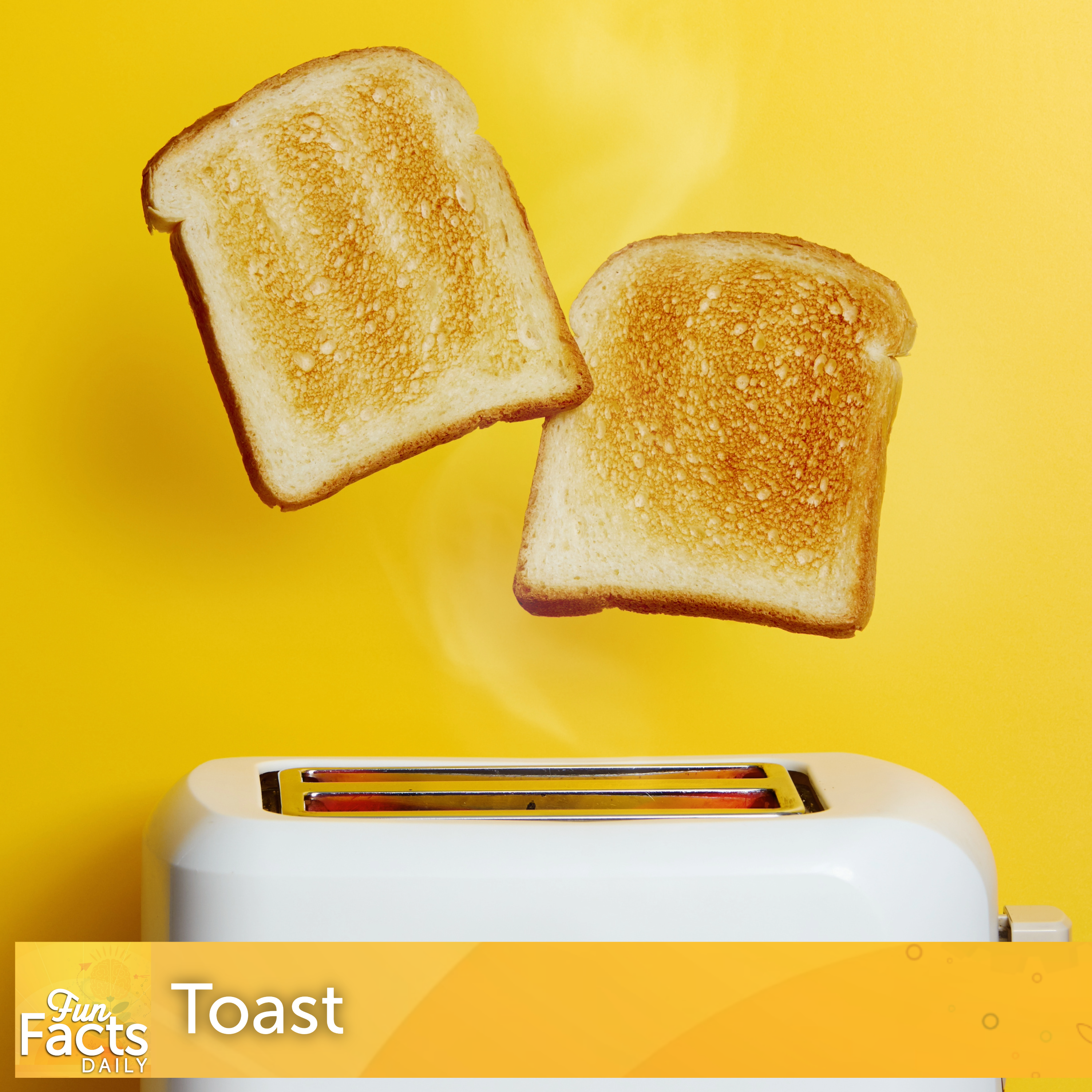
Toasting bread transforms ordinary slices through a complex chemical process known as the Maillard reaction, which occurs when amino acids and simple sugars are exposed to heat between 280 and 330 degrees Fahrenheit. Discovered by French physician Louis-Camille Maillard in 1912, this reaction creates distinct aromas, browning, and flavor compounds by rearranging molecular structures into Amadori compounds and chain-like polymers. Beyond culinary enhancement, historical techniques for toasting bread originated as practical preservation methods in ancient Egypt and Rome to remove excess moisture, prevent mold growth, and salvage stale loaves during long journeys. Over centuries, this culinary staple evolved significantly, transitioning from open-fire cooking and spiced wine additions in medieval Europe to the invention of the automatic pop-up toaster by Charles Strite in 1919 and Otto Rohwedder's bread-slicing innovations in 1928. The physics behind the common observation that dropped toast frequently lands butter-side down has even captured scientific attention, famously studied by physicist Robert Matthews, who demonstrated that standard table heights and rotational torque give a falling slice just enough time for a half-rotation. While heat drives off roughly 15 to 20 percent of a slice's moisture, toasting does not eliminate calories or carbohydrates; instead, it alters starch structures to lower the glycemic index compared to fresh bread. Whether exploring the etymological roots shared with coffee roasting and mineral torrefaction or choosing the ideal slice thickness and toaster settings to achieve a crispy exterior while preserving a soft interior, understanding the science and history of toast reveals a fascinating intersection of chemistry, physics, and culinary tradition. Want to learn more? Fun Facts Daily is an Airwave Media Podcast.

Episode information is provided by the publisher. Listening takes place on the publisher’s service.

Listen at the source ↗

Featured places to meet in Palo Alto, CA

Explore these places and arrange a conversation through ThinkMatch.

City guide for Palo Alto, CA

More from Fun Facts Daily

Fun Facts Daily

Fun Facts About Clocks

18 min

From ancient sundials to modern atomic timekeepers, the history of clocks reveals how human societies have measured time with growing precision. Early mechanical clocks in the Northern Hemisphere adopted a clockwise motion to mirror the sweep of sundial shadows across the sky, while exceptions such as Prague's 16th-century Jewish Town Hall clock and La Paz's modified legislative clock demonstrate cultural and regional variations. Practical timekeeping milestones include Levi Hutchins's 1787 4:00 a.m. alarm clock, Antoine Redier's 1847 adjustable alarm patent, and the November 18, 1883 establishment of four North American standard time zones to replace chaotic local solar times across towns and railroads. Precision timekeeping spans from monumental pendulums to quantum-scale oscillators. London's Great Clock in Elizabeth Tower relies on a two-second pendulum regulated with pre-decimal pennies to adjust its daily rate by two-fifths of a second, whereas cesium-133 atomic clocks define the

Discuss this episode

Fun Facts Daily

Fun Facts About Your Nervous System

15 min

The human nervous system is an intricate, high-speed biological network comprising the brain, spinal cord, and an extensive web of peripheral nerves that regulate nearly every bodily function, sensation, and movement. Nerve signals travel at varying speeds depending on myelination, with insulated alpha motor neurons transmitting electrical impulses at speeds up to 268 miles per hour via saltatory conduction, while unmyelinated pain fibers transmit sensations at much slower rates. Specialized neural pathways, such as reflex arcs, bypass the brain entirely during emergencies, routing signals through the spinal cord and interneurons to initiate rapid protective muscular reactions in fractions of a second before conscious processing occurs. Beyond the central nervous system, the human body features specialized decentralized networks like the enteric nervous system within the gastrointestinal tract, which contains roughly 100 million neurons and produces the vast majority of the body's sero

Discuss this episode

Fun Facts Daily

Fun Facts About Zebras

16 min

Zebras are iconic African equines recognized worldwide for their distinctive black-and-white striped coats, which conceal jet-black skin beneath unpigmented white and pigmented black hair. Far from functioning as camouflage against large savanna predators like lions, whose visual acuity fails to distinguish individual stripes at distances exceeding 164 feet, these high-contrast patterns act as an effective optical defense against biting horseflies. The overlapping visual lines scramble the insects' flight mechanics, causing them to miss their landing and bounce off the coat. Because every individual possesses a unique stripe arrangement akin to a human fingerprint, researchers use automated pattern-recognition tools and databases to track populations across the three recognized species: plains zebras, mountain zebras, and Grevy's zebras. Beyond their striking appearance, these animals exhibit remarkable ecological behaviors and physical adaptations across diverse African habitats. Plai

Discuss this episode

Community Poll

Elected representatives should serve people who voted against them as seriously as their supporters.

Share your view, then see how readers voted. No sign-in required. This poll is shared across stories.

Do you agree or disagree?

Choose one answer

Common Quandary

A Common Quandary to discuss

Another conversation to explore, separate from this news story.

Everyone loves the group photo except you. Can you forbid them from posting it?

At a reunion, someone takes a joyful group photo that captures the night perfectly. Everyone looks wonderful except you, caught at an awful angle. The group wants to post it publicly and promises nobody else will care.

How much control should one person have over a memory shared by many?

Explore this quandary