Listen through the publisher, then discuss the episode here or arrange an in-person Roundtable. Your city determines where to meet.
Roundtables are designed for groups of four, with a shared subject and room for everyone to speak. Come for discussion, with no dating expectation.
As soon as someone says “generosity,” you probably think money. But according to the Bible, generosity is more radical than money. The Bible teaches that generosity should be pervasive in all parts of our lives. Money is only part of it. It’s possible to be financially generous and not radically generous. Because radical means the radix. It means the heart. It means the depth. We’re going to ask three things about this passage in Luke: 1) what is the source of radical generosity? 2) what is the sign of radical generosity? and 3) what is the key to becoming radically generous? This sermon was preached by Dr. Timothy Keller at Redeemer Presbyterian Church on September 30, 2012. Series: Generosity: Studies from the Gospel of Luke. Scripture: Luke 18:9-17.
Episode information is provided by the publisher. Listening takes place on the publisher’s service.
It’s Mailbag Friday! You’ve got questions, we’ve got answers. Segment 1 Can Steve Lawson be restored to ministry? — Joshua Segment 2 What if someone says Jesus never condemned homosexuality? — J.K. How can I help a brother struggling with pornography? — Anonymous Can families take communion together at Thanksgiving? — Anonymous Segment 3 Why get baptized if it isn’t necessary for salvation? — Abigail How can I know for sure that I’m saved? — Abigail Can we pray for God to intensify someone’s conviction of sin? — Ethan Segment 4 Should Christians prepare for a grid shutdown? — Anonymous What does Todd think about Christian rap, rock, and heavy metal? — Jeff ___ Thanks for listening! As part of our Multiply 2027 year-end campaign, every gift made through December 31, 2026, will be matched dollar-for-dollar, up to $750,000. Your generosity helps us train evangelists, equip pastors, and multiply our gospel impact. Learn more and double your impact: https://FortisInstitute.org/Donate (https
The great message of Christianity is that Christians are not only saved from their sin and made right before a holy God, but they are made new creatures as the first fruits of the new creation in Christ. In this sermon on Ephesians 5:3–5 titled “Distinct Roles of Church and State,” Dr. Martyn Lloyd-Jones demonstrates how Scripture undercuts all doctrines of antinomianism, because by the power of the Holy Spirit all who are true believers are renewed and transformed daily through God’s grace. For it is the gospel that truly transforms fallen men and women; it alone can overcome the depravity of fallen human nature and make them new in Christ. This is why all attempts to make people moral without the gospel fail to address the deepest need of humanity. When the church becomes more concerned with moralism than the gospel, it loses the focus of its mission. This has often happened throughout the history of the church, and today many are repeating this error. The remedy to this is to see th
Why is it so hard to forgive someone who has hurt you? Why did Jesus tell Peter to forgive not just seven times, but seventy-seven? And what does the parable of the unforgiving servant reveal about the way we treat people who wrong us? In today's episode, Patrick explores Matthew 18:21–35 and shows us why the forgiveness we've received from God should change the way we extend forgiveness to others. Want to become a more consistent Bible reader? Read the Bible with us! We're almost done exploring the Gospels—Matthew, Mark, Luke, and John—but it's never too late to jump in! Your support makes TMBT possible. Ten Minute Bible Talks is a crowd-funded project. Join the TMBTeam to reach more people with the Bible. Give now (https://info.tenminutebibletalks.com/support). Like this content? We'd love to hear from you! Passage: Matthew 18:21–35 (https://www.biblegateway.com/passage/?search=Matthew+18%3A21%E2%80%9335&version=NIV)
Nine- and ten-year-old students in China surrounded their teacher and spat on her over a "bourgeois" hairstyle—and Xi Van Fleet says that teacher was the lucky one. Parents who escaped Communist China are now watching their own children become Marxists in America. And growing up under Mao's Little Red Book, she says you didn't even know you were controlled, because you could not think. Xi Van Fleet on what living through Mao's Cultural Revolution taught her about America today.Xi talks about surviving the 1959–1961 Great Leap Forward era and Mao Zedong's 1966 Cultural Revolution, watching the "Four Olds" campaign tear down statues and rename streets, spending three years in countryside field labor after high school before coming to the United States in 1986 with the help of an American teacher, how U.S. political and business leaders helped build Communist China over the past century, why China still restricts passports today, and why she believes biblical liberty is the antidote to st
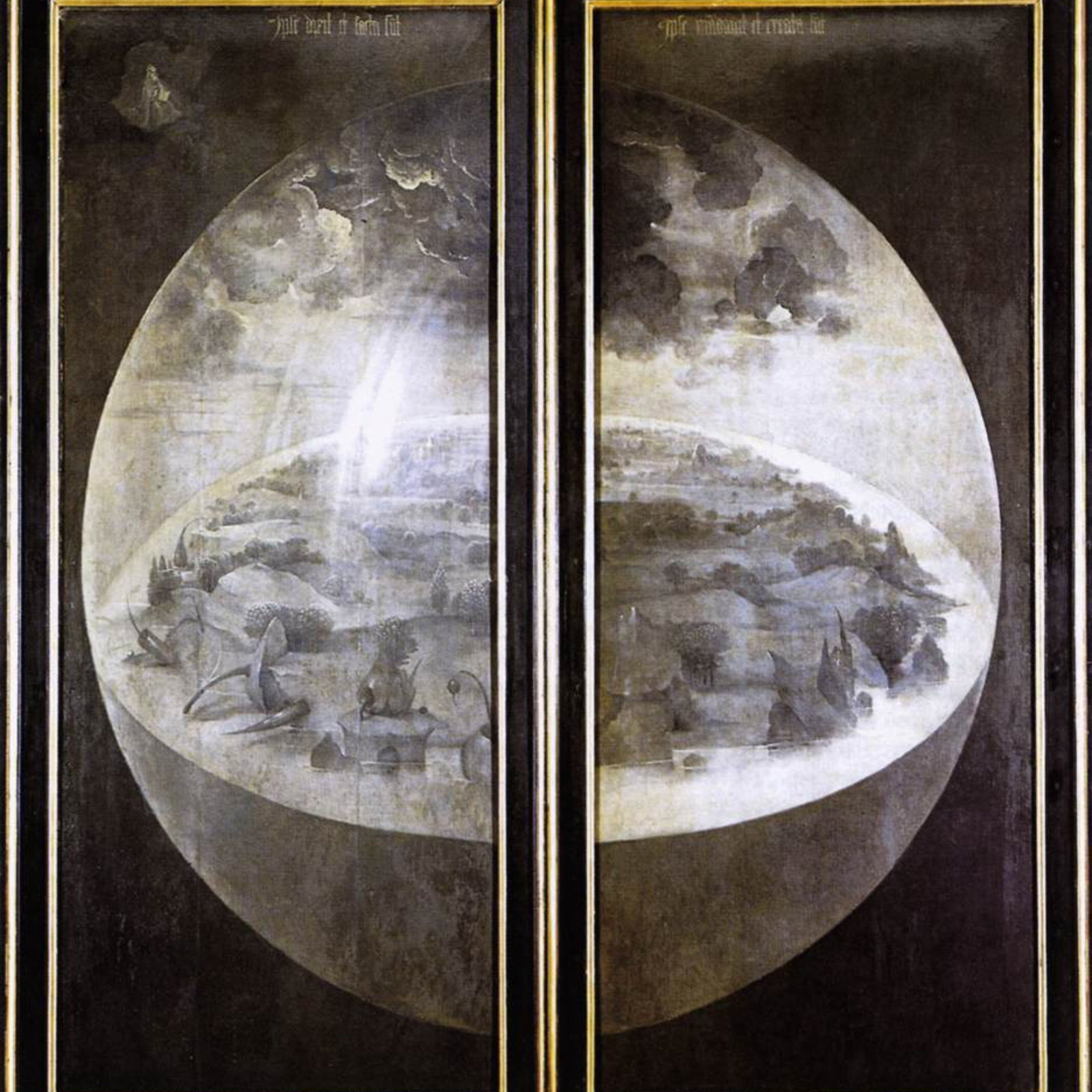
By analyzing the writings of Thomas Aquinas and other historical records, Fr. Timothy Bellamah, O.P. debunks the pseudo-controversy of the medieval "flat-earth" myth to demonstrate that the Church has long supported scientific inquiry. This lecture was given on September 20th, 2026, at Dominican House of Studies. About the Speaker: Fr. Bellamah was born and raised in Washington, D.C. He entered the Order of Preachers in 1991 and was ordained a priest in 1998. He studied at Wake Forest University (B.S., 1982), the Pontifical Faculty of the Immaculate Conception (M.Div. and S.T.B., 1997; S.T.L, 1999) and the Ecole Pratique des Hautes Etudes, Paris, (Ph.D., Section des sciences Religieuses, 2008). He has previously taught at Providence College in the Department of Theology and the Department of the Development of Western Civilization. From 2010 to 2018 he served as editor of the speculative review The Thomist and is a member of the Leonine Commission, a team of Dominican scholars responsi
Luke 20: 27-40 - 'In God all men are alive.' Catechism of the Catholic Church Paragraphs: - 330 (In 'Who are Angels'?) - As purely spiritual creatures angels have intelligence and will: they are personal and immortal creatures, surpassing in perfection all visible creatures, as the splendor of their glory bears witness. - 575 (In 'Jesus and Israel') - Many of Jesus’ deeds and words constituted a “sign of contradiction,” but more so for the religious authorities in Jerusalem, whom the Gospel according to John often calls simply “the Jews,” than for the ordinary People of God. To be sure, Christ’s relations with the Pharisees were not exclusively polemical. Some Pharisees warned him of the danger he was courting; Jesus praises some of them, like the scribe of Mark 12:34, and dines several times at their homes. Jesus endorses some of the teachings imparted by this religious elite of God’s people: the resurrection of the dead, certain forms of piety (almsgiving, fasting, and prayer), the c
The more we hear about Jesus, the more we’re faced with an important question: who do we actually think Jesus is? Many of us tend to sit on the fence without choosing one side or the other—we may not want to declare that he really is the Son of God, but neither do we want to call him a liar. But Jesus himself says we must choose. When he calls himself the “I Am,” he pushes us to one side of our fence or the other. How do we decide if Jesus is who he says he is? And if we decide he is, what does it mean for the way we live? Let’s explore the answers to three questions. 1) Who does Jesus think he is? 2) Who did his listeners think he was? And 3) Who do you think he is? This sermon was preached by Dr. Timothy Keller at Redeemer Presbyterian Church on December 20, 1998. Series: John – On Knowing the Christ. Scripture: John 8:31-36; 51-59.
As human beings, each of us not only experiences physical hunger, but spiritual hunger deep inside us. And it isn’t long before we find that whatever we try to fulfill ourselves with, whether it’s family, acceptance, money, or comfort, is never going to satisfy us. Jesus knows this all too well—and gives us a much better way to address our hunger. After he miraculously feeds thousands of people in the Book of John, Jesus points to himself as the real “bread of life” that will never leave us wanting. But how exactly do we find ourselves truly fed? Let’s look at how Jesus is 1) bread for the mind that engages our intellect, 2) bread for the body that shapes our actions and lives, and 3) bread for the heart that offers us eternal life. This sermon was preached by Dr. Timothy Keller at Redeemer Presbyterian Church on December 13, 1998. Series: John – On Knowing the Christ. Scripture: John 6:5-13; 32-35.
Throughout the Bible, Jesus uses a variety of metaphors that explain who he is and the salvation he offers us. But the image of the Great Shepherd gives us wonderful insight into not just what Jesus does for us, but why he chooses to do it. What does Jesus mean when he calls us his sheep, and what does this mean for the relationship between us? Let’s explore how Jesus’s identity as a shepherd means 1) he knows his sheep, 2) we are spiritually dependent, and 3) he gives us what we need. This sermon was preached by Dr. Timothy Keller at Redeemer Presbyterian Church on November 29, 1998. Series: John – On Knowing the Christ. Scripture: John 10:1-18.
Employees should usually have a say in whether their work requires office attendance.
Share your view, then see how readers voted. No sign-in required. This poll is shared across stories.
Do you agree or disagree?
Common Quandary
A Common Quandary to discuss
Another conversation to explore, separate from this news story.
Your father is becoming a dangerous driver. Would you report him behind his back?
Your father values the independence his car gives him. He has not caused an accident, but his reactions have noticeably slowed and several recent drives frightened you. He refuses an assessment.