Listen through the publisher, then discuss the episode here or arrange an in-person Roundtable. Your city determines where to meet.
Roundtables are designed for groups of four, with a shared subject and room for everyone to speak. Come for discussion, with no dating expectation.
The Tenth Circuit hears Hoang versus Collins. Doctor Dai Hoang worked as a radiologist at a Veterans Affairs hospital in Denver. After surgery at that hospital, a surgical clamp was left inside a patient. Hoang had been asked to read an X-ray to check for a foreign object. The patient later won a malpractice case against the government. A Veterans Affairs review faulted Hoang's care, and a report about her went to the National Practitioner Data Bank. Hoang says she was singled out because she had filed a discrimination complaint against her supervisor. She sued, but the district court dismissed her employment claims and upheld the medical review. Her lawyer will argue that retaliation influenced the reporting process and that she should have a chance to develop her case. The government's lawyer will argue that the allegations do not connect her earlier complaint to the reviewers' findings, and that the review was independently supported. Listen for whether alleged bias at the hospital can taint a later review, even when different people make the final decision. Hoang v. Collins (No. 25-1261) — U.S. Court of Appeals for the Tenth Circuit, argued November 17, 2026. Sources: Official Tenth Circuit oral argument: Official argument listing: District court: employment claims and case background (2020): District court: medical-review challenge (2025):
Episode information is provided by the publisher. Listening takes place on the publisher’s service.
Fourteen decisions from tribunals in South Australia, New South Wales, Victoria and Queensland in the Tribunals edition of Wednesday 18 November 2026, three with headnotes and seven more with synopses. Whether the limitation statute governs a South Australian tenancy compensation claim, and whether the tribunal can extend time; extensions for late discrimination complaints; what a heritage listing does to site value; costs after a withdrawn case in NCAT; suppression orders and open justice; and repeat planning reviews and preferred heights in Victoria. Tribunals Desk: limitation and the tribunal's power to extend time (lead; Signal Doctrine; headnoted). Morris v Housing Choices [2026] SACAT 107 - the Limitation of Actions Act 1936 (SA) applies to a compensation proceeding under the Residential Tenancies Act 1995 (SA), whether framed in contract or under the Act; "court" in s 48 preferably means an adjudicative body finally determining disputes judicially (tentatively; Taylor v Marveggi
For review: 1. Iraq has reached a compromise with the powerful Iran-backed militia Kataeb Hezbollah, three senior security officials said, after Prime Minister Ali al-Zaidi readied security forces to move against the group. Reflecting the gravity of the situation, Iraqi Shiite political sources said Esmail Qaani, commander of Iran’s elite Revolutionary Guards’ Quds Force, arrived in Baghdad late on Monday to help defuse tensions with Kataeb Hezbollah, Tehran’s most powerful militia ally in Iraq. 2. Lebanese President Joseph Aoun launched a lengthy rebuke of Iran in an Independence Day address, arguing that the Islamic Republic does not have the right to interfere in Lebanon’s internal affairs, as it long has via support for its local terror proxy, Hezbollah. 3. Yemen’s Houthis launched strikes on the Saudi capital Riyadh on Saturday, after vowing reprisals for a “special operation” by the Saudi-led coalition fighting them. The coalition later said it had “intercepted and destroyed” thr
The rich and powerful have long used UK law to keep their secrets under wraps. The newspapers may know the allegations, social media thinks it knows and Auntie Shirley in Swindon is certain she knows. And yet nobody can officially say a word. There are injunctions, super-injunctions, gagging orders and SLAPPs – “Strategic lawsuits against public participation”. But what even are they and how do they work? Is it really about protecting privacy or power? And do you really need one if you’ve done nothing wrong? Mark Stephens CBE, one of Britain’s most experienced media lawyers, joins Emma Kennedy to break down the injunctions crisis. • Read Mark’s contributions to the New York Times’ explainer on the injunctions crisis (https://www.nytimes.com/2026/11/14/world/europe/russell-brand-david-walliams-gag-order.html) Back The Bunker on Patreon (https://www.patreon.com/bunkercast/membership?vanity=bunkercast) to help keep the podcast going – and get early, ad-free episodes, merch and more. Writt
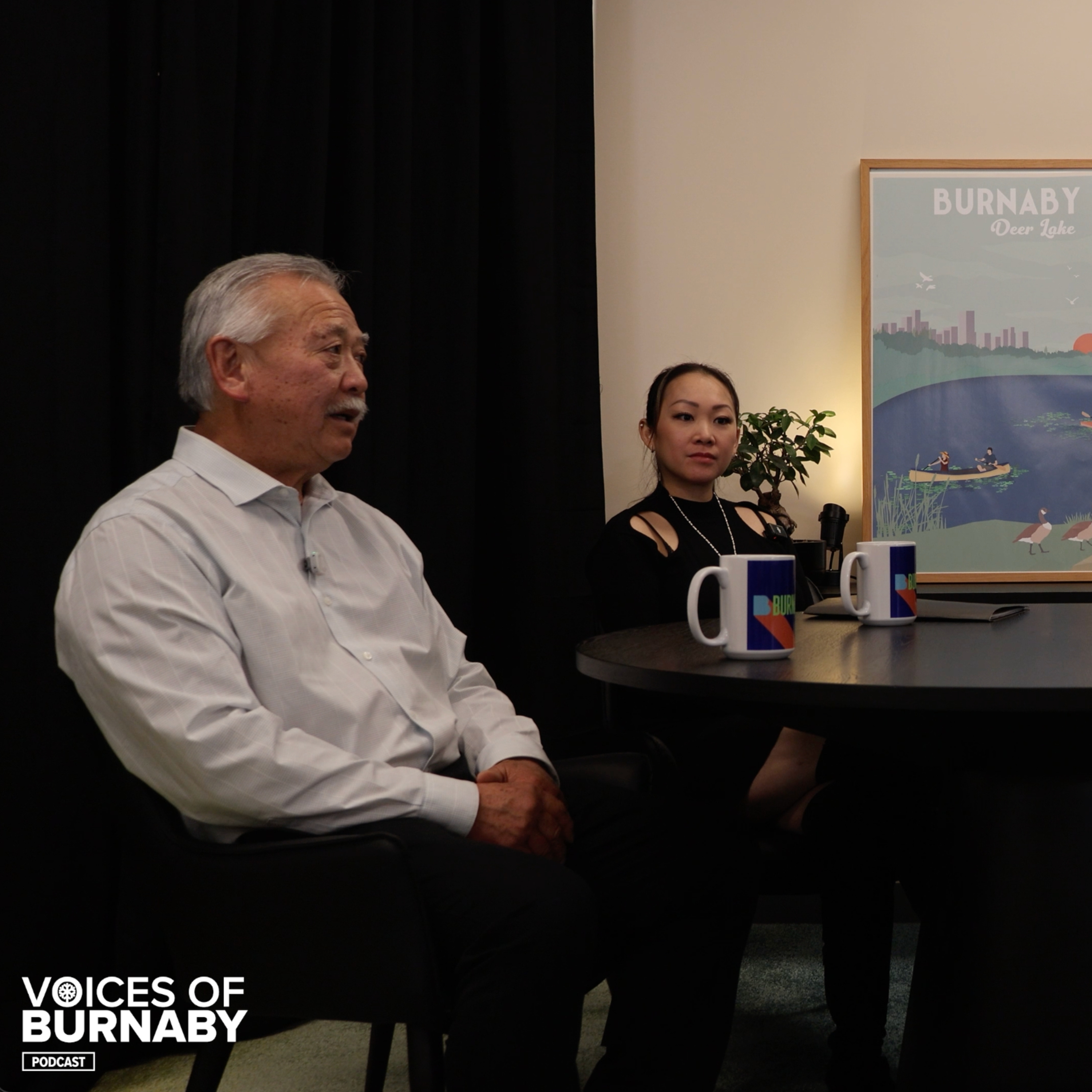
Mayor Mike Hurley talks with Natalie Chow-Kung, who owns and operates Lotus Flower Boutique and whose grandfather and great-grandfather helped start Hop On Farms in South Burnaby more than 70 years ago. As well as Edmond Leong, whose family moved to #Burnaby to farm in 1966 and started Leong’s Nursery. It is one year since the City of Burnaby formally apologized for its historic discrimination against people of Chinese descent, and both guests are from families that lived and worked through that #discrimination. Their conversation reflects on the generations of #ChineseCanadians whose hard work, contributions and resilience helped build Burnaby, the community-led process that helped shape the apology and the ongoing work to acknowledge and learn from that history.
**ONE SOCIAL SECURITY MISTAKE COULD COST YOU THOUSANDS OF DOLLARS OVER YOUR LIFETIME!** Are you collecting Social Security retirement benefits, or getting ready to apply? There's one potentially devastating mistake that many Americans make without fully understanding the consequences. Need help with Medicare? Contact our friends at Chapter for FREE HELP! 352-841-0632 And here's the frightening part: **You may not realize what you've lost until years later, when it's too late to change your decision.** In today's video, **Dr. Ed Weir, a former Social Security Administration District Manager**, explains one of the most consequential Social Security retirement mistakes and why understanding the rules BEFORE you make a decision could protect thousands of dollars in future benefits. **IN THIS VIDEO, YOU'LL LEARN:** The Social Security mistake that could have lasting financial consequences. Why a decision that seems perfectly reasonable today could become costly years later. How certain reti
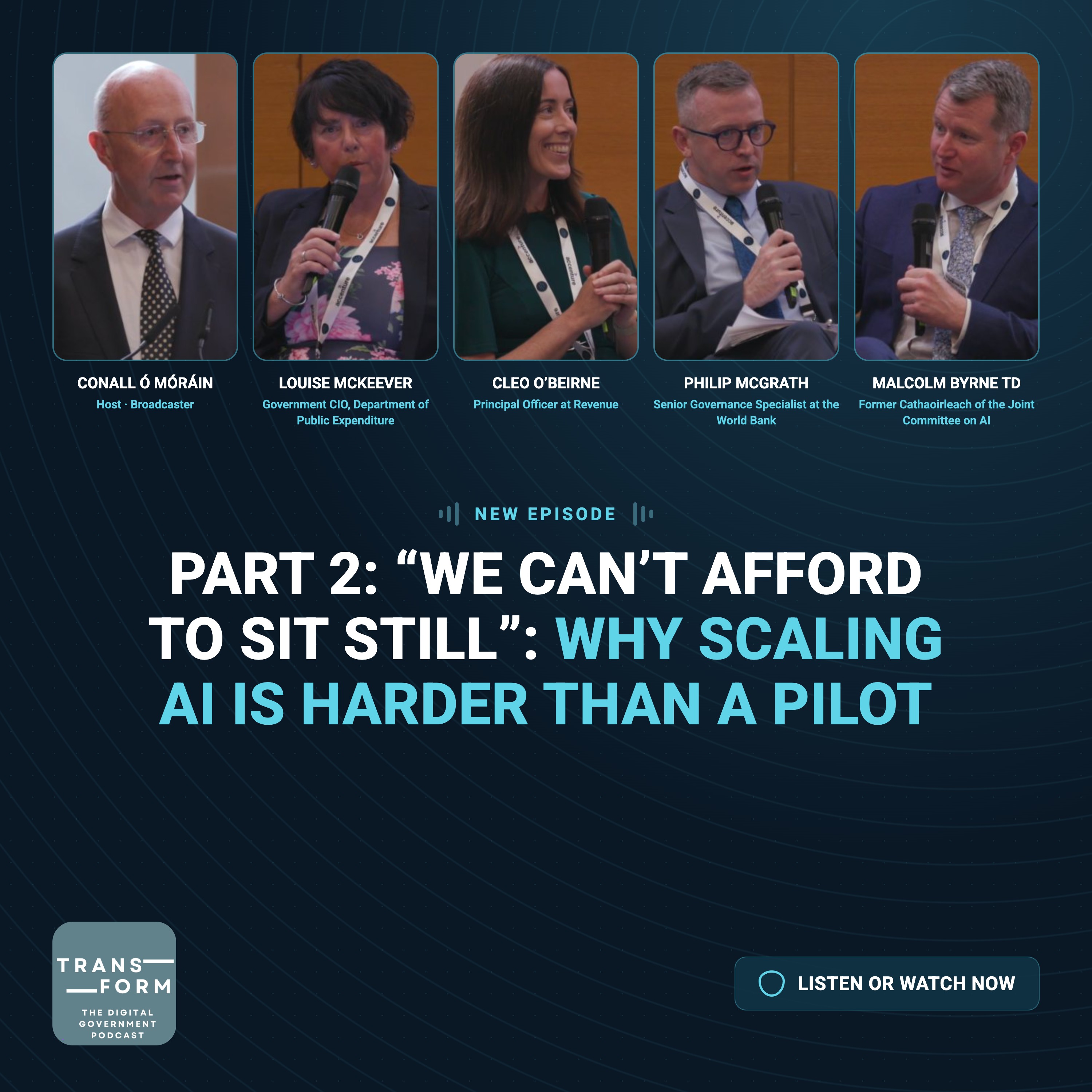
The pilot worked. Now what? In Part 2 of this panel discussion, four leaders explain how they're taking AI from pilot to scale, and what it takes to get data and governance right. This panel discussion took place at the Ireland eGovernment Awards and Leadership Summit 2026 on 24 September 2026 at UCD's O'Reilly Hall. We bring together Louise McKeever, Government CIO; Cleo O'Beirne, Principal Officer at Revenue; Philip McGrath, Senior Governance Specialist at the World Bank; and Malcolm Byrne TD, former Cathaoirleach of the Joint Committee on AI. The panel is chaired by Conall Ó Móráin. If you're taking AI beyond the pilot, here's what to do: Start small, prove it, then scale. Revenue tested agentic AI on a small application first, stage by stage. Redesign the whole process, not one stage. Individual productivity gains only go so far. Plan for lost knowledge, and recovered knowledge. As AI scales, people may know less, but AI can also capture knowledge that has already been lost. Reuse
The Ninth Circuit considers a shareholder's challenge to disclosures used to sell UserTesting. During negotiations, Thoma Bravo reduced a proposed ten-dollar-a-share offer to seven dollars and fifty cents. The board initially rejected that lower price, but later recommended a deal at that price to shareholders. The shareholder alleges that the merger's proxy statement wrongly made the company's revenue performance look worse than it was. The disputed sentence grouped revenue with calculated billings and said both had fallen short of expectations. Her theory is that this depressed picture helped persuade shareholders to accept too little for their stock. That is an allegation, not a finding that the deal was unfair. The district court dismissed the revised complaint. Although it had treated the disputed sentence as false or misleading, it said the allegations still sounded in fraud and failed the stricter requirements for pleading the executive's responsibility. The shareholder will arg
The Second Circuit considers a plan to help homebuyers who need mortgages compete with cash offers. Canandaigua National Corporation, a New York financial holding company, wanted to guarantee purchases arranged through its mortgage subsidiary. If a preapproved customer failed to obtain final mortgage approval, the company would buy the home itself and later resell it. The proposal capped the value of homes held at any one time at five million dollars and promised resale within two years. Canandaigua says those safeguards make the risk small. The Federal Reserve Board rejected the plan on safety-and-soundness grounds, looking beyond the risk to this particular company. It did not finally decide the remaining statutory factors. Canandaigua will argue that the Board ignored the limits in its actual application. The Board will defend considering what could happen if financial holding companies generally began buying property under such guarantees. This is a dispute over permission for a pr
The Ninth Circuit hears a dispute over a proposed waste-processing project in California. Nortech already operated the Western Placer Waste Management Authority's facility. It worked with EcoHub on a proposal for the facility's future, first seeking a contract extension and then preparing for competitive bidding. The collaboration broke down. Nortech ended discussions after EcoHub failed to produce a requested financing commitment. EcoHub says the financing demand was a pretext, and that Recology pushed Nortech to abandon their joint effort. EcoHub and Nortech eventually submitted separate bids. Neither won. EcoHub nevertheless says their work together had already created a legal partnership, with duties Nortech could not simply walk away from. The district court ruled against EcoHub before trial, finding insufficient evidence of shared control. It also found EcoHub's interference claims against Recology were brought too late. EcoHub will argue that the companies' conduct and board dis
Similar work should receive similar pay despite differences in workers' bargaining power.
Share your view, then see how readers voted. No sign-in required. This poll is shared across stories.
Do you agree or disagree?
Common Quandary
A Common Quandary to discuss
Another conversation to explore, separate from this news story.
The stadium can ban violent fans by scanning every face at the gate. Would you walk in?
A stadium can use facial recognition to identify people banned for violence and shorten security lines. Every visitor would be scanned, error rates are not zero, and the resulting biometric data could become useful to police or advertisers.
How much privacy may a crowd be asked to trade for collective safety?