How Arduino is open-sourcing imagination - Massimo Banzi
21 min
Listen through the publisher, then discuss the episode here or arrange an in-person Roundtable. Your city determines where to meet.
Roundtables are designed for groups of four, with a shared subject and room for everyone to speak. Come for discussion, with no dating expectation.
Massimo Banzi helped invent the Arduino, a tiny, easy-to-use open-source microcontroller that's inspired thousands of people around the world to make the coolest things they can imagine -- from toys to satellite gear. Because, as he says, "You don't need anyone's permission to make something great." Uploaded 05-07-13 Talk by Massimo Banzi.
Episode information is provided by the publisher. Listening takes place on the publisher’s service.
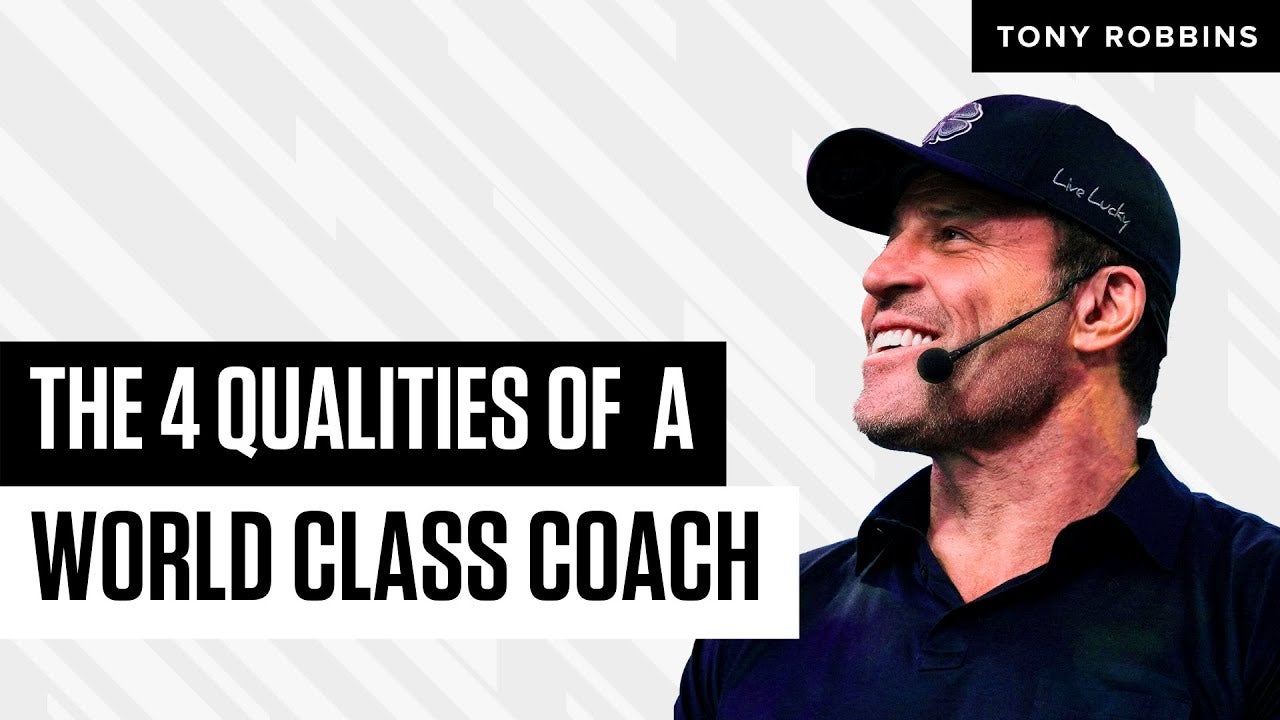
Imagine chasing what you want more than anything in life with laser focus... Uploaded 29-07-21 With sky-high confidence... Without limits... And achieving massive results beyond what you ever dreamed. This is the short list of the results a world-class coach can help you achieve. The most successful people in the world have launched to the top with coaches by their side – it doesn’t matter if you want to be the next great business mogul, artist, musician, teacher, athlete, or something else... A coach is the powerful secret that will help you get to the next level. Here, three of the world’s greatest athletes reveal how their coaches pushed them to achieve record-breaking greatness, including: The most decorated Olympian of all time, swimmer Michael Phelps World champion boxer Mike Tyson Olympics and X-Games gold medal record-holder Shaun White Plus, Tony Robbins explains why you need a coach to help you completely transform your mindset, unleash massive success and ensure you perform
Yannik Schrade says privacy is the prerequisite for sovereign artificial intelligence, and that your AI provider is now your competitor. In this conversation with Andy and Rob, he argues that whoever controls the models and the compute will fight the real battle for self-sovereignty, and that those rules have to be enforced with cryptography rather than promises. He describes Arcium as an encrypted supercomputer, not a chain: inference stays encrypted, no single processor can read a prompt, and privacy no longer has to mean a worse product. He also looks ahead to a world where breakout applications only reach the mainstream if they are private by default. Yannik Schrade is co-founder and CEO of Arcium. Live from the financial capital of the world. Timestamps: 00:00 Intro 01:45 Protectors Can Become The Threat 05:13 Your AI Provider Is Your Competitor 07:20 No Single Machine Reads Your Prompt 09:39 The Internet Is Being Rebuilt Encrypted 11:56 An Encrypted Supercomputer Not A Blockchain
Braintrust founder and CEO Ankur Goyal joins MTS to unpack the launch of Patterns, an AI observability agent that digs through logs and traces to catch bugs before users notice. He also breaks down real-world enterprise AI adoption trends, including the surge of Google’s Neon and open-weight models, why OpenAI models perform 15% better in Codex, and why companies will start building their own data centers within a year. MTS chronicles the singularity, live. Monitoring the situation of tech and AI. Follow MTS: Spotify |https://open.spotify.com/show/4HUNNmV1pjV7CW6Lphm1rM Apple |https://podcasts.apple.com/us/podcast/mts/id1891088763 – Brought to you by: Mongo DB - Anyone can prototype an agent. Lovable - Turn ideas into software people love with Lovable. Start today at https://lovable.dev/ Visithttps://factory.com/ Neon (by Databricks) - Scale your startup on Neon. The Postgres backend for apps and agents. Head over to http://getvcx.com (http://getvcx.com/) to learn more Kong - The AI co
#JimRohn, #Motivation, #MotivationalSpeech, #SuccessMindset, What if your entire life could start changing with just a few powerful daily habits? What if success, confidence, discipline, and peace were hiding inside the small things you do every single day? Uploaded 20-05-26 In this powerful 35-minute motivational speech inspired by Jim Rohn’s timeless wisdom, you will discover the 10 life-changing habits that can completely transform your mindset, future, discipline, confidence, success, and personal growth. If you feel stuck, lost, unmotivated, lazy, confused, or tired of watching life pass you by… this speech is for you. This isn’t just motivation. This is a wake-up call. A deep lesson about discipline, consistency, regret, self-belief, mindset, personal responsibility, daily habits, success psychology, emotional growth, and becoming the person you were born to become. You’ll learn why: Small daily habits change everything Discipline matters more than motivation Your future depends
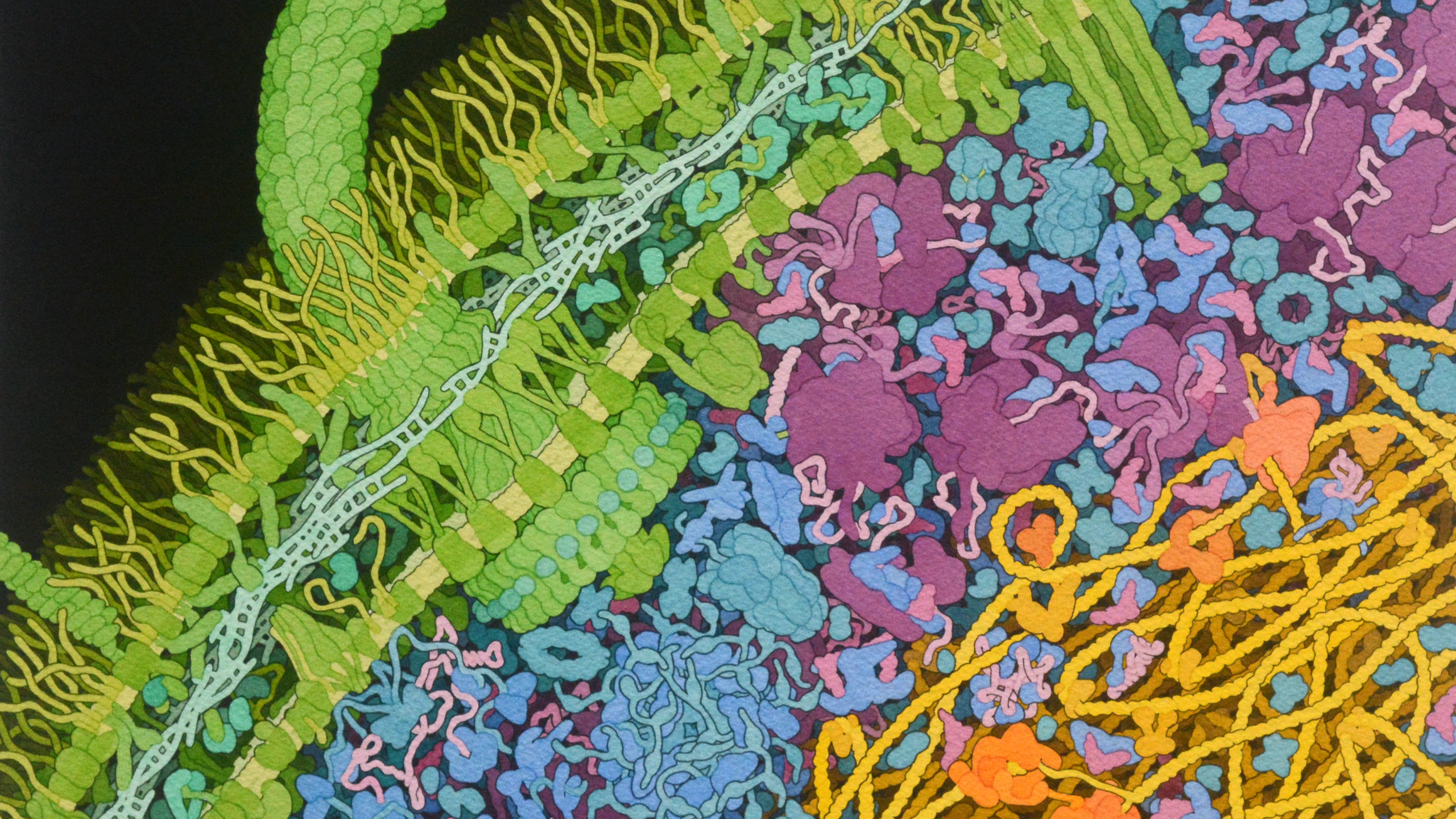
Humans have accomplished some amazing feats of engineering! There’s the Great Wall, the Great Pyramids, the Empire State Building. These are all wonders, to be sure. But it’s easy to forget the wonders that are much smaller than all that: wonders inside us, wonders that are keeping us alive! On today's ID The Future, Andrew McDiarmid is excited to read to you from The Robots Inside You, a new book designed for young people from biochemist Dr. Michael Behe. If you’ve watched the video series Secrets of the Cell, you know Dr. Behe has the ability to make complex scientific concepts easier to understand. In The Robots Inside You, Behe unpacks three amazing systems: the blood-clotting system that coordinates our body’s emergency response to bleeding, the molecular machines that maintain and repair our cells, and the superhero bugs at the heart of life that harness sophisticated machinery and extraordinary capabilities. Source (https://idthefuture.com/2295/)
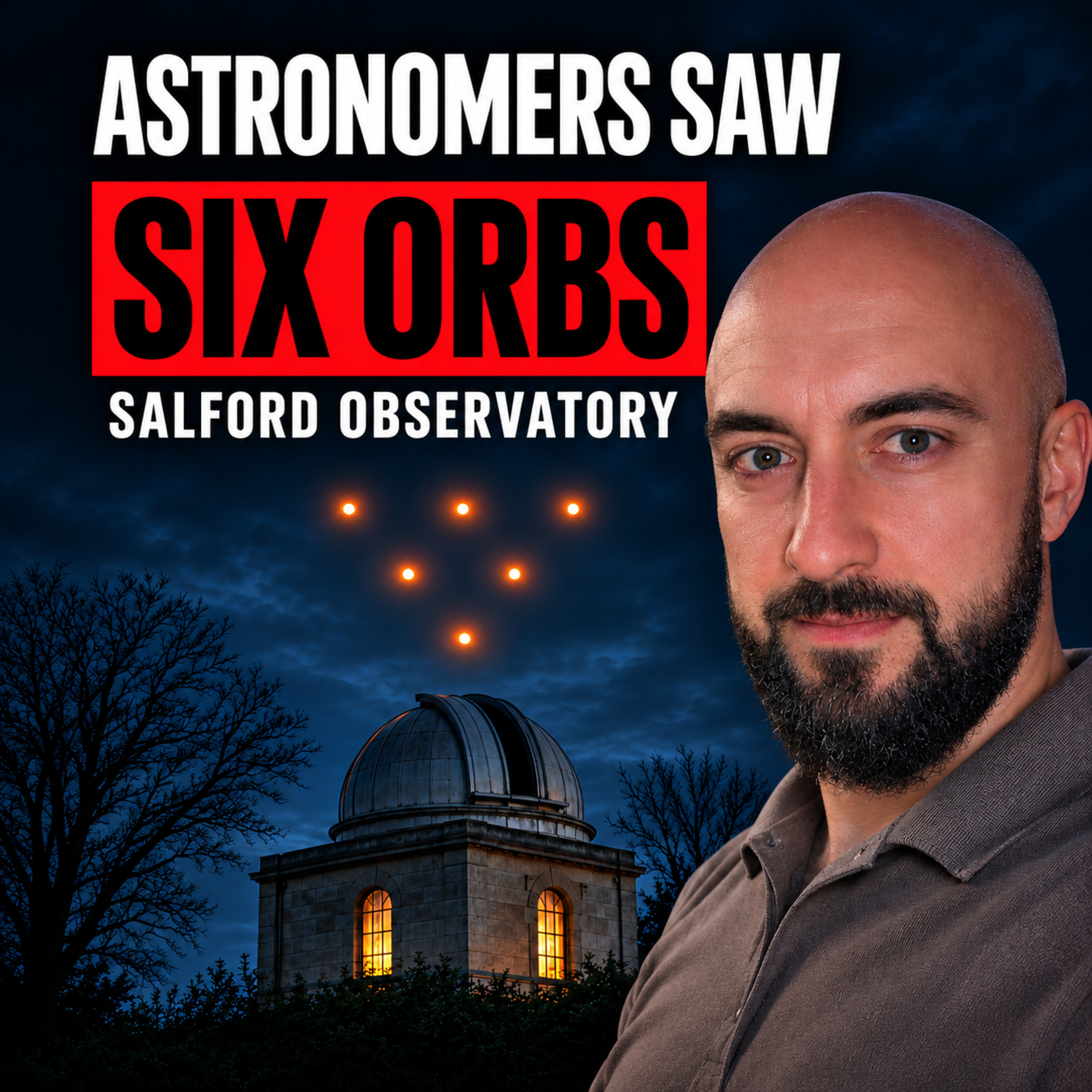
Six orange orbs shot across the sky in formation. About 20 minutes later, three white lights appeared in a triangle. This time, someone got their phone out. UAP Files Podcast S4|E44 On 7 October 2026, amateur astronomer and astrophotographer Adam George was outside Salford Observatory with other observers when they saw two sets of unusual lights. Adam describes the first six lights as fast, silent and arranged in a 3–2–1 formation. While the group was still discussing what they’d seen, someone spotted three white lights moving across the sky. One of the group filmed that second sighting before the lights appeared to switch off. Adam joins me on UAP Files to talk through both sightings, what the group checked that night and why he still hasn’t settled on an explanation. We also get into how difficult it is to judge the speed, size and distance of a light in the night sky. What do you make of the second sighting? If you’ve seen something similar, let us know where and when in the comment
Dig into the slippery slope fallacy, which assumes that one step will lead to a series of events that lead to an extreme— often bad— scenario. Uploaded 19-08-21 -- It’s 1954. Vietnamese nationalists are on the verge of securing an independent Vietnam under communist leader Ho Chi Minh. U.S. President Eisenhower claims that by virtue of the "falling domino principle," communist control of Vietnam would lead to the global spread of authoritarian communist regimes. Can you spot the problem with this argument? Elizabeth Cox explores the slippery slope fallacy. Lesson by Elizabeth Cox, directed by TOGETHER. Support Our Non-Profit Mission ---------------------------------------------- Support us on Patreon: http://bit.ly/TEDEdPatreon Check out our merch: http://bit.ly/TEDEDShop ---------------------------------------------- Connect With Us ---------------------------------------------- Sign up for our newsletter: http://bit.ly/TEDEdNewsletter Find us on Twitter: http://bit.ly/TEDEdTwitter Pe
View full lesson: http://ed.ted.com/lessons/how-do-we-measure-distances-in-space-yuan-sen-ting Uploaded 09-10-14 When we look at the sky, we have a flat, two-dimensional view. So how do astronomers figure the distances of stars and galaxies from Earth? Yuan-Sen Ting shows us how trigonometric parallaxes, standard candles and more help us determine the distance of objects several billion light years away from Earth. Lesson by Yuan-Sen Ting, animation by TED-Ed.
As machines take on more jobs, many find themselves out of work or with raises indefinitely postponed. Is this the end of growth? No, says Erik Brynjolfsson -- it's simply the growing pains of a radically reorganized economy. A riveting case for why big innovations are ahead of us ... if we think of computers as our teammates. Be sure to watch the opposing viewpoint from Robert Gordon. Uploaded 30-08-13 Talk by Erik Brynjolfsson.
A rule should not be introduced unless it can be enforced fairly.
Share your view, then see how readers voted. No sign-in required. This poll is shared across stories.
Do you agree or disagree?
Common Quandary
A Common Quandary to discuss
Another conversation to explore, separate from this news story.
A pricey AI tutor can turn B students into A students. Should schools let them use it?
An effective AI tutor adapts to each student and dramatically improves performance, but its subscription is expensive. A public school cannot provide it to everyone and worries that allowing its use will deepen existing inequality.
Should access be limited when a beneficial tool cannot yet be shared fairly?