English-language podcasts

TED-Ed

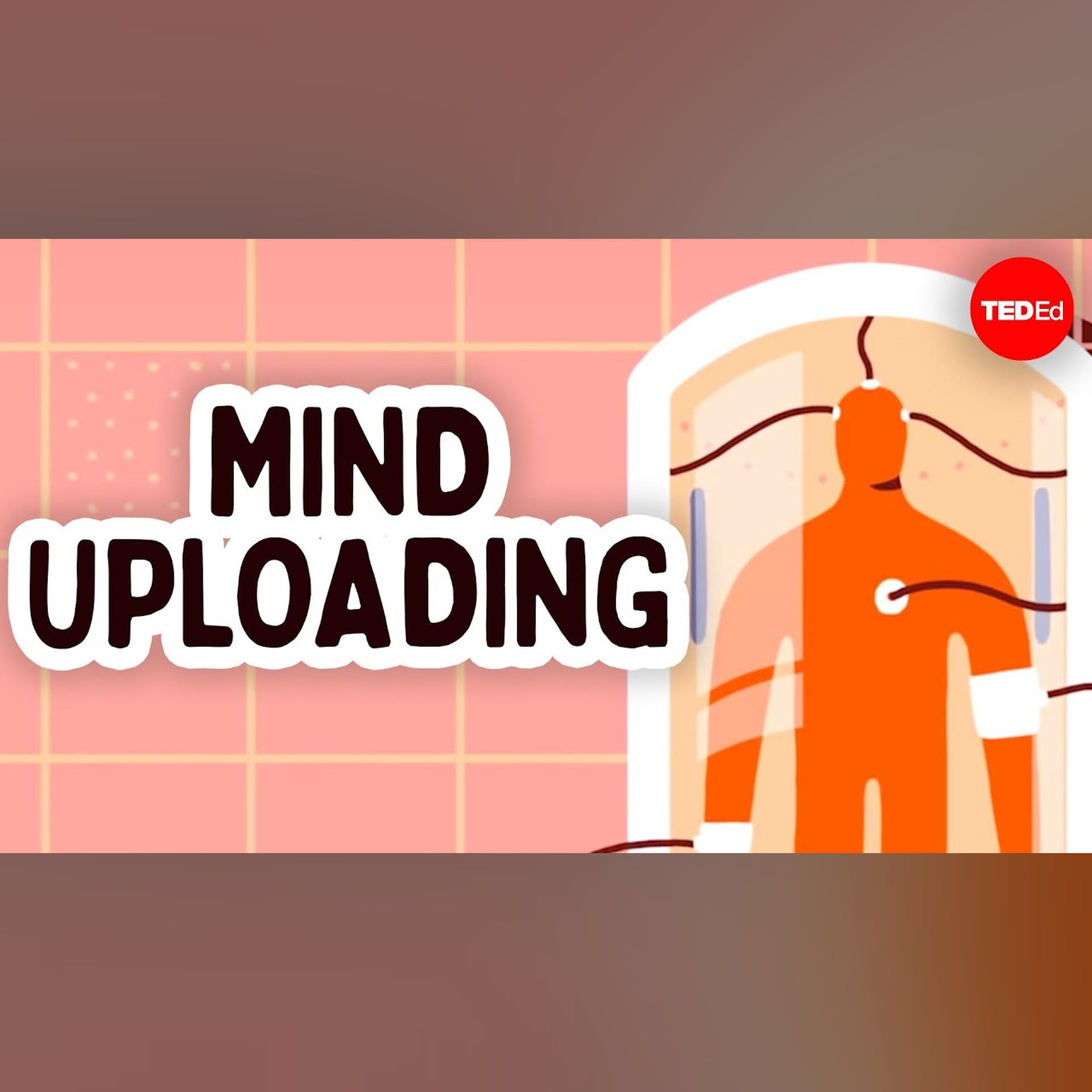
How close are we to uploading our minds? - Michael S.A. Graziano
8 min

Listen through the publisher, then discuss the episode here or arrange an in-person Roundtable. Your city determines where to meet.

Roundtables are designed for groups of four, with a shared subject and room for everyone to speak. Come for discussion, with no dating expectation.

Investigate the possibility of scanning the human brain and uploading our minds and consciousness to a digital world. Uploaded 28-10-19 -- Imagine a future where nobody dies— instead, our minds are uploaded to a digital world. There they could live on in a realistic, simulated environment with avatar bodies, calling in and contributing to the biological world. Mind-uploading has powerful appeal— but what would it actually take to scan a person’s brain and upload their mind? Michael S. A. Graziano explores the challenges. Lesson by Michael S. A. Graziano, directed by Lobster Studio. Animator's website: https://www.lobsterstudio.tv (https://www.lobsterstudio.tv/) Sign up for our newsletter: http://bit.ly/TEDEdNewsletter Support us on Patreon: http://bit.ly/TEDEdPatreon Find us on Twitter: http://bit.ly/TEDEdTwitter Peep us on Instagram: http://bit.ly/TEDEdInstagram View full lesson: https://ed.ted.com/lessons/how-close-are-we-to-uploading-our-minds-michael-s-a-graziano Thank you so much to our patrons for your support! Without you this video would not be possible! João Henrique Rodrigues, Sebastiaan Hols, Aries SW, SANG HAN, Amy Lopez, ReuniteKorea, Vinh-Thuy Nguyen, Liz Candee, Clovis Norroy, Danielle Downs, Nik Maier, Angel Pantoja, Nishant Suneja, 张晓雨, Srinivasa C Pasumarthi, Kathryn Vacha, Anthony Arcis, Jeffrey Segrest, Sandra Fuller Bocko, Alex Pierce, Lawrence Teh Swee Kiang, BRENDAN NEALE, Jane White, Karmi Nguyen, John C. Vesey, Yelena Baykova, Harshita Jagdish Sahijwani, Won Jang, Nick Johnson, Tariq Keblaoui, Carlos H. Costa, Eimann P. Evarola, Aleksandr Lyozin, Mohamed Elsayed, Alan Wilder, Marcus Appelbaum, Francisco Leos, Kevin O'Leary, Les Howard, Ten Cha, Mehmet Yusuf Ertekin, Arlene Weston, phkphk123321, Jennifer Kurkoski, Ryan B Harvey, Austin Randall, Abhishek Bansal, Jayant Sahewal, Dian Atamyanov and igor romanenko.

Episode information is provided by the publisher. Listening takes place on the publisher’s service.

Listen at the source ↗

Featured places to meet in Palo Alto, CA

Explore these places and arrange a conversation through ThinkMatch.

City guide for Palo Alto, CA

More from TED-Ed

TED-Ed

Withstanding a nuclear attack - Irwin Redlener

33 min

View full lesson: http://ed.ted.com/lessons/surviving-a-nuclear-attack-irwin-redlener The face of nuclear terror has changed since the Cold War, but disaster-medicine expert Irwin Redlener reminds us the threat is still real. He looks at some of history's farcical countermeasures and offers practical advice on how to survive an attack. Talk by Irwin Redlener.

Discuss this episode

TED-Ed

The true reason polio poses such a threat

10 min

Explore what makes polio so dangerous, what is causing the 21st century resurgence of cases, and how we can eradicate the disease. -- In 1952, polio was everywhere: killing or paralyzing roughly half a million people annually. Yet just 10 years later, paralytic polio cases in the US dropped by 96% and we were on track to get rid of polio for good. But in recent years, the virus started striking back. So, what’s behind these recent spikes? Explore the dangers of poliovirus and the possibility of eradicating this deadly disease. Directed by Anton Bogaty. This video made possible in collaboration with Gates Ventures Learn more about how TED-Ed partnerships work: https://bit.ly/TEDEdPartner A special thanks to Ananda Bandyopadhyay, Amber Zeddies, and Kathleen O'Reilly who provided information and insights for the development of this video. Support Our Non-Profit Mission ---------------------------------------------- Support us on Patreon: http://bit.ly/TEDEdPatreon Check out our merch: htt

Discuss this episode

TED-Ed

How to fool a GPS - Todd Humphreys

21 min

Todd Humphreys forecasts the near-future of geolocation when millimeter-accurate GPS "dots" will enable you to find pin-point locations, index-search your physical possessions ... or to track people without their knowledge. And the response to the sinister side of this technology may have unintended consequences of its own. (Filmed at TEDxAustin.) Uploaded 26-06-13 Talk by Todd Humphreys.

Discuss this episode

Community Poll

Institutions should publicly explain how they respond to research misconduct.

Share your view, then see how readers voted. No sign-in required. This poll is shared across stories.

Do you agree or disagree?

Choose one answer

Common Quandary

A Common Quandary to discuss

Another conversation to explore, separate from this news story.

Your family wants an AI to settle an old argument. Would you hand over the group chat?

A recurring family dispute has reached the point where nobody agrees on what was actually said. Your cousin proposes uploading five years of the family group chat to an AI that can reconstruct events, flag contradictions, and recommend a fair resolution. Nearly everyone agrees—but one relative refuses.

Can a tool make a family argument fair without turning intimacy into evidence?

Explore this quandary