How elephants talk, with Dr Caitlin E O'Connell-Rodwell
48 min
Listen through the publisher, then discuss the episode here or arrange an in-person Roundtable. Your city determines where to meet.
Roundtables are designed for groups of four, with a shared subject and room for everyone to speak. Come for discussion, with no dating expectation.
A behavioural ecologist from the United States, Caitlin O’Connell-Rodwell has studied the elephants of Namibia’s Etosha National Park for 30 years, revealing unimagined new learnings about elephant communication and society. In this episode of Wild Lives, she talks about her groundbreaking studies and how they have shone fresh light on the way elephants talk to each other – even through the ground. We also talked about how watching insects on leaves in New Jersey opened up the natural world for her, and about how elephants aren’t that different to humans. Photo: O'Connell & Rodwell And to get more great content from BBC Wildlife, visit our website at discoverwildlife.com (https://www.discoverwildlife.com/)
Episode information is provided by the publisher. Listening takes place on the publisher’s service.
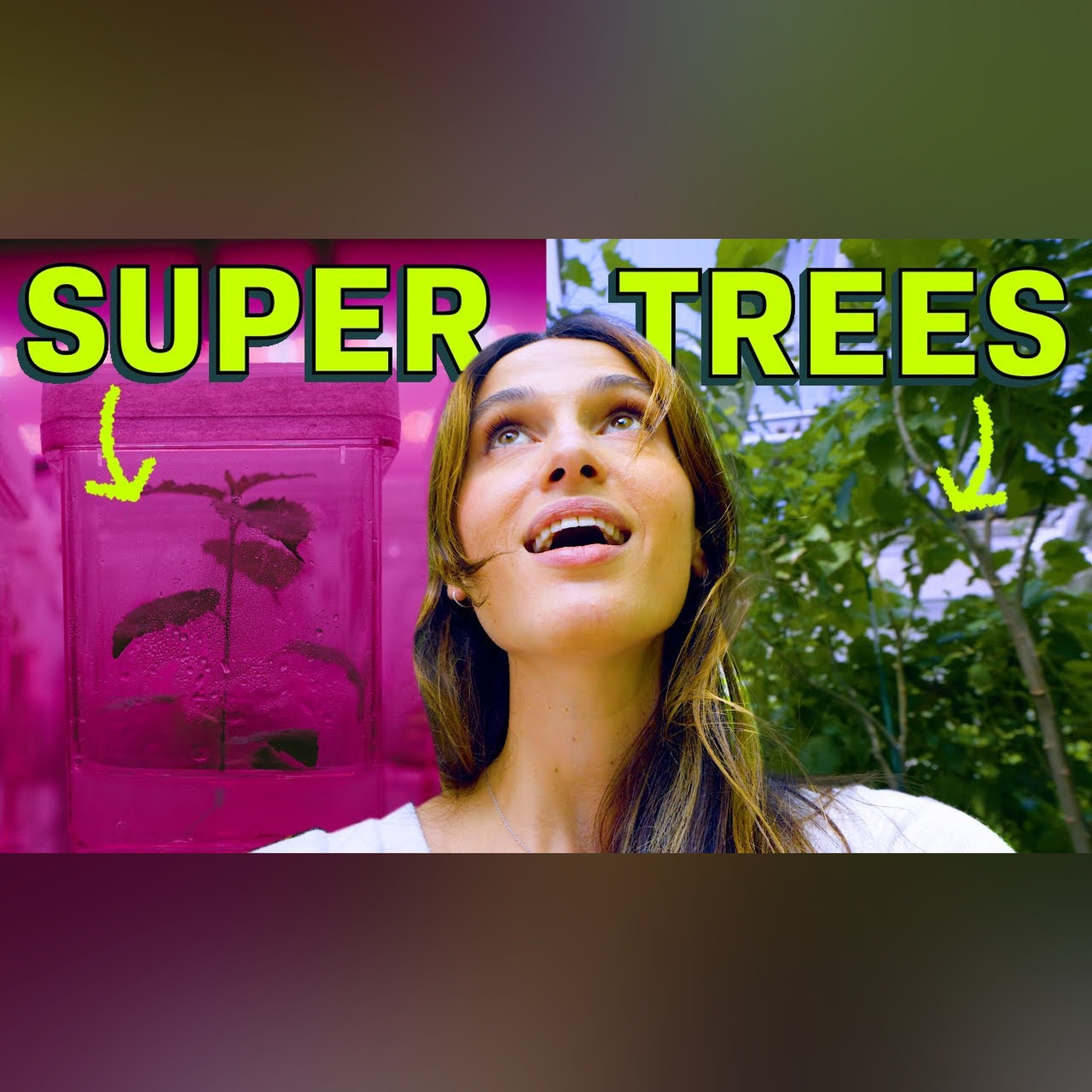
These trees have been genetically modified to capture more carbon. Should we use them? You may have heard that the United States Supreme Court recently weakened the power of the Environmental Protection Agency (EPA) to regulate emissions. That decision harms our ability to fight climate change. In this video, I look for hope in a new research effort - but it's important that new science be paired with regulation. As Mr Beast put it in this video, "we're going to need all the help we can get." Recently, I visited a greenhouse full of super trees. Over the past few decades, genetic engineering has given us the power to manipulate living things - crops, animals, even humans. At the same time, we’ve been unable to adequately slow climate change. The trees I saw are an effort to use one to help the other, led by a group of researchers at a company called Living Carbon. If it works, it could strengthen one of our best allies in this fight. Hold on though, easier said than done. In this video
Growing up in a family with a long history of paranormal experiences, he was no stranger to seeing spirits. But when unexplained activity began at a friend's house in New Jersey, he encountered something unlike anything he'd experienced before. Cabinets slammed, doors opened and closed on their own, and a tall, shadowy man wearing a long black coat and wide-brimmed hat began appearing. With each encounter, the mysterious figure seemed to move closer. When he finally confided in his friend, he discovered something disturbing: his friend had been seeing the same man in his dreams for years. But the most frightening encounter was still to come. One evening, the figure got close enough to touch him, triggering an overwhelming surge of anger he couldn't explain. Was the entity somehow influencing his emotions? And what did it want? #RealGhostStoriesOnline #HatMan #ShadowPeople #GhostStories #ParanormalEncounters #DarkEntities #HauntedHouse #SpiritEncounters #TrueGhostStories #ParanormalActi
Check Out Untold Earth on PBS Terra: https://www.youtube.com/watch?v=-BVHSUMAWR4&list=PLzkQfVIJun2J5q9CIXPAlL95FSb0tJul7&index=85 PBS Member Stations rely on viewers like you. To support your local station, go to:http://to.pbs.org/DonateSPACE Sign Up on Patreon to get access to the Space Time Discord! We humans have always been explorers. The great civilizations that have arisen across the world are owed to our restless ancestors. These days, there’s not much of Earth left to explore. But if we look up, there’s a whole universe out there waiting for us. Future generations may one day explore the cosmos and even settle entire other galaxies. But there is a hard limit to how much of the universe we can expand into. So, how big can humanity get? Episodes Referenced: How Much Of The Universe Can Humanity Ever See?: https://youtu.be/eVoh27gJgME Is Interstellar Travel Possible?: https://youtu.be/wdP_UDSsuro What If Humanity Is Among The First Spacefaring Civilizations?: https://youtu.be/uTrF
A man who had experienced paranormal activity throughout his life believed he could sometimes sense a spirit before entering a building. His friend's apartment was already known for unusual activity, but one evening, he felt something different. There was another presence inside—and it didn't seem particularly friendly. Even the dog behaved strangely, abandoning the routine she'd followed for years. Then, while the two friends were playing video games, he became aware of a male figure standing directly behind his friend. Determined to protect him, he confronted the unseen visitor, and something extraordinary appeared to happen. For a moment, it seemed the confrontation had worked. The dog returned to normal, and the apartment felt peaceful again. But later that night, he claimed he could still see the figure outside, pacing in the parking lot. Had he really driven something away—or merely forced it out of the apartment? #RealGhostStoriesOnline #TrueGhostStories #SpiritEncounters #Haunt
In Gurus, Hucksters, Entertainers: How Influencers Reshaped Social Media (https://bookshop.org/a/12343/9780226830940)(University of Chicago Press, 2026), digital studies scholar Dr. Angèle Christin demystifies the content creator economy, explaining its long history and the pitfalls of its professionalization. Drawing on in-depth fieldwork with digital creators as varied as vegan YouTubers, dads of Instagram, and self-described drama commentators, Dr. Christin shows how individuals enter social media creation, how they make money, and how their online environments shape their content. Aspiring creators often dream of a better life in social media careers. Yet these dreams soon turn into exhaustion as influencers try to meet the contradictory demands of platforms, brands, and audiences. Over time, Dr. Christin shows, creators cluster into three types: hucksters, who work on behalf of brands; entertainers, who chase virality and platform payments; and gurus, who monetize the loyalty of t
We are in the ecological crisis, and not just as victims of an environmental devastation that is unequally distributed along intersecting hierarchies of class, ‘race’ and gender. We are part of the crisis because, in our society, the vast majority of us rely on work to pay for the things we need to survive. This means we also depend on the infinite growth of commodity production that defines capitalism and drives the ecological crisis. Nonetheless, workers’ insertion in capital accumulation also has an antagonistic face, rooted in their very separation from the means of production. Therefore, labour is also a crucial collective actor against the ecological crisis. In Workers and the World: Fighting Ecological Crisis from Within with Lorenzo Feltrin (https://bookshop.org/a/12343/9781804297827) (Verso Books, 2026), Lorenzo Feltrin explores the relationship between workers and nature by bringing Italian operaismo into a dialogue with a broad range of traditions, from dependency theory to
Born and raised in Kenya, Jan Fox spent his childhood travelling around the country exploring its wildlife. In this episode of Wild Lives, he talks about what it was like to grow up surrounded by nature and how that went on to inform his life and the wildlife and humanitarian projects in Africa that he has been involved in. Jan is an expert in sustainable wildlife tourism, and he also discusses the ethics of travel in East Africa, where tourism and conservation go hand-in-hand. Photo: Gabriella Fox
How can you do more to protect our oceans? And could you help to address youth unemployment in coastal areas at the same time? These were the questions that Wietse van der Werf was attempting to answer when he set up the Sea Ranger Service in 2016. In this episode, Wietse discusses the wide-ranging conservation work that the ambitious social enterprise has undertaken over the last decade, and how it has created employment opportunities for young people at the same time. Also joining us is Molly King, who made it through the arduous Sea Ranger bootcamp to become one of the UK's first ever Sea Rangers. She tells us about her experience of conducting marine bird surveys in the Celtic Sea, as well a precarious voyage to the Netherlands to monitor shipwrecks. Find out more about the Sea Ranger Service, including details of how to apply for the next Sea Ranger bootcamp, at searangers.org (https://searangers.org/) Photo: Oliver Hurley This episode was presented by Oliver Hurley, hosted by Pau
From his home in the remote Great Bear Rainforest, First Nations hereditary chief Mike Willie runs wildlife tours that go much further than showing visitors what animals live in British Columbia. Through his Indigenous-owned and operated wildlife travel businesses, Mike uses tourism as a vehicle to share the stories of the lands that he and his ancestors have looked after, and that have looked after them, for more than 14,000 years. Canada is still undergoing a process of truth and reconciliation relating to the country’s treatment of its Indigenous people, and Mike talks about the raw issues related to this history, as well as celebrating the cultures that have seen First Nations people live in harmony with nature for countless generations. You can find out more about Mike's work by visiting seawolfadventures.ca (https://seawolfadventures.ca/) Photo: Mike Willie
Public health information should explain uncertainty even when simpler messages are easier to communicate.
Share your view, then see how readers voted. No sign-in required. This poll is shared across stories.
Do you agree or disagree?
Common Quandary
A Common Quandary to discuss
Another conversation to explore, separate from this news story.
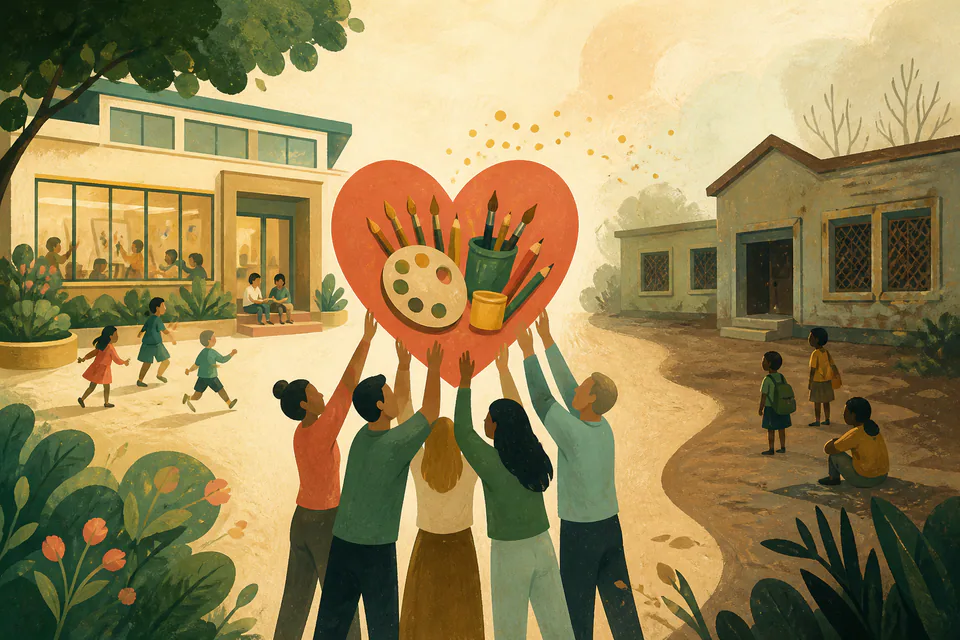
Rich parents want to buy their public-school class an art teacher. Should the school say no?
Parents at a well-resourced public school raise enough money for art teachers and smaller classes. Nearby schools cannot raise comparable amounts, widening differences within the same district.
Can helping your own community become unfair to the larger one?