Listen through the publisher, then discuss the episode here or arrange an in-person Roundtable. Your city determines where to meet.
Roundtables are designed for groups of four, with a shared subject and room for everyone to speak. Come for discussion, with no dating expectation.
When it's Christmastime, there are a few movies I like to watch year after year. One of those is Elf. It's not only one of my favorite Christmas movies, but one of my favorite movies in general. So to kick off the Christmas season, today I talk with Andy Richter. Andy played Morris, who works at Walter Hobbs’ publishing house in the film. He’s also the co-author of a new book on the making of the movie, Elf Unwrapped. Today on the show, Andy takes us behind the scenes of how Elf went from a script that bounced around Hollywood for years to a modern Christmas classic. We discuss how Will Ferrell and Jon Favreau got attached to the project, the two contrasting elements their competing visions generated that gave the movie its special alchemy, the unpredictable nature of creative success, and the improvisation and practical effects behind Elf 's distinctive charm. We talk both about fun facts, like who else was considered to play Buddy besides Will Ferrell and whether the snow in the Central Park snowball fight was real, and get to the bottom of why Elf continues to resonate with audiences more than two decades after its release and what it says about the human desire for magic. After the show is over, check out the show notes at aom.is/elf (http://aom.is/elf) Resources Related to the Podcast Get the Book: Elf Unwrapped — Behind the Scenes of a Modern Christmas Classic (https://link.amazon/B05tAFJjY) AoM Podcast #952: Season’s Screenings — A Tour of Classic Christmas Movies (https://www.artofmanliness.com/culture/entertainment/podcast-952-seasons-screenings-a-tour-of-classic-christmas-movies/) AoM Article: How to Make the Perfect Snowball (Like Buddy the Elf) (https://www.artofmanliness.com/skills/just-for-fun/how-to-make-the-perfect-snowball-an-illustrated-guide/) The ending/sleigh scene of Elf (https://www.youtube.com/watch?v=nwBtZOTEbgo) 00:00 Introduction 01:49 Andy Richter on Elf’s Lasting Success 03:26 Joining the Cast—and Why Hits Are Unpredictable 06:14 How Elf’s Original Script Came to Life 09:37 Casting Buddy: Chris Farley to Will Ferrell 14:25 Jon Favreau’s Vision: Balancing Comedy and Heart 21:11 James Caan and the Art of Playing Buddy’s Dad 27:32 Improvised Moments and Filming on NYC Streets 30:24 Last-Minute Rewrites and Elf’s Funniest Lines 34:02 Filming in Vancouver and the Real Snowball Fight 37:32 Practical Effects and Forced Perspective 40:00 Why Elf’s Ending Still Moves Us
Episode information is provided by the publisher. Listening takes place on the publisher’s service.
Lauren Johnson went from struggling with addiction as a teenager in Texas to accumulating four felonies and serving three separate prison sentences. After giving birth in county jail, experiencing a relapse five years into recovery, and repeatedly trying to rebuild her life, she turned her experiences into a career in criminal justice advocacy. Today, Lauren works with Dream.Org and has helped change multiple laws in Texas. She shares how she broke the cycle of incarceration and became an advocate for others. _____________________________________________ Connect with Lauren Johnson: Dream Foundation: https://dream.org/?form=FUNBQVDQPMX&source=organic-website&utm_medium=organic&utm_source=website&utm_campaign=general (https://dream.org/?form=FUNBQVDQPMX&source=organic-website) Facebook: https://www.facebook.com/laurenjohnson512 X: https://x.com/laurenfreenow Linkedin:https://www.linkedin.com/in/lauren-johnson-65552736/ _____________________________________________ Hosted, Executive Prod
How can we embrace the benefits of AI without outsourcing the very skills that make us human? Today, I'm joined by educator and author Jonathan Strecker to explore the intersection of artificial intelligence, convenience culture, and childhood development. Drawing from his book, Emergence: How Modern Convenience Is Dumbing Down Our Children and What Parents and Schools Can Do About It (https://www.amazon.com/dp/1493094254?asc_item-id=amzn1.ideas.DL4M6AD2Z4ZN&creativeASIN=1493094254&linkCode=ssc&ref_=aip_sf_list_spv_ons_mixed_d_asin&tag=onamzdianebod-20&th=1), Jonathan challenges us to consider what children might be losing in a world increasingly designed to make life easier. We explore the developmental value of boredom, frustration, and struggle, the difference between enhancing our thinking and outsourcing it, and the essential human skills our children need to thrive in an AI-driven future. Rather than taking a fear-based or anti-technology approach, this conversation invites us to
POTUS will never voluntarily relinquish the MAGA project, and no potential successor will advance without his blessing. Vance and Rubio are trapped. Meanwhile, the Tech Right has a messiah problem, and Trumpland wants us to be a Third World banana republic. And since this is Thanksgiving, Tim delivers a little food fight with former Trump supporter Saagar over whether Ukraine should surrender to Russia. Plus: The role MAGA moms and ICE played in the Democrats’ sweeping victories, and some suggestions for how to cut back on your phone addiction. Saagar Enjeti joins Tim Miller. show notes: Saagar's "Breaking Points" (https://www.youtube.com/breakingpoints) Culper Research on Nvidia from May (https://culperresearch.com/wp-content/uploads/2026/05/Culper_NVDA_5-13-2026.pdf) Dan Wang on China’s coming AI freakout (https://www.nytimes.com/2026/11/23/opinion/china-ai-race-control.html?smid=url-share&unlocked_article_code=1.TFE.WIB5.9BPERgPcVbRO) Tim’s interview with Anne Applebaum last week (h
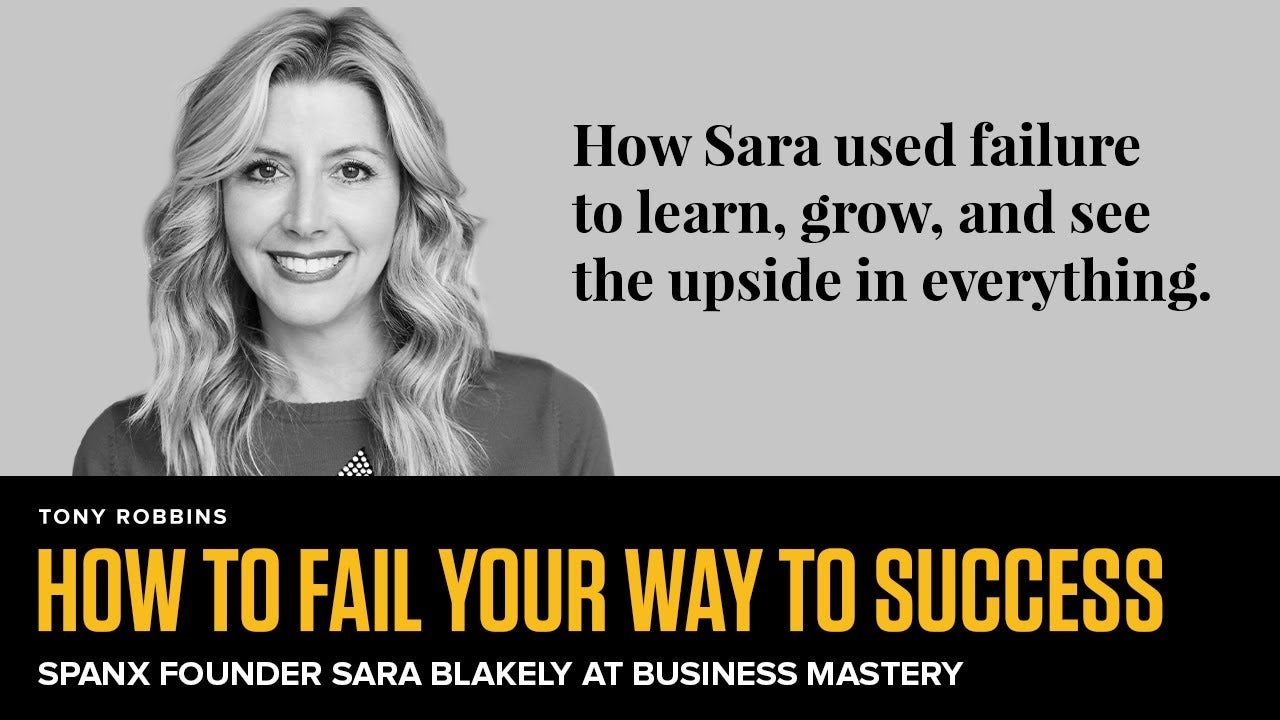
Sara Blakely, founder and CEO of SPANX, shares how failure has been a catalyst to her success – and how she uses it to learn, grow and see the upside in everything. Uploaded 23-06-20 Sara is the founder of shapewear company SPANX (www.spanx.com), and in 2012 – at just 41 years old – she became the first female in the world to become a billionaire, on her own, without the help of an inheritance or spouse. At Business Mastery in Palm Beach, Sara shared the number-one influence on her success: her father, who taught her the value of failure. In fact, he expected it – and he expected her to learn from it. Sara shares, “My definition of failure became not about the outcome, but about not trying.” Fear of failure in business is one of the biggest limiting beliefs that holds business owners and entrepreneurs back. Read how you can overcome this fear at https://www.tonyrobbins.com/stories/business-mastery/overcoming-fear-failure/ and watch this video for real-life examples of how Sara uses fea
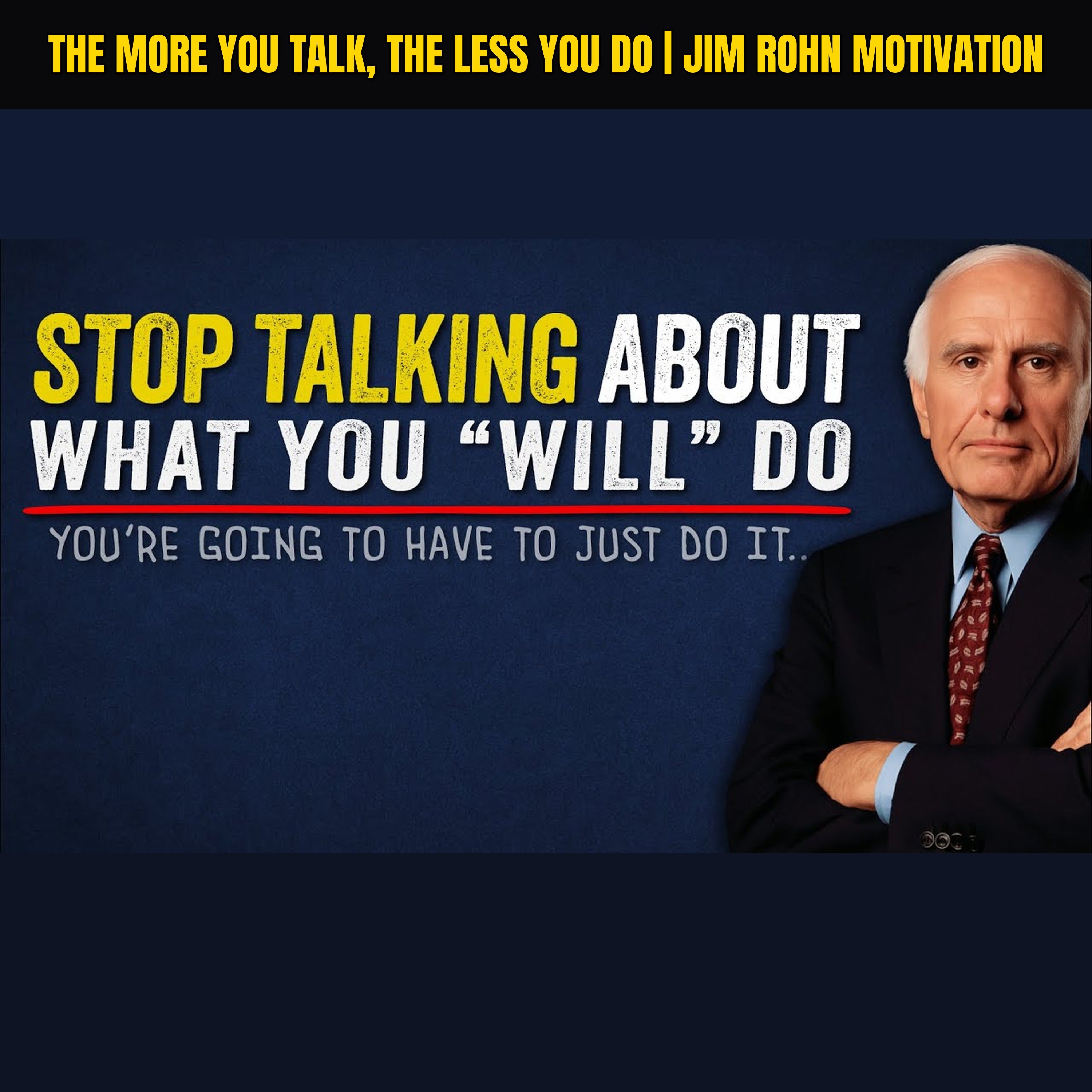
#JimRohnMotivation #JimRohn #JimRohnSpeech In this Jim Rohn Motivation video, Jim dives deep into the powerful distinction between talking and doing — exposing how many mistake conversation for progress. If you've ever felt stuck while making grand plans, this message will help you shift from saying to executing. Key Topics From This Motivational Video: Why talking about goals isn't the same as achieving them The illusion of progress through words The importance of execution over expression Building credibility through consistent action The discipline of silence and restraint This powerful Jim Rohn speech reminds us that life rewards execution — not intention. Words can excite, but only action creates momentum and results. Jim explains how silence, restraint, and consistent effort build trust, while over-promising and under-delivering create credibility debt. If you want your actions to speak louder than your announcements, this message is for you. This Jim Rohn Motivational Video Is P
Thanks to Brilliant for supporting PBS. Learn more at: https://www.brilliant.org/spacetime Uploaded 02-12-19 PBS Member Stations rely on viewers like you. To support your local station, go to: http://to.pbs.org/DonateSPACE The universe is big, really, really big. Although according to a new paper, it may literally be infinitely smaller than we previously thought. Sign Up on Patreon to get access to the Space Time Discord! Check out the Space Time Merch Store Hosted by Matt O'Dowd Written by Matt O'Dowd Graphics by Leonardo Scholzer and Adriano Leal Directed by: Andrew Kornhaber Executive Producers: Eric Brown and Andrew Kornhaber End Credits Music by J.R.S. Schattenberg: https://www.youtube.com/channel/UCRl6-nb4iOnsij-vnpAjp0Q Every time you walk out the door, light from the Big Bang strikes your face, enters your eyes. This is the cosmic microwave background radiation - the left-over heat-glow from the very early universe. We can’t see this microwave light with our eyes, but we can ca
Young Americans are dating less and getting married later, if at all. And sometimes the sexes don't even seem to like each other much. What's separating men and women, and leading to a decline in romance? And what can be done to reverse it? My guest today did extensive polling research and conducted over one hundred hours of interviews with young adults to find out. His name is Daniel Cox, and he's the director of the Survey Center on American Life and the author of Generation Uncoupled (https://link.amazon/B07Wpxg20). Today on the show, Daniel explains why young adults have become more hesitant about dating and marriage, how social media has distorted men's and women's perceptions of each other, and why dating apps haven't delivered on their promise. We also discuss why the romance recession is really downstream of the friendship recession, and Daniel explains how the size of a man's social circle is strongly connected to his dating prospects, why young people need more opportunities
Envy is a universal human emotion, but it's one we don't like to admit we feel. When a friend gets a promotion, a neighbor buys a bigger house, or someone you follow on social media seems to be living a better life than you, you might feel a pang of envy. And then you probably feel bad about feeling envious. But what if envy isn't necessarily a bad thing? What if, instead of trying to suppress it, you could use it to build a better life? My guest today says that's entirely possible. Her name is Dr. Stacy Kim, and she's a social scientist, a coach who works with high achievers, and the author of Envy: Why Wanting What They Have Is the Key to Getting What You Want. (https://link.amazon/B01EaQx35) Today on the show, Stacy explains the difference between benign and malicious envy, how envy can reveal what we really want out of life, and how envy is experienced and expressed differently in the U.S. versus Korea, where Stacy was born. We also discuss why you can't simply stop comparing yours
Note: This is a rebroadcast. When people think about living more fully and making better use of their time, they typically think of finding some new organizational system they can structure their lives with. Oliver Burkeman says that what you really need instead are perspective shifts — small, sustainable changes in how you view and approach your day-to-day life. He provides those mindset shifts in his new book, Meditations for Mortals: Four Weeks to Embrace Your Limitations and Make Time for What Counts (https://amzn.to/3Yn6I7T). And we talk about some of them today on the show, including why you should view life’s tasks and problems like a river instead of a bucket, stop feeling guilt over your “productivity debt,” make peace with your decisions by embracing an unconventional reading of the poem “The Road Not Taken,” aim to do your habits “dailyish,” be more welcoming of interruptions, and practice “scruffy hospitality.” Resources Related to the Podcast Oliver‘s previous appearance o
Essential public services should be protected even when they operate at a financial loss.
Share your view, then see how readers voted. No sign-in required. This poll is shared across stories.
Do you agree or disagree?
Common Quandary
A Common Quandary to discuss
Another conversation to explore, separate from this news story.
A stray cat adopts you—and starts killing birds. Do you keep feeding it?
A stray cat visits your yard daily and appears to depend on the food you leave out. Neighbors complain that outdoor cats kill birds and say feeding it encourages the problem without taking responsibility for the animal.
Does caring for one visible animal excuse harm to less visible ones?