Listen through the publisher, then discuss the episode here or arrange an in-person Roundtable. Your city determines where to meet.
Roundtables are designed for groups of four, with a shared subject and room for everyone to speak. Come for discussion, with no dating expectation.
Thanks to Brilliant for supporting PBS. Learn more at: https://www.brilliant.org/spacetime Uploaded 02-12-19 PBS Member Stations rely on viewers like you. To support your local station, go to: http://to.pbs.org/DonateSPACE The universe is big, really, really big. Although according to a new paper, it may literally be infinitely smaller than we previously thought. Sign Up on Patreon to get access to the Space Time Discord! Check out the Space Time Merch Store Hosted by Matt O'Dowd Written by Matt O'Dowd Graphics by Leonardo Scholzer and Adriano Leal Directed by: Andrew Kornhaber Executive Producers: Eric Brown and Andrew Kornhaber End Credits Music by J.R.S. Schattenberg: https://www.youtube.com/channel/UCRl6-nb4iOnsij-vnpAjp0Q Every time you walk out the door, light from the Big Bang strikes your face, enters your eyes. This is the cosmic microwave background radiation - the left-over heat-glow from the very early universe. We can’t see this microwave light with our eyes, but we can catch it with even a simple radio antenna. As soon as we became aware of its existence we’ve been feverishly building better and better devices to collect it. Why? Because it encodes so many secrets. And within this light, a group of scientists have just found evidence of the limits of space. A clue that our universe may be actually be finite in size. Today on Space Time Journal Club we’ll delve into the Nature Astronomy paper that just reported this: Planck evidence for a closed Universe and a possible crisis for cosmology by Eleonora Di Valentino, Alessandro Melchiorri, and Joe Silk. Special Thanks to Our Patreons Big Bang Alexander Tamas Andrew and Brenna Craig Stonaha David Barnholdt David Nicklas Fabrice Eap John S Juan Benet Matt Miller Morgan Hough Quasar Mark Heising Mark Rosenthal Vinnie Falco Hypernova Chuck Zegar Danton Spivey Donal Botkin Edmund Fokschaner Hank S John Hofmann John Pollock John R. Slavik Jordan Young Joseph Salomone Mathew Matthew O'Connor Syed Ansar Gamma Ray Burst A G Adrian Hatch Adrien Molyneux AlecZero Andreas Nautsch Bradley Jenkins Brandon labonte Dan Warren Daniel Lyons David Bethala DFaulk Eric Kiebler Frederic Simon Geoffrey Short Graydon Goss Greg Smith James Flowers Jamie Frederick John Funai John Griffith John Robinson Jonathan Nesfeder Joseph Dillman Josh Thomas Kevin Lee Kevin Warne Kyle Hofer Malte Ubl Michael Conroy Nick Virtue Nick Wright Paul Rose Scott Gossett Sean Warniaha Steve Bradshaw Tatiana Vorovchenko Tim Stephani Tonyface Yurii Konovaliuk
Episode information is provided by the publisher. Listening takes place on the publisher’s service.
Discover how scientists developed atomic clocks, which use the vibrations of atoms to measure and maintain a globally consistent time. Uploaded 19-01-21 -- In 1967, researchers gathered to answer a long-running scientific question: just how long is a second? It might seem obvious at first. A second is the tick of a clock, the swing of a pendulum, the time it takes to count to one. But how precise are those measurements? And what is that length based on? John Kitching digs into how we scientifically define this fundamental unit of time. Lesson by John Kitching, directed by Tjoff Koong. Support Our Non-Profit Mission ---------------------------------------------- Support us on Patreon: http://bit.ly/TEDEdPatreon Check out our merch: http://bit.ly/TEDEDShop ---------------------------------------------- Connect With Us ---------------------------------------------- Sign up for our newsletter: http://bit.ly/TEDEdNewsletter Find us on Twitter: http://bit.ly/TEDEdTwitter Peep us on Instagram
For a written breakdown, early access to content like this, and extra nuances, see the associated StayCurious Metabolism newsletter: https://open.substack.com/pub/staycuriousmetabolism/p/stop-chasing-8-hours-of-sleep?r=40ekz2&utm_campaign=post&utm_medium=web&showWelcomeOnShare=true (https://open.substack.com/pub/staycuriousmetabolism/p/stop-chasing-8-hours-of-sleep?r=40ekz2&showWelcomeOnShare=true) Pinealon Letter: https://staycuriousmetabolism.substack.com/p/why-im-trying-this-peptide-for-sleep?r=40ekz2 No Sleep Letter: https://staycuriousmetabolism.substack.com/p/what-if-you-didnt-need-to-sleep-this?r=40ekz2 Deep Sleep Masterclass: https://staycuriousmetabolism.substack.com/p/how-to-help-your-brain-clean-itself?r=40ekz2 I review several gamma entrainment devices in the Deep Sleep letter, along with the evidence supporting this tool. The only device I have personal experience with is Gamma Light Therapy, which was developed based on some of the early Nature research and is also one of
Explore how the Hubble Space Telescope reveals the Universe, from iconic images to major discoveries, and how it complements the James Webb Space Telescope. "ASTROMAN: the Dark Sky Guardian" is a podcast channel that aims to explore popular science in multiple disciplines and research on interdisciplinary approaches, such as sustainability, dark-sky protection, astrophotography, space exploration, astronomy innovation, inclusive science communication, and STEAM Education by integrating science and arts. Exodus Chun-Long Sit, also known as the ASTROMAN, is a transmedia astronomy educator, popular science author, STEAM educator, and science communicator in Hong Kong. He is recently the National Astronomy Education Coordinator (Chair of Hong Kong, China) of the International Astronomical Union and President of Starrix. He was also an International Committee Member of the Dark Sky International, regularly organizing public lectures at the Hong Kong Space Museum and the Hong Kong Science Mu
Scientists are rethinking how particles behave when moving at extreme speeds through matter. New research into quark-gluon plasma, the exotic fluid that existed moments after the Big Bang, reveals unexpected patterns in particle motion that challenge traditional physical models. The findings could offer a powerful new way to investigate the properties of the universe’s earliest matter. This episode includes AI-generated content.
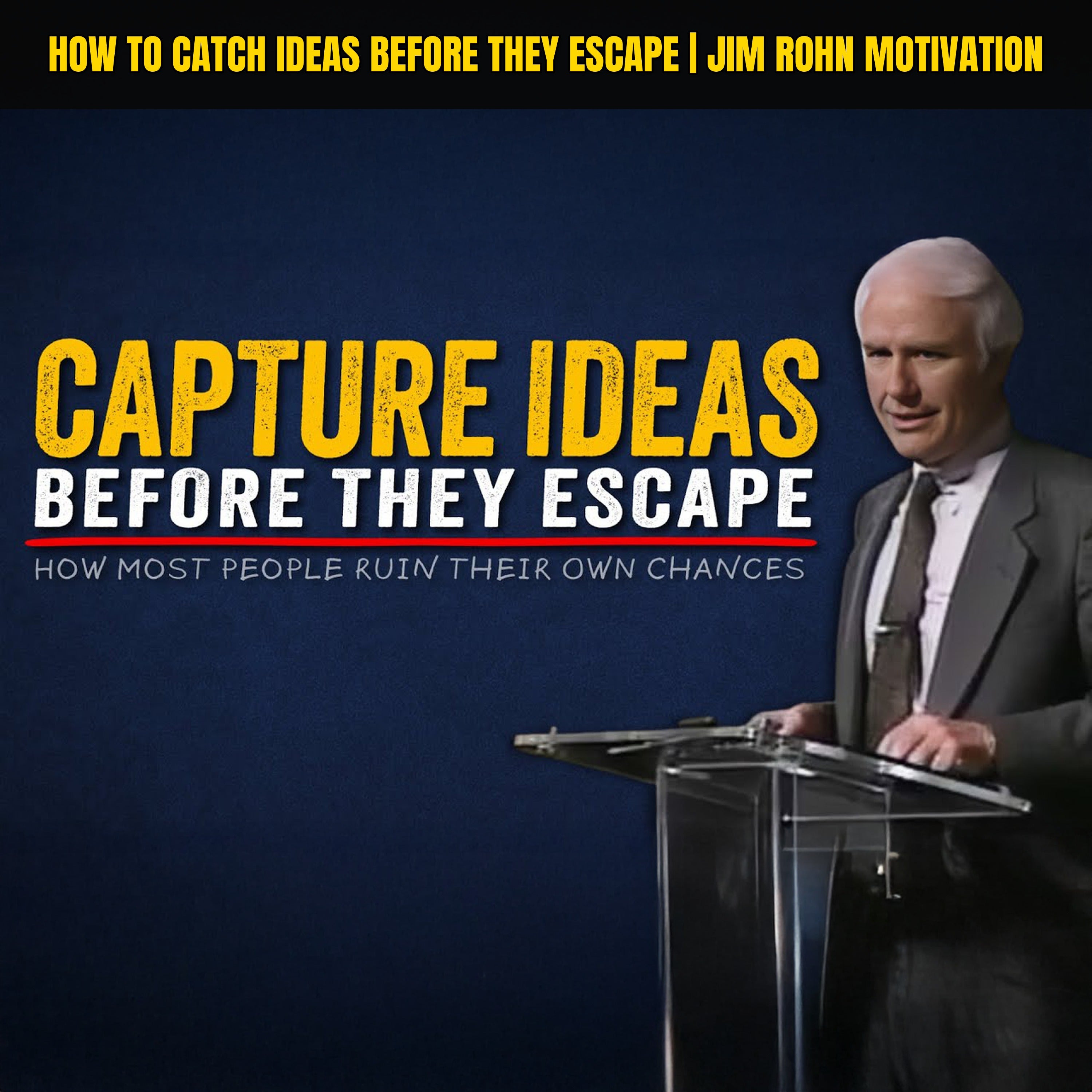
In this Jim Rohn Motivation video, Jim Rohn reveals the transformative power of capturing ideas before they vanish. He emphasizes how one single thought, when written down and applied, can reshape your destiny in wealth, health, relationships, and influence. Key Topics From This Motivational Video: Why most people lose life-changing ideas The habit that separates the average from the extraordinary How to treat your ideas like treasure The connection between capturing and applying insights The role of journaling in building a better future In this powerful Jim Rohn speech, you'll learn why the discipline of writing down ideas is one of the greatest investments you can make. Rohn shows how a single notebook can become your personal goldmine—a treasury of wisdom, opportunity, and action. Ideas don’t wait, and if you’re not ready to catch them, they disappear forever. But when you become intentional about capturing them, life responds with abundance. This Jim Rohn Motivational Video Is Per
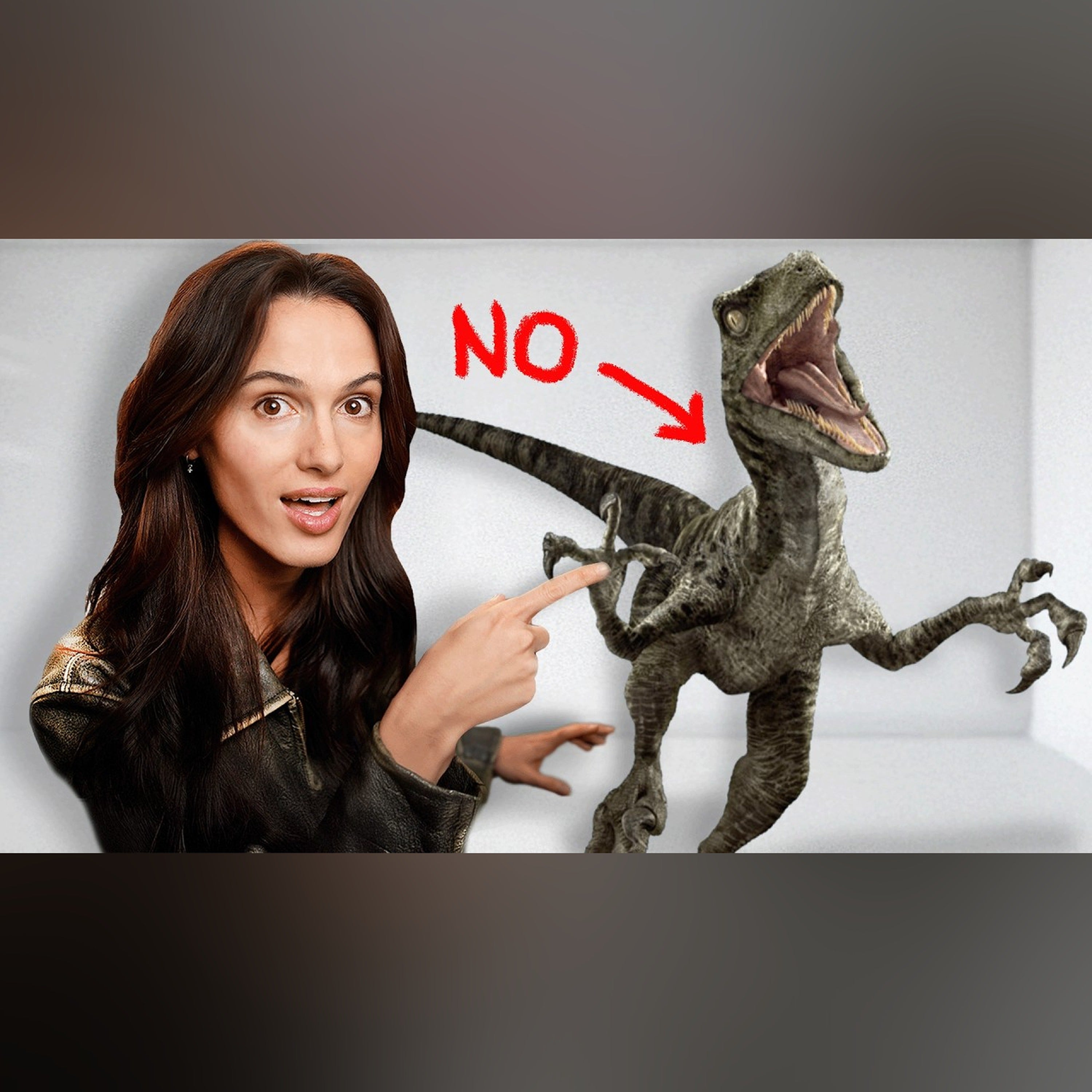
Dinosaurs were not like I thought... Check out https://groundnews.com/Cleo for a data-driven, balanced approach to staying informed. Use my link to save 50 percent on the Vantage plan and see how current events are framed from every perspective. I’m finally learning the truth about dinosaurs. I’ve loved dinosaurs since I was a kid, but it turns out a lot of what I thought I knew is wrong… or at the least outdated. So, in this video, I’m gonna show you the cutting edge of dinosaur discovery. I’ll give you rare access into a warehouse full of dinosaur bones, try to find my own fossil, and show you something new these scientists just discovered… Chapters: 00:00 What were dinosaurs really like? 01:08 Why is today a big deal for dinosaur discovery? 03:31 How big were dinosaurs, really? 05:49 When did dinosaurs actually live? 08:20 How many dinosaurs have we found? 09:26 What was the T-Rex like? 10:39 Did I find a bone?? 11:55 What IS a dinosaur? 14:31 What did dinosaur skin feel like? 15:06
Viewers like you help make PBS (Thank you ) . Support your local PBS Member Station here: https://to.pbs.org/DonateSPACE Uploaded 26-07-17 Unlock the secrets of Feynman Diagrams. Part 5 in our Quantum Field Theory series. And if you're submitting an answer to our challenge question email your answer by August 2nd to pbsspacetime [AT] gmail.com with the subject line "Feynman Diagram Challenge." You can further support us on Patreon at https://www.patreon.com/pbsspacetime Get your own Space Time tshirt at http://bit.ly/1QlzoBi Tweet at us! @pbsspacetime Facebook: facebook.com/pbsspacetime Email us! pbsspacetime [at] gmail [dot] com Comment on Reddit: http://www.reddit.com/r/pbsspacetime Help translate our videos! https://www.youtube.com/timedtext_cs_... Previous Episode: The Real Star Wars Feynman’s path integral shows us that, to properly calculate the probability of a particle traveling from point A to point B, we need to add up the contributions from all conceivable paths between tho
Sign Up on Patreon to get access to the Space Time Discord! Uploaded 18-08-21 The universe is going to end. But of all the possible ends of the universe vacuum decay would have to be the most thorough - because it could totally rewrite the laws of physics. Today I hope to help you understand exactly how terrified you should be. Check out the Space Time Merch Store Sign up for the mailing list to get episode notifications and hear special announcements! Hosted by Matt O'Dowd Written by Matt O'Dowd Graphics by Leonardo Scholzer, Yago Ballarini, Pedro Osinski, Adriano Leal and Stephanie Faria GFX Visualizations: Ajay Manuel Directed by Andrew Kornhaber Assistant Producer: Setare Gholipour Executive Producers: Eric Brown and Andrew Kornhaber End Credits Music by J.R.S. Schattenberg: https://www.youtube.com/user/MultiDroideka Special thanks to Our Patreon Sponsors Big Bang Supporters Ari Paul Kyle Bulloch Charlie Mrs. Tiffany Poindexter Leo Koguan Sandy Wu Matthew Miller Scott Gray Ahmad Jo
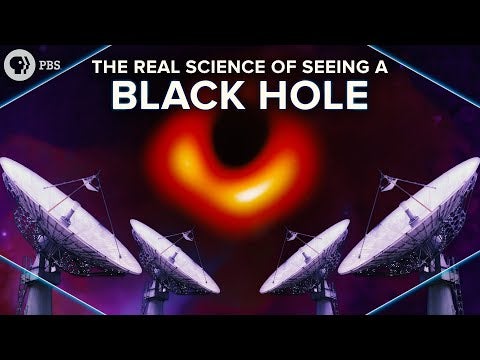
You can learn more about CuriosityStream at https://curiositystream.com/spacetime Uploaded 01-05-19 PBS Member Stations rely on viewers like you. To support your local station, go to: http://to.pbs.org/DonateSPACE How do you take a picture of a black hole and what can we learn from it? Our first ever actual bona fide photo of a black hole, made by the Event Horizon Telescope and revealed to the world in a press conference on April 10th. Since then it’s got plenty of coverage, because … I mean look at it. It’s a freaking black hole. It’s black, it’s holey, it’s everything we hoped it would be. Now that the giddiness has subsided and I personally have stopped spending hours on end staring at a black spot, we can take a breath and actually look at the real science here and discuss exactly how a picture like this could be taken and what we can learn from it. Check out the new Space Time Merch Store! Support Space Time on Patreon Need a Black Hole Refresher #Blackhole #astrophysics #spaceti
Large technology projects should demonstrate local benefits before receiving public incentives.
Share your view, then see how readers voted. No sign-in required. This poll is shared across stories.
Do you agree or disagree?
Common Quandary
A Common Quandary to discuss
Another conversation to explore, separate from this news story.
A stranger rings up fancy apples as the cheap kind. Do you mind your own business?
At self-checkout, the shopper beside you labels expensive organic apples as the cheapest variety. An employee is distracted nearby. The difference is only a few dollars, the store is a huge chain, and the shopper notices that you noticed.
When does witnessing a small cheat make it any of your business?