How many universes could there be? - Chris Anderson
7 min
Listen through the publisher, then discuss the episode here or arrange an in-person Roundtable. Your city determines where to meet.
Roundtables are designed for groups of four, with a shared subject and room for everyone to speak. Come for discussion, with no dating expectation.
View the full lesson: http://ed.ted.com/lessons/how-many-un... The fact that no one knows the answer to this question is what makes it exciting. The story of physics has been one of an ever-expanding understanding of the sheer scale of reality, to the point where physicists are now postulating that there may be far more universes than just our own. Chris Anderson explores the thrilling implications of this idea. Lesson by Chris Anderson, animation by Andrew Park.
Episode information is provided by the publisher. Listening takes place on the publisher’s service.
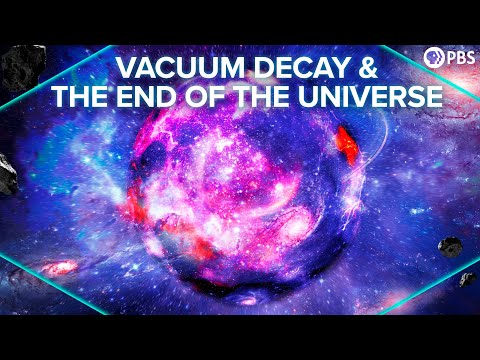
Sign Up on Patreon to get access to the Space Time Discord! Uploaded 18-08-21 The universe is going to end. But of all the possible ends of the universe vacuum decay would have to be the most thorough - because it could totally rewrite the laws of physics. Today I hope to help you understand exactly how terrified you should be. Check out the Space Time Merch Store Sign up for the mailing list to get episode notifications and hear special announcements! Hosted by Matt O'Dowd Written by Matt O'Dowd Graphics by Leonardo Scholzer, Yago Ballarini, Pedro Osinski, Adriano Leal and Stephanie Faria GFX Visualizations: Ajay Manuel Directed by Andrew Kornhaber Assistant Producer: Setare Gholipour Executive Producers: Eric Brown and Andrew Kornhaber End Credits Music by J.R.S. Schattenberg: https://www.youtube.com/user/MultiDroideka Special thanks to Our Patreon Sponsors Big Bang Supporters Ari Paul Kyle Bulloch Charlie Mrs. Tiffany Poindexter Leo Koguan Sandy Wu Matthew Miller Scott Gray Ahmad Jo
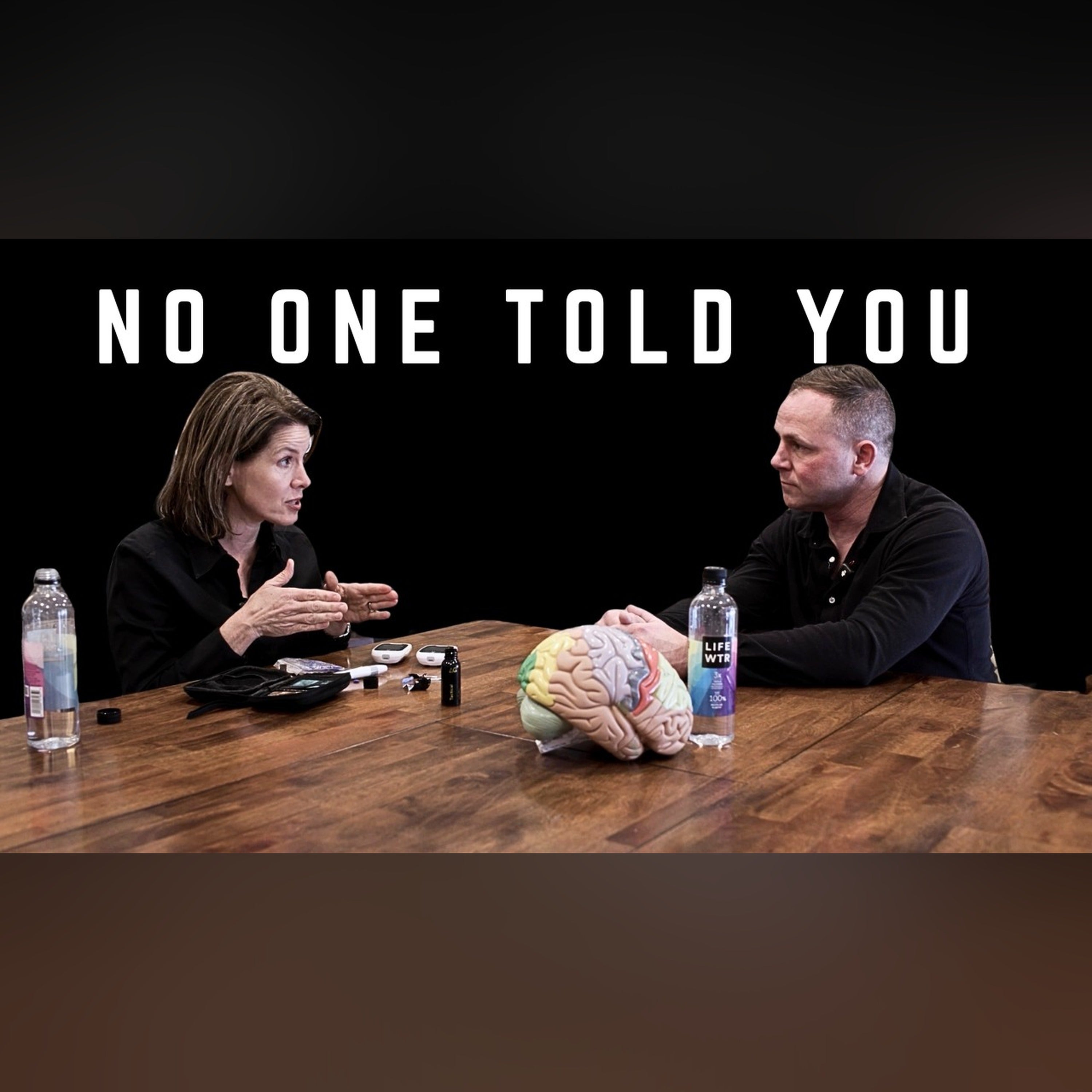
Master the skills that change lives — enroll in your free human behavior course today: https://nci.university/learn Uploaded 21-02-26 I flew Dr. Boz to the house. She's an expert in broken brains, and I happen to have one of those. This might save someone's life, so I am publishing it. I know it's not my regular content, but grab a pen and paper for this one. This conversation dives into mitochondrial health, ketones, cognitive decline, and the quiet metabolic crisis affecting your brain. We talk about insulin resistance, mitochondrial function, mental clarity, brain fog, fasting, ketone esters, and why so many people feel mentally “off” without understanding why. Please note that the content provided in this broadcast is for informational and educational purposes only and should not be construed as legal, medical, financial, or professional advice. No material in this communication establishes any form of professional relationship that is privileged or confidential. The insights and o
Most people satisfice. They walk into a trap willingly — even gratefully — because the trap felt like shelter. Uploaded 02-04-26 This seminar breaks down the comfortable lie almost everyone tells themselves, the quiet cost of small daily surrenders, and what it actually takes to stop living by accident and start living by design. This isn't about a lack of talent or opportunity. It's about the story you picked up somewhere along the way — one that felt completely reasonable, even wise — that quietly became the ceiling above everything you'd ever attempt. This isn't motivation. This is a mirror. What you'll learn in this video: The trap that doesn't feel like a trap — and why the most dangerous lies come disguised as clarity The quiet math of small surrenders — how 30 minutes a day becomes 900 hours over five years, for better or worse How to use honest self-appraisal without falling into self-criticism — the difference between a judge and an accountant The unexamined philosophy running
Former OpenAI Chief Futurist Joshua Achiam joins Theo and Sofia to discuss Anthropic researcher Levent Alpöge’s AI breakthrough on the Riemann hypothesis and what it signals for math, physics, and superintelligence timelines. He also weighs in on the new Trump-Xi AI guardrails deal, the threat of AI-driven rolling internet outages, and why overly aggressive US chip export controls on China could backfire. Check out our sponsor Lovable: https://lovable.dev (https://lovable.dev/). Turn ideas into software people love. --https://x.com/jachiam0-- MTS chronicles the singularity, live. Monitoring the situation of tech and AI. Follow MTS: Spotify |https://open.spotify.com/show/4HUNNmV1pjV7CW6Lphm1rM Apple |https://podcasts.apple.com/us/podcast/mts/id1891088763 – Brought to you by: Mongo DB - Anyone can prototype an agent. Lovable - Turn ideas into software people love with Lovable. Start today at https://lovable.dev/ Factory - A 24/7 system turning signals into production software. Visithttps
Have you ever been so mad you wanted to learn how to fight? That is exactly what happened to a twelve-year-old boy named Cassius Clay when his shiny new red bicycle was stolen! But instead of getting into trouble, a police officer told him to channel his energy and learn how to box. That boy grew up to become the legendary Muhammad Ali! Join Mira and Finn in this exciting episode of People Are Not Boring as they uncover the true story of the greatest heavyweight champion of the world! Discover how Ali trained so hard he raced alongside yellow school buses, won an Olympic gold medal at just eighteen years old, and shocked the world by dancing around his opponents with incredibly quick feet! You will also learn about his bravery outside the boxing ring, standing up for his beliefs even when it cost him his championship title, and his epic comeback at the famous Rumble in the Jungle. Plus, find out why he loved to say he could "float like a butterfly, sting like a bee!" Tune in for a knoc
To check the transcript: https://www.buzzsprout.com/2379282 Imagine someone who has lived abroad for many years. One evening, they're talking to a friend about their hometown. They mention the streets they used to walk down, the familiar voices, and the little things they never thought they'd miss. Their friend asks: “Why do you get so emotional whenever you talk about your hometown? Do you want to move back?” They reply: “It's not that simple. It goes deeper than that. I miss a version of my life that doesn't exist there anymore.” Hello everyone, and welcome to Daily English. Today's expression is “It goes deeper than that.” We use this expression when something is more complicated, meaningful, or emotionally significant than it first appears. In other words, there's something beneath the surface that people might not immediately recognize. In our opening example, the person isn't necessarily longing to return to their hometown. What they miss might be their childhood, the people they
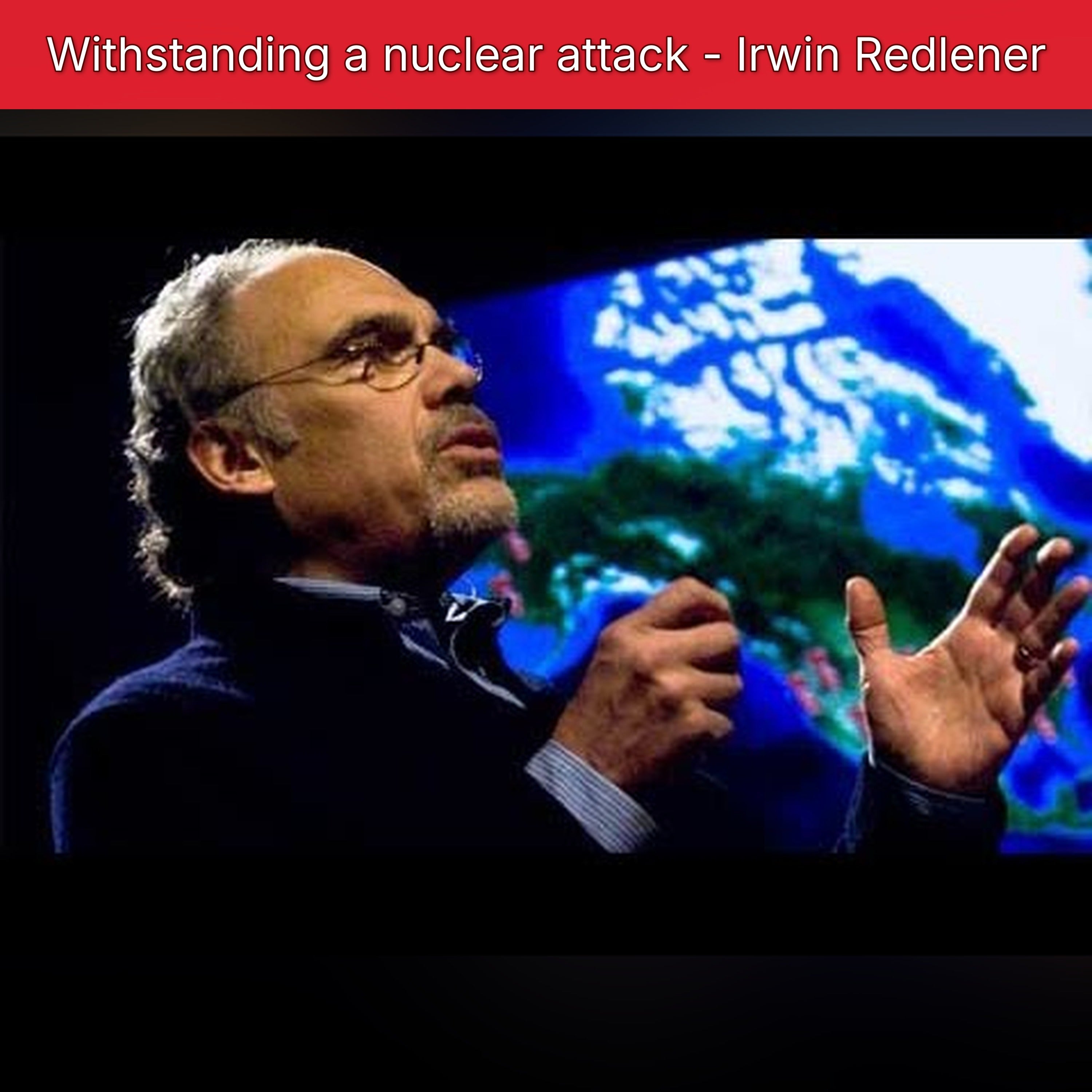
View full lesson: http://ed.ted.com/lessons/surviving-a-nuclear-attack-irwin-redlener The face of nuclear terror has changed since the Cold War, but disaster-medicine expert Irwin Redlener reminds us the threat is still real. He looks at some of history's farcical countermeasures and offers practical advice on how to survive an attack. Talk by Irwin Redlener.
Explore what makes polio so dangerous, what is causing the 21st century resurgence of cases, and how we can eradicate the disease. -- In 1952, polio was everywhere: killing or paralyzing roughly half a million people annually. Yet just 10 years later, paralytic polio cases in the US dropped by 96% and we were on track to get rid of polio for good. But in recent years, the virus started striking back. So, what’s behind these recent spikes? Explore the dangers of poliovirus and the possibility of eradicating this deadly disease. Directed by Anton Bogaty. This video made possible in collaboration with Gates Ventures Learn more about how TED-Ed partnerships work: https://bit.ly/TEDEdPartner A special thanks to Ananda Bandyopadhyay, Amber Zeddies, and Kathleen O'Reilly who provided information and insights for the development of this video. Support Our Non-Profit Mission ---------------------------------------------- Support us on Patreon: http://bit.ly/TEDEdPatreon Check out our merch: htt
Todd Humphreys forecasts the near-future of geolocation when millimeter-accurate GPS "dots" will enable you to find pin-point locations, index-search your physical possessions ... or to track people without their knowledge. And the response to the sinister side of this technology may have unintended consequences of its own. (Filmed at TEDxAustin.) Uploaded 26-06-13 Talk by Todd Humphreys.
Research announcements should give uncertainty as much attention as promising findings.
Share your view, then see how readers voted. No sign-in required. This poll is shared across stories.
Do you agree or disagree?
Common Quandary
A Common Quandary to discuss
Another conversation to explore, separate from this news story.
A pricey AI tutor can turn B students into A students. Should schools let them use it?
An effective AI tutor adapts to each student and dramatically improves performance, but its subscription is expensive. A public school cannot provide it to everyone and worries that allowing its use will deepen existing inequality.
Should access be limited when a beneficial tool cannot yet be shared fairly?