Nvidia Overleveraged Credit Tariff Economic Policies — Part Two Richard Epstein sharply criticizes Nvidia for extending overleveraged credit and selling advanced microchips to Chinadespite major national security risks. He condemns President Trump’s tariff proposals as economically damaging and warns against excessive corporate power concentrated in imperial chief executives across major sectors. (4)
November 21, 2026; 10am: The president’s coziness with tech oligarchs is muddying the waters of protecting America’s best interests. Congressman-elect Dan Koh expresses his concerns about the series of recent tech outages and how the administration is prioritizing beneficial relationships and cash over the safety of Americans and their cybersecurity; Lisa Rubin breaks down the obstacles ex-Nvidia CEO Jensen Huang can expect as legal inquiries come his way; Project 2025 may seem like a distant memory, but its policies are more present in this administration than you might think. David Graham outlines the consequences of the Heritage Foundation’s influence; Victor Fontanez is known on the internet as VicBlends, a viral haircutting sensation. But to many in the California prison system, he’s a mentor and hero, helping incarcerated men prepare for a career. Fontanez reflects on his impact. Hosted by Simplecast, an AdsWizz company.
One of the best Christian films that Glenn Beck has ever seen was written by… Ben Shapiro? Glenn speaks with Ben about his new film, “Confession,” starring Rob Lowe and James Franco, a gritty drama about a prisoner in Stalin’s USSR. They discuss why Ben wanted to tell this story, why it feels very different from your standard Christian film, and what it may signal about Hollywood, which is snubbing it. Glenn also gets Ben’s thoughts on why antisemitism has become so popular on both the left and right, as well as what it truly means to be a man. Plus, Ben gives his rapid-fire takes on this week’s biggest news stories: the release of GTA VI, the outages, Jensen Huang and Nvidia, Robert Pattinson’s casting as James Bond, the midterms, the next leaders of the Republican and Democratic parties, data centers in space, how Joe Rogan became a right-wing icon, and whether woke is coming back. Glenn’s Sponsors: PreBorn: This Christmas, you can sponsor an ultrasound and help save a baby’s life fo
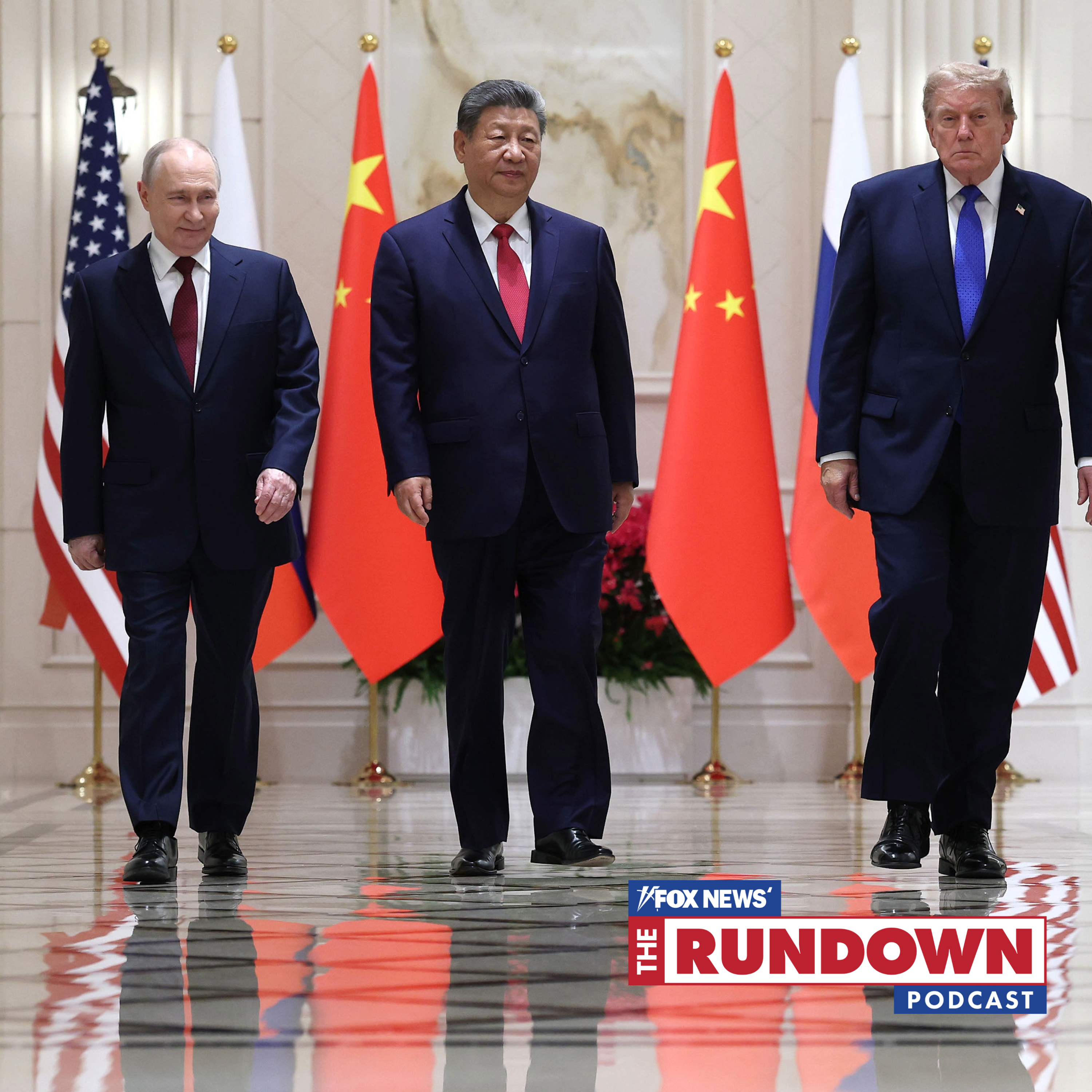
Following President Trump’s trip to Asia and a first-ever trilateral meeting with the leaders of China and Russia, foreign policy experts are weighing what was accomplished on the world stage. Former national security advisor to Vice President Dick Cheney and Heritage Foundation senior research fellow Stephen Yates joins The Rundown to analyze the summit’s outcomes on Taiwan, Ukraine, Iran, and strategic arms talks. Yates also explains how new rare-earth agreements with U.S. allies and export controls on AI chips balance Trump’s warmer rhetoric toward Beijing. Later, widespread tech outages across major platforms and government systems raise urgent questions about whether U.S. digital infrastructure is prepared for the artificial intelligence era. Former Cybersecurity and Infrastructure Security Agency (CISA) director Bridget Bean breaks down how rapid software patching can trigger cascading system failures, the growing cyber threats posed by China and Iran, and how organizations can d
Rep. Jamie Raskin joins Catherine Rampell to discuss the growing investigation into Commerce Secretary Howard Lutnick’s financial ties to NVIDIA, his family’s business dealings, and whether the Trump administration has compromised national security for private profit. Raskin also reveals that whistleblowers are already coming forward with allegations of corruption and criminality, and explains why Trump’s presidential pardons may not protect his allies from the investigations ahead. Upgrade your sleep now with Boll & Branch during their best sale of the year.
November 20, 2026; 4pm: Closing Bell: Overtime breaks down a historic market sell-off as the Dow, S&P 500, Nasdaq, Nvidia and AI-linked stocks tumble, while guests debate whether capitulation, Fed policy and stretched positioning signal a bottom or more pain ahead. Hosted by Simplecast, an AdsWizz company.
Anthropic made its much-anticipated debut on the stock market yesterday. The company’s initial public offering was the largest ever (https://www.wsj.com/finance/stocks/anthropic-prices-ipo-at-83-a-share-0290494c?mod=WSJ_TJPOD), making the company one of the world’s most valuable. But as WSJ’s Peter Rudegeair (https://www.wsj.com/news/author/peter-rudegeair?mod=WSJ_TJPOD) explains, investors are worried about pressures on other stocks in the AI and tech sectors (https://www.wsj.com/finance/stocks/the-month-that-rocked-the-ai-trade-and-rewired-wall-street-f33d3af3?mod=WSJ_TJPOD), leading to a huge sell off (https://www.wsj.com/finance/stocks/two-big-debuts-fail-to-boost-stocks-b68b79b1?mod=WSJ_TJPOD) that’s raining on the Anthropic parade. Ryan Knutson (https://www.wsj.com/news/author/ryan-knutson?mod=WSJ_TJPOD) hosts. Further Listening: - The Biggest Loser of the Midterms? Data Centers (https://open.spotify.com/episode/6b9EqFD2jwhwr2KklS8w0t) - Is AI Running Out of Money to Borrow? (htt
China’s tech giants aren’t supposed to have access to Nvidia’s most advanced chips. But Chinese companies get around export controls via alleged smuggling operations (https://www.wsj.com/tech/super-micro-computer-employees-arrested-for-alleged-sales-to-china-45a2bd73?mod=article_inline%3Fmod%3DWSJ_TJPOD) and a loophole granting remote access through massive data centers (https://www.wsj.com/tech/jensen-huang-backdoor-ai-data-centers-a5e4499d?mod=WSJ_TJPOD) in Southeast Asia. WSJ’s Stu Woo (https://www.wsj.com/news/author/stu-woo?mod=WSJ_TJPOD) explains how the ouster of Nvidia CEO Jensen Huang now threatens to implode the ecosystem he helped build. Michelle Hackman (https://www.wsj.com/news/author/michelle-hackman?mod=WSJ_TJPOD) hosts. Further Listening: - How Nvidia CEO’s Affair Became a National Security Nightmare (https://open.spotify.com/episode/7esXDAsi2m8xVLowCfAEdC?si=08da5ea01d2f485b) - After Nvidia’s Scandal, the Washington Blame Game Begins (https://open.spotify.com/episode/7
The Gund Company has 1,300 workers around the world and is on track to reach $400 million in annual sales. And yet, it has not laid off a single worker in 75 years (https://www.wsj.com/business/bosses-want-the-secrets-of-the-family-firm-that-has-never-had-a-layoff-in-75-years-ac608165?mod=WSJ_TJPOD). Now, as WSJ’s Allison Pohle (https://www.wsj.com/news/author/allison-pohle?mod=WSJ_TJPOD) reports, hundreds of business leaders are flocking to this family company to learn its secrets. Imani Moise (https://www.wsj.com/news/author/imani-moise?mod=WSJ_TJPOD)hosts. Further Listening: How the Job Market Fell Into a Deep Freeze (https://open.spotify.com/episode/5L0KnDMu0PC26Jmcd2WlnS?si=3534682e4fe34231) Why Companies Are Paying You to Quit (https://open.spotify.com/episode/5tgZfRglzRyLGD75r9F52t?si=b38d6b64cb774ddf)
Sports eligibility rules should be based on transparent evidence and allow meaningful appeal.
Share your view, then see how readers voted. No sign-in required. This poll is shared across stories.
Do you agree or disagree?
Common Quandary
A Common Quandary to discuss
Another conversation to explore, separate from this news story.
A stranger takes an emotional call in the quiet car. Do you shush them?
On a crowded train's designated quiet car, a passenger answers a call and begins discussing an apparent family emergency. They are speaking softly but continuously, and everyone nearby is listening despite trying not to.
Do public rules make room for private emergencies?