How optical illusions trick your brain - Nathan S. Jacobs
9 min
Listen through the publisher, then discuss the episode here or arrange an in-person Roundtable. Your city determines where to meet.
Roundtables are designed for groups of four, with a shared subject and room for everyone to speak. Come for discussion, with no dating expectation.
View full lesson: http://ed.ted.com/lessons/how-optical-illusions-trick-your-brain-nathan-s-jacobs Uploaded 12-08-14 Optical illusions are images that seem to trick our minds into seeing something different from what they actually are. But how do they work? Nathan S. Jacobs walks us through a few common optical illusions and explains what these tricks of the eye can tell us about how our brains assemble visual information into the 3D world we see around us. Lesson by Nathan S. Jacobs, animation by TED-Ed.
Episode information is provided by the publisher. Listening takes place on the publisher’s service.
PBS Member Stations rely on viewers like you. To support your local station, go to:http://to.pbs.org/DonateSPACE Sign Up on Patreon to get access to the Space Time Discord! Physics is the business of figuring out the structure of the world. So are our brains. But sometimes physics comes to conclusions that are in direct conflict with concepts fundamental to our minds, such as the realness of space and time. How do we tell who’s correct? Are time and space objective realities or human-invented concepts? Episode Companion Playlist Check out the Space Time Merch Store Search the Entire Space Time Library Here: https://search.pbsspacetime.com/ Hosted by Matt O'Dowd Written by Bahar Gholipour & Matt O'Dowd Post Production by Leonardo Scholzer, Yago Ballarini, Pedro Osinski, Caique Oliveira, Adriano Leal & Stephanie Faria Directed by Andrew Kornhaber Associate Producer: Bahar Gholipour Executive Producers: Eric Brown & Andrew Kornhaber Executive in Charge for PBS: Maribel Lopez Director of P
Master the skills that change lives — enroll in your free human behavior course today: https://nci.university/learn Uploaded 14-03-26 During the first ninety seconds of any interaction, a window opens in the human brain that most people never notice. A specific sequence of neurological events unfolds — predictable, exploitable, and almost never taught outside of military and intelligence training. Very few people alive understand the full mechanics of what happens inside that window. Only operators, interrogators, and behavioral scientists with the right access have ever had this mapped out for them. Someone made sure it stayed that way. Every interaction you've ever had — every negotiation, every first impression, every moment you walked into a room — was governed by this sequence. You were either running it or it was being run on you. Most people spend their entire lives on the receiving end without ever knowing it. Language is the delivery system. But language isn't where it starts.
Get the 200+ Page Optimal Living Daily Workbook (PDF) - Free. Want to turn today's episode into an actionable plan? Episode 4232: Chris Guillebeau shares a candid, funny account of his lack of qualifications, from a short-lived dishwashing job to failing his way through statistics and shrink-wrapping pallets. He argues that formal credentials matter far less than people think, and that anyone who builds a good life without them should treat that work with gratitude and diligence. It is an encouraging take on personal development for anyone who has ever felt like an imposter. Read along with the original article(s) here: https://chrisguillebeau.com/qualifications/ Quotes to ponder: "First, forget about what you're actually qualified to do. It's irrelevant and no one cares." "Fourth, when you do find something that works for you, you should be very grateful, every day." "Regardless of your actual qualifications, there's one thing that no one can give you and no one can take away: the wil
Some people walk through life believing that if they could just change one or two people around them, their whole life would finally work. Uploaded 27-05-26 Their spouse would stop doing that thing. Their parents would finally understand. Their kid would just listen for once. So they spend year after year trying to change the people in their life. And year after year, nothing changes. The people in their life are exactly who they were 10 years ago. Meanwhile, the person doing all the fixing has gotten older, more tired, more bitter, and not noticeably closer to the life they actually wanted. The whole project was never going to work — and there's a specific mechanism underneath it that does damage the longer you stay in it. This seminar lays out why fixing other people is the most sophisticated form of procrastination there is, what it's quietly costing every relationship in your life, and the only move that actually changes anything. CHAPTERS: 0:00 The Years You've Spent Trying to Fix
Are we in an AI stock bubble, or are investors betting on a genuinely bigger economy? Justin Wolfers examines AI stock valuations with Stacey Vanek Smith, separating what the technology could do for the economy from what investors might actually earn. A deliberately hypothetical valuation exercise shows why a trillion-dollar company isn't automatically absurd—but a breakthrough for society doesn't guarantee profits for shareholders. Competition can give you powerful tools at low prices while squeezing the companies selling them. The Thanksgiving turkey problem illustrates why a long run of good news can hide rare, severe risks. Justin connects that analogy to fat tails and the peso problem, then explains why spotting a bubble and successfully betting against it are different challenges. He also unpacks what the CAPE ratio can—and can't—tell you about whether stocks are overpriced. The stakes are your savings, not just Wall Street's scoreboard: Justin discusses an S&P 500 decline of 7.5
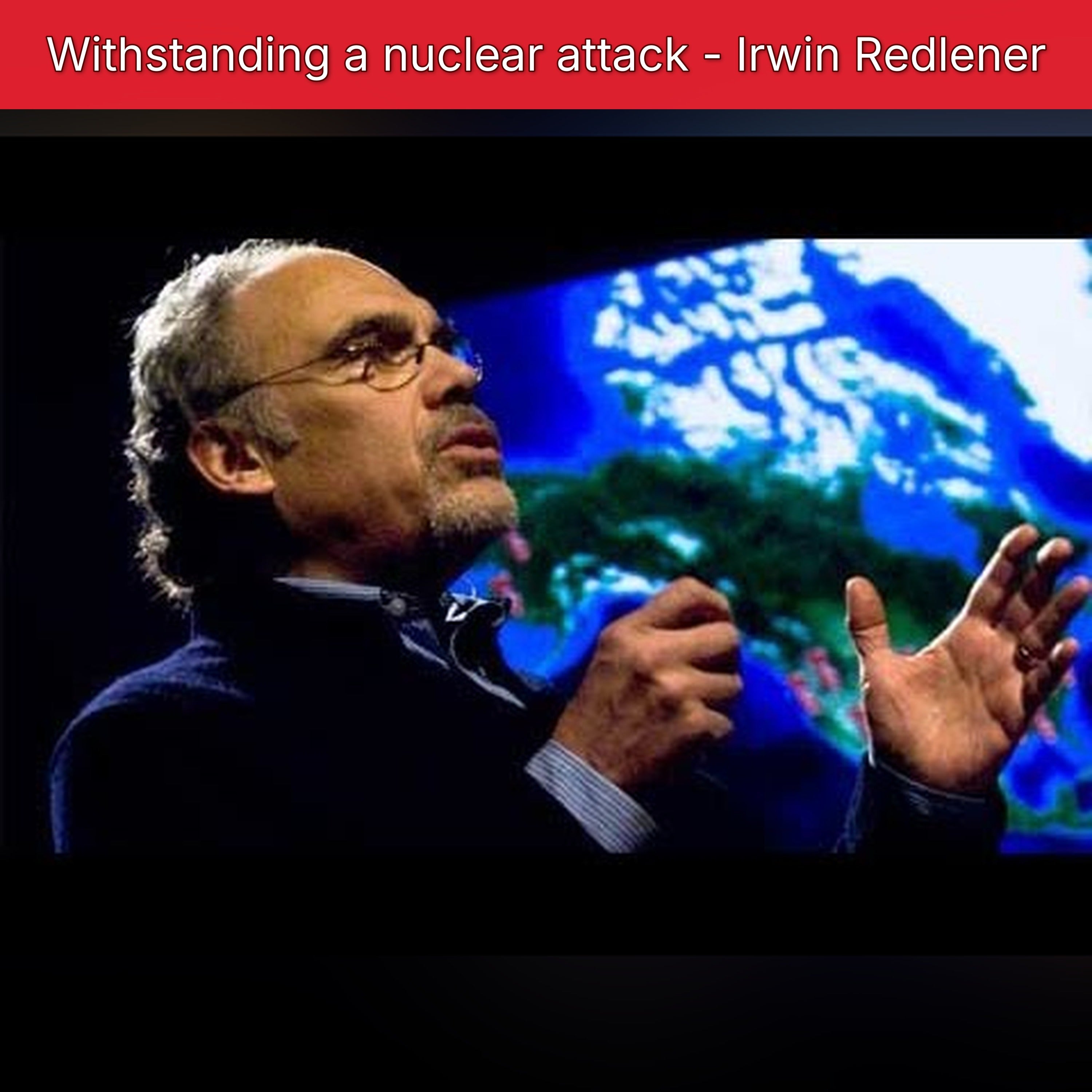
View full lesson: http://ed.ted.com/lessons/surviving-a-nuclear-attack-irwin-redlener The face of nuclear terror has changed since the Cold War, but disaster-medicine expert Irwin Redlener reminds us the threat is still real. He looks at some of history's farcical countermeasures and offers practical advice on how to survive an attack. Talk by Irwin Redlener.
Explore what makes polio so dangerous, what is causing the 21st century resurgence of cases, and how we can eradicate the disease. -- In 1952, polio was everywhere: killing or paralyzing roughly half a million people annually. Yet just 10 years later, paralytic polio cases in the US dropped by 96% and we were on track to get rid of polio for good. But in recent years, the virus started striking back. So, what’s behind these recent spikes? Explore the dangers of poliovirus and the possibility of eradicating this deadly disease. Directed by Anton Bogaty. This video made possible in collaboration with Gates Ventures Learn more about how TED-Ed partnerships work: https://bit.ly/TEDEdPartner A special thanks to Ananda Bandyopadhyay, Amber Zeddies, and Kathleen O'Reilly who provided information and insights for the development of this video. Support Our Non-Profit Mission ---------------------------------------------- Support us on Patreon: http://bit.ly/TEDEdPatreon Check out our merch: htt
Todd Humphreys forecasts the near-future of geolocation when millimeter-accurate GPS "dots" will enable you to find pin-point locations, index-search your physical possessions ... or to track people without their knowledge. And the response to the sinister side of this technology may have unintended consequences of its own. (Filmed at TEDxAustin.) Uploaded 26-06-13 Talk by Todd Humphreys.
School policy should consider all families rather than follow the loudest parental voices.
Share your view, then see how readers voted. No sign-in required. This poll is shared across stories.
Do you agree or disagree?
Common Quandary
A Common Quandary to discuss
Another conversation to explore, separate from this news story.
The company allows an $80 dinner. Is ordering the lobster fair game?
During work travel, company policy permits an expensive dinner. A modest option is nearby, but colleagues choose the nicest restaurant because the company can easily afford it and everyone is within the stated limit.
Is following a rule enough when you are spending someone else's money?