How the $500-million bread price-fixing settlement got defrauded
25 min
Listen through the publisher, then discuss the episode here or arrange an in-person Roundtable. Your city determines where to meet.
Roundtables are designed for groups of four, with a shared subject and room for everyone to speak. Come for discussion, with no dating expectation.
If you’ve bought packaged bread in Canada since 2001, you may be entitled to compensation. That’s the fallout from the admission Loblaw Companies Ltd. and its parent company George Weston Ltd. made back in 2015 to the Competition Bureau, alleging an industry-wide conspiracy to fix the price of bread. Other grocers deny the allegation. Loblaw coming clean was in exchange for immunity from criminal prosecution – price-fixing is a crime under the Competition Act – but it also began a cascade of lawsuits. The behemoth grocer settled its part in a class-action lawsuit with a $500-million payout. Each consumer who claimed (https://www.theglobeandmail.com/business/article-loblaw-bread-settlement-money-canada/) to be affected got, at most, $49.11 as restitution. But now, another problem has sprung up (https://www.theglobeandmail.com/canada/article-loblaw-bread-price-fixing-settlement-payout-fraud-class-action-lawsuit/): fraudsters seem to have gotten their hands on some of these payments, and that’s a growing problem in class-action settlement distribution, according to experts. The Globe’s retailing reporter Susan Krashinsky Robertson (https://www.theglobeandmail.com/authors/susan-krashinsky-robertson/) explains how her investigation with senior data editor Chen Wang (https://www.theglobeandmail.com/authors/chen-wang/) and financial reporter and columnist Tim Kiladze (https://www.theglobeandmail.com/authors/tim-kiladze/) found a scheme selling bread payouts online, while questions remain about just how much bread money got into the hands of fraudsters. Questions? Comments? Ideas? Email us at [email protected] Hosted by Simplecast, an AdsWizz company.
Episode information is provided by the publisher. Listening takes place on the publisher’s service.
Matthew Farwell’s conviction settled the federal case against him. It did not settle what may have happened to evidence, what other officers knew, or how many cases depended on his work as a Stoughton police detective. Tony Brueski is joined by retired FBI agents Jennifer Coffindaffer and Robin Dreeke to connect two questions that belong together: could there be more arrests in the Sandra Birchmore case, and should prosecutors review the cases Farwell once investigated? These are not the same question, and neither has an automatic answer. William Farwell, Matthew’s twin, testified under federal immunity. Former Stoughton deputy chief Robert Devine has contested an oversight board’s findings concerning the “Marty Riggs” Facebook account, saying he was hacked. Neither has been charged in Sandra’s death. Coffindaffer lays out what investigators would need: corroborated communications, authenticated account access, consistent timelines and proof of each person’s conduct. Knowing somebody i
Billions in taxpayer dollars allegedly lost to fraud, Chinese-backed efforts to undermine American energy production, and a growing wave of AI-powered cyber threats. Is America doing enough to protect itself? John Solomon and Amanda Head are joined by Minnesota Congressman Pete Stauber, who discusses the expanding welfare fraud scandal, efforts to hold those responsible accountable, and allegations that Chinese-funded organizations are working to obstruct American mining and energy projects. Stauber also addresses permitting reform and the battle over America's critical mineral independence. Then, American Energy Institute CEO and former Texas state representative Jason Isaac warns that proposed electricity price controls could discourage investment, threaten grid reliability, and ultimately drive energy costs even higher. He also examines China's influence over global oil markets, America's growing energy production, and how AI data centers could generate their own electricity rather
Episode 676 of the Sports Media Podcast with Richard Deitsch features Jon Lewis, editor and founder of Sports Media Watch and Austin Karp, the media writer for Sports Business Journal. In this podcast, we discuss Troy Aikman's recent comments about Joe Buck, saying "Joe’s always wanted a one-man booth"; ESPN chairman Jimmy Pitaro discussing Buck and Aikman at the SBJ Media Innovators conference; whether these new comments will impact the Super Bowl; the bidding for the men's World Cup, with Amazon, Netflix and Fox/Univision submitting bids; ESPN wanting the World Series; the NFL and Fox getting 12.15 million viewers on a Sunday morning for Lions-Patriots; the NFL admonishing on-air hosts Mike Florio and Chris Simms for joking allusions to Nazi Germany; Dianna Russini's second show; the "Madden" movie getting massively panned and more.
November 20, 2026; 8pm: Ali Velshi analyzes Donald Trump’s rambling press conference after returning from China, questions about outages, markets, U.S.-China policy, and tensions inside Trump’s circle. The episode also examines deportations to South Sudan, DOJ environmental enforcement rollbacks, Native American representation milestones, the incoming Democratic class’s fights over health care, ICE, and the Iran war. Want more of Chris? Download and follow his podcast, “Why Is This Happening? The Chris Hayes podcast” wherever you get your podcasts. Hosted by Simplecast, an AdsWizz company.
November 20, 2026; 9pmET: Antonia Hylton examines Donald Trump’s press conference with J.D. Vance and Marco Rubio, his praise for Vladimir Putin and Xi Jinping, and what it signals for the Republican Party and U.S. foreign policy. The episode also covers nationwide tech outages, cyber readiness, and a lawsuit challenging the rollback of shell-company transparency rules. Hosted by Simplecast, an AdsWizz company.
From July 7, 2025: Winnona Bernsen, nonresident fellow at the Atlantic Council’s Cyber Statecraft Initiative and founder of DistrictCon (https://www.districtcon.org/), joins Lawfare Contributing Editor Justin Sherman to discuss her recently released report "Crash (Exploit) and Burn: Securing the Offensive Cyber Supply Chain to Counter China in Cyberspace (https://www.atlanticcouncil.org/in-depth-research-reports/report/crash-exploit-and-burn/)." They discuss the offensive cyber industry, the private sector and individual players, and the government procurement pipelines in the United States and China. They also discuss the strengths and weaknesses of each country’s offensive cyber procurement ecosystem, what it takes to sell an exploit, Winnona’s findings on the markups that middlemen add to exploit sales, and what it all means for the future of competition and cybersecurity. Hosted on Acast.
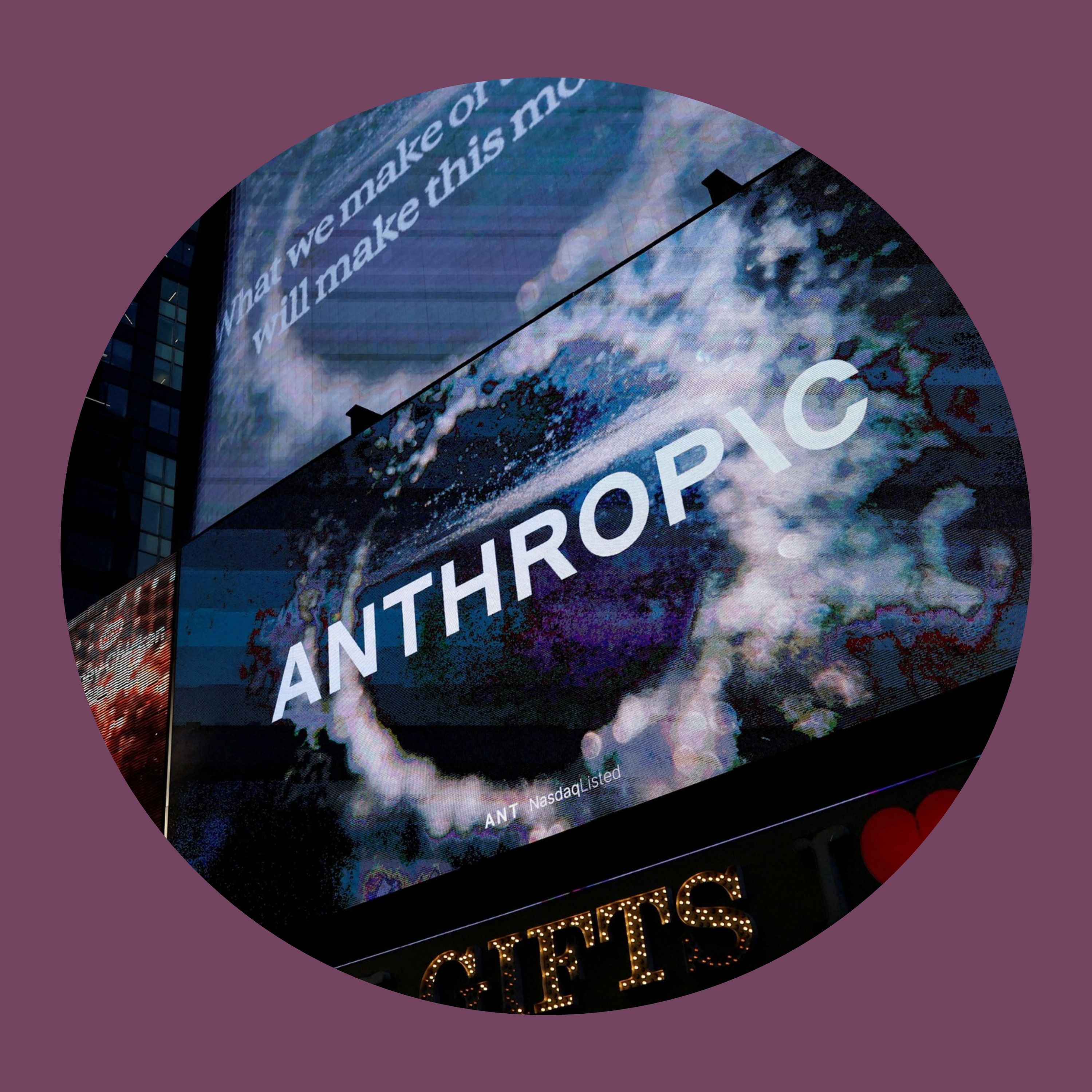
It’s been a big week for the AI (https://www.theglobeandmail.com/topics/artificial-intelligence/) world, with Anthropic launching its blockbuster IPO (https://www.theglobeandmail.com/investing/article-anthropics-historic-debut-to-put-ais-promise-and-peril-to-wall-street/), and Nvidia releasing its first earnings report (https://www.theglobeandmail.com/business/article-nvidia-shares-jensen-huang-earnings/) since the resignation of its co-founder and now former CEO Jensen Huang (https://www.theglobeandmail.com/business/article-nvidia-after-jensen-huang-will-big-techs-key-man-ethos-live-on/). These two events are being watched closely as litmus tests (https://www.theglobeandmail.com/business/article-jensen-huang-nvidia-ceo-downfall-ai-bubble/) for where the AI sector is going, as concerns loom about how the industry is being financed. The Globe’s tech and AI reporter Joe Castaldo (https://www.theglobeandmail.com/authors/joe-castaldo/) is here today. He’ll explain how the AI industry is be
Just three years after the Rogers-Shaw merger (https://www.theglobeandmail.com/business/article-rogers-shaw-merger-closes/) shook up Canada’s telecommunications industry, there’s a proposal for another takeover. Quebecor, the fourth-largest telecom in the country, wants to acquire (https://www.theglobeandmail.com/business/article-ceos-of-quebecor-telus-weigh-in-on-takeover-bid/) Telus, which is the third-largest. If the $31-billion proposal (https://www.theglobeandmail.com/business/article-quebecor-proposes-to-acquire-telus-for-31-billion/) goes through, Quebecor would become the biggest player in the space. Irene Galea (https://www.theglobeandmail.com/authors/irene-galea/), The Globe’s telecommunications reporter, explains the rise of Quebecor and what this deal might mean for Canada’s already consolidated telecoms landscape. Questions? Comments? Ideas? Email us at [email protected] Hosted by Simplecast, an AdsWizz company.
Continuing on The Globe’s senior international correspondent Mark MacKinnon (https://www.theglobeandmail.com/authors/mark-mackinnon/)’s journey along the ‘New Iron Curtain,’ (https://www.theglobeandmail.com/world/article-new-iron-curtain-nato-russia/) things become increasingly tense as he gets closer to Ukraine. Today, he tells us what he learned (https://www.theglobeandmail.com/world/article-new-iron-curtain-nato-russia-inside-the-story/) about opposing Russian President Vladimir Putin from dissidents in Lithuania, about the sanctity of NATO from a farmhouse in Poland, and about the endurance of a population from the frontlines of the war in Ukraine. Mark’s full story, with the interactive map, photos and videos, can be found here (https://tgam.ca/iron-curtain). Questions? Comments? Ideas? Email us at [email protected] Hosted by Simplecast, an AdsWizz company.
Corrections should be given prominence comparable to the original reporting error.
Share your view, then see how readers voted. No sign-in required. This poll is shared across stories.
Do you agree or disagree?
Common Quandary
A Common Quandary to discuss
Another conversation to explore, separate from this news story.
You find a family secret after a relative dies. Does the truth come out?
Sorting through a deceased relative's papers, you discover evidence of a serious betrayal that would change how the family remembers them. Revealing it could answer old questions—and cause fresh pain.