In this paid subscriber-only edition of The Roundtable, Rudyard Griffiths and Sean Speer examine Quebecor’s proposed takeover of Telus and what it reveals about Canada’s economic model. They trace the history of the “fourth carrier” policy, debate whether this merger signals the end of telecom competition, and explore how government regulation creates what they call “Laurentian capitalism”—a system where state power and corporate interests intertwine. The discussion also addresses sovereignty arguments, media consolidation, and whether Canada is abandoning market-based competition for state-managed oligopolies across key industries. If you are enjoying free versions of the Hub Roundtable, subscribe to become a Hub Hero or Fellow to access the full version every week: https://thehub.ca/join/ The Hub is Canada’s fastest growing independent digital news outlet. https://tinyurl.com/3a7zpd7e (Apple) https://tinyurl.com/y8akmfn7 (Spotify) Watch a video version on YouTube: https://www.youtube
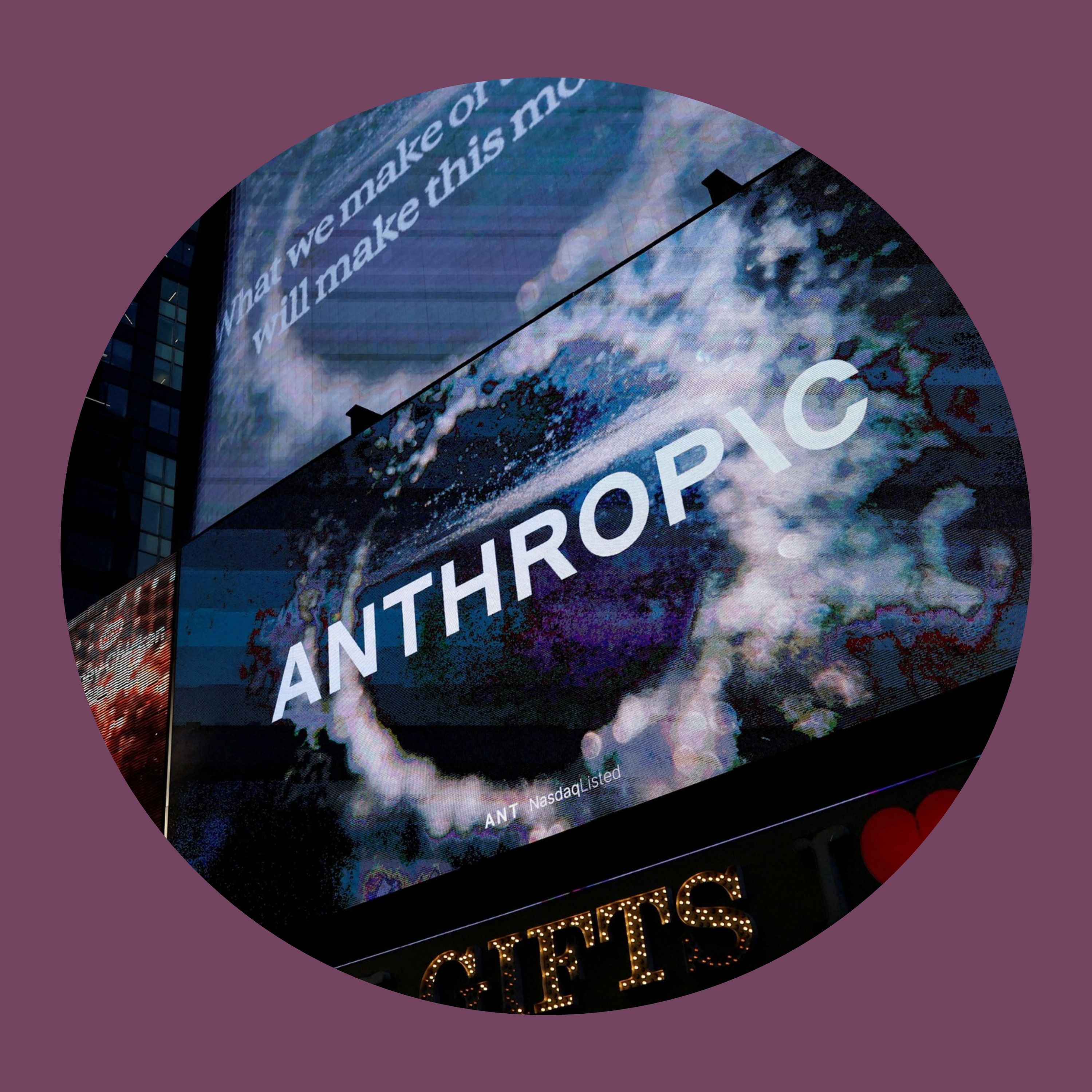
Open your OneGold account: https://onegold.smart.link/p5etuotrkWill Rhind, CEO of GraniteShares, discusses Anthropic's record-breaking IPO, its valuation, investor demand, Nvidia's role in AI financing, and what the company's public debut means for the broader AI market.GraniteShares New 2x Long and -2x Short Anthropic Daily ETFs launching on 11/23/26: $AIL and $ANS.Watch Will's last interview: https://youtu.be/BtE0jM1mFig*This video was recorded on November 20, 2026.Subscribe to my clips channel: https://www.youtube.com/@DavidLinReportClipsSubscribe to my free newsletter: https://davidlinreport.substack.com/Listen on Spotify: https://open.spotify.com/show/510WZMFaqeh90Xk4jcE34sListen on Apple Podcasts: https://podcasters.spotify.com/pod/show/the-david-lin-reportFOLLOW WILL RHIND: GraniteShares: https://graniteshares.com/GraniteShares X (@graniteshares): https://x.com/granitesharesX (@willrhind): https://x.com/willrhind FOLLOW DAVID LIN:X (@davidlin_TV): https://x.com/davidlin_TVTikTok
Until a little under two weeks ago, Silicon Valley Bank was the sixteenth largest bank in the United States, the favoured choice of tech startups due to the tailored services it provided. But by 10th March 2023, American authorities were taking control of SVB following its collapse. It had assets of over $200bn, making for the second biggest bank failure in US history. There were a number of factors behind the collapse, and it’s causing concern as it’s common for one bank collapse to be followed by another, due to what’s called financial contagion. Indeed, just a few days later it was the turn of New York-based Signature Bank to collapse. And over in Europe, Switzerland’s second largest bank Crédit Suisse had to take out a $54bn to stay afloat, before then being bought out by the country’s largest bank UBS, in a bid to halt the crisis. Why did Silicon Valley Bank collapse? How do stock market crashes happen? In under 3 minutes, we answer your questions! To listen to the last episodes,
From The Daily Wolf with Scott Melker, live weekdays at 12pm ET on Yahoo Finance. Scott Melker says the Anthropic IPO is getting blamed for a broad sell-off, but crypto's pre-IPO markets nailed the opening price, and tech has fallen harder than Bitcoin from the highs. CoreWeave, Oracle, Intel, and Robinhood are down as much as or more than Bitcoin, yet the "Bitcoin is dead" talk does not get applied to those stocks, or to silver, which he notes fell 36% in a day near the top and is now down 65% from its high versus about 51% for Bitcoin. Galaxy Research says institutional holdings in US spot Bitcoin ETPs hit a record $29.8 billion in Q3, with investment managers adding a net 49,229 Bitcoin equivalent and Wells Fargo the largest reported holder. The Treasury also auctioned a $15 billion 9-day cash management bill, the first of that tenor since the financial crisis, which he frames as cash plumbing rather than a crisis. CFTC chairman Michael Selig told a Washington forum that platforms s
November 21, 2026; 8am: With just weeks left before democrats take control of Congress, Senate Republicans are in a race against the clock to put as many of president trump’s judicial nominees on the federal bench as possible. Seven Trump nominees appeared before the Senate Judiciary Committee just this week. Retired Judge J. Michael Luttig, who served on the U.S. Court of Appeals for the Fourth Circuit, joins “The Weekend” to discuss. For more, follow us on social media Bluesky: @theweekendmsnow.bsky.social Instagram: @theweekendmsnow TikTok: @theweekendmsnow Hosted by Simplecast, an AdsWizz company.
Donald Trump has a blunt message for Canada following his meeting with Prime Minister Mark Carney, warning that Canadian leaders are feeling increasingly emboldened as Canada-U.S. trade negotiations remain unresolved. White House trade advisor Peter Navarro is also taking aim at Canada's negotiating team, accusing Canadian officials of misreading their leverage with Washington. Meanwhile, Trump's surprising comments about Chinese espionage are sparking controversy as Carney deepens Canada's economic relationship with Beijing. Visithttp://keet.io/jasminlaine - Download it free, invite one person you trust, and start a conversation that belongs to you. Help me stay 100% independent! Send a one-time contribution - Let’s Be Friends! (https://www.instagram.com/jasminlaine/)
It’s been a big week for the AI (https://www.theglobeandmail.com/topics/artificial-intelligence/) world, with Anthropic launching its blockbuster IPO (https://www.theglobeandmail.com/investing/article-anthropics-historic-debut-to-put-ais-promise-and-peril-to-wall-street/), and Nvidia releasing its first earnings report (https://www.theglobeandmail.com/business/article-nvidia-shares-jensen-huang-earnings/) since the resignation of its co-founder and now former CEO Jensen Huang (https://www.theglobeandmail.com/business/article-nvidia-after-jensen-huang-will-big-techs-key-man-ethos-live-on/). These two events are being watched closely as litmus tests (https://www.theglobeandmail.com/business/article-jensen-huang-nvidia-ceo-downfall-ai-bubble/) for where the AI sector is going, as concerns loom about how the industry is being financed. The Globe’s tech and AI reporter Joe Castaldo (https://www.theglobeandmail.com/authors/joe-castaldo/) is here today. He’ll explain how the AI industry is be
If you’ve bought packaged bread in Canada since 2001, you may be entitled to compensation. That’s the fallout from the admission Loblaw Companies Ltd. and its parent company George Weston Ltd. made back in 2015 to the Competition Bureau, alleging an industry-wide conspiracy to fix the price of bread. Other grocers deny the allegation. Loblaw coming clean was in exchange for immunity from criminal prosecution – price-fixing is a crime under the Competition Act – but it also began a cascade of lawsuits. The behemoth grocer settled its part in a class-action lawsuit with a $500-million payout. Each consumer who claimed (https://www.theglobeandmail.com/business/article-loblaw-bread-settlement-money-canada/) to be affected got, at most, $49.11 as restitution. But now, another problem has sprung up (https://www.theglobeandmail.com/canada/article-loblaw-bread-price-fixing-settlement-payout-fraud-class-action-lawsuit/): fraudsters seem to have gotten their hands on some of these payments, and
Continuing on The Globe’s senior international correspondent Mark MacKinnon (https://www.theglobeandmail.com/authors/mark-mackinnon/)’s journey along the ‘New Iron Curtain,’ (https://www.theglobeandmail.com/world/article-new-iron-curtain-nato-russia/) things become increasingly tense as he gets closer to Ukraine. Today, he tells us what he learned (https://www.theglobeandmail.com/world/article-new-iron-curtain-nato-russia-inside-the-story/) about opposing Russian President Vladimir Putin from dissidents in Lithuania, about the sanctity of NATO from a farmhouse in Poland, and about the endurance of a population from the frontlines of the war in Ukraine. Mark’s full story, with the interactive map, photos and videos, can be found here (https://tgam.ca/iron-curtain). Questions? Comments? Ideas? Email us at [email protected] Hosted by Simplecast, an AdsWizz company.
Residents' need for quiet should usually outweigh the benefits of late-night entertainment.
Share your view, then see how readers voted. No sign-in required. This poll is shared across stories.
Do you agree or disagree?
Common Quandary
A Common Quandary to discuss
Another conversation to explore, separate from this news story.
A donor's family wants to hear their loved one's heart beating in you. Do you meet them?
A transplant recipient receives a letter from the donor's family asking to meet. The recipient feels profound gratitude but also discomfort and wants their recovery to remain private and separate from another family's grief.
Can receiving an extraordinary gift create a personal obligation to strangers?