It’s been a big week for the AI (https://www.theglobeandmail.com/topics/artificial-intelligence/) world, with Anthropic launching its blockbuster IPO (https://www.theglobeandmail.com/investing/article-anthropics-historic-debut-to-put-ais-promise-and-peril-to-wall-street/), and Nvidia releasing its first earnings report (https://www.theglobeandmail.com/business/article-nvidia-shares-jensen-huang-earnings/) since the resignation of its co-founder and now former CEO Jensen Huang (https://www.theglobeandmail.com/business/article-nvidia-after-jensen-huang-will-big-techs-key-man-ethos-live-on/). These two events are being watched closely as litmus tests (https://www.theglobeandmail.com/business/article-jensen-huang-nvidia-ceo-downfall-ai-bubble/) for where the AI sector is going, as concerns loom about how the industry is being financed. The Globe’s tech and AI reporter Joe Castaldo (https://www.theglobeandmail.com/authors/joe-castaldo/) is here today. He’ll explain how the AI industry is be
Just three years after the Rogers-Shaw merger (https://www.theglobeandmail.com/business/article-rogers-shaw-merger-closes/) shook up Canada’s telecommunications industry, there’s a proposal for another takeover. Quebecor, the fourth-largest telecom in the country, wants to acquire (https://www.theglobeandmail.com/business/article-ceos-of-quebecor-telus-weigh-in-on-takeover-bid/) Telus, which is the third-largest. If the $31-billion proposal (https://www.theglobeandmail.com/business/article-quebecor-proposes-to-acquire-telus-for-31-billion/) goes through, Quebecor would become the biggest player in the space. Irene Galea (https://www.theglobeandmail.com/authors/irene-galea/), The Globe’s telecommunications reporter, explains the rise of Quebecor and what this deal might mean for Canada’s already consolidated telecoms landscape. Questions? Comments? Ideas? Email us at [email protected] Hosted by Simplecast, an AdsWizz company.
If you’ve bought packaged bread in Canada since 2001, you may be entitled to compensation. That’s the fallout from the admission Loblaw Companies Ltd. and its parent company George Weston Ltd. made back in 2015 to the Competition Bureau, alleging an industry-wide conspiracy to fix the price of bread. Other grocers deny the allegation. Loblaw coming clean was in exchange for immunity from criminal prosecution – price-fixing is a crime under the Competition Act – but it also began a cascade of lawsuits. The behemoth grocer settled its part in a class-action lawsuit with a $500-million payout. Each consumer who claimed (https://www.theglobeandmail.com/business/article-loblaw-bread-settlement-money-canada/) to be affected got, at most, $49.11 as restitution. But now, another problem has sprung up (https://www.theglobeandmail.com/canada/article-loblaw-bread-price-fixing-settlement-payout-fraud-class-action-lawsuit/): fraudsters seem to have gotten their hands on some of these payments, and
Continuing on The Globe’s senior international correspondent Mark MacKinnon (https://www.theglobeandmail.com/authors/mark-mackinnon/)’s journey along the ‘New Iron Curtain,’ (https://www.theglobeandmail.com/world/article-new-iron-curtain-nato-russia/) things become increasingly tense as he gets closer to Ukraine. Today, he tells us what he learned (https://www.theglobeandmail.com/world/article-new-iron-curtain-nato-russia-inside-the-story/) about opposing Russian President Vladimir Putin from dissidents in Lithuania, about the sanctity of NATO from a farmhouse in Poland, and about the endurance of a population from the frontlines of the war in Ukraine. Mark’s full story, with the interactive map, photos and videos, can be found here (https://tgam.ca/iron-curtain). Questions? Comments? Ideas? Email us at [email protected] Hosted by Simplecast, an AdsWizz company.
There’s an increasingly militarized border between NATO countries in Europe, and Russia and its allies. Mark MacKinnon (https://www.theglobeandmail.com/authors/mark-mackinnon/), The Globe’s senior international correspondent, calls it the “New Iron Curtain,” (https://www.theglobeandmail.com/world/article-new-iron-curtain-nato-russia/) reminiscent of the Cold War. In September, Mark drove 5,000 kilometres to document this divide and what it’s like for the people living there. Mark’s travels (https://www.theglobeandmail.com/world/article-new-iron-curtain-nato-russia-inside-the-story/) take us to a cave in Finland running the largest civilian emergency drill held in Europe since the end of the Second World War, to a town in Estonia with a heavily militarized crossing into Russia, and to a Canadian-led NATO mission in Latvia preparing for battle. Questions? Comments? Ideas? Email us at [email protected] Hosted by Simplecast, an AdsWizz company.
Student-led protests (https://www.theglobeandmail.com/world/article-student-led-protests-are-raging-across-europe-ask-us-your-questions/) continue to sweep across cities in Europe – from Paris, to Milan, to Madrid – as demonstrations have grown to encompass anger over the cost of living crisis, stagnant wages and lack of school resources. Thousands have been arrested (https://www.theglobeandmail.com/world/article-violent-protests-rock-france-ahead-of-spring-presidential-elections/), as some protests have turned violent. Paul Waldie (https://www.theglobeandmail.com/authors/paul-waldie/), The Globe’s Europe correspondent, talks about what he witnessed at recent protests in Paris, the response, and what the demonstrations reveal about how the younger generation is moving away from centrist politics. Questions? Comments? Ideas? Email us at [email protected] Hosted by Simplecast, an AdsWizz company.
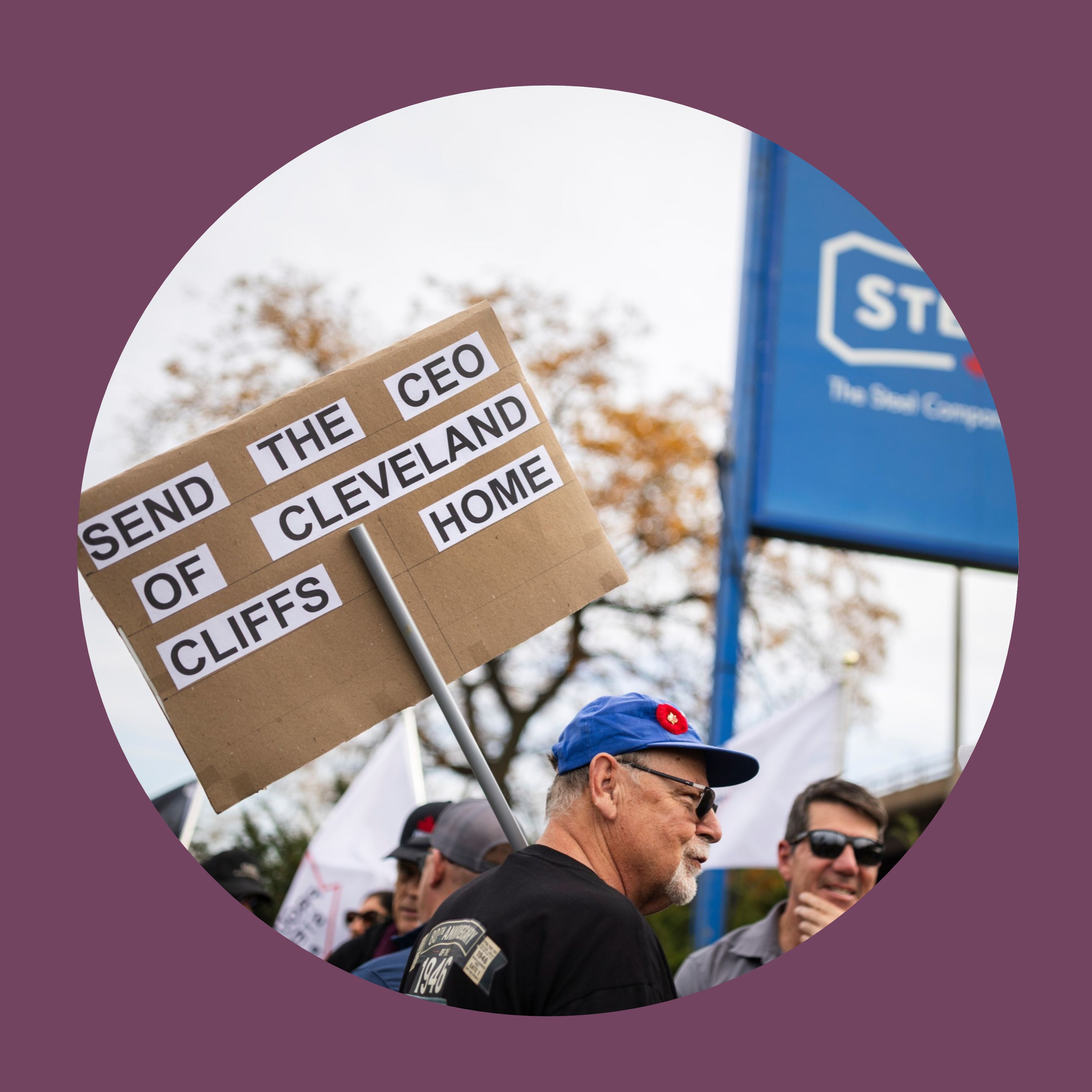
There’s been a public feud (https://www.theglobeandmail.com/business/article-melanie-joly-demands-cliffs-come-up-with-plan-to-restore-stelco-jobs/) brewing between Industry Minister Mélanie Joly (https://www.theglobeandmail.com/business/article-melanie-joly-letter-competition-bureau-comments-from-cliffs-ceo/) and the CEO of the company that owns Stelco (https://www.theglobeandmail.com/business/article-cleveland-cliffs-says-it-is-in-compliance-with-investment-canada-act/), the Canadian steel company. It began after layoffs were announced in September, which prompted Joly to accuse the company of violating its agreement (https://www.theglobeandmail.com/politics/article-stelco-cleveland-cliffs-layoffs-could-force-owner-divest-assets-joly/) with the government from 2024. The Globe’s mining reporter Niall McGee (https://www.theglobeandmail.com/authors/niall-mcgee/) has been following the fracas. He’ll explain why the government has taken such interest in 175 layoffs, why the company says it
The latest federal budget had a line item that was intriguing and ambitious: $30-billion in spending over the next decade (https://www.theglobeandmail.com/canada/article-housing-experts-welcome-ottawas-plan-to-eradicate-homelessness-but/) to put a roof over every Canadian’s head. The plan is a mix of new supportive and transitional housing developments (https://www.theglobeandmail.com/politics/article-carney-budget-plan-end-homelessness-winnipeg/), low-income rental assistance and a $7-billion commitment to facilities that provide mental health, addictions treatment and other support services. But how will this work? Can the Carney government succeed where other governments have largely failed? Patrick White (https://www.theglobeandmail.com/authors/patrick-white/), The Globe’s cities reporter, joins The Decibel to break down the federal government’s strategy, why provincial and municipal governments play a big role in this plan and why some housing advocates are cautiously optimistic a
After years of delays, Canada is launching its national instant payment system (https://www.theglobeandmail.com/business/article-payments-canada-launches-real-time-rail-system/). The first phase was initiated on Monday as part of a suite of new financial services aimed at both growing the economy and decreasing reliance on the United States. Workers, companies, retailers and restaurants will be able to receive funds immediately under the new system. The Globe’s banking reporter, Stefanie Marotta (https://www.theglobeandmail.com/authors/stefanie-marotta/), is on the show to explain how this all works, how Canada compares to other countries, and how it’s ultimately all about sovereignty. Questions? Comments? Ideas? E-mail us at [email protected] Hosted by Simplecast, an AdsWizz company.
The federal government is making a big bet on AI by promising to invest up to $1.6 billion (https://www.theglobeandmail.com/business/article-ottawa-buys-stake-in-cohere-357-billion-in-new-financing/) in the Canadian AI company Cohere. This is unprecedented for a private tech company in Canada – and it’s sparked a debate among (https://www.theglobeandmail.com/business/article-ottawas-mega-investment-in-cohere-sparks-debate-over-how-to-support-ai/) experts about how the government should support the AI sector. The Globe’s AI and technology reporter, Murad Hemmadi (https://www.theglobeandmail.com/authors/murad-hemmadi/), explains why some experts are worried about this investment, why others say it’s essential, and why the government is putting so much money into one company. Questions? Comments? Ideas? Email us at [email protected] Hosted by Simplecast, an AdsWizz company.
The federal government has released the 2026 budget (https://www.theglobeandmail.com/canada/article-federal-budget-canada-2026-breakdown/). And this year the focus is on new net spending (https://www.theglobeandmail.com/canada/article-federal-budget-highlights-2026-canada/). It looks to put money toward boosting the housing supply, investing in Canadian businesses (https://www.theglobeandmail.com/business/article-federal-budget-2026-business-and-investment-takeaways/) and bulking up the cultural sector (https://www.theglobeandmail.com/politics/article-federal-budget-2026-canada-culture-national-identity-sovereignty/). How do those ambitions balance against fiscal constraints and a deficit? Matt Lundy (https://www.theglobeandmail.com/authors/matt-lundy/), The Globe’s economics editor, breaks down the big takeaways from the budget and explains what story the Carney government is telling to Canadians. Questions? Comments? Ideas? E-mail us at [email protected] Hosted by Simplecas
The U.S. midterm results (https://www.theglobeandmail.com/world/article-us-midterm-election-results-live-updates-november-4-2026/) have seemingly delivered a new era in American politics. On Tuesday, voters helped the Democratic Party take control of the U.S. House and Senate, flipping traditional Republican strongholds and sending a strong message to President Donald Trump. But what does this political shift mean for Canada? Does this impact the trade war (https://www.theglobeandmail.com/business/article-canada-us-trade-tariffs-midterms-michigan-texas/)? Will this reset U.S.-Canada relations (https://www.theglobeandmail.com/business/commentary/article-with-democrats-in-the-house-the-trade-war-will-continue-and-could-even/) in the next two years? Doug Saunders (https://www.theglobeandmail.com/authors/doug-saunders/), The Globe’s international affairs columnist, joins the show to talk about the ripple effects of the midterms, what it will mean for Carney-Trump relations, and reflects on
In the last several years, the village of Elora, Ont. has undergone a renaissance (https://www.theglobeandmail.com/canada/article-kat-florence-luxury-hotel-firm-elora-ontario/). Its picturesque downtown has welcomed more than 750,000 visitors annually which is up from 500,000 visitors just a few years prior. A number of Elora’s 19th century buildings have undergone restoration. Many of Elora’s recent real estate developments have been led by Kat Florence, a hotel company that has bought up historic properties (https://www.theglobeandmail.com/life/travel/article-kat-florence-hotel-elora-ontario-1000-a-night/) and is now one of the village’s largest landlords. But not everyone in Elora is happy. Some residents have criticized Kat Florence and say the company wields too much power in the village. Kat Florence has pushed back issuing defamation lawsuits and cease-and-desist letters against its loudest critics. Greg Mercer (https://www.theglobeandmail.com/authors/greg-mercer/), investigativ
As artificial intelligence (https://www.theglobeandmail.com/topics/artificial-intelligence/) seeps into every aspect of our lives, white-collar workers are wondering what that means for job security. And some are pre-emptively making the shift to work that they see as AI-proof (https://www.theglobeandmail.com/business/technology/article-bracing-ai-disruption-white-collar-pre-emptively-changing-careers/) in fields like skilled trades. And while there’s not a lot of clear evidence that AI is actively eliminating white-collar jobs, there are trends in the job market to pay attention to. The Globe’s future of work reporter, Vanmala Subramaniam (https://www.theglobeandmail.com/authors/vanmala-subramaniam/), tells us about the people switching careers and what white-collar workers should be thinking about in this moment. Questions? Comments? Ideas? Email us at [email protected] Hosted by Simplecast, an AdsWizz company.
GLP-1 medications revolutionized the way we treat chronic weight management and diabetes by helping to quiet “food noise”. Researchers are now looking into (https://www.theglobeandmail.com/canada/article-glp-1s-medication-opioid-addiction-treatment/) whether these medications can also be used to dampen “drug noise” and help treat people with substance use disorders. Alanna Smith (https://www.theglobeandmail.com/authors/alanna-smith/) is a health reporter for The Globe and she’s been looking into what’s going on with the research around GLP-1s being used to tread opioid addiction. She’s on the show to talk about the excitement and the reluctance on this potential treatment. Questions? Comments? Ideas? Email us at [email protected] Hosted by Simplecast, an AdsWizz company.