November 20, 2026 On November 19, Trump met with Xi Jinping and Vladimir Putin in Shenzhen, China, The fact that the president of the US would meet with leaders of China and Russia was bizarre since both China and Russia have been helping Iran in its current fight against the US, Trump appeared to want the fanfare and President Xi played that up, Putin wanted the meeting because it would suggest that Russia was a great power, although it is far from being so and Putin’s war on Ukraine is going poorly, The meeting’s purpose seemed to be to produce propaganda for each of the three leaders, Beyond the propaganda is the larger story of the destruction of the post-World War II rules-based international order, In its place is the idea of dividing the world into spheres of influence, The three leaders met for 90 minutes and issued only a vague "joint declaration toward peace," which vowed to reform the UN and weaken the International Criminal Court, where Putin is already under indictment for
President Donald Trump's first ever trilateral summit with Vladimir Putin and Xi Jinping raises questions about the future of the war in Ukraine and whether a peace agreement could finally be within reach. Victor Davis Hanson and Sami Winc examine the summit on today’s edition of “Victor Davis Hanson: In His Own Words,” discussing Russia's declining influence, potential territorial concessions in Ukraine, and Europe's frustration over Trump's peace negotiations. Hanson criticizes Hillary Clinton's attacks on Trump's diplomacy; he also argues that European leaders have weakened their influence by neglecting defense spending and relying on American military protection. They discuss Elon Musk's shifting political allegiances, and Hanson warns that distancing himself from MAGA may not protect him from Democrat investigations. They also discuss the potential economic benefits of artificial intelligence and the challenges facing Hakeem Jeffries as Democrats prepare to take control of the Hou
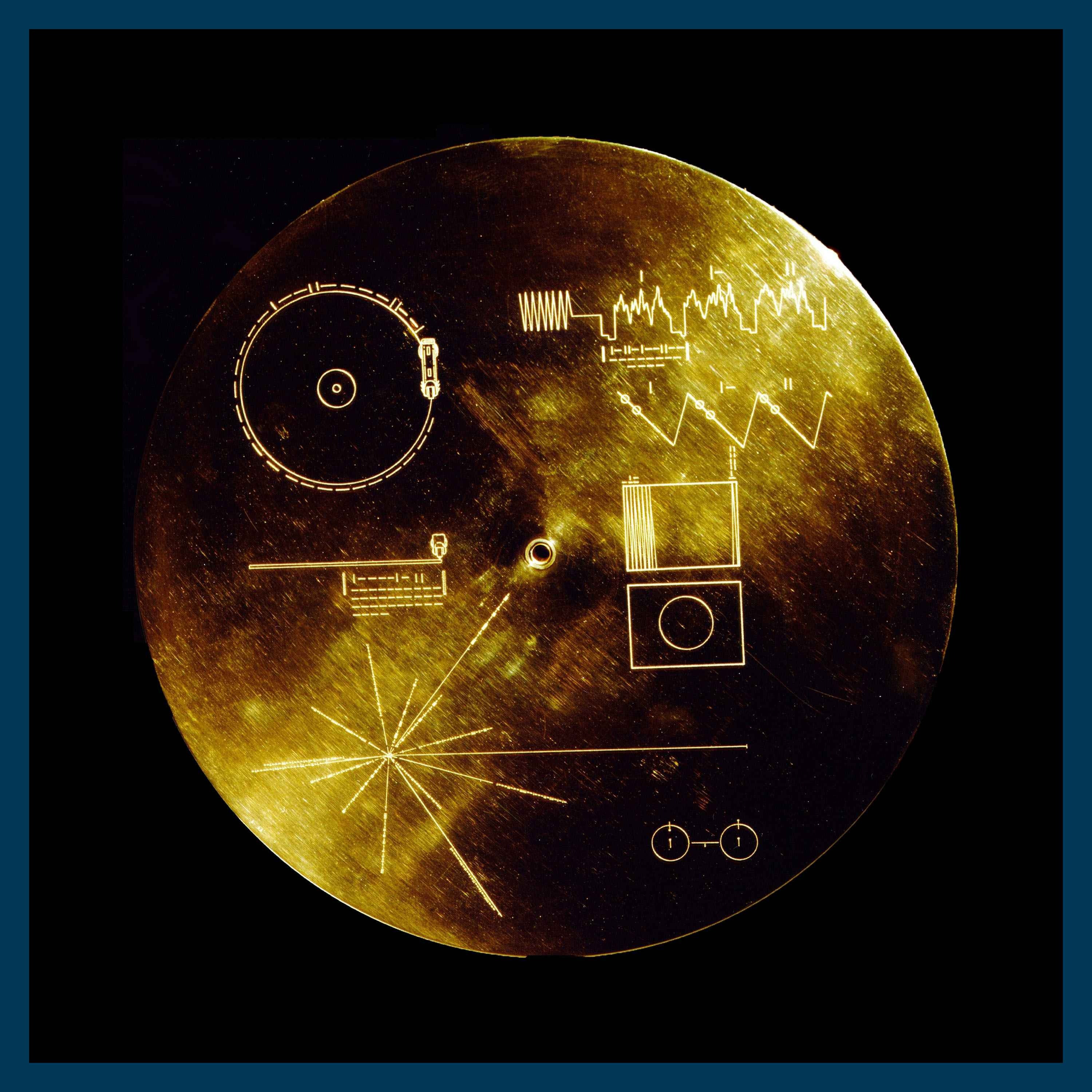
This week, Voyager 1 reached one light day away from earth - the farthest any man-made object has ever been. For fifty years, it as well as its sister probe Voyager 2, have been sending information back to earth. Now, they’re off to interstellar space, carrying two golden records designed to introduce humanity to whatever life form may be out there. So what’s on those discs? And what does the project tell us about what it means to be human? Guests: Rhys Blakely, science editor, The Times Tim Ferris, author and producer of the Voyager Golden Record Host: Manveen Rana Producer: Olivia Case We want to hear from you - email: [email protected] Read more: Voyager - humanity’s most distant message (https://www.thetimes.com/uk/science/article/nasa-golden-record-sounds-voyager-humanity-bksl2n0ck?eafs_enabled=false) Further listening: Has space become the final frontier for war? (https://pod.link/1501716010/episode/NmFhYzMzNzM4ZGUzYjQzYjZhOTk4ZGJj) Clips: NASA Voyager Golden Record / Carl Sa
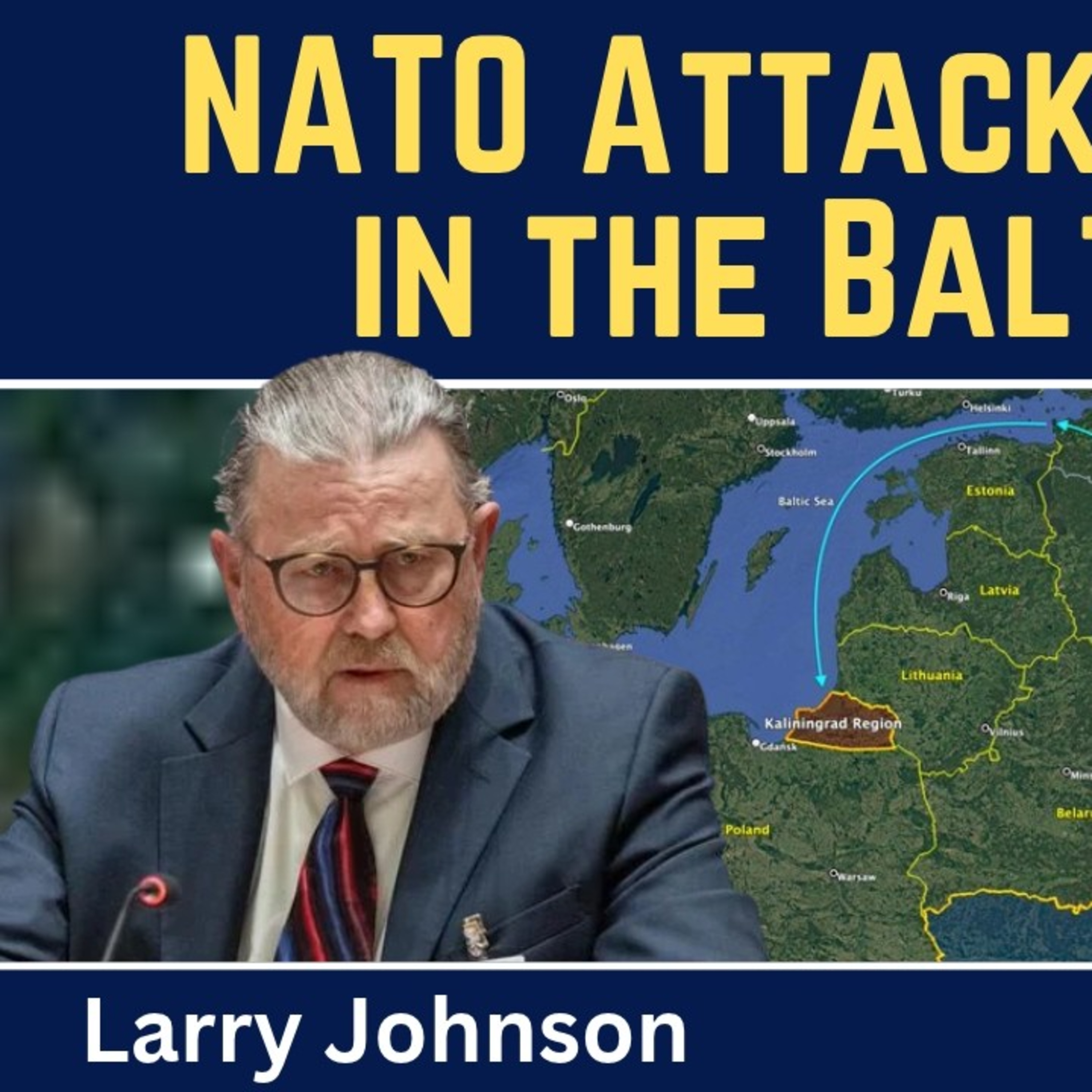
Larry Johnson is a former CIA intelligence analyst who also worked at the U.S. State Department's Office of Counterterrorism. Johnson discusses the attack on a Russian cargo ship in the Baltic Sea, and the air alarms going off in Kaliningrad. Read Larry Johnson's Sonar21: https://sonar21.com/Follow Prof. Glenn Diesen: PayPal: https://www.paypal.com/paypalme/glenndiesenBuy me a Coffee: buymeacoffee.com/gdiesengGo Fund Me: https://gofund.me/09ea012fBuy Diesen merchandise: https://diesen-shop.fourthwall.com/en-nokBooks by Prof. Glenn Diesen: https://www.amazon.com/stores/author/B09FPQ4MDL 00:00 Escalating Tensions in the Baltic Sea02:45 NATO's Role and Russia's Response05:52 The Shift in European Attitudes Towards Russia09:11 Cultural Influences on Perceptions of Russia11:44 The Consequences of Military Escalation15:06 The Irrelevance of Europe in Global Politics25:49 Reassessing Global Power Dynamics32:44 The Role of Europe in a Changing World39:19 The Impact of Economic Interests on Pol
What actually works when it comes to detecting lies, and why are so many popular ideas about reading people and nonverbal behavior at odds with the scientific research? I talk with Aldert Vrij, one of the world's leading deception-detection researchers, who has spent almost four decades studying these topics. We discuss why what people say is far more revealing than their body language; why the perceived “sexiness” of reading nonverbal behavior has contributed to widespread myths and misconceptions; whether vocal behaviors like pitch, volume, and hesitation contain meaningful clues; and whether there's value in analyzing minor word choices and turns of phrase, as is done in so-called “statement analysis.” We discuss Paul Ekman's legacy as a source of faulty ideas about deception, micro-expression-based deception detection training, and the strategies that popular “body language experts” use to appear scientifically credible while simultaneously promoting ideas that conflict with the sc
As GLP-1 drugs grow in popularity, a dangerous black market is targeting teenagers looking to improve their appearance. Penny Nance, president of Concerned Women for America, joins Georgia Howe and John Bickley to explain how teens are buying unregulated weight-loss drugs like retatrutide through social media and convenience stores, and what parents need to know about the harm of the growing looksmaxxing trend. Get the facts first with Morning Wire. - - - Ep. 3208 - - - Wake up with new Morning Wire merch: https://bit.ly/4lIubt3 - - - Today's Sponsors: Chime - Make holiday spending a little more rewarding with Chime! Earn 5% cash back on eligible purchases in a category you choose each month, from groceries and gas to travel and dining. Get started at https://Chime.com/WIRE. (https://chime.com/WIRE.) Terms and limits apply. Alliance Defending Freedom - Visit https://JoinADF.com/WIRE (https://joinadf.com/WIRE) or text WIRE to 83848 to make an impact for freedom today. - - - Privacy Poli
It’s been a big week for the AI (https://www.theglobeandmail.com/topics/artificial-intelligence/) world, with Anthropic launching its blockbuster IPO (https://www.theglobeandmail.com/investing/article-anthropics-historic-debut-to-put-ais-promise-and-peril-to-wall-street/), and Nvidia releasing its first earnings report (https://www.theglobeandmail.com/business/article-nvidia-shares-jensen-huang-earnings/) since the resignation of its co-founder and now former CEO Jensen Huang (https://www.theglobeandmail.com/business/article-nvidia-after-jensen-huang-will-big-techs-key-man-ethos-live-on/). These two events are being watched closely as litmus tests (https://www.theglobeandmail.com/business/article-jensen-huang-nvidia-ceo-downfall-ai-bubble/) for where the AI sector is going, as concerns loom about how the industry is being financed. The Globe’s tech and AI reporter Joe Castaldo (https://www.theglobeandmail.com/authors/joe-castaldo/) is here today. He’ll explain how the AI industry is be
Just three years after the Rogers-Shaw merger (https://www.theglobeandmail.com/business/article-rogers-shaw-merger-closes/) shook up Canada’s telecommunications industry, there’s a proposal for another takeover. Quebecor, the fourth-largest telecom in the country, wants to acquire (https://www.theglobeandmail.com/business/article-ceos-of-quebecor-telus-weigh-in-on-takeover-bid/) Telus, which is the third-largest. If the $31-billion proposal (https://www.theglobeandmail.com/business/article-quebecor-proposes-to-acquire-telus-for-31-billion/) goes through, Quebecor would become the biggest player in the space. Irene Galea (https://www.theglobeandmail.com/authors/irene-galea/), The Globe’s telecommunications reporter, explains the rise of Quebecor and what this deal might mean for Canada’s already consolidated telecoms landscape. Questions? Comments? Ideas? Email us at [email protected] Hosted by Simplecast, an AdsWizz company.
If you’ve bought packaged bread in Canada since 2001, you may be entitled to compensation. That’s the fallout from the admission Loblaw Companies Ltd. and its parent company George Weston Ltd. made back in 2015 to the Competition Bureau, alleging an industry-wide conspiracy to fix the price of bread. Other grocers deny the allegation. Loblaw coming clean was in exchange for immunity from criminal prosecution – price-fixing is a crime under the Competition Act – but it also began a cascade of lawsuits. The behemoth grocer settled its part in a class-action lawsuit with a $500-million payout. Each consumer who claimed (https://www.theglobeandmail.com/business/article-loblaw-bread-settlement-money-canada/) to be affected got, at most, $49.11 as restitution. But now, another problem has sprung up (https://www.theglobeandmail.com/canada/article-loblaw-bread-price-fixing-settlement-payout-fraud-class-action-lawsuit/): fraudsters seem to have gotten their hands on some of these payments, and
Experts should explain openly why their recommendations change.
Share your view, then see how readers voted. No sign-in required. This poll is shared across stories.
Do you agree or disagree?
Common Quandary
A Common Quandary to discuss
Another conversation to explore, separate from this news story.
You spot your friend's partner on a dating app. Do you send the screenshot?
While browsing a dating app, you see the long-term partner of a close friend. The profile looks active, but you have no way to know whether it is current, permitted, fake, or simply forgotten.
When does loyalty require sharing uncertain information?