One week after the U.S. midterm elections, join Valérie Beaudoin, one of Canada's most respected commentators on U.S. politics, for a discussion on how Canadian policymakers and officials are digesting the results in Washington. From the new balance of power in Congress to the potential implications for Canada-U.S. relations, trade economic growth, and cross-border policy priorities, we'll explore what the election outcome could mean for Canada in the months ahead. Recorded on November 10, 2026. -- Optique canadienne sur les élections américaines de mi-mandat – Valérie Beaudoin Pour une version avec des sous-titres français, veuillez consulter Une semaine après les élections de mi-mandat aux États-Unis, Valérie Beaudoin, l’une des commentatrices de la politique américaine les plus respectées du Canada, discute des façons dont les décideurs canadiens et Ottawa ont réagi aux résultats à Washington. Du nouvel équilibre des pouvoirs au Congrès aux répercussions possibles sur les relations
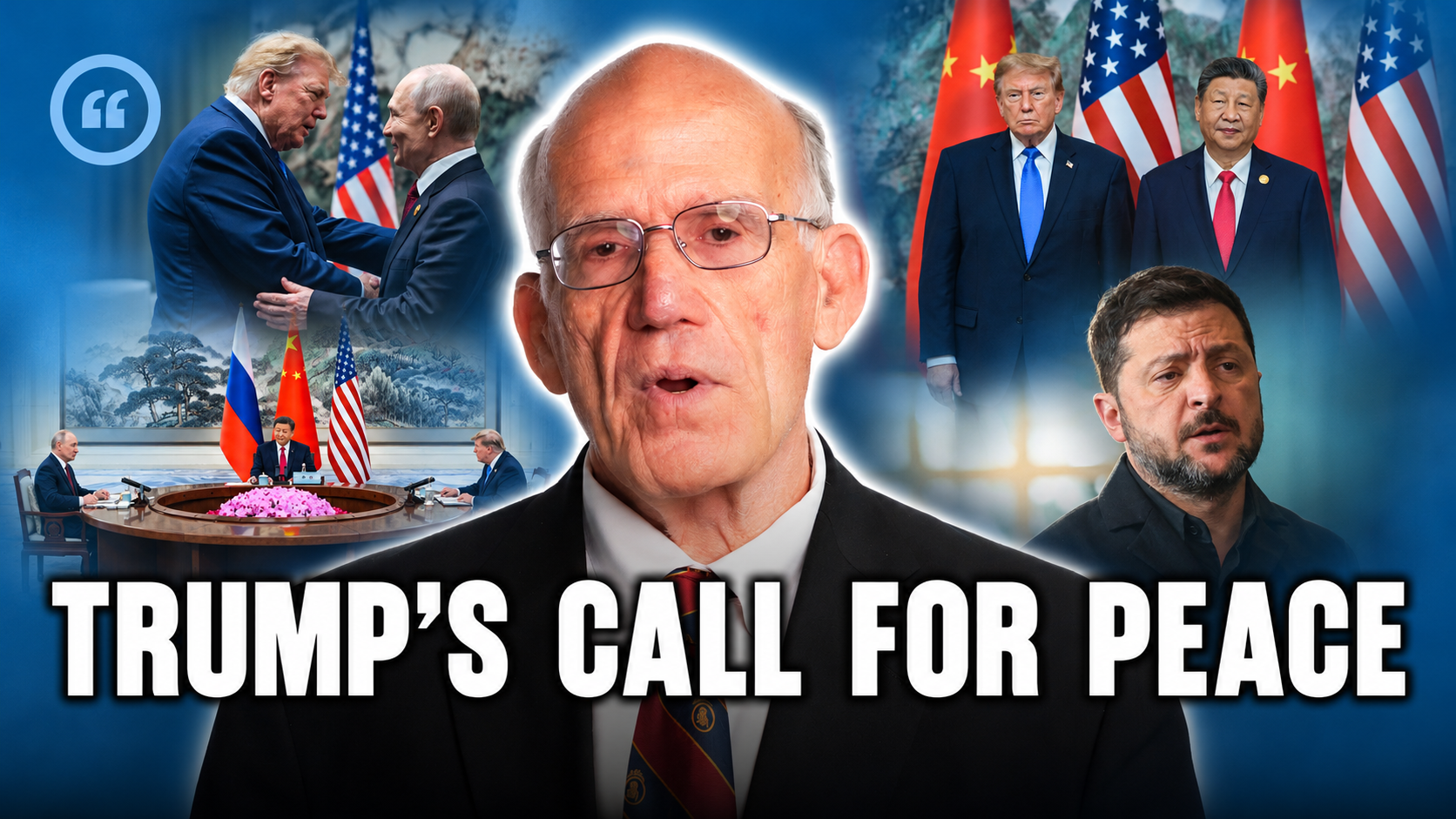
President Donald Trump's first ever trilateral summit with Vladimir Putin and Xi Jinping raises questions about the future of the war in Ukraine and whether a peace agreement could finally be within reach. Victor Davis Hanson and Sami Winc examine the summit on today’s edition of “Victor Davis Hanson: In His Own Words,” discussing Russia's declining influence, potential territorial concessions in Ukraine, and Europe's frustration over Trump's peace negotiations. Hanson criticizes Hillary Clinton's attacks on Trump's diplomacy; he also argues that European leaders have weakened their influence by neglecting defense spending and relying on American military protection. They discuss Elon Musk's shifting political allegiances, and Hanson warns that distancing himself from MAGA may not protect him from Democrat investigations. They also discuss the potential economic benefits of artificial intelligence and the challenges facing Hakeem Jeffries as Democrats prepare to take control of the Hou
Hey everybody, Tom Bilyeu here. On today’s episode of Impact Theory, we’re taking on a topic that’s got the whole world holding its breath: the escalating crisis between the United States and Iran. As tensions ratchet up, we’re asking the tough questions—how did we get stuck in this “escalation trap,” and what does it mean for America’s global leverage, our economy, and our very sense of security? The conversation focused on why the traditional idea of “strategy” might be failing policymakers, using powerful analogies—like chess versus roulette—to show how doubling down in conflict can spiral out of control. We’ll break down the risks of tactical “wins” that create even bigger crises, the real leverage Iran holds with control of the Strait of Hormuz, and the mounting pressure on President Trump as political support erodes and legacy hangs in the balance. A key theme that emerged is what happens when military might runs into decentralized opposition, and why high-stakes gambles—like the
P.M. Edition for Nov. 20. Despite Nvidia’s strong earnings and Anthropic’s record-breaking IPO this week, tech stocks had one of their worst weeks (https://www.wsj.com/finance/stocks/anthropics-ipo-bust-punctuates-4-trillion-ai-wipeout-on-wall-street-f1f1ec90?mod=WSJ_WNPOD) in years. Journal markets reporter Hannah Erin Lang (https://www.wsj.com/news/author/hannah-erin-lang?mod=WSJ_WNPOD) discusses why investors have gone cold on the AI trade. Plus, in a press conference today, President Trump, flanked by Vice President JD Vance and Secretary of State Marco Rubio, said there will be new penalties on companies (https://www.wsj.com/politics/policy/trump-to-hold-white-house-press-conference-following-trip-to-asia-25c8ecc0?mod=WSJ_WNPOD) that build data centers outside the U.S. We hear from White House reporter Philip Wegmann (https://www.wsj.com/news/author/philip-wegmann?mod=WSJ_WNPOD) about ramifications for the 2028 presidential election. And, to help solve New York City’s bathroom cri
Donald Trump has a blunt message for Canada following his meeting with Prime Minister Mark Carney, warning that Canadian leaders are feeling increasingly emboldened as Canada-U.S. trade negotiations remain unresolved. White House trade advisor Peter Navarro is also taking aim at Canada's negotiating team, accusing Canadian officials of misreading their leverage with Washington. Meanwhile, Trump's surprising comments about Chinese espionage are sparking controversy as Carney deepens Canada's economic relationship with Beijing. Visithttp://keet.io/jasminlaine - Download it free, invite one person you trust, and start a conversation that belongs to you. Help me stay 100% independent! Send a one-time contribution - Let’s Be Friends! (https://www.instagram.com/jasminlaine/)
The Democrats swept the midterms. Donald Trump is still president. What will the next two years look like? And what can history teach us about what comes next? Martin Wolf speaks to historian Heather Cox Richardson about the cycles in the past 250 years of US politics — how renewal (and division) can both follow periods of oligarchy, and how the Democrats should react to a “constitutional crisis”. To enjoy future episodes, be sure to subscribe to ‘Martin Wolf on the World’ wherever you get your podcasts. You can also watch Martin’s podcast series on the FT’s YouTube channel here:https://www.youtube.com/@FinancialTimeshttps://www.youtube.com/@FinancialTimes Host: Martin Wolf Producer: Mischa Frankl-Duval Senior producer: Laurence Knight Video editor: Richard Topping Senior audio engineer: Breen Turner Broadcast engineer: Andrew Georgiades Podcast development: Laura Clarke FT Global Head of Audio: Flo Phillips Learn more at www.ft.com/martin-wolf-on-the-world (http://www.ft.com/martin-wo
It’s been a big week for the AI (https://www.theglobeandmail.com/topics/artificial-intelligence/) world, with Anthropic launching its blockbuster IPO (https://www.theglobeandmail.com/investing/article-anthropics-historic-debut-to-put-ais-promise-and-peril-to-wall-street/), and Nvidia releasing its first earnings report (https://www.theglobeandmail.com/business/article-nvidia-shares-jensen-huang-earnings/) since the resignation of its co-founder and now former CEO Jensen Huang (https://www.theglobeandmail.com/business/article-nvidia-after-jensen-huang-will-big-techs-key-man-ethos-live-on/). These two events are being watched closely as litmus tests (https://www.theglobeandmail.com/business/article-jensen-huang-nvidia-ceo-downfall-ai-bubble/) for where the AI sector is going, as concerns loom about how the industry is being financed. The Globe’s tech and AI reporter Joe Castaldo (https://www.theglobeandmail.com/authors/joe-castaldo/) is here today. He’ll explain how the AI industry is be
Just three years after the Rogers-Shaw merger (https://www.theglobeandmail.com/business/article-rogers-shaw-merger-closes/) shook up Canada’s telecommunications industry, there’s a proposal for another takeover. Quebecor, the fourth-largest telecom in the country, wants to acquire (https://www.theglobeandmail.com/business/article-ceos-of-quebecor-telus-weigh-in-on-takeover-bid/) Telus, which is the third-largest. If the $31-billion proposal (https://www.theglobeandmail.com/business/article-quebecor-proposes-to-acquire-telus-for-31-billion/) goes through, Quebecor would become the biggest player in the space. Irene Galea (https://www.theglobeandmail.com/authors/irene-galea/), The Globe’s telecommunications reporter, explains the rise of Quebecor and what this deal might mean for Canada’s already consolidated telecoms landscape. Questions? Comments? Ideas? Email us at [email protected] Hosted by Simplecast, an AdsWizz company.
If you’ve bought packaged bread in Canada since 2001, you may be entitled to compensation. That’s the fallout from the admission Loblaw Companies Ltd. and its parent company George Weston Ltd. made back in 2015 to the Competition Bureau, alleging an industry-wide conspiracy to fix the price of bread. Other grocers deny the allegation. Loblaw coming clean was in exchange for immunity from criminal prosecution – price-fixing is a crime under the Competition Act – but it also began a cascade of lawsuits. The behemoth grocer settled its part in a class-action lawsuit with a $500-million payout. Each consumer who claimed (https://www.theglobeandmail.com/business/article-loblaw-bread-settlement-money-canada/) to be affected got, at most, $49.11 as restitution. But now, another problem has sprung up (https://www.theglobeandmail.com/canada/article-loblaw-bread-price-fixing-settlement-payout-fraud-class-action-lawsuit/): fraudsters seem to have gotten their hands on some of these payments, and
Local events should make a deliberate effort to welcome people attending alone.
Share your view, then see how readers voted. No sign-in required. This poll is shared across stories.
Do you agree or disagree?
Common Quandary
A Common Quandary to discuss
Another conversation to explore, separate from this news story.
The stadium can ban violent fans by scanning every face at the gate. Would you walk in?
A stadium can use facial recognition to identify people banned for violence and shorten security lines. Every visitor would be scanned, error rates are not zero, and the resulting biometric data could become useful to police or advertisers.
How much privacy may a crowd be asked to trade for collective safety?