How To Heal Childhood Memories with Dr. Marisa Franco
59 min
Listen through the publisher, then discuss the episode here or arrange an in-person Roundtable. Your city determines where to meet.
Roundtables are designed for groups of four, with a shared subject and room for everyone to speak. Come for discussion, with no dating expectation.
I did not have crying over a fourth-grade friendship on my bingo card for this week's podcast, but here we are. (And Penn makes a confession about a Slinky incident he thinks about weekly.) This week, we welcome back New York Times bestselling author Dr. Marisa Franco (https://drmarisagfranco.com/) to discuss her new book, Worth: The New Science of Self-Esteem and Secure Attachment (https://link.amazon/B00iVViED). What started as a conversation about why we struggle to feel worthy turned into an unexpected therapy session for both of us. We explore why it can be so hard to accept compliments, how even seemingly small childhood experiences can shape how we see ourselves decades later, and how revisiting those memories can change the way we carry them. It was incredibly powerful, and I hope you'll give yourself permission to do the exercise alongside us. And because it's Thanksgiving week, we're also giving you some truly unhinged conversation starters to help you change the subject when things get awkward around the dinner table. (Nothing derails a political debate quite like asking if aliens can become ghosts.) Plus, we discuss how cell phones would have ruined our favorite Christmas movies, and I may or may not get canceled. Happy Thanksgiving, friends. Thank you for being here with us. We love to hear from you... especially any funny stories you have! Get Dr. Franco's Book, Worth (https://link.amazon/B00iVViED) Get Our New Book (https://link.amazon/B0hCiCZzu) VisitOur Shop (https://holdernessfamilyshop.com/) JoinOur Newsletter (https://theholdernessfamily.com/newsletter/) Find us onSubstack (https://theholdernessfamily.substack.com/) They were also winners on The Amazing Race (Season 33) on CBS. It is hosted by Acast. Thanks for listening! 00:00 Welcome to Laugh Lines 1:57 Pre-WiFi Christmas Movies 5:43 Modern Nativity 10:20 Welcome, Dr. Franco 11:40 Feeling Worthy 20:14 Rewriting Memories 24:16 Kim's Memory 33:30 Penn's Memory 45:08 Holiday Advice 48:44 Focus on Positives 51:38 Unhinged Thanksgiving Topics 55:13 Remember DVD Extras Hosted on Acast.
Episode information is provided by the publisher. Listening takes place on the publisher’s service.
Have you ever heard your parents say something that made absolutely no sense when you were a kid—but years later, you finally understood what they meant? In this special episode from the Real English Conversations Podcast archives, Curtis and former co-host Amy take a nostalgic trip back to childhood and share some of the funniest, most memorable things their parents used to say. From "Money doesn't grow on trees!" to "Don't make me turn this car around!" and "Because I said so!", we explore the everyday English expressions that parents have been using for generations. But there's more to this conversation than just funny memories! Curtis and Amy explain what these expressions actually mean, when native English speakers use them, and how you can use them naturally in your own conversations. Whether you're an English learner who wants to understand everyday spoken English, an international professional looking to sound more natural, or simply someone who enjoys funny childhood memories,
What if your worst day could actually become the turning point of your life? In this video, Tony Robbins shares powerful insights on how to transform pain into fuel, turning setbacks into purpose and unstoppable growth. Uploaded 14-09-25 Watch more videos like this Priming - The Daily Habit Tony Robbins Uses: https://www.youtube.com/watch?v=faTGTgid8Uc Do THIS to Break Through ANY Challenge You're Facing: https://youtu.be/ssgHDCsACTw Why Most People Never Feel Truly Happy (And How to Change It): https://youtu.be/bHG0370m8XM Join "The Edge" - Tony Robbin's FREE weekly newsletter: https://tonyr.co/3YJ0m2L Try Tony AI for just $1: https://tonyr.co/4cr742A Follow Tony Robbins: Facebook: https://www.facebook.com/TonyRobbins Instagram: https://instagram.com/tonyrobbins/ TikTok: https://www.tiktok.com/@tonyrobbins Twitter: https://twitter.com/tonyrobbins LinkedIn: https://www.linkedin.com/in/officialtonyrobbins Website: https://www.tonyrobbins.com/ Tony Robbins is a #1 New York Times best-sel
A.I. for Learning Meditation: Building a Practice Even If Your Mind Never Stops, a practical, beginner-friendly look at how artificial intelligence can help you build a practice even if your mind never stops. Learning Meditation? Press play on Episode 431 of A.I. for Beginners and learn exactly how artificial intelligence, especially ChatGPT, alongside Headspace and Calm, can help you build a practice even if your mind never stops. WHAT YOU WILL LEARN IN THIS EPISODE - Why learning meditation is so hard to handle alone, and what is actually going on underneath it - A specific way to use Headspace to work through it, step by step - An example prompt you can copy word for word: "Give me a simple two minute guided breathing exercise I can do right now" - A second practical technique, with another ready-to-use prompt: "Help me build a tiny, realistic meditation habit I could actually keep for a week" WHO THIS EPISODE IS FOR - Anyone currently working on learning meditation - Anyone curious
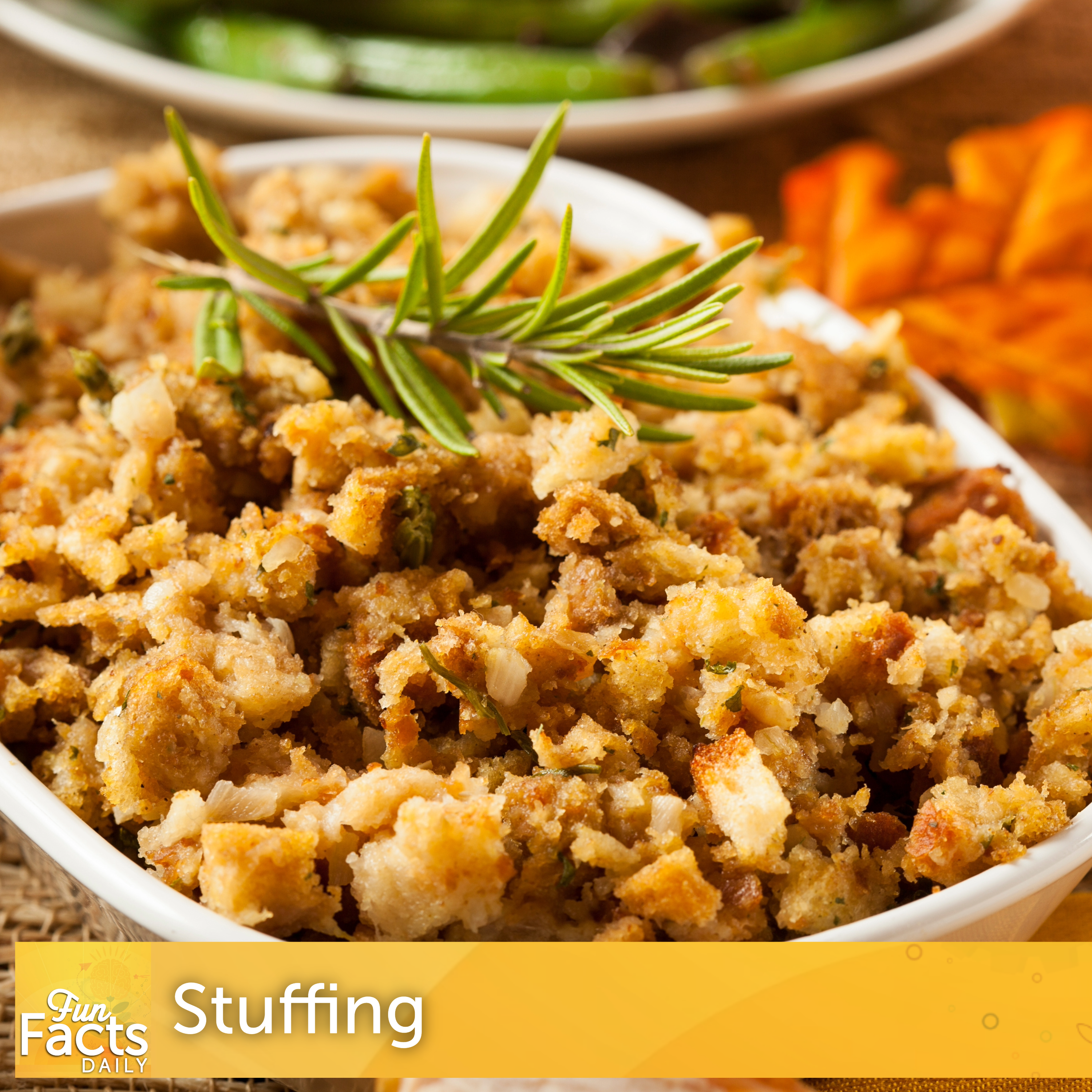
Whether you call it stuffing or dressing, this favorite holiday side dish has a surprisingly rich history. In the 1880s, Victorian etiquette guides encouraged Americans to use the word dressing because stuffing sounded too impolite for the dinner table. Today, the USDA officially defines stuffing as cooked inside the bird and dressing as baked in a separate pan. Even so, most cooks stick to their regional habits, with people in the South preferring dressing and folks in the Northeast and Midwest choosing stuffing. The culinary tradition even gave us the word farce, which comes from the Latin verb farcire, meaning to stuff or cram. Long before Thanksgiving turkeys took center stage, the oldest surviving Roman cookbook, De Re Coquinaria, included recipes for stuffed chicken, pig, and even edible dormice served as a status symbol at wealthy banquets. Centuries later, in 1807, a French food writer took the idea to the extreme by publishing a recipe that packed 17 different birds inside one
There is a list you carry around inside you. A list of things you are going to do. Someday. When the time is right. When things settle down. When you have more money, more energy, more certainty. And every day, you push that list forward by one more day, and you tell yourself it's fine, because there will always be tomorrow. Uploaded 21-09-26 But tomorrow is not a warehouse. It does not store the days you don't use. Every day you postpone something you say you want, that day is gone, and it isn't coming back. The things you keep putting off are not sitting quietly in a drawer, waiting patiently for you to be ready. They are the things you are postponing your whole life for. The delay isn't neutral. The delay is the life. Here is the truth: what you keep putting off is not separate from your life. It is your life, held just out of reach by your own hand. This seminar walks through ten things you keep postponing that are quietly postponing your entire life — not the big obvious dreams, b
Are you a rescuer or a victim? Trauma-informed therapist Michelle Malloy, author of Thriving in Chaos: How to Have Hope and Purpose in a World of Constant Change, joins Gina Livy to talk about weight gain as a real loss, and why no wound is too small to count. "I don't look at trauma as an event. I look at it as a wound." They get into why grief comes back when triggers happen and how to break the rescuer-victim-villain loop so many women in midlife get stuck in. There is a difference between parking a feeling and stuffing it down with food. Michelle closes with small, body-first ways to process hard emotions, and why each one counts as healing work. This podcast aligns with Day 72 of our Fall Program, members can find video in our Livy Method app and community group: https://www.facebook.com/groups/livymethod Hosted on Acast.
Yes, you read that title right... gratitude, existential dread, and why you should never trust a fart. (And if you have ever had a Code Brown, we want to hear about it.) This week on the podcast, Penn gets vulnerable and shares how a trip to the eye doctor sent him into a full-blown existential crisis. Getting a cataract at age 52 can really make a person think about how quickly life is passing by. And honestly, I get it. Turning 50 has made me think about those things, too. But it's also made me appreciate the little moments in life in a way I never did before. So we decide to fight off those feelings of dread with gratitude and laughter. Penn and I try to find the silver lining in life's most annoying situations in Gratitude Roulette, and also which two things we're most thankful for (Penn's answer to internet versus antibiotics is concerning.) We also go behind the music on a recent parody about Penn almost pooping his pants which leads to some stories from our producers. Ann Marie
Well, I did something I never thought I'd do... I invited my ACTUAL therapist onto our podcast. (And yes, it almost turned into marriage counseling.) This week, we're joined by the wonderful Dr. Amelia Kelley, the woman who helped me figure out I had ADHD. Despite literally co-writing a book about ADHD with Penn, I somehow missed all the signs. (And yes, there were signs.) We talk with Dr. Kelley about why ADHD can look so different in women, how hormones can make symptoms worse, and all the things I've spent my life thinking were just weird little personality quirks. Like why I can handle a full-blown crisis but I can't make a dentist appointment. We also get into friendship guilt, doom piles, and the exhaustion of pretending to have it all together. Plus, Penn gets a crash course in the female hormonal cycle and starts considering whether he should track mine. What could possibly go wrong? If you are a woman with ADHD, I hope this conversation makes you feel seen. Getting diagnosed w
Have you ever looked back at a parenting moment and thought, "I could have handled that better..." (Raises both hands.) Well friends, I have good news. It's never too late to make things right with our kids. Even when they're teenagers. Even when they don't want our advice. And even when the hardest thing we can do as parents is just... shut up. This week, we're joined by one of our favorite parenting experts, Dr. Becky Kennedy, who is a TED speaker and #1 New York Times bestselling author, to talk about the parenting mistakes we can still fix and why connection matters more than getting everything right. We dive into raising kids with ADHD, understanding deeply feeling kids, and what to do when your child says they're stupid or worthless. And while these conversations are important (and sometimes emotional) Dr. Becky has a way of making us laugh through all of it while giving such good, practical advice. We also have plenty of ridiculousness this week, including Penn's adventures gett
Automated tools should be tested with the people expected to use them.
Share your view, then see how readers voted. No sign-in required. This poll is shared across stories.
Do you agree or disagree?
Common Quandary
A Common Quandary to discuss
Another conversation to explore, separate from this news story.
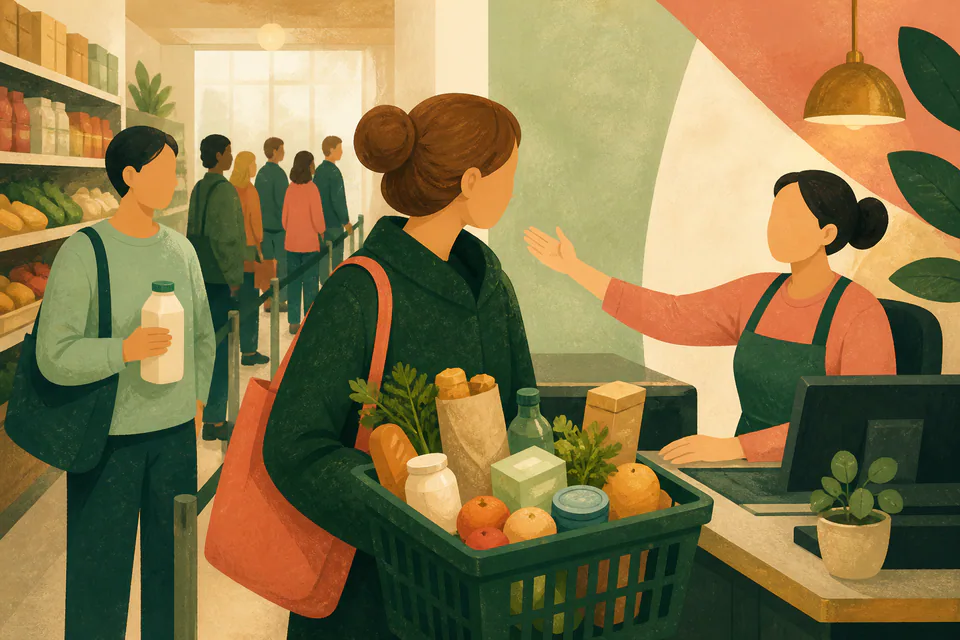
The sign says twelve items and you have fourteen. Is the express lane still yours?
The regular checkout lines are long and the express lane is empty. You count fourteen small items, two over the posted limit. A shopper approaches behind you carrying a single carton of milk as the cashier waves you forward.
Are small rules optional when enforcing them would seem fussier than breaking them?