How to Keep Your Relationship With Your Child Bigger Than OCD
41 min
Listen through the publisher, then discuss the episode here or arrange an in-person Roundtable. Your city determines where to meet.
Roundtables are designed for groups of four, with a shared subject and room for everyone to speak. Come for discussion, with no dating expectation.
When a child has OCD, it can start to feel like every conversation, decision, and family routine revolves around symptoms or treatment. Parents may find themselves constantly coaching, reminding, and problem-solving, even when they just want to connect with their child. In this episode, I’ll talk about how OCD can take up so much space in family life, and how parents can support recovery while protecting the relationship from becoming all about OCD. We’ll look at ways to make room for conversations and activities that have nothing to do with symptoms, stay emotionally connected during difficult moments, and help your child feel seen as a whole person—not just someone with OCD. Resources mentioned in episode: Podcast episode on building trust and communication (https://childocdtherapist.com/trust-and-communication/) SPACE Study Guide Course (https://www.atparentingsurvivalseries.com/space) *** This podcast episode is sponsored by NOCD. Parents, do you need more support? Here’s are resources I offer parents ️ Take one of my FREE webinars: Check out my books: Other social places I hang out: Hosted on Acast.
Episode information is provided by the publisher. Listening takes place on the publisher’s service.
Gratitude gets handed out a lot this time of year, usually as an instruction, and if the holidays are hard for you, being told to feel grateful can make things worse. In this episode, I'm exploring what the research says about gratitude, including how it may help with the impulsiveness that shows up in binge eating and emotional eating. I share how I use glimmers and body gratitude in my own life, and specific ways to practice gratitude with food, with your body, with yourself, and with difficult family dynamics during the holidays. What you'll discover: What gratitude research reveals about impulsiveness Why the same gratitude list stops working How to practice gratitude toward a body you're frustrated with Gratitude when family or grief makes the holidays hard If you're heading into Thanksgiving with a knot in your stomach about the food, the people, or a year that won't look anything like previous years, this episode is for you. Previous episodes referenced: Overcoming Holiday Obsta
Reconnect with your younger self through kindness, compassion, and gentle reassurance in this peaceful inner child sleep meditation. If you've been feeling emotionally overwhelmed, disconnected from yourself, or simply longing for a little more tenderness in your life, this soothing guided meditation invites you to slow down, feel supported, and offer yourself the understanding you deserve. As you settle into relaxation, you'll imagine walking along a quiet, peaceful lane toward a comforting place of your choosing. Perhaps it's a beautiful garden, a calm beach, or a cosy room where everything feels familiar and welcoming. There, you'll gently meet a younger version of yourself. There is nothing you need to fix, change, or remember. You are simply invited to offer warmth, acceptance, and reassurance. You might imagine sitting together, listening to what your younger self needs, holding hands, or quietly sharing a peaceful moment. Through this gentle visualization, you'll practise bringi
What if you could eat the stuffing, go back for seconds, and still wake up on Friday morning without feeling gross and like you overdid it? Not puffy, not foggy, and not counting the days until you start over in January.. I want you to think differently about holiday food in your 40s, so inside this episode I'm walking you through simple anti-inflammatory swaps that let you eat the same food as everyone else at the table, without the “special plate” and without feeling deprived. After listening you'll understand why the special plate left you feeling left out, why eating whatever is on the table leaves you feeling awful for days, and why neither one has to be your only option. If you're constantly asking yourself, "Why can't I enjoy the holidays without paying for it all week?", this episode is for you. You'll discover how to keep your family's favorite dishes on the table, make them anti-inflammatory without anyone noticing, and start new traditions everyone will love. Inside This Epi
A ham and egg sandwich, a conversation on the beach, and a summer spent swimming in a lake can matter more in the making of a person than we might ever imagine. Computational neuroscientist and Stanford adjunct professor David Sussillo joins Ginny Yurich to discuss his remarkable memoir, Emergence: A Memoir of Boyhood, Computation, and the Mysteries of the Mind. (https://link.amazon/B0ejwGCtg)Raised amid parental addiction, poverty, and years in children's homes, David found unexpected sources of joy, belonging, and possibility. He shares how childhood friendships helped him envision a different future, how ordinary summers in the Catskill Mountains helped him heal, and how one aunt taught him that his worth had nothing to do with his achievements. Drawing fascinating parallels between neuroscience, artificial intelligence, and human development, David offers a hopeful perspective on the wonderfully unpredictable ways a life takes shape — and the lasting influence of the seemingly smal
For most of my life I was a high-functioning codependent. I was hypervigilant to everyone around me, constantly scanning for what others needed, and deferring my own needs as a matter of habit. Having a PDA child broke that pattern, because I could no longer maintain it while supporting my son. In this episode - a recording of a live teaching did in one of our programs - I explain how I made these changes despite the deep discomfort it caused me. Most of us know the soft version of compassion: unconditional regard, patience, flexibility, the kind of love we try to bring to our children every day. Fierce compassion is the other side of that. It is stating and living your truth even when it makes the people around you uncomfortable. And for parents who have a fawn response or a people-pleasing history, that can be very difficult. In this episode I walk through three practical tools I have used personally and shared with families: a visualization for building a force field around your ner
Tuesday Talks: He Cheated, Now We’re Swinging | Episode 136 On this episode of Tuesday Talks, Dan and Lacy tackle a difficult question: Can a relationship still healing from infidelity successfully navigate the swinger lifestyle? A listener calls in and shares that her husband previously cheated and had an emotional affair. As recently as three months ago, he asked for a divorce, but the couple ultimately decided to stay together and work on their marriage for the sake of their children. Since then, they've decided to explore the lifestyle, but she finds herself struggling emotionally when she watches her husband flirt with other women at lifestyle events, knowing their history. Dan and Lacy offer their honest and compassionate advice, encouraging the couple to take a step back from the lifestyle, seek marriage counseling, and prioritize rebuilding trust and repairing their relationship. They discuss the importance of having a strong foundation before opening up a marriage and why the
Obviously we don’t want our kids to feel alone with their OCD, but there is an even bigger, therapeutic reason to ensure they know they aren’t alone. In this episode I explore how feeling isolated contributes to poor communication, treatment resistance, hopelessness and long-term struggles. I’ll also talk about the power of connection and validation. Resources discussed in episode: Join the AT Parenting Community (http://www.atparentingcommunity.com/) with kid and teen support groups IOCDF Young Adult Support Group (https://iocdf.org/special-interest-groups/young-adults/) *** This podcast episode is sponsored by NOCD. Parents, do you need more support? Here’s are resources I offer parents ️ Take one of my FREE webinars: Check out my books: Other social places I hang out: Hosted on Acast.
When your child is struggling with OCD, it can start to shape the routines, decisions, and emotional energy of the whole family. You want to help your child, but you also want your family to have room for connection, joy, and the ordinary parts of life. In this episode, I’m talking about how parents can begin to make that room again while still supporting a child with OCD. You don’t have to change everything at once. Finding one manageable place to start can help your family move forward. If you’re looking for support with that first step, register for my free AT Parenting Survival Series. I’ll teach you how to create a therapeutic home environment. Register at ATParentingSurvivalSeries.com (http://atparentingsurvivalseries.com/) Resources mentioned in episode: When a Loved One Won’t Seek Mental Health Treatment by Alec Pollard (https://www.amazon.com/When-Loved-Mental-Health-Treatment/dp/1648483135) Space Study Guide Course (http://www.natashadaniels.com/space) AT Parenting Survival S
When our kids start struggling with OCD it is normal to want to get them into therapy as soon as possible, especially Exposure Response Prevention (ERP) therapy, the first line treatment for OCD. But going into therapy when a child isn’t ready can be a costly mistake and can sabotage the success of future therapy sessions. In this episode I outline four key components needed to make therapy a success. Often therapy is a middle step, not the first step. Want to know exactly where YOU should start? In my free series, Survival Tools for Parents Raising Kids with OCD (https://www.atparentingsurvivalseries.com/), I teach you how to assess your particular situation and learn where to focus your energy to get the most long term success. Register for FREE at www.atparentingsurvivalseries.com (http://www.atparentingsurvivalseries.com/) Podcasts discussed during episode: How to Build Trust and Communication (https://childocdtherapist.com/trust-and-communication/) How to Create an Effective Incen
Cross-party cooperation is worthwhile even when it disappoints committed party supporters.
Share your view, then see how readers voted. No sign-in required. This poll is shared across stories.
Do you agree or disagree?
Common Quandary
A Common Quandary to discuss
Another conversation to explore, separate from this news story.
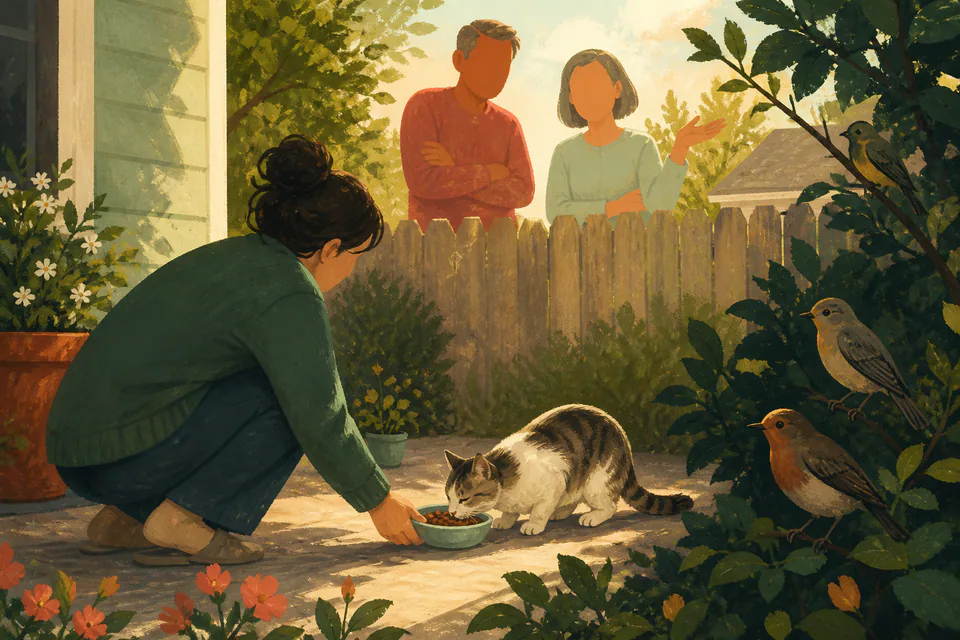
A stray cat adopts you—and starts killing birds. Do you keep feeding it?
A stray cat visits your yard daily and appears to depend on the food you leave out. Neighbors complain that outdoor cats kill birds and say feeding it encourages the problem without taking responsibility for the animal.
Does caring for one visible animal excuse harm to less visible ones?