Listen through the publisher, then discuss the episode here or arrange an in-person Roundtable. Your city determines where to meet.
Roundtables are designed for groups of four, with a shared subject and room for everyone to speak. Come for discussion, with no dating expectation.
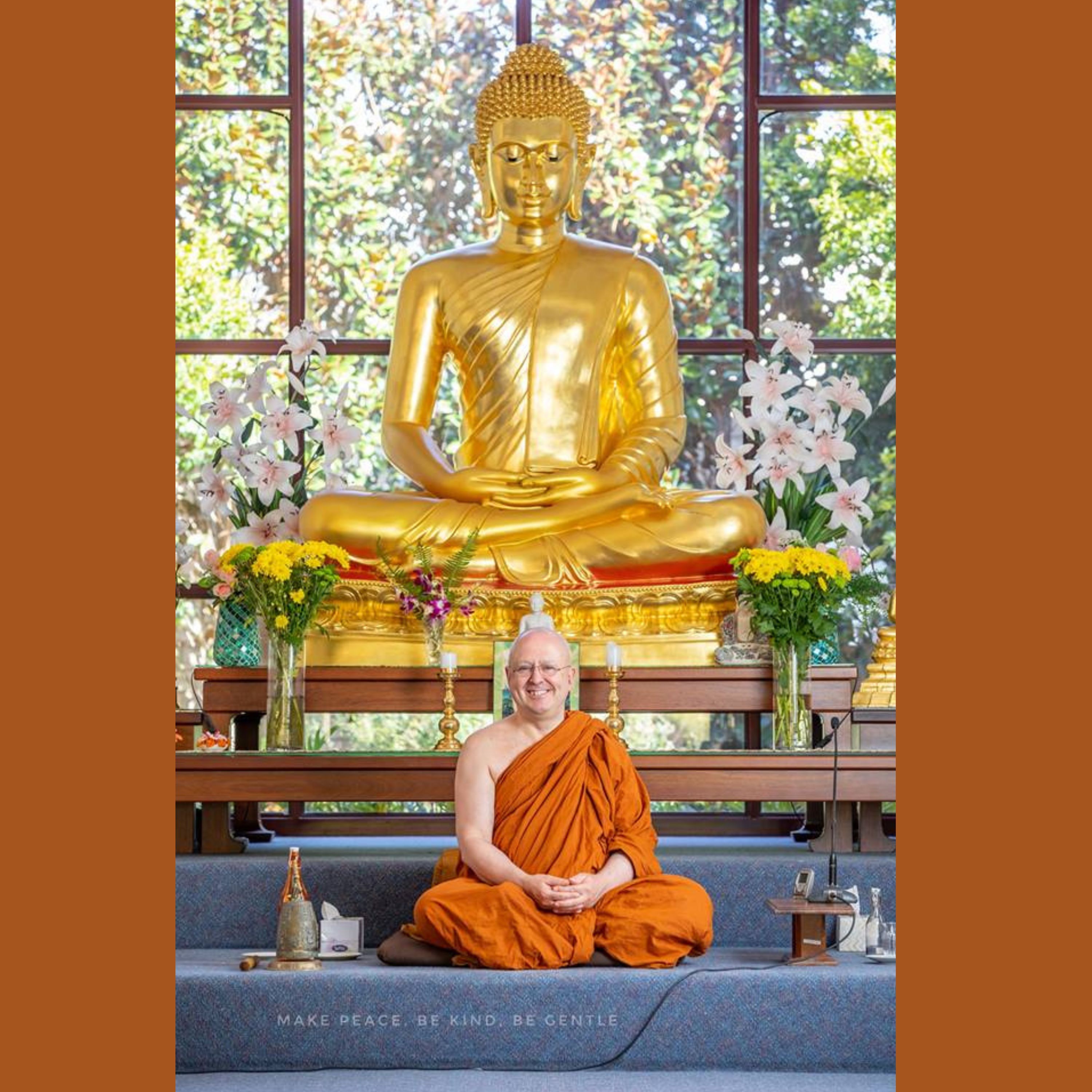
This talk explores how to live in the present moment and develop equanimity by releasing attachment to both past suffering and future anxiety. Ajahn Brahm introduces the Buddhist approach of “acknowledge, forgive, and learn,” emphasizing self-forgiveness, letting go of resentment and guilt, and refusing to let others control one’s happiness. Through meditation, mindfulness, and simple practices such as eating one spoonful at a time or treating traffic lights as opportunities to relax, people can become more present. — This dhamma talk was originally recorded in 29th May 2026. It has now been remastered and published by the Everyday Dhamma Network (https://everydaydhamma.net/podcast/ajahn-brahm-podcast), and will be of interest to his many fans.
Episode information is provided by the publisher. Listening takes place on the publisher’s service.
In this meditation, I explore how something as ordinary as drinking a cup of coffee can become a contemplative practice. As a Capuchin Franciscan, I can even claim a particular connection with coffee through Blessed Mark of Aviano, whose story became associated with the cappuccino. You can practise this meditation with coffee, tea or another warm drink, either holding a real cup or simply visualising the experience. We begin by feeling the warmth and weight of the cup in our hands. We notice its texture, the steam, the fragrance and the anticipation of taking a drink. As we take each sip, we pay attention to sensations that usually pass unnoticed: the cup against the lips, the warmth of the liquid, its movement through the mouth and throat, and the memories or stories awakened by taste and smell. By attending closely to an ordinary action, we begin to see how rich even the simplest moment can be. Towards the end of the meditation, we reflect with gratitude on everything that has allowe
I'm Too Hard on Myself — Guided Meditation for Self-Compassion, Negative Self-Talk & Anxiety | 10 Minutes Are you too hard on yourself? A small mistake, something forgotten, a day you simply ran out of energy, and that familiar voice arrives: "I should have done better. Why am I like this? Why can't I just get things right?" This guided meditation for self-kindness and anxiety helps you step back from negative self-talk, soften the pressure you've been carrying and practise speaking to yourself with a little more care. For gentle support every day, download Anchored, my app for panic and anxiety. Guided sessions, breathing tools and fresh caring tips daily, and it plays with the screen off. iPhone: https://apps.apple.com/us/app/anchored-panic-anxiety/id6785035669 | Android: https://play.google.com/store/apps/details?id=com.martinhewlett.anchored We begin with easy breathing and a slightly longer out breath, then learn to notice the inner critic without arguing with it. Through a short
How do we make sense of the unseen? For centuries, the supernatural has offered ways to understand misfortune, find comfort and live with uncertainty. But its history is not simply a story of superstition giving way to reason. Why did people seek evidence in witchcraft trials? Can science and supernatural belief exist alongside one another? And what might today’s encounters with frontier technologies reveal to us about the persistence of the uncanny? In this episode, Margherita Volpato speaks with Malcolm Gaskill about his new book, Worlds of Fear and Wonder: Living with the Supernatural, Past and Present. Together, they explore the emotions behind supernatural beliefs that have shaped culture. They discuss Puritans searching for signs from God, the persistence of enchantment in the modern world and the uneasy relationship between technology and the uncanny. Malcolm Gaskill is Emeritus Professor of Early Modern History at the University of East Anglia and the author of seven books, inc
Money. Validation. Likes. Who you're “supposed” to be. What if the things you've been chasing are actually blocking your manifestations? Human Design expert Jenna Zoe joins Lacy and Jessica to explore how to manifest in the new paradigm, where the gap between cause and effect is shrinking and the universe is clearing away anything that isn’t soul-driven. Jenna explains passenger consciousness, why you can’t solve everything with your mind, and how being radically honest with yourself (even about the job, home, or relationship you’re questioning) allows life to redirect you before you hit rock bottom. Together, they explore the four transformations in Human Design: digestion, environment, perspective, and motivation. Jenna shares how your perspective can reveal what's pulling you off your path, why your personal frequency matters more than productivity, and how to use your strategy and authority to tap into your intuition. Plus, Lacy has a live aha moment about where her soul is guiding
Welcome to Ep#3 in our Full Table & a Well-Fed Soul Series When Food Becomes More Than Fuel Why Food Is About Connection—and How to Keep It from Becoming Self-Sabotage Food was never meant to be just another thing to manage, measure, or get right. It's nourishment, yes—but it's also tradition, celebration, connection, and some of our most meaningful memories. In this episode of A Full Table and Well-Fed Soul, Jess and Micah explore what happens when we allow food to become part of the moments that matter most. From Christmas Eve traditions and family recipes to the deeper spiritual significance of sharing a meal, they unpack why food has always been about more than nutrition. But what happens when the holiday table brings complicated family dynamics, emotional triggers, or pressure to eat perfectly? How do we enjoy the experience without swinging between restriction and overindulgence? Want to dive into this 1:1 with Jess and prep your January plan? Snag the limited-time Empowered Eati
(Job 42:11-15) In this final special-edition video lesson of Enjoying the Journey, Scott Pauley examines Job chapter 42 and draws practical principles for making the end better than the beginning. After the repentance, the humility, and the hard choice to forgive, learn how God always saves the best for last! If you are nearing the end of a hard season and wondering whether anything better still lies ahead, this message will remind you why the God of Job is still the God who turns captivity, multiplies grace, and finishes what He starts. The best is yet to come. Finish strong! Continue your study of Job with ourStudy Job (https://enjoyingthejourney.org/study-job/) at https://enjoyingthejourney.org/study-job/ (10278261120) FOLLOW, COMMENT, SHARE Would you take a moment to share this podcast with others? Explore now at ETJ.Bible (https://enjoyingthejourney.org/). Extend the Work
Ajahn Brahm argues that peace, compassion, forgiveness, friendship, and care are more valuable than money, status, being right, or material possessions. By distinguishing genuine problems from mere irritations, focusing on life’s successes rather than past mistakes, and nurturing positive qualities instead of anger and resentment, people can build more harmonious families, religions, and communities. He concludes that true freedom comes not from satisfying every desire, but from becoming free of desire and learning to value inner peace. — This dhamma talk was originally recorded in 5th June 2009. It has now been remastered and published by the Everyday Dhamma Network (https://everydaydhamma.net/podcast/ajahn-brahm-podcast), and will be of interest to his many fans.
Ajahn Brahm explains that meditation posture has no rigid formula: sit comfortably with a reasonably straight back, using mindfulness and compassion to notice and adjust discomfort rather than forcing the body to remain still. These same qualities help quiet the mind, since kindness toward the present moment creates contentment and reduces restlessness, craving, thoughts, and escape. Regularly recognizing the peace and freedom felt at the end of meditation reinforces the mind’s inclination toward deeper stillness. --- This guided meditation by Ajahn Brahm was originally recorded in 27th November 2010. It includes a talk about some aspect of meditation followed by a 45 minute guided meditation. This guided meditation has been remastered and published by the Everyday Dhamma Network (https://everydaydhamma.net/podcast/ajahn-brahm-podcast), and will be of interest to people who have started meditation but are seeking guidance to take it deeper.
Rebuilding after a disaster should sometimes mean changing where or how people live.
Share your view, then see how readers voted. No sign-in required. This poll is shared across stories.
Do you agree or disagree?
Common Quandary
A Common Quandary to discuss
Another conversation to explore, separate from this news story.
Your anonymous review could cost a coworker a promotion. Do you sign your name?
A company requests anonymous feedback about a colleague being considered for promotion. You have serious concerns based on direct experience, but anonymity prevents them from asking questions or understanding the context of your criticism.
Does honest criticism require accepting personal accountability for it?