Listen through the publisher, then discuss the episode here or arrange an in-person Roundtable. Your city determines where to meet.
Roundtables are designed for groups of four, with a shared subject and room for everyone to speak. Come for discussion, with no dating expectation.
Synopsis At Carnegie Hall on today’s date in 2002, the American Composers Orchestra presented new works inspired by the Hebrew Psalms. The program included the premiere of a new work by American composer David Lang, How to Pray. In his program note, Lang wrote: “[The] Psalms are so central to religious experience [because] they are a comprehensive catalogue of how to talk to the Almighty. ... Of course, it's like reading one side of a correspondence. ... I am not a religious person. I don't know how to pray. I do, however, know some of the times and places and formulas that are supposed to help make prayer possible. Sometimes I find myself sending those messages out. And then I wait, secretly hoping that I will recognize the response.” The minimalist-style, patterned repetition in Lang’s How to Pray, reminded some listeners of a “mandala” — those intricate graphic patterns intended to be an aid to meditation for Hindu or Buddhist believers. Stravinsky fans with sharp ears might also recognize the running piano line from the beginning of Stravinsky’s Symphony of Psalms, which Lang borrows and weaves into the pattern of How to Pray as both a tribute and inspiration. Music Played in Today's Program David Lang (b. 1957): How to Pray; Real Quiet ensemble; Gil Rose, conductor; Naxos 8.559615
Episode information is provided by the publisher. Listening takes place on the publisher’s service.
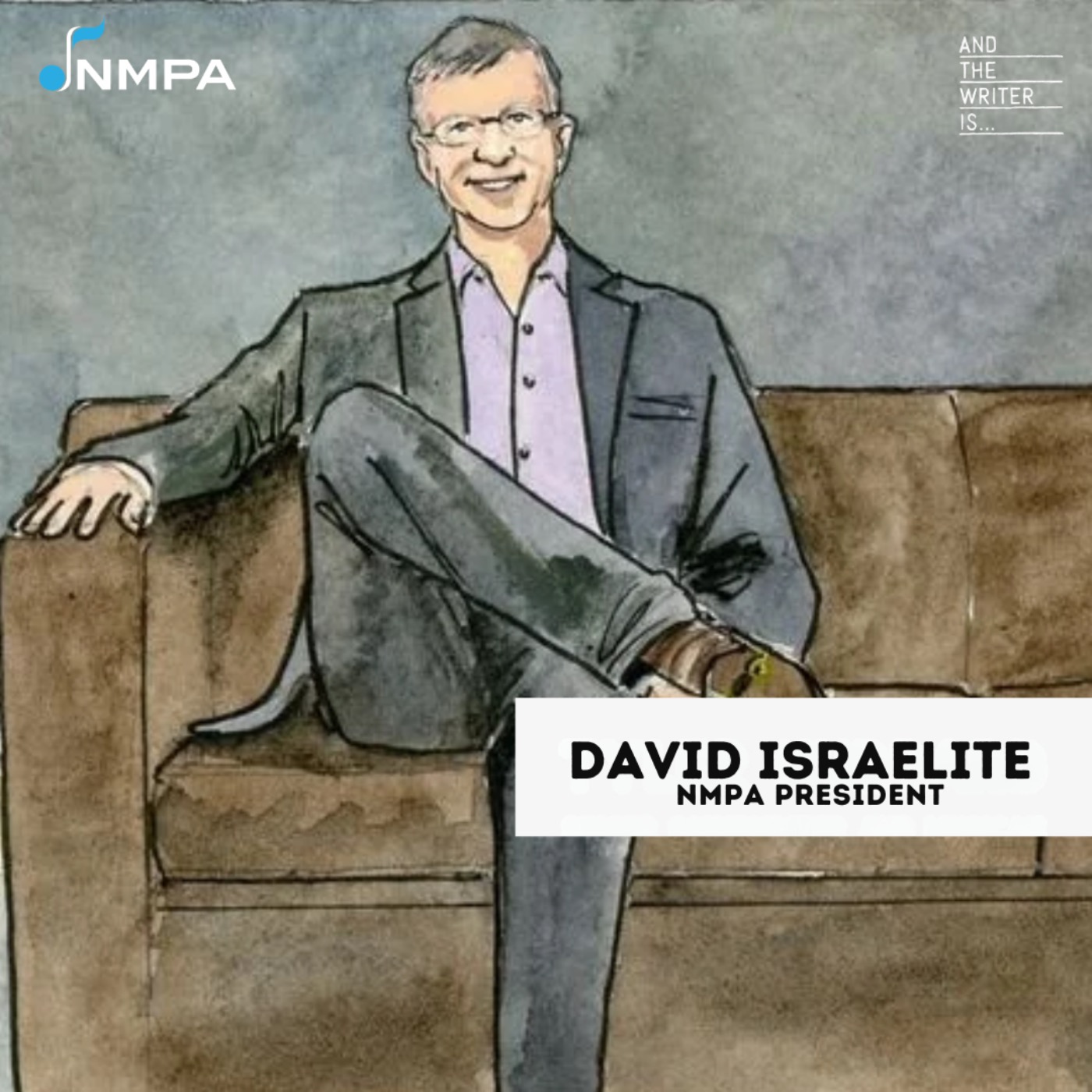
Streaming services celebrate songwriters. So why are they fighting to pay them less? Today's guest is David Israelite, President and CEO of the National Music Publishers’ Association. He joins Ross to unpack the fight over what songs are worth, who gets paid, and who decides. From what a million streams earns in publishing to Spotify’s audiobook bundles, David explains the economics behind the music and why the next Copyright Royalty Board fight matters. They also dig into AI, the digital radio pay gap, and why artists should care about whether professional songwriters can make a living. If you write, record, produce, publish, or manage music, this is the business behind your work. Stay informed about the fight for songwriters through NMPA: https://www.nmpa.org/ Share this conversation with an artist or songwriter who needs to hear it. Thank you to our lead sponsor, NMPA, for supporting And The Writer Is… Chapters: 00:00 Spotify’s audiobook move and the fight over songwriter pay 02:51
Written by Rob Hirst, and completed by his daughter Lex, the new book, World Is Almost At Peace, moves through the many songs Rob wrote and recorded and shares remarkable detail about the writing of a lifetime of music. Lex Hirst and Rob’s wife, Lesley Holland join Andy to share their memories of Rob and their reflections on his life and his music. Hana Stretton’s first album, Soon, was a response to isolation - with Covid and Australian bushfires looming in its background. On her latest, tiarn (https://hanastretton.bandcamp.com/album/tiarn-2), Hana has been folding ever more into her compositions: more voices, more instruments, more ideas, but it retains much of that shimmering, distant sound and remains inspired by the natural world around her. Hana is performing 8 Dec at Phoenix Central Park, Sydney; 9 Dec at Lansdowne Hotel, Sydney; 10 Dec at Thornbury Theatre, Melbourne; 11 Dec at Oregon Hall, Beechworth; 13 Dec at Meredith Music Festival Music heard in this program: Title: StoveA
Bomani Jones and Spencer Hall revisit Joe Paterno, Jerry Sandusky and the Penn State scandal in this Time Machine Tuesday episode of The Right Time. Fifteen years after the events of November 2011, they examine how Paterno became inseparable from Penn State's identity—and why the university's image of doing college football the right way made its institutional failures so revealing. Visit https://prizepicks.onelink.me/LME0/BOMANI and use code BOMANI to get $25 instantly in Packs after you rip your first $5 PackFrom Paterno's “Grand Experiment” and Penn State's national profile to Sandusky's place in the football program and The Second Mile, Bomani and Spencer trace the reputation surrounding the people and institutions at the center of the story. They discuss Sara Ganim's reporting, Mike McQueary, the reaction from former players including Matt Millen and Franco Harris, and the difficulty of confronting allegations involving someone treated as a father figure. They also question the NC
■ PUN He started with an 800-baht microphone in his bedroom — and at the height of it all, he stepped away to become a monk. PUN is a Thai R&B and indie-pop singer-songwriter signed to Universal Music Thailand. He started as a teenager in a school rock band, then recorded songs into an iPad through an 800-baht microphone. As PUNYARB he joined YARBCREW, an underground hip-hop crew, as its youngest member and the one who brought the melodies. He never studied theory; he wrote lyrics "10 times, 100 times, 1,000 times" until he found his voice. His debut single, "Kryptonite," on High Cloud Entertainment, was not hip-hop at all, a deliberate step out of his comfort zone. He moved to Universal Music Thailand in 2023 with "Therapist," then released "GOODBYE," which passed 30 million streams in two months, and "DAY ONE," written in a single day and now past 100 million. His 2024 debut album, "PUN," has passed 600 million streams and won Best New Artist and Best Album in 2025, the year his firs
I’ve wanted to do this episode for ages. And since I don’t know what the future holds. Today is the day. It’s my 10 picks for the greatest albums of the 70s. These are records that sit at the pinnacle of one of the most creatively explosive decades in rock history. Each one is a game-changer — built by artists who were willing to bet everything on their vision, fight their own labels for control, and even bend the truth to get it done. We’ve got the story of the Ivy League-trained engineer Tom Scholz who secretly recorded his band Boston's debut album in his basement while tricking his label into thinking it was being made in a California studio… and the LP’s biggest song, More Than a Feeling, was inspired by his childhood crush on his own cousin! Then there’s Bruce Springsteen's Born to Run, which I got married to… Also, there’s Tom Petty, who intentionally drove himself into bankruptcy to get out of a terrible contract and even hid his album’s master tapes from his label to keep them
Stuart and Joe take a look at this week's music biz stories, including... → £8.4bn. That’s how much the UK’s music industry is worth to the national economy, according to a new report from UK Music. → Streaming service Deezer has published its second annual survey of music fans’ views on AI. What did it find this time? → Could Spotify be banned for under-16s in the UK? Probably not, but the idea has been floated in the past week as a possibility (https://musically.com/2026/11/12/uks-social-media-ban-for-under-16s-could-include-music-streaming/)… → Another app that will almost certainly be subject to the ban is TikTok, but this week it was talking about musicians in the UK doing well on its app (https://musically.com/2026/11/13/tiktok-trumpets-livestreaming-success-for-uk-based-musicians/)… → It’s nearly time to wish Tina Turner a happy 87th birthday. Or at least, it would be if she hadn’t passed away in 2023. But the custodians of her estate and music rights are going to get fans to ce
Synopsis In August, 2019, thousands of women took to the streets of Mexico City to protest the outrageous police indifference to violent crimes against women, which largely went unpunished. Their protest became known as the “revolución diamantina” (glitter revolution), since they showered Mexico City’s security chief with pink glitter during their inaugural demonstration. Their protest inspired Mexican composer Gabriela Ortiz to collaborate with her compatriot, Pulitzer Prize-winning Mexican author Cristina Rivera Garza, in the creation of a ballet score that would chronicle their history and honor their action. The result of their collaboration was Revolución Diamantina, a 42-minute work of surprising power and beauty. Ortiz said, “It was up to me to imagine the music by using not only aesthetic languages already known to me, but by taking risks, learning, and experimenting with new tools. In this ballet, it has been my hope that the audience will explore different pathways that radic
Synopsis In 1974, St. Petersburg was still called Leningrad and still part of what we now call the former Soviet Union. Back then, the most famous living Soviet composer was Dmitri Shostakovich, whose health was rapidly failing from the cancer that would claim his life the following year. On today’s date in 1974, Shostakovich’s String Quartet No. 15, his final, was given its premiere performance by the Taneyev Quartet. The work was supposed to have been premiered by the Beethoven Quartet, but its cellist died unexpectedly, and, mindful of his own mortality, Shostakovich was reluctant to postpone the scheduled premiere. After all, he might not be around by the time the Beethoven Quartet found a replacement cellist. When his String Quartet No. 1 had premiered in 1938, Shostakovich had described that work as “joyful, merry, lyrical” and “springlike.” His String Quartet No. 15, on the other hand, is obviously a “winter work,” written by someone who knows he might never see another spring.
Synopsis On today’s date in 1922, the British Broadcasting Corporation began daily radio transmissions from London, at first offering just news and weather — the latter read twice, in case anyone wanted to take notes. The following month, on Dec. 23, 1922, the BBC broadcast its first orchestral concert. Over time, the BBC became affectionately nicknamed “the Beeb,” or, less affectionately “Auntie,” due to the upper-middle class, slightly patronizing tone of its music announcers in the 1940s and ‘50s. That said, Auntie has proven to be hip in one aspect: The BBC has been a major commissioner of and advocate for new music by a wide range of composers — and not just British ones. In 2007, for example, the BBC Symphony premiered the Doctor Atomic Symphony, by American composer John Adams, live on-air at a BBC Proms Concert at the Royal Albert Hall. And it’s not just famous, big-name composers who get an airing on the Beeb either. Each year, BBC Radio 3 hosts a competition for teenage compo
Public spending should prioritize people with the greatest unmet needs.
Share your view, then see how readers voted. No sign-in required. This poll is shared across stories.
Do you agree or disagree?
Common Quandary
A Common Quandary to discuss
Another conversation to explore, separate from this news story.
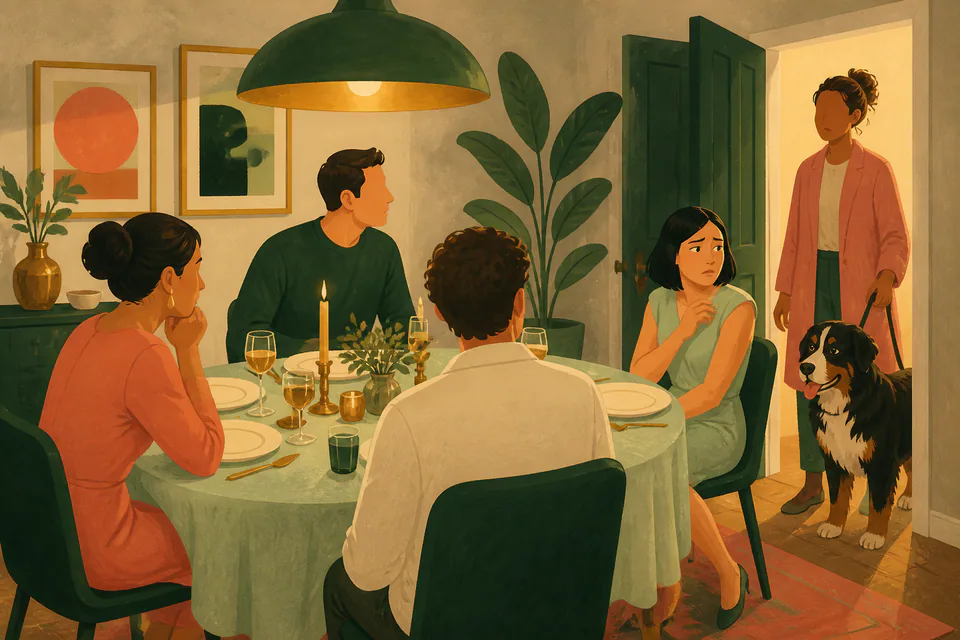
Your dinner guest arrives with their dog. Do you let both of them in?
A friend appears at your carefully planned dinner with a large dog they never mentioned. They say the dog becomes anxious when left alone and will sit quietly. Another guest is uneasy around animals, and your lease forbids pets.
Whose needs should an unexpected accommodation displace?