How to put European Security on a Stronger Footing
24 min
Listen through the publisher, then discuss the episode here or arrange an in-person Roundtable. Your city determines where to meet.
Roundtables are designed for groups of four, with a shared subject and room for everyone to speak. Come for discussion, with no dating expectation.
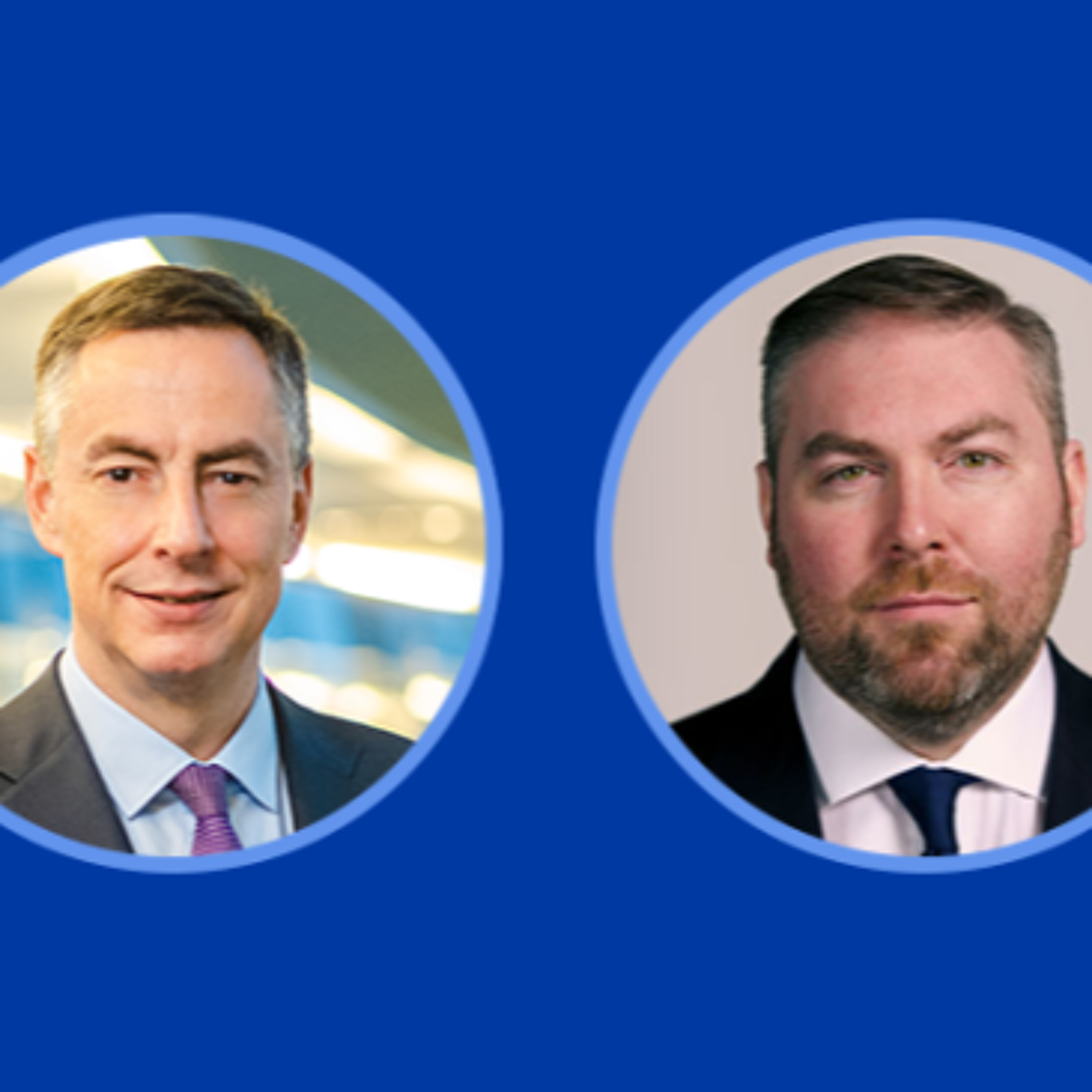
David McAllister has been a Member of the European Parliament for the Christian Democratic Union (CDU) since 2014. He chairs the European Parliament’s Committee on Foreign Affairs (AFET), a position he has held since 2017, and is actively involved in EU relations with the United Kingdom and NATO. He began his political career in the Parliament of Niedersachsen, where he served from 1998 to 2014, including as Chairman of the CDU Parliamentary Group from 2003 to 2010. From 2010 to 2013, he was Minister-President of Niedersachsen. Barry Ward was elected as a member of Dáil Éireann in November, 2024 Prior to that, Barry served as a Senator, and was Seanad spokesperson on Justice. A practicing barrister, Barry is originally from Deansgrange. He was first elected to Dún Laoghaire-Rathdown County Council in 2009, representing the Blackrock Ward, which also includes Booterstown, Deansgrange, Foxrock, Monkstown and Stillorgan. Barry also served as Leader of the Fine Gael group on the Council. In 2020, he was elected to the Industrial and Commercial Panel of the Seanad, having stood in that year’s general election in the Dún Laoghaire constituency.
Episode information is provided by the publisher. Listening takes place on the publisher’s service.
For review: 1. Iraq has reached a compromise with the powerful Iran-backed militia Kataeb Hezbollah, three senior security officials said, after Prime Minister Ali al-Zaidi readied security forces to move against the group. Reflecting the gravity of the situation, Iraqi Shiite political sources said Esmail Qaani, commander of Iran’s elite Revolutionary Guards’ Quds Force, arrived in Baghdad late on Monday to help defuse tensions with Kataeb Hezbollah, Tehran’s most powerful militia ally in Iraq. 2. Lebanese President Joseph Aoun launched a lengthy rebuke of Iran in an Independence Day address, arguing that the Islamic Republic does not have the right to interfere in Lebanon’s internal affairs, as it long has via support for its local terror proxy, Hezbollah. 3. Yemen’s Houthis launched strikes on the Saudi capital Riyadh on Saturday, after vowing reprisals for a “special operation” by the Saudi-led coalition fighting them. The coalition later said it had “intercepted and destroyed” thr
This week on The Necessary Conversation, it's Chad, Haley, and Mary Lou. Bob is still recovering but sent in a video message about Trump calling Putin his friend that we watch together. 🇷🇺 Trump held the first-ever three-way talks with Putin and Xi, called it a "12 out of 10," and produced nothing. Then at a press conference he called Putin his friend — and when asked if Putin is a friend to America, the president of the United States said, "I can't speak to America." That same day, Trump's friend Putin launched massive strikes into Ukraine, hit Poland with two missiles — an act of war against a NATO ally — then struck near a Ukrainian restaurant and drone-bombed the first responders, killing a 7-year-old child and a 20-year-old paramedic. We watch Bob's video and ask Mary Lou: is Russia our friend? 🇨🇳 The House Foreign Affairs Committee revealed Trump's Commerce Department approved nearly 880,000 advanced AI chips for Chinese military-linked companies including Alibaba, Tencent, a
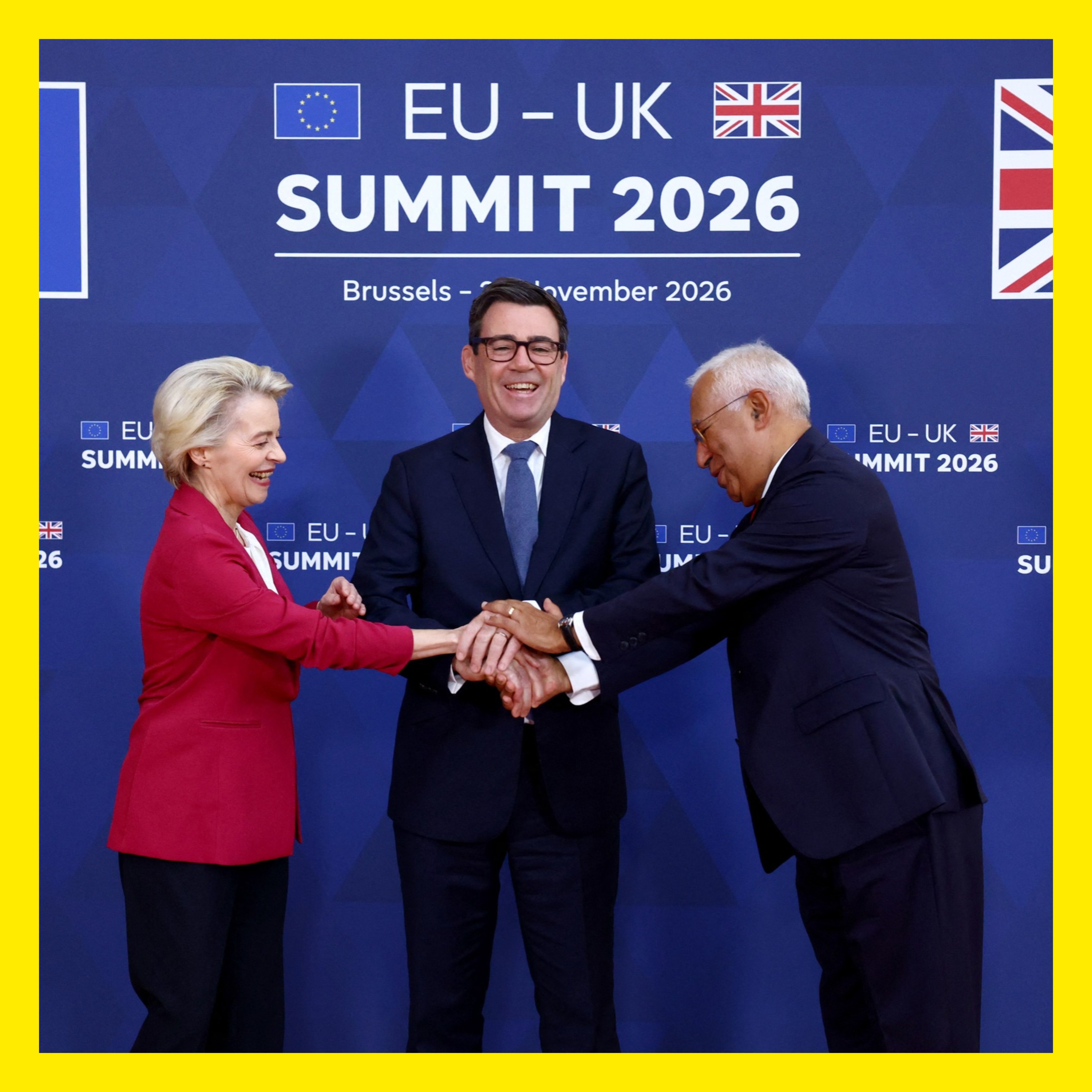
Andy Burnham travelled to Brussels expecting a smooth signing ceremony for his reset deal with the European Union, only to face a classic EU ambush: none of it will be implemented until Britain gives ground on lowering tuition fees for EU students. We unpack what is actually in the agreement, from cutting border checks on food and scrapping the foie gras ban to a 100,000-person youth mobility scheme that has already led to friction with Alan Milburn over opportunities for British young people. Fresh off the Eurostar with Nigel Farage, Patrick explains why the Reform UK leader is dismissing the deal as small-scale. And what he thinks Andy Burnham's long game is: "he wants to rejoin and he thinks he can win the argument." Steven Swinford, political editor, The Times Lara Spirit, deputy political editor, The Sunday Times Patrick Maguire, chief political commentator, The Times Producers: Euan Dawtrey, George Clare Executive producer: Molly Guinness Picture: Getty Images Hosted on Acast.
Rebuilding the government after Trump and DOGE will take more than rehiring the people they fired last year. The Supreme Court enabled the administration’s assault on services and protections millions of Americans rely upon, and it could still block the rebuilding, too. On this week’s Amicus, Dahlia Lithwick talks with Cornell law professor and former Biden administration official K. Sabeel Rahman about his new book, Remaking the State: A New Blueprint for American Democracy (https://www.amazon.com/dp/1967190208?tag=slatmaga-20&th=1), about why restoring the old machinery of the administrative state won’t be enough. Rahman connects DOGE’s slash-and-burn campaign to a much longer legal project. He explains why doctrines that constrain regulation remain a threat to future policymaking, even as the high court supercharges Trump’s executive power grabs. But this is not just a damage assessment. From stronger consumer protections to easier access to public benefits and a meaningful democrat
In this episode of The Carbon Removal Scoop, Eve Tamme and Sebastian Manhart sit down with Dan Maleski, the Scoop's go-to expert on the EU Carbon Border Adjustment Mechanism (CBAM), for his fourth time on the show. Since his last visit in May, a lot has moved: Turkey has set out plans for its own CBAM, the Commission has published its final rules on carbon prices paid abroad, and the UK and EU have agreed to link their emissions trading systems. Dan explains why he sees Turkey as the first of many dominoes, and what its new ETS has to do with the EU CBAM. He then walks through the final implementing act: what changed since the draft, why a carbon price that only applies to exports to the EU will not count, and why importers who cannot get actual emissions data are stuck with the Commission's default carbon price. Eve and Sebastian push on how carbon credits, including removals generated inside a company's own value chain, would be valued under the new rules, and Dan sets out the price
Episode #169 of the Irregular Warfare Podcast examines what happens to women who take part in rebel groups once the fighting stops. The conversation considers why women are so often central to rebel logistics, legitimacy, and governance during war, yet are frequently sidelined in peace negotiations and post-conflict settlements. We explore the many pathways women take into armed groups, from coercion and capture to ideology and social pressure, and unpack what cases like the Tigray People's Liberation Front in Ethiopia and the FARC in Colombia reveal about why rebel promises to women so often go unfulfilled. Our guests close by discussing what practitioners and policymakers most misunderstand about women in conflict settings, and how tokenistic participation can undermine efforts to reintegrate female ex-combatants. This episode is anchored in the book After Liberation (https://www.sup.org/books/politics/after-liberation) by Dr. Hilary Matfess. Dr. Hilary Matfess (https://www.hilarymat
Nikol Pashinyan has served as Prime Minister of the Republic of Armenia since May 2018, leading the country through a period of significant political, economic, and social transformation. He entered parliamentary politics in 2012, when he was elected to the National Assembly as a representative of the Armenian National Congress Alliance. In 2018, he initiated the My Step movement, which led to Armenia’s peaceful Velvet Revolution. On May 8, 2018, he was elected Prime Minister by the National Assembly. His Civil Contract party won the 2021 elections, leading to his reappointment as Prime Minister. In 2026, Civil Contract won the elections, and Nikol Pashinyan was appointed Prime Minister for another term. Among his international honors are the Knight Grand Cross of the Order of Pope Pius IX, awarded by Pope Francis in 2023; the Gold Medal of the Hellenic Parliament in 2024; Kazakhstan’s Order of the Altyn Qyran in 2025; the Zayed Award for Human Fraternity in 2026; and the Gernika Award
Edi Rama is the Prime Minister of the Republic of Albania and Chairman of the Socialist Party of Albania. Before entering politics, Edi Rama established himself as a painter, professor, writer and public intellectual. He has served as Prime Minister since 2013 and is currently serving his fourth consecutive term in office. His fourth government, sworn in in September 2025, continues to place European Union membership, economic development, institutional modernization, digital transformation and Albania’s Euro-Atlantic partnerships among its central priorities. Albania is undergoing a period of significant institutional, economic and social transformation, with a strong focus on justice reform, public services modernisation, public administration, as well as citizen centric and social welfare reforms. Albania obtained EU candidate status in 2014 and formally opened accession negotiations in 2022. Between mid-2022 and 2026, Albania made remarkable progress in its EU accession process. Th
Since declaring independence in 2008, Kosovo has made significant progress in consolidating its statehood, strengthening democratic institutions, and advancing its European agenda. However, this pathway has been met with domestic and geopolitical challenges. In his first ever address at the IIEA, the Prime Minister of Kosovo, H.E. Mr. Albin Kurti, reflects upon the country's reform efforts, especially during his time in office. The Prime Minister also considers Kosovo's MR. opportunities and ongoing challenges, while outlining the country’s aspirations to transition from being one of Europe's most pro-European countries to becoming a full member of the EU. H.E. Mr. Albin Kurti was elected Prime Minister of the Republic of Kosovo for the fourth time in September 2026, being elected first in February 2020. Before his time as prime minister, Mr. Kurti led the massive student protests in 1997 against the repressive Milosevic regime. Having been politically active during the war and serving
Communities should test major changes on a small scale before making them permanent.
Share your view, then see how readers voted. No sign-in required. This poll is shared across stories.
Do you agree or disagree?
Common Quandary
A Common Quandary to discuss
Another conversation to explore, separate from this news story.
Your boss offers lessons to make you sound “more professional.” Do you take them?
Clients sometimes ask an employee to repeat themselves during calls. Their manager offers company-paid speech coaching framed as clearer communication, but the employee experiences the request as pressure to hide part of their identity.
When does improving communication become demanding conformity?