How Your Mind Creates Reality & The Surprising Power of Being Calm
50 min
Listen through the publisher, then discuss the episode here or arrange an in-person Roundtable. Your city determines where to meet.
Roundtables are designed for groups of four, with a shared subject and room for everyone to speak. Come for discussion, with no dating expectation.
Is it bad to leave your phone charging overnight? Should you avoid using it while it's plugged in? And can the way you charge it shorten the life of the battery? There are plenty of myths about smartphone charging, and some of the advice you've heard may be completely wrong. Listen as I separate fact from fiction and reveal what really helps keep your phone's battery working longer. https://www.makeuseof.com/myths-misconceptions-charging-your-phone-debunked/ You probably think your brain simply takes in information and tells you what's happening around you. But that's not quite how it works. Your brain is constantly making predictions about what you're going to experience — and those predictions can actually shape what you feel and perceive. Even something as simple as expecting a shot to hurt can make it feel more painful. So how much of your reality is created by your own expectations? Andy Clark, professor at the University of Sussex and author of The Experience Machine: How Our Minds Predict and Shape Reality (https://amzn.to/3JJPUjH), (https://amzn.to/3JJPUjH) joins me to explain the remarkable ways your brain anticipates the world and why understanding this could change how you experience everyday life. Some people seem able to stay calm no matter what happens, while others get rattled by the smallest things. What's their secret? Is calm something you're born with, or is it a skill you can develop? And what happens to your mind and body when you learn to be calmer? Chris Bailey, whose work has appeared in The New York Times, The Wall Street Journal, and GQ, joins me to explore why calm is so valuable, what gets in the way of it, and how to bring more of it into your life. He is the author of How to Calm Your Mind (https://amzn.to/44cmGSu). (https://amzn.to/44cmGSu) Flip-flops are easy, comfortable, and practically the official footwear of summer. But foot specialists have some concerns about wearing them too often. What could be wrong with such a simple shoe? And how much flip-flop wearing is too much? Listen as I explain what you should know before slipping on your next pair. https://www.oregonlive.com/health/2012/07/health_news_flip-flops_the_men.html PLEASE SUPPORT OUR SPONSORS AURAFRAMES: For a limited time, visit r a limited time, visit https://AuraFrames.com (https://auraframes.com/) and get up to $50 off select frames plus an additional $5 off your order with the promo code SOMETHING. Now available in Canada, too! Upgrade your whole setup for less! Listen or watch wherever you get your podcasts!
Episode information is provided by the publisher. Listening takes place on the publisher’s service.
In this calm and sleepy facts episode, we slip quietly into the world of dreams, the extraordinary theater the mind builds every single night from nothing but fragments of memory, emotion, and imagination. We begin with the basics of what a dream actually is, a vivid mental experience that occurs during sleep, most intensely during rapid eye movement sleep, and we trace the architecture of a full night, learning how the brain cycles through stages roughly every 90 minutes, with each REM period growing longer and more dream rich as the night goes on. We visit the moment in 1953 when Eugene Aserinsky and Nathaniel Kleitman first discovered REM sleep in a Chicago laboratory, and we explore the curious state of muscle atonia, the temporary paralysis that keeps the body still while the dreaming mind races. From there we wade into the deep question of why we dream at all, from Freud's wish fulfillment theory to the activation synthesis model to the idea that dreams help consolidate memories
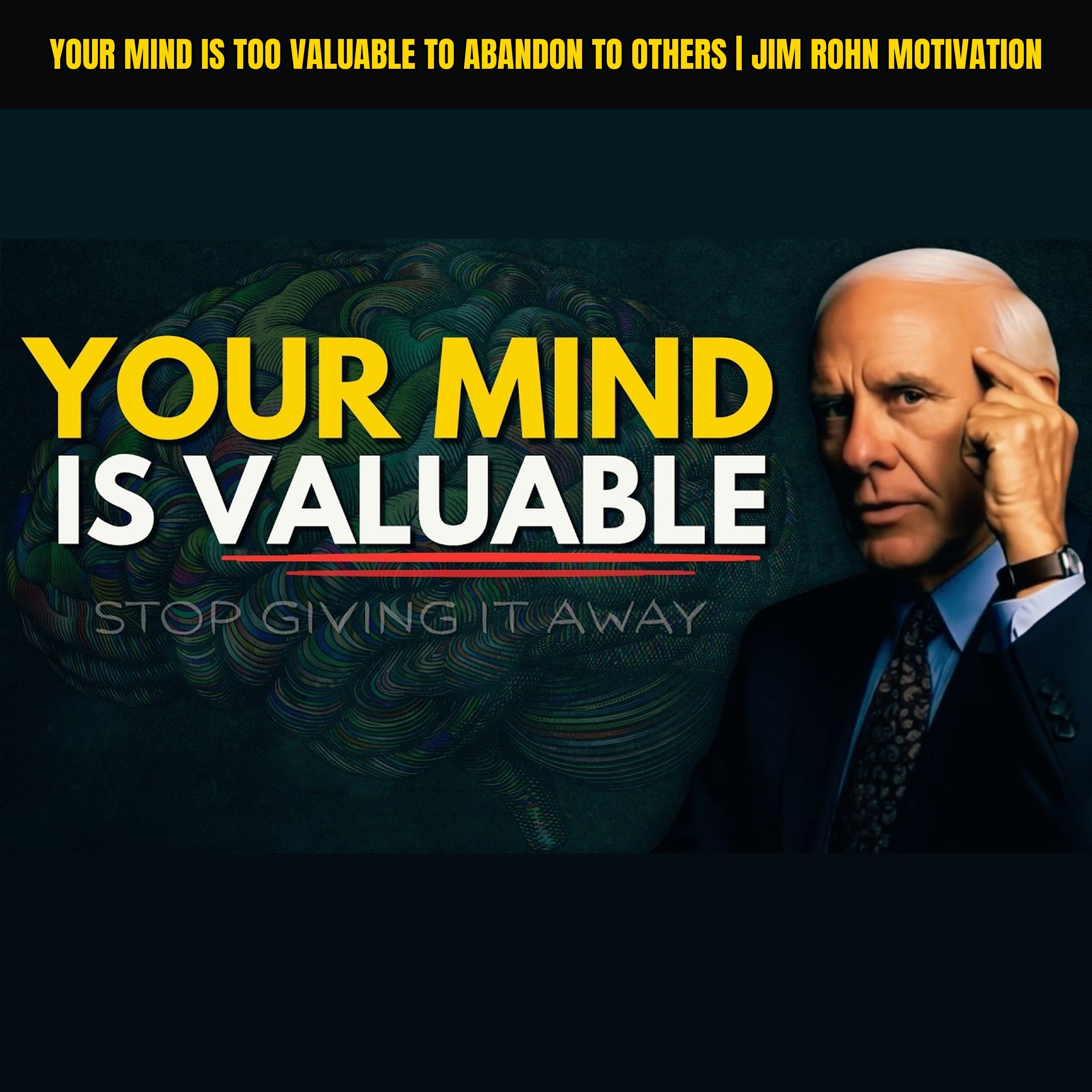
#JimRohnMotivation #JimRohn #JimRohnSpeech In this Jim Rohn Motivation video, uncover the power of intentional thinking and how programming your own mind daily can lead to transformational success. If you’re not shaping your thoughts, someone else is—so this is your wake-up call to take control of your beliefs, habits, and direction in life. Key Topics From This Motivational Video: Why your mind becomes whatever you plant in it How negative influences quietly destroy clarity The secret power of visualization and affirmations Why goal setting, self-talk, and habit design matter How to maintain a powerful mindset long term This motivational video delivers a practical mental blueprint for intentional living. You’ll learn how to guard your mindset, rewire your thinking with daily routines, and resist outside influences trying to shape your direction. With tools like affirmations, goal clarity, visualization, and self-talk, you’ll stop living passively and start designing your life consciou
Artificial wombs are coming. That's a good thing. Artificial wombs are the stuff of science fiction, the scary kind. I think of The Matrix, when Neo wakes up in the real world, covered in goo. But in recent years, researchers have taken enormous leaps in helping embryos survive and grow outside a uterus. Artificial wombs are becoming more science, less fiction. Any conversation about this topic gets heated, fast. Some people HATE the idea of an artificial womb. They feel that this technology could be used in terrible ways, like to control how people have kids or breed babies. Or that pregnancy is an important, special connection that we can never replicate with technology. Or that it’s a useless distraction, because there’s way more important stuff we should be investing in right now to make life easier for parents (parental leave, affordable childcare) and in the US at least, we don’t. But others LOVE the idea. They feel that artificial wombs could help reduce the risks of pregnancy,
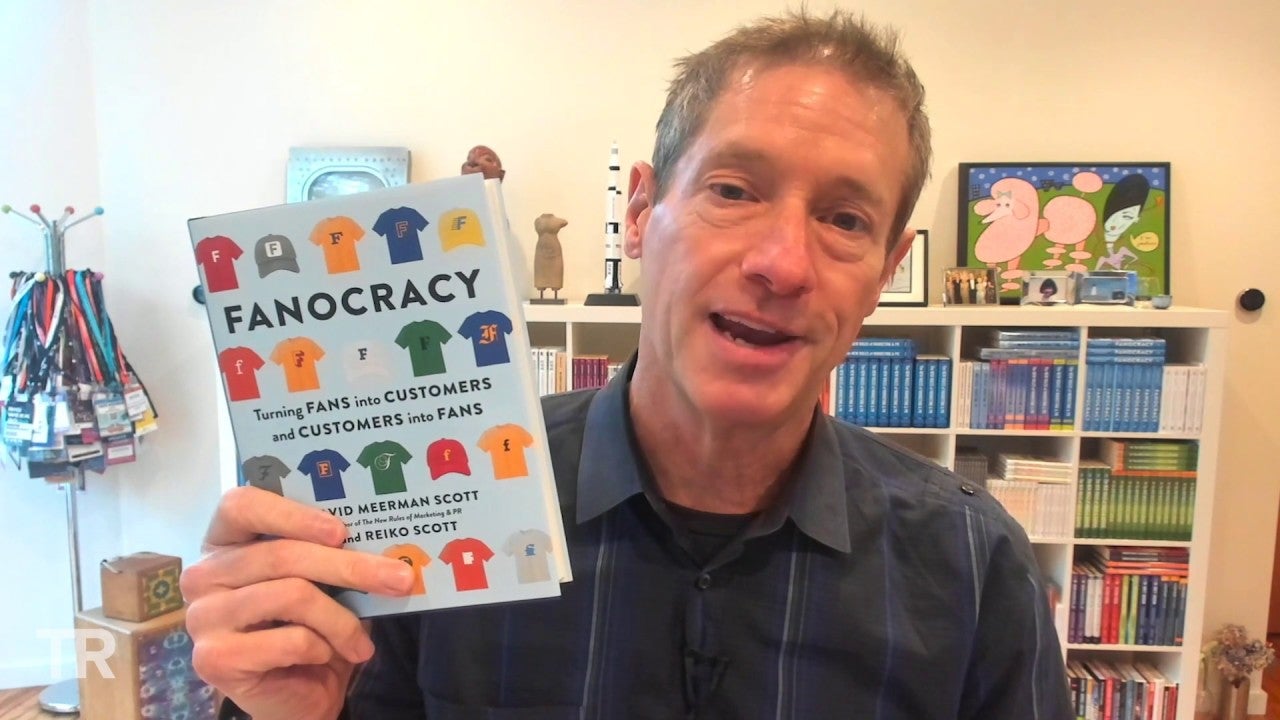
Marketing strategist, visionary and best-selling author David Meerman Scott shares three things you can be doing right now to improve your marketing and communications to create raving fan customers. Uploaded 24-04-20 For his recent book Fanocracy (https://www.fanocracy.com), (https://www.fanocracy.com),/) David researched an essential question for all business owners: Why do we become fans of something? Ultimately, humans are hard-wired to want to be part of a tribe. We want to find people who are like us. When we’re part of our tribe we feel safe and comfortable. When we’re not part of our tribe, we feel uncomfortable. Music creates these tribes. Tony Robbins events create these tribes. Especially in times of stress, business owners can leverage this need for belonging to create raving fan customers. (You can read about raving fan customers at https://www.tonyrobbins.com/career-business/create-raving-fan-customers and watch this video for more). But to do it, you’ll need to shift the
Everyone's heard of Cholesterol. Many people don't know the different types of Cholesterol though. Most people are under the assumption that Cholesterol is bad but that can be from the truth. The truth is, certain types of cholesterol can be bad. It’s important to learn the different types of cholesterol so that you can understand how they work. This will ultimately lead you to a healthier life. Cholesterol can be good. To further understand why watch this video: https://youtu.be/KzHtcLznNgE Learn how your liver reacts to healthy cholesterol levels vs unhealthy cholesterol levels: https://youtu.be/tDWZzwkZCbs Read more about Cholesterol and why Americans are getting Fatter in my Blog: https://bozmd.com/the-metabolic-syndrome-epidemic-how-low-fat-diet-fad-made-us-fat/ ************** Thanks for checking out the Dr Boz Channel. Tune in Sunday nights, 6PM Central Time to watch me Live! We are KETONES FOR LIFE. Improving your health - One ketone at a time. Dr Boz’s First ONLINE Course Consi
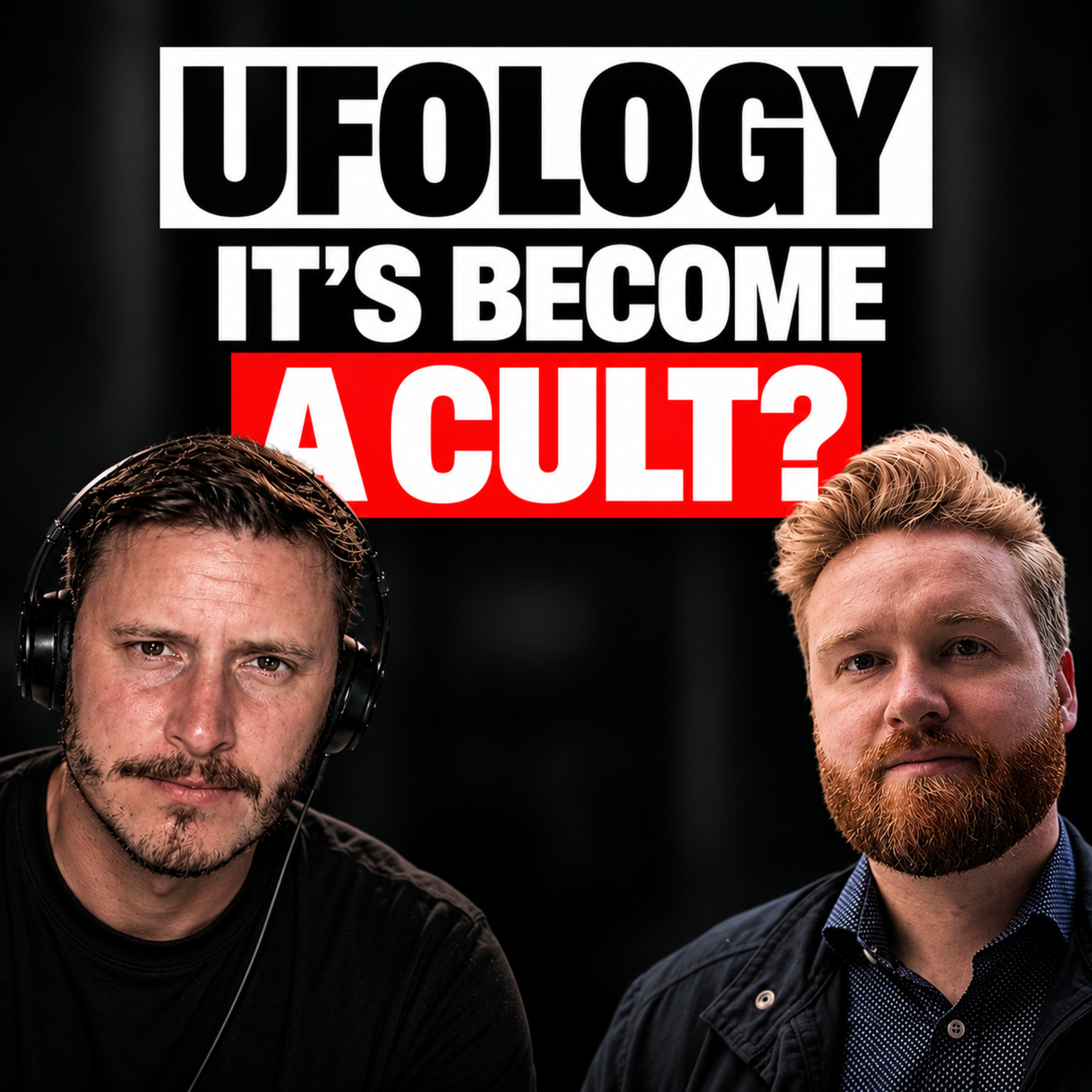
UAP Files Podcast S4 | E41 (Full Episode Linked Below) FULL EPISODE: https://youtu.be/DTeqmNx6hj0 What if the biggest obstacle to UFO disclosure isn't the government, but the UFO community itself? In this episode of UAP Files, I'm joined by documentary filmmaker Darcy Weir, who has spent close to two decades investigating UFOs, government secrecy, extraterrestrial encounters and some of the most controversial personalities in the subject. Darcy doesn't hold back. We discuss the growing influence of UFO celebrities, the money being made from disclosure, the increasingly divided UFO community and whether some of the people promising us answers are actually making it harder to uncover the truth. From Dr Steven Greer and Chris Bledsoe to Mick West, Susan Gerbic, Sean Kirkpatrick and the Pentagon, we explore some uncomfortable questions about an industry built around one of humanity's greatest mysteries. ️ IN THIS EPISODE, WE DISCUSS: THE UFO INDUSTRY: Has the search for extraterrestrial li
You probably like to think the decisions you make are your own. You weigh the options, consider the consequences, and choose what seems best. But what if your choices are being influenced in ways you don't even notice? Everything from how options are presented to the order in which they appear can quietly steer you toward one decision over another. And the really interesting part is that you can influence other people's choices in exactly the same way — often without realizing it. This fascinating science is called "choice architecture," and understanding it can change how you make decisions. Eric Johnson, director of the Center for Decision Sciences at Columbia Business School and author of The Elements of Choice: Why the Way We Decide Matters (https://amzn.to/3mK49bN) (https://amzn.to/3mK49bN), joins me to explain the hidden forces that shape our choices, how businesses and other people influence what we decide, and how to recognize those influences so you can make better decisions o
Ever been in an audience applauding and wondered, "Why are we still clapping?" Everyone seems ready to stop, yet the applause goes on and on. It turns out there's some fascinating science behind when applause starts, when it stops, and how the behavior of just a few people can influence an entire crowd. https://royalsociety.org/news/2013/applause-social-contagion/ We have more control over our lives than ever before. We can customize almost everything, track our health, and have practically anything delivered to our door. But has all that control actually made us happier? And what happens when we encounter the many things in life we simply can't control? Our need for certainty may be creating more anxiety and frustration than we realize. Anna Lembke, professor of psychiatry at Stanford University and medical director of the Stanford Addiction Medicine Program, joins me to explain why our obsession with control can work against us — and why learning to let go may be one of the smartest
A kiss can be wonderful. It can create an instant connection, spark romance, or make you feel closer to someone. But a kiss can also have the opposite effect — and sometimes ruin everything. So what makes kissing so powerful, and why can one kiss make such a difference? There's some fascinating science behind it. https://www.scientificamerican.com/article/why-we-kiss/ We spend an enormous amount of time worrying about what's going to change. What's next? What's coming? How do we prepare? But what if we're paying attention to the wrong things? Some of the most important forces shaping our lives never change, and understanding them may be far more valuable than trying to predict the future — something humans are notoriously bad at. Morgan Housel, partner at The Collaborative Fund and author of Same as Ever: A Guide to What Never Changes (https://amzn.to/3SwWn6u) (https://amzn.to/3SwWn6u)), joins me to explain why the things that stay the same may be the most important things to understan
People's reported experiences should matter as much as official service-performance targets.
Share your view, then see how readers voted. No sign-in required. This poll is shared across stories.
Do you agree or disagree?
Common Quandary
A Common Quandary to discuss
Another conversation to explore, separate from this news story.
The company printer sits idle all day. Can you print two hundred wedding invitations?
Your office has a fast color printer that is rarely used, and supplies are ordered automatically. Printing your wedding invitations after hours would save substantial money. Personal use is technically prohibited but routinely ignored for small jobs.
When does an insignificant workplace perk become taking?